
Adho Mukha Svanasana — The Downward-Facing Dog Pose
Adho Mukha Svanasana, universally known as Downward-Facing Dog, is one of yoga's most iconic and versatile postures.
Key Takeaways
- Lengthen your spine first; straight legs are secondary.
- Strengthens shoulders while stretching hamstrings and calves.
- Bend your knees to maintain safe alignment and comfort.
Adho Mukha Svanasana, universally known as Downward-Facing Dog, is one of yoga's most iconic and versatile postures. Serving as an inversion, a full-body stretch, and a transition pose in Sun Salutations, it invigorates the whole system while stretching the entire back body.
Modern habits often cause tight hamstrings, weak shoulders, and compressed spines. Downward Dog counteracts these issues by reversing gravity's pull on the spine, stretching the calves and hamstrings, and strengthening the hands, arms, and upper back.
While it is often treated as a resting pose in advanced practices, it poses a physical challenge for beginners as it requires a mix of flexibility, shoulder stability, and core engagement.
At Habuild, Adho Mukha Svanasana is introduced with emphasis on proper foundation and alignment, ensuring practitioners build upper-body strength while protecting their wrists and lower back.
What is Adho Mukha Svanasana?
Adho Mukha Svanasana (pronounced AH-doh MOO-kah shvah-NAHS-uh-nuh) breaks down into Adho (downward), Mukha (face), Svana (dog), and Asana (posture).
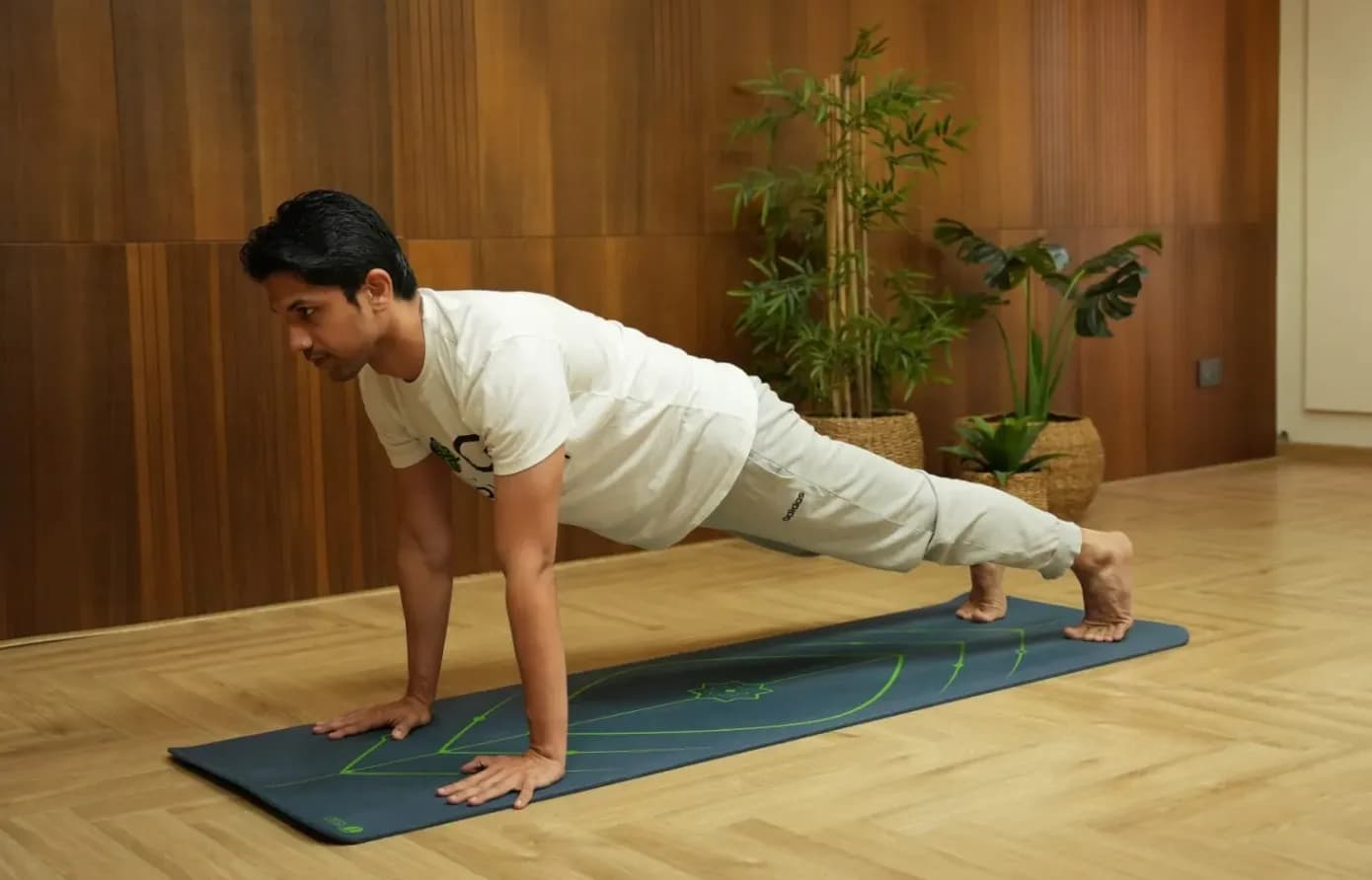
In this posture, the body forms an inverted "V" shape. The hands and feet are grounded on the mat while the hips lift high toward the ceiling, extending the spine and stretching the back of the legs.
Unlike simple leg or back stretches, Downward Dog engages almost every major muscle group simultaneously, providing both strength and flexibility benefits in a single posture.
Adho Mukha Svanasana Benefits
Physical Benefits
- Stretches the Posterior Chain: Deeply stretches hamstrings, calves, Achilles tendons, and the spine.
- Strengthens the Upper Body: Builds strength in the shoulders, arms, wrists, and upper back.
- Decompresses the Spine: Lengthens the spine between the hips and hands, easing pressure on intervertebral discs.
- Improves Circulation: As a mild inversion (head below heart), it encourages blood flow toward the brain without forcing the neck.
Mental and Emotional Benefits
- Calms the Mind: The inverted position helps relieve stress, mild depression, and mental fatigue.
- Energizes the Body: Reverses sluggish energy, making it an ideal pose to awaken the body in the morning.
- Reduces Tension Headaches: Gently releases built-up tightness in the neck and upper shoulders.
How to Do Adho Mukha Svanasana — Step-by-Step Instructions
Key Principles
Prioritize a long, straight spine over straight legs or heels touching the ground. Bending the knees generously is recommended if your hamstrings feel tight.
- Step 1: Start on Hands and Knees: Begin in a tabletop position with wrists slightly ahead of shoulders and knees hip-width apart.
- Step 2: Set Your Hands: Spread your fingers wide and press firmly down through your knuckles and palms.
- Step 3: Lift the Hips: Tuck your toes under, exhale, and lift your knees off the mat. Send your hips up and back toward the ceiling.
- Step 4: Align the Upper Body: Press the floor away to extend your arms, lengthen your spine, and draw your chest gently toward your thighs. Keep your head in line with your arms.
- Step 5: Adjust the Legs: Keep a slight bend in your knees if your lower back rounds. Slowly lower your heels toward the mat as your hamstrings open (heels do not need to touch the floor).
- Step 6: Hold and Breath: Stay in the pose for 30–60 seconds, taking deep, steady breaths. Gently lower to your knees to release.
Breathing in Adho Mukha Svanasana
Inhale to press firmly into the hands and lengthen through the arms and torso. Exhale to lift the hips higher and let the heels drop toward the floor.
Preparatory Poses Before Adho Mukha Svanasana
- Plank Pose (Phalakasana) – Establishes shoulder strength and hand alignment.
- Marjaryasana–Bitilasana (Cat–Cow Pose) – Mobilizes the spine and shoulders.
- Uttanasana (Standing Forward Bend) – Prepares the hamstrings for stretching.
Variations of Adho Mukha Svanasana
- Variation 1: Knees-Bent Downward Dog — Beginner: Knees remain bent significantly to take pressure off tight hamstrings and maintain a long spine.
- Variation 2: Wall Downward Dog — Limited Mobility / Wrist Pain: Hands are placed against a wall at hip height while stepping back to form an "L" shape, eliminating floor weight-bearing.
- Variation 3: Three-Legged Dog (Eka Pada Adho Mukha Svanasana) — Intermediate: Lifting one leg straight up behind you to test balance and deepen the stretch on the standing leg.
Alignment Tips
- Press firmly through the index finger and thumb knuckles to protect the wrists (Hasta Bandha).
- Keep ears aligned with upper arms; avoid letting the head dangle or pulling the neck up.
- Rotate upper arms outward to broaden the shoulder blades and create neck space.
- Keep your feet hip-width apart and parallel to each other.
Common Mistakes to Avoid
- Rounding the spine forward into a modified plank to force the feet flat on the floor.
- Collapsing weight entirely into the wrists instead of spreading it through the fingers.
- Shrugging shoulders toward the ears, pinching the neck.
- Locking the knees backward tightly.
Who Should Practise Adho Mukha Svanasana?
- Runners and Athletes: Excellent for releasing tight hamstrings and calves.
- Desk Workers: Reverses slouching by opening shoulders and lengthening the back.
- Yoga Practitioners: Serves as an essential transition posture in dynamic styles.
Is Adho Mukha Svanasana Good for Beginners?
Yes, with proper modifications. Beginners often assume their heels must touch the floor, leading to a rounded back. By keeping the knees bent, beginners can safely experience the posture's full spinal benefits. Habuild's daily live sessions guide new practitioners through step-by-step alignment to build shoulder strength safely over time.
Precautions
Avoid or modify Adho Mukha Svanasana if you have:
- Carpal Tunnel Syndrome or severe wrist pain (use blocks or a wall variation).
- High blood pressure or unmanaged eye conditions like glaucoma (avoid holding inversions for long).
- Late-stage pregnancy (use a wider stance or wall-supported variation).
Make Yoga a Daily Habit
Learning poses like Marjaryasana–Bitilasana, Balasana, Vrikshasana, and Adho Mukha Svanasana is the foundation for a strong, balanced practice. Whether you are aiming to relieve back pain, build core strength, or calm your mind, consistency is key.
Habuild's daily live yoga classes provide real-time guidance, posture adjustments, and progressive routines designed to help you build physical well-being safely from home.
Start your 14-day free yoga journey with Habuild today!
Frequently Asked Questions
Related Articles

Vajrasana (Thunderbolt Pose): Steps, Benefits and Alignment Tips
Master Vajrasana (Thunderbolt Pose) with Habuild. Practise Vajrasana to improve digestion, strengthen your posture, calm the mind, and enhance meditation. Start your wellness journey today.

How to Reduce Hand Fat with Yoga: Best Exercises, Steps & Tips
Learn ardha matsyendrasana with Habuild. Discover ardha matsyendrasana benefits for spinal health, improved digestion, and flexibility. Start your practice now!
Ardha Matsyendrasana: Steps Benefits and How to Practice v2
Learn ardha matsyendrasana with Habuild. Discover ardha matsyendrasana benefits for spinal health, improved digestion, and flexibility. Start your practice now!