
Animal Yoga Poses: Steps, Benefits & Precautions
Many of yoga's oldest poses were named after animals — the cobra's raised hood, the frog's deep crouch, the crow's steady perch. See the poses, benefits, and precautions.
Key Takeaways
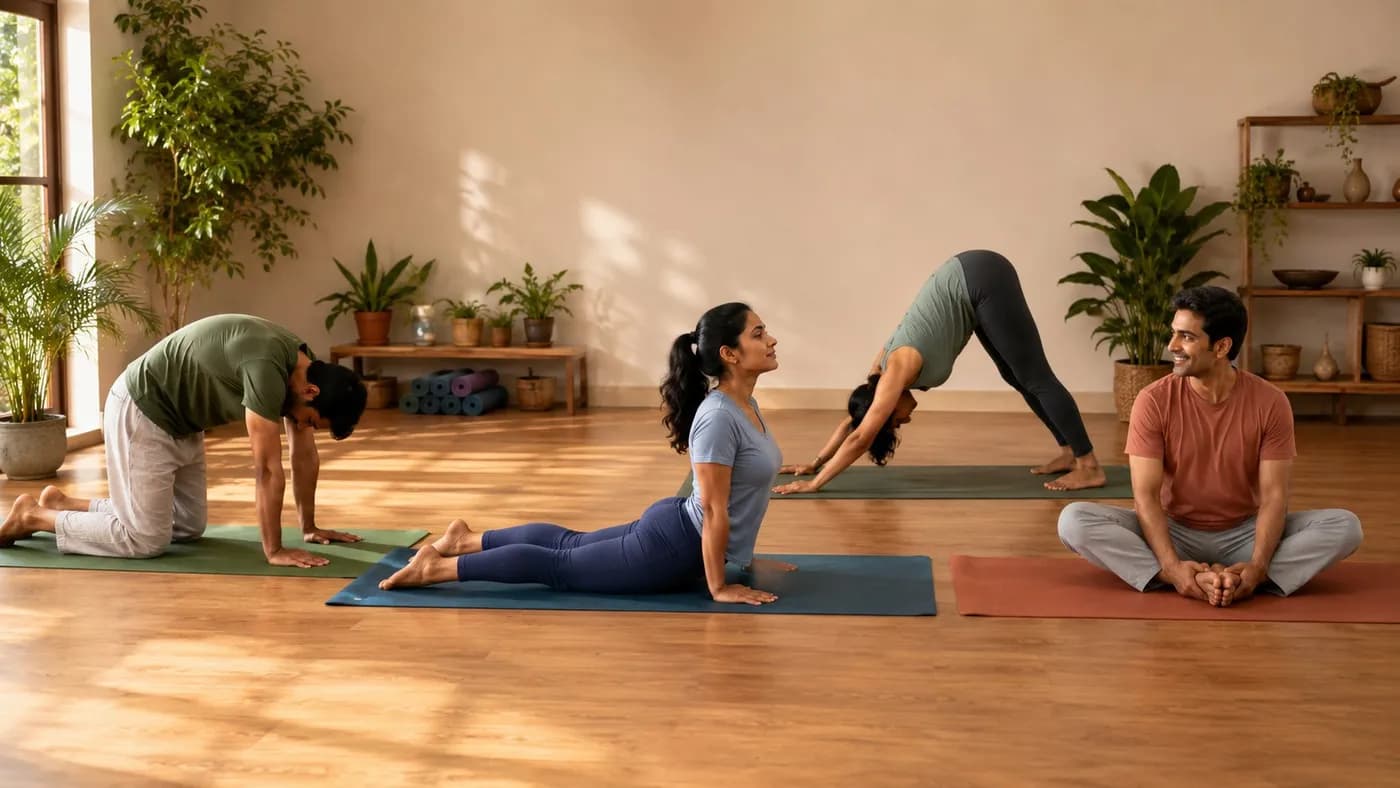
- Poses are named after animals observed in nature – cobra, frog, crow, cat, lion.
- Cobra and Cat-Cow move the spine through extension and flexion to strengthen back muscles.
- Frog and Pigeon Pose are among the deepest hip-openers available at any level.
- Poses that curl or compress the torso, like Frog and Tortoise, support digestive function.
- Cobra Pose extends the front body and stimulates the adrenal glands and thyroid.
- Grounding poses like Child’s Pose and Tortoise activate the parasympathetic nervous system.
What are Animal Yoga Poses?
Animal yoga poses are asanas inspired by the natural movements, postures, and qualities of animals. The Sanskrit word asana means “seat” or “posture,” and many of yoga’s oldest poses were named after creatures observed in the wild — the cobra’s raised hood, the frog’s deep crouch, the crow’s steady perch. Pronounced as individual asana names (Bhujangasana, Mandukasana, Bakasana), these poses collectively form one of the most recognisable categories in yoga.
Yoga’s ancient texts, including the Hatha Yoga Pradipika, describe how sages observed animals to understand the relationship between posture, breath, and inner stillness. Each animal embodies a quality — the serpent’s flexibility, the lion’s courage, the cat’s spinal awareness — and the corresponding pose invites the practitioner to embody that same quality on the mat.
Within the broader yoga system, animal yoga poses span all skill levels. Some, like Cat-Cow (Marjaryasana-Bitilasana), are foundational warm-up movements. Others, like Crow Pose (Bakasana), are intermediate balance challenges. Together they cover the full spectrum of spinal movement, hip opening, chest expansion, and core engagement — making them an ideal framework for a well-rounded daily practice.
Animal Yoga Poses Benefits
Physical Benefits
- Benefit 1: Strengthens the Spine and Back Muscles Poses like Cobra (Bhujangasana) and Cat-Cow (Marjaryasana-Bitilasana) move the spine through extension and flexion, progressively strengthening the erector spinae and multifidus muscles. Regular practice supports upright posture and may gradually ease the tension that builds from prolonged sitting. These yoga poses for back pain are particularly valuable for anyone spending long hours at a desk.
- Benefit 2: Improves Flexibility in the Hips and Hamstrings The Frog Pose (Mandukasana) and Pigeon Pose (Kapotasana) are among the deepest hip-opening animal yoga poses available to practitioners at any level. Held consistently over weeks, they help release the hip flexors, adductors, and groin — areas that tighten significantly from sedentary lifestyles. Incorporating these poses supports better range of motion in everyday movement such as walking, squatting, and climbing stairs.
- Benefit 3: Stimulates the Digestive and Endocrine Organs Poses inspired by animals that curl or compress the torso — Frog, Tortoise (Kurmasana), and Child’s Pose (Balasana) — apply gentle abdominal pressure that may support digestive function over time. The Cobra Pose, by contrast, extends the front body and stimulates the adrenal glands and thyroid through mild spinal extension. Practised regularly, this combination helps maintain internal organ health and complements yoga for digestion routines.
- Benefit 4: Calms the Nervous System and Supports Stress Management Grounding animal poses — particularly Child’s Pose and Tortoise Pose — activate the parasympathetic nervous system, shifting the body away from its fight-or-flight state. The rhythmic breath synchronised with Cat-Cow movement has a particularly soothing effect on the mind. For anyone dealing with daily pressure, these poses support consistent stress management through regular practice.
Mental and Emotional Benefits
- Benefit 5: Builds Focus and Present-Moment Awareness Balance-dependent animal poses like Crow (Bakasana) and Eagle (Garudasana) demand total mental attention — the moment the mind wanders, the pose collapses. This makes them an effective tool for practising single-pointed focus. Over time, this quality of attention built on the mat begins to carry into daily tasks, improving concentration and reducing mental scatter.
- Benefit 6: Builds Confidence and Emotional Resilience Progressing from simpler animal poses like Cat-Cow to more challenging ones like Crow is a deeply tangible experience of growth. Each small milestone — holding a balance for one extra breath, deepening a hip stretch — reinforces a sense of capability. This progression supports emotional resilience and a positive relationship with the body, particularly for people returning to movement after a break.
How to Do Animal Yoga Poses — Step-by-Step Instructions
The instructions below guide you through Bhujangasana (Cobra Pose), one of the most foundational and widely practised animal yoga poses, as a representative example of proper alignment and breath technique.
Key Principles
Before entering any animal yoga pose, establish a neutral spine on the mat. Breathe slowly and deliberately — never force a range of motion. Each movement should feel like an exploration, not a destination. Keep the face and jaw relaxed throughout.
Step 1: Starting Position
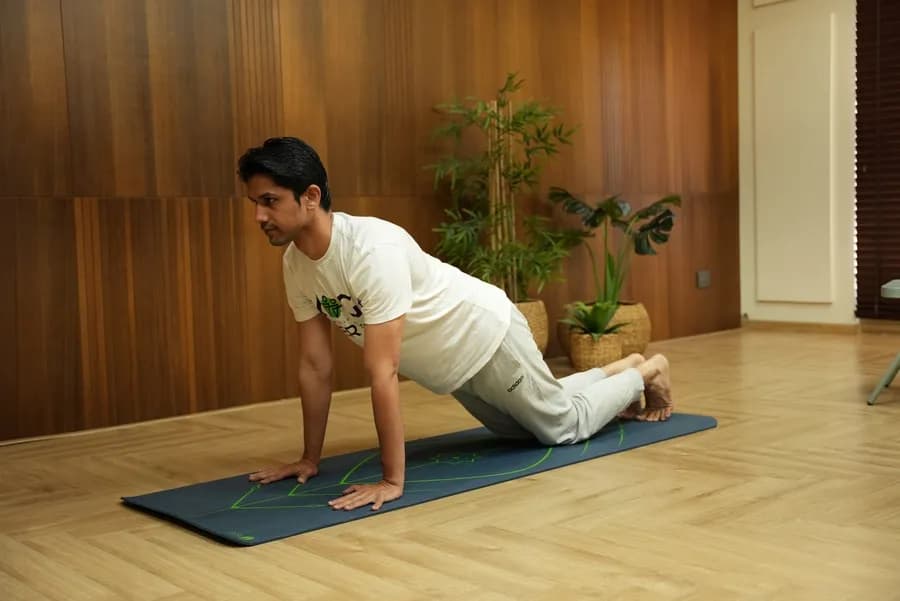
Lie flat on your stomach (prone position) with your legs extended and the tops of your feet pressing into the mat. Place your palms flat on the mat directly beneath your shoulders, fingers spread wide. Keep your elbows tucked close to your ribcage. Rest your forehead gently on the mat and take two slow breaths to settle in.
Step 2: Engage the Lower Body
Press the tops of both feet firmly into the mat and gently engage your thigh muscles (quadriceps). Lightly draw your inner thighs upward without lifting the legs. This lower-body engagement protects the lumbar spine as you begin to rise. You should feel a subtle lengthening through the legs.
Step 3: Engage the Core
Draw your navel gently toward your spine — not aggressively, just a light engagement. This protects the lower back during the backbend. Keep breathing normally; you should be able to breathe comfortably with the core engaged. Think of this as putting on a soft internal brace before lifting.
Step 4: Rise Into the Pose
On an inhale, press through your palms and begin to lift your chest and head away from the mat. Lead with the sternum, not the chin. Keep a slight bend in the elbows — this is not a full arm-lock. Roll the shoulders back and down, away from the ears. Your navel may or may not leave the mat depending on your spinal flexibility — both are correct at this stage.
Step 5: Final Position and Hold
Find the height that allows you to maintain length through the lower back without compression or pain. Gaze forward or very slightly upward — avoid throwing the head back sharply. Hold for 3–5 slow, full breaths. Feel the chest open, the shoulder blades draw together, and the front body stretch from pelvis to collarbones.
Step 6: How to Come Out of Cobra Pose (Bhujangasana)
On an exhale, slowly lower your chest back toward the mat — vertebra by vertebra if possible. Rest your forehead on the mat. Release the core engagement and let the lower back soften. Turn your head to one side and let the arms relax by your sides. Take 2–3 breaths here before moving on. Never collapse suddenly out of a backbend.
Breathing in Animal Yoga Poses
The general rule across all animal yoga poses is: inhale as you open or extend (Cobra rising, Cat arching), and exhale as you fold or compress (Frog sinking deeper, Cow curling down). In balance poses like Crow, breathe slowly and evenly — holding the breath creates tension and destabilises the pose. Let the breath lead the movement, not the other way around.
Preparatory Poses Before Animal Yoga Poses
Warming up the relevant muscle groups makes your practice safer and more effective. These four preparatory poses are particularly useful before attempting deeper animal-inspired asanas:
- Cat-Cow (Marjaryasana-Bitilasana) — gently mobilises the entire spine and warms up the back muscles before any backbend or spinal pose.
- Child’s Pose (Balasana) — releases the lower back and hip flexors, preparing the body for hip-opening poses like Frog and Pigeon.
- Downward Dog (Adho Mukha Svanasana) — lengthens the hamstrings and calves, and warms up the shoulders before arm-balance animal poses like Crow.
- Butterfly Pose (Baddha Konasana) — opens the inner groin and hips, making Frog Pose and other deep hip openers more accessible for beginners.
If you are new to yoga, working through these easy yoga poses first gives your body a solid foundation before attempting the full range of animal yoga poses.
Variations of Animal Yoga Poses
Animal yoga poses span a wide difficulty spectrum. Below are four named variations to suit different stages of practice.
Variation 1: Ardha Bhujangasana (Baby Cobra / Half Version)
Difficulty: Beginner
In Baby Cobra, the elbows remain bent and the hands barely press into the mat — the lift comes entirely from the back muscles, not arm strength. The navel stays on the floor. This modification reduces lumbar compression significantly and is the safest starting point for anyone new to backbends or with sensitivity in the lower back.
Variation 2: Ardha Mandukasana (Half Frog Pose)
Difficulty: Beginner–Intermediate
Instead of the full Frog with both knees wide, Half Frog works one hip at a time. The practitioner lies prone and bends one knee out to the side while keeping the other leg extended. This allows gradual, asymmetrical hip opening — ideal for tight hips or anyone working through discomfort in the groin area.
Variation 3: Parsva Bakasana (Side Crow)
Difficulty: Intermediate
Side Crow takes the standard Crow arm balance and adds a spinal twist, stacking both knees on a single upper arm rather than spreading them across both. This variation demands greater core strength and wrist stability, while also deeply engaging the obliques. It is an excellent progression once standard Crow feels comfortable.
Variation 4: Eka Pada Rajakapotasana (One-Legged King Pigeon — Advanced Version)
Difficulty: Advanced
The advanced Pigeon reaches the back foot up toward the head, combining a deep hip opener with a significant backbend. This full expression requires substantial hip flexor length, thoracic mobility, and shoulder flexibility. Always practise preparatory poses for several weeks before attempting this variation, ideally under the guidance of a qualified instructor.
Common Mistakes to Avoid in Animal Yoga Poses
- 1. Collapsing the Lower Back in Cobra Pose The mistake: Pushing too high through arm strength, creating a sharp crunch in the lumbar spine.
- 2. Letting the Knees Splay Beyond Comfort in Frog Pose The mistake: Forcing the knees wider than the hips can handle, often to “get deeper” faster.
- 3. Rounding the Back in Crow Pose The mistake: Hunching the mid-back and losing the dome shape of the upper spine, which destabilises the balance.
- 4. Holding the Breath The mistake: Gripping in challenging animal poses and unconsciously stopping the breath.
- 5. Skipping the Counter-Pose The mistake: Practising several backbend-heavy animal poses in a row without neutralising the spine in between.
- 6. Misaligning the Wrists in Arm Balances The mistake: In poses like Crow, placing the wrists at an angle rather than directly below the shoulders, which concentrates pressure on the outer wrist.
The correction: Keep a soft bend in the elbows and engage the core before rising. Rise only as high as your back muscles — not your arms — allow.
The correction: Let gravity do the work over time. Prop the forearms on a folded blanket to reduce intensity and hold for longer, gentler periods instead.
The correction: Actively press the floor away, round the upper back like a cat, and draw the navel in firmly. Think of lifting up, not just leaning forward.
The correction: If you cannot breathe smoothly in a pose, come out of it slightly. The breath is always the priority — it is also the best signal of whether you are working at the right intensity.
The correction: After any deep backbend (Cobra, Camel, Upward Dog), always follow with a gentle forward fold or Child’s Pose to decompress the spine.
The correction: Set up with wrists shoulder-width apart, fingers spread, and middle fingers pointing straight forward. Press evenly through the base of every finger.
Who Should Practise Animal Yoga Poses?
- Those with Back Pain, Stress, or Digestive Concerns Many animal yoga poses work directly on the spine, abdomen, and nervous system. Cobra and Cat-Cow may gradually support back health through consistent spinal movement. Grounding poses like Tortoise and Child’s Pose can help deal with daily stress. Compressive poses like Frog may support digestive ease over time. These benefits build incrementally — consistent daily practice is what makes the difference.
- Is Animal Yoga Good for Beginners? Absolutely. The category of animal yoga poses deliberately includes some of yoga’s simplest movements — Cat-Cow, Child’s Pose, and Baby Cobra are routinely taught in the first session of any beginner programme. The key is starting with accessible variations and progressing gradually. A good foundational set of 12 beginner poses will include several animal-inspired asanas that build the strength and flexibility needed for the full range.
- Working Professionals and Those with Sedentary Lifestyles If you spend most of your day seated, animal yoga poses that open the hips and move the spine are particularly beneficial. Frog Pose counters the hip compression of prolonged sitting. Cobra reverses the forward-rounding posture of desk work. Even ten minutes of targeted animal poses each morning can shift how the body feels through the rest of the day.
- Intermediate Practitioners Seeking Variety and Depth For practitioners who have moved past the basics, animal-inspired asanas offer a rich progression path. From standard Crow to Side Crow to One-Legged Crow, from Baby Cobra to Full King Cobra — each step in the animal pose library challenges strength, balance, and flexibility in a new way. They also reward consistent practice, making them ideal for anyone building a long-term yoga habit.
Make Animal Yoga Poses a Part of Your Life
Animal yoga poses cover every major movement pattern the body needs — spinal extension and flexion, hip opening, chest expansion, balance, and core engagement. Whether you practise Cobra to ease a stiff back, Frog to release tight hips, or Crow to build arm strength and focus, these poses are a remarkably complete toolkit drawn from centuries of observation of the natural world.
If you are a complete beginner or are working through a specific physical concern, the modifications described here — Baby Cobra, Half Frog, propped variations — make the practice genuinely accessible. With live instruction that offers real-time corrections, even challenging poses become approachable far more quickly than practising from a static image alone.
The best way to build a consistent animal yoga practice is to show up daily with guidance you can trust. Habuild’s live morning sessions are designed precisely for this — a structured, progressive programme with an instructor who can see you, correct you, and keep you motivated alongside a community of 1.5 Crore+ practitioners.
Frequently Asked Questions
Related Articles
Yoga Poses for Back Pain: Best Asanas for Lower Back, Upper Back and Sciatica
Back pain is the leading cause of disability worldwide, affecting 619 million people, and yoga is among the most evidence-supported non-pharmacological interventions for it. See the best asanas.
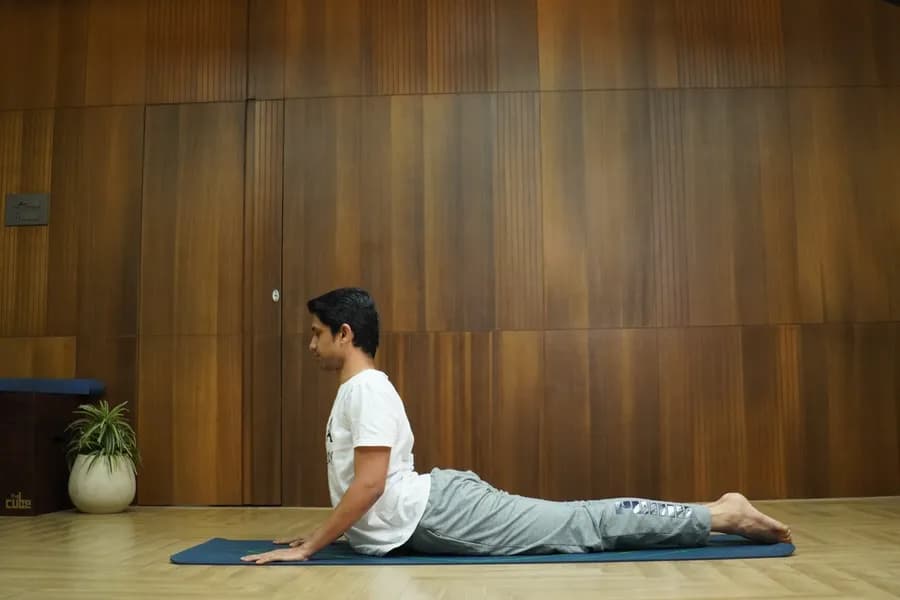
Bhujangasana: Cobra Pose Steps, Benefits & Tips
Bhujangasana, or Cobra Pose, strengthens the spine and entire back musculature, opens the chest, stimulates abdominal organs, and corrects the postural damage of prolonged sitting.

Marjariasana (Cat Pose): Steps, Benefits & Precautions
This mimics the natural stretch a cat makes upon waking, an arched, rounded spine that pairs with Cow Pose to form one of yoga’s most foundational warm-up sequences. See the steps, benefits, and precautions.