
Ardha Chandrasana (Half Moon Pose): Steps, Benefits & Precautions
Ardha Chandrasana — the Half Moon Pose — is one of yoga's most visually striking and physically demanding standing balance poses. Named after the crescent shape
Key Takeaways
- The standing leg, extended top leg, and lifted arm together form the half moon’s crescent.
- Balances on one grounded foot and one grounded hand, with hip and shoulder at equal height.
- Members typically achieve the full expression within 4-6 weeks of dedicated balance work.
- The rotated single-leg base challenges the entire proprioceptive system all at once.
- Full chest rotation toward the ceiling directly addresses rounded-shoulder thoracic stiffness.
- Combines lateral hip opening with a simultaneous hamstring stretch in one balanced shape.
Ardha Chandrasana — the Half Moon Pose — is one of yoga’s most visually striking and physically demanding standing balance poses. Named after the crescent shape of the half moon that the body forms in the full expression, this pose simultaneously builds single-leg balance and strength, opens the lateral body and hip, challenges the proprioceptive system, and cultivates the focused mental presence that balancing poses uniquely develop.
What is Ardha Chandrasana?
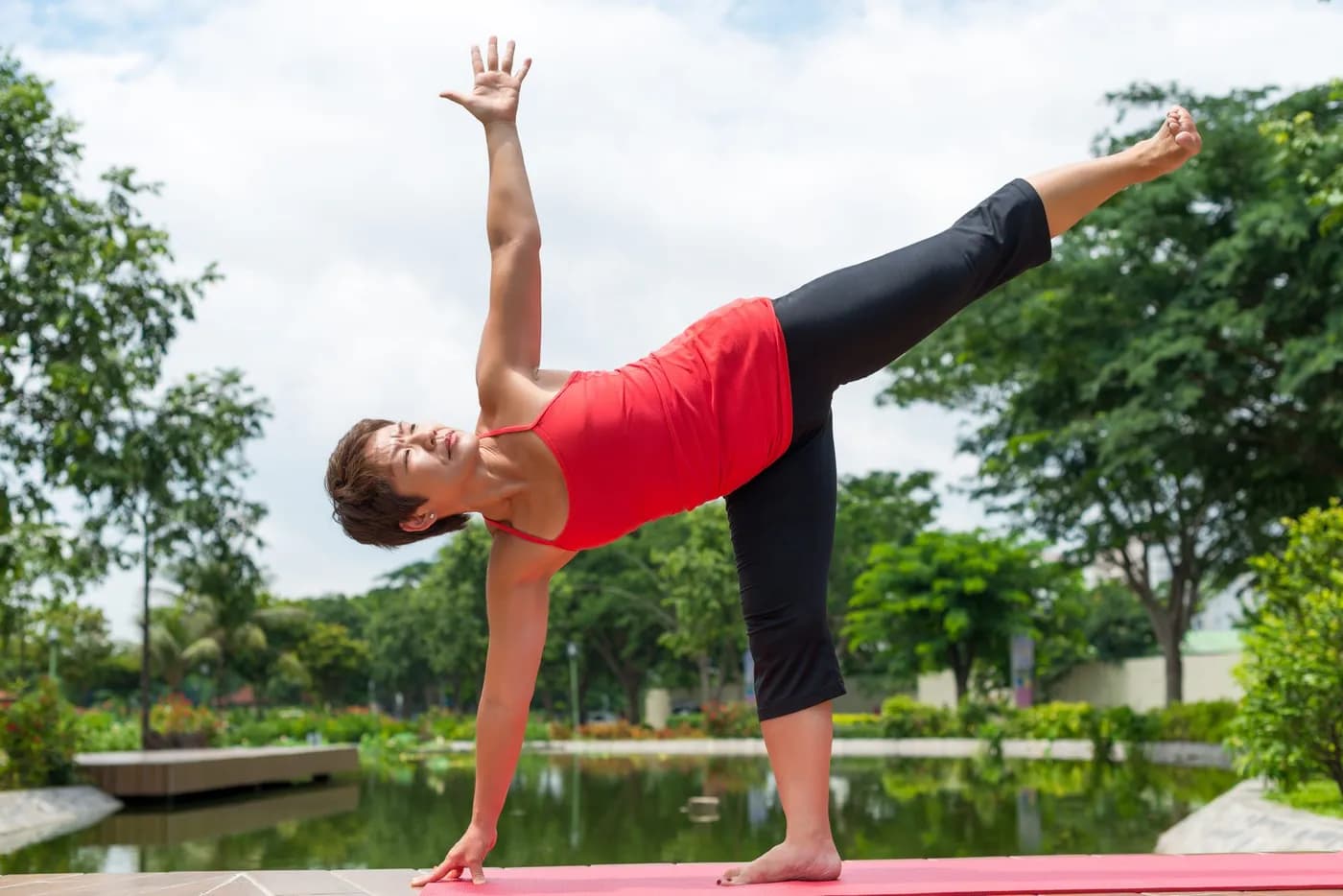
Ardha Chandrasana — pronounced ar-dha chan-DRAS-ana — translates as Half Moon Pose (Ardha = half, Chandra = moon, Asana = pose). The crescent form of the half moon is mirrored in the body: the standing leg as the moon’s lower point, the extended top leg as the upper arc, and the lifted arm completing the full crescent shape against the sky.
In the ardha chandrasana pose, the practitioner balances on one leg with that foot’s hand (or a block) on the floor below the shoulder, the opposite leg extended horizontally at hip height, the torso and chest rotating to face the side wall, and the top arm extending vertically. The entire body forms a single horizontal line — hip, shoulder, and extended foot at the same height — balanced on one grounded foot and one grounded hand.
At Habuild, Ardha Chandrasana is taught within our balance and lateral hip strength curriculum. Members building toward the pose through dedicated hip opening yoga and single-leg balance work consistently achieve the full expression within 4–6 weeks.
Ardha Chandrasana Benefits
Physical Benefits
- Builds Single-Leg Balance and Proprioception Ardha Chandrasana is one of yoga’s most demanding balance poses — the single-leg standing position on a slightly rotated base challenging the entire proprioceptive system of the standing leg, ankle, and hip. Regular practice measurably improves balance, ankle stability, and the neural coordination that underlies all athletic movement.
- Strengthens the Standing Leg, Hip, and Core The standing leg, gluteus medius, and lateral core are intensely engaged throughout Ardha Chandrasana — sustaining the single-leg balance and horizontal torso position demanding significant stabilising strength that conventional exercise rarely targets in this combined way.
- Opens the Lateral Hip and Stretches the Hamstrings The extended top leg and open chest position of the ardha chandrasana pose create a simultaneous lateral hip opening and hamstring stretch — making it a valuable complement to dedicated hip opening yoga poses that primarily work the hip in standing or seated positions.
- Improves Spinal and Thoracic Rotation The full chest rotation toward the ceiling in Ardha Chandrasana opens the thoracic spine and anterior chest — directly addressing the rounded-shoulder and thoracic stiffness that poor posture creates. Combined with yoga for posture work, it produces visible postural improvement.
Mental and Emotional Benefits
- Develops Focused Concentration and Present-Moment Awareness Balance poses demand complete present-moment attention — the mind cannot wander without the body falling. Ardha Chandrasana builds the focused concentration that yoga for concentration practitioners specifically seek, with the balance challenge providing immediate biofeedback on the quality of mental focus.
- Cultivates Courage, Trust, and Mental Resilience Falling out of Ardha Chandrasana — and returning to it — cultivates the mental resilience, willingness to fail, and self-trust that balance training specifically develops. Practitioners consistently report that the mental qualities built in balance poses carry directly into how they handle challenge in daily life.
How to Do Ardha Chandrasana — Step-by-Step Instructions
Key Principles
The standing foot, lower hand (or block), and extended hip should form a vertical line from floor to hip. The chest rotates fully to face the side wall — not the floor. The extended leg reaches actively through the heel. A block under the lower hand is strongly recommended until the balance is established.
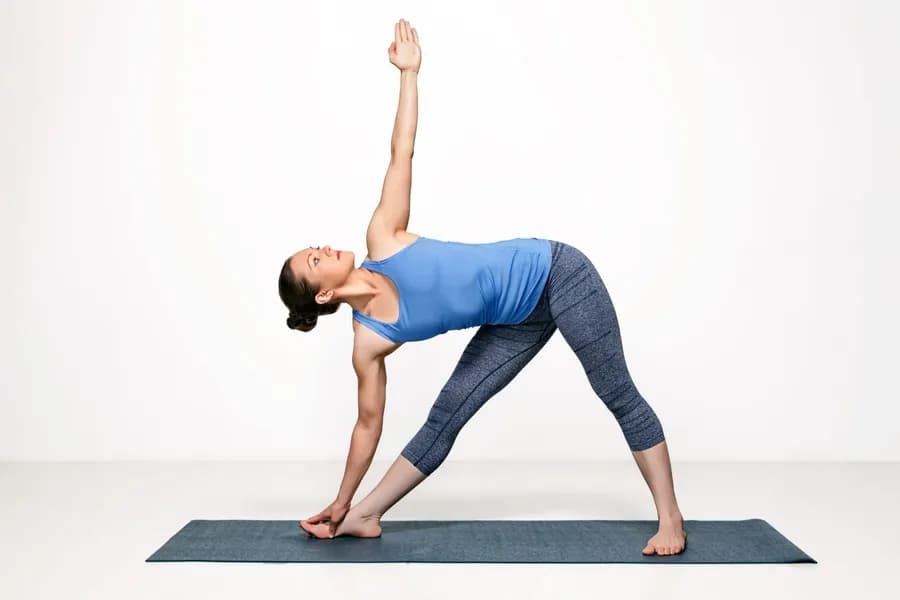
Step 1: Begin in Trikonasana From Trikonasana (Triangle Pose) on the right side, bend the right knee slightly and place the right hand or a block on the floor approximately 12 inches in front of and slightly to the right of the right foot.
Step 2: Shift Weight onto the Right Foot Shift the weight completely onto the right foot and right hand or block. Begin to straighten the right leg as the left foot lifts off the floor.
Step 3: Extend the Left Leg Horizontally Lift the left leg until it is parallel to the floor — the left foot flexed, reaching actively through the heel. The left hip stacks directly above the right hip.
Step 4: Rotate the Chest and Extend the Top Arm Rotate the chest fully to face the left wall. Extend the left arm straight up toward the ceiling. Both arms form a single vertical line. Gaze forward or upward toward the left hand.
Step 5: Find Steady Balance and Hold Hold for 5–8 breaths — the standing leg strong and straight, the extended leg active and horizontal, the chest fully open. Use a block under the lower hand if needed.
Step 6: Release and Switch Sides Exhale and lower the left foot to the floor, returning to Trikonasana. Repeat on the left side.
Breathing in Ardha Chandrasana
Inhale to lengthen through the crown and the extended heel simultaneously — creating expansion in both directions. Exhale to stabilise and ground through the standing foot. Even, steady Ujjayi breath is the primary balancing tool — erratic breathing destabilises the pose more than any alignment issue.
Preparatory Poses Before Ardha Chandrasana
- Trikonasana (Triangle Pose, 5 breaths each side) — The direct entry pose for Ardha Chandrasana — establishes the lateral reach and chest rotation.
- Virabhadrasana III (Warrior III, 5 breaths each side) — Builds the single-leg balance and hip stability required.
- Uttanasana (Standing Forward Fold, 5 breaths) — Opens the hamstrings before the extended-leg balance demand.
- Standing on one leg with eyes closed (30 seconds each side) — Trains the proprioceptive system before the full pose.
Variations of Ardha Chandrasana
- Variation 1: Ardha Chandrasana with Block — Beginner/Intermediate Place a yoga block on its highest setting under the lower hand. The block raises the floor and allows the chest to open and the extended leg to reach horizontal — without the hamstring flexibility needed for the floor-hand version. All ardha chandrasana benefits are fully accessible with the block.
- Variation 2: Ardha Chandrasana at the Wall — Balance Training Stand with the back approximately one leg-length from the wall and practise the pose with the extended foot resting against the wall for support. The wall provides proprioceptive feedback and removes the fear of falling — allowing full focus on chest rotation and arm extension.
- Variation 3: Chapasana (Sugarcane Pose) — Advanced From full Ardha Chandrasana, bend the top knee and reach back with the top hand to hold the top foot — adding a deep quadriceps and hip flexor stretch to the base pose. This advanced variation requires significant single-leg balance stability and hip flexibility.
Common Mistakes to Avoid in Ardha Chandrasana
- Extended leg lower than hip height — The top leg must be horizontal — parallel to the floor — throughout the pose. A drooping extended leg loses both the hip opening and the aesthetic line of the half moon.
- Chest facing the floor instead of the side wall — Full chest rotation is essential to the ardha chandrasana pose. A downward-facing chest indicates insufficient thoracic rotation — use the wall variation to develop the opening.
- Standing foot turned too far inward — The standing foot should maintain its Trikonasana alignment — rotated appropriately to allow the hip to stack. An inward-turning foot destabilises the entire balance.
- Gripping the floor with the lower hand — The lower hand or block provides light guidance — not structural weight-bearing. The balance lives in the standing leg.
- Looking at the floor for security — Gazing at the floor collapses the chest rotation and reduces the proprioceptive challenge. Gaze forward or upward — the balance improves with the gaze elevated.
Who Should Practise Ardha Chandrasana?
- Those Building Balance, Hip Strength, and Lateral Mobility
- Ardha Chandrasana is the yoga tradition’s most demanding lateral balance pose — building the single-leg stability, gluteus medius strength, and lateral hip mobility that everyday movement, sport, and injury prevention all depend on.
- Athletes Seeking Lateral Stability and Proprioception For athletes in sports requiring single-leg stability — running, football, tennis, martial arts — Ardha Chandrasana develops the hip stabiliser strength and proprioceptive accuracy that prevent ankle sprains, hip injuries, and the lateral movement inefficiencies that cause performance limitations.
- Is Ardha Chandrasana Good for Beginners?
- Ardha Chandrasana requires intermediate balance and hip flexibility. Beginners should first establish single-leg balance in Virabhadrasana III and open the hips through Trikonasana before attempting the half moon. The wall and block variations make the pose accessible from the beginning stages of the balance progression.
Make Ardha Chandrasana a Part of Your Practice
Ardha Chandrasana is yoga’s most complete lateral balance pose — simultaneously building single-leg strength, opening the hip and lateral body, developing proprioception, and cultivating the focused mental presence that only balance training produces.
Whether you are building toward the pose with a wall and block, or deepening the full expression into Chapasana, consistent daily practice compounds the balance, strength, and mental clarity benefits significantly over weeks and months.
Start your 14 day free yoga journey with Habuild, today!
Balance in Ardha Chandrasana isn’t something you arrive at by chance — it’s built through repeated practice that trains your core, standing leg, and focus together over time, not through one wobbly attempt. Habuild’s Yoga Everyday program sequences balance poses like this into a daily practice so that steadiness actually develops.
Frequently Asked Questions
Related Articles
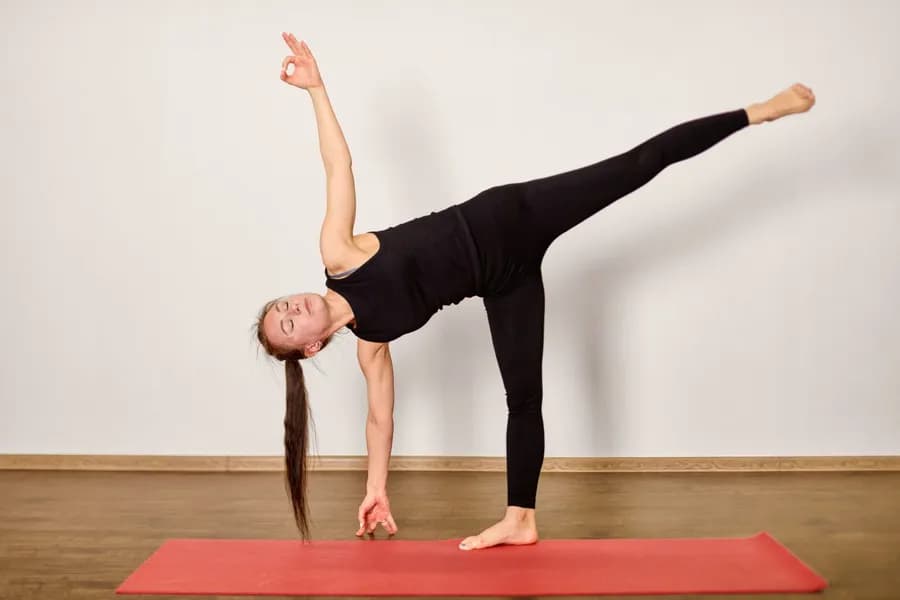
Ardha Chandrasana Benefits: Steps, Variations & Precautions
Half Moon Pose builds single-leg strength, lateral flexibility, and present-moment focus in one integrated standing shape. See the steps, benefits, and
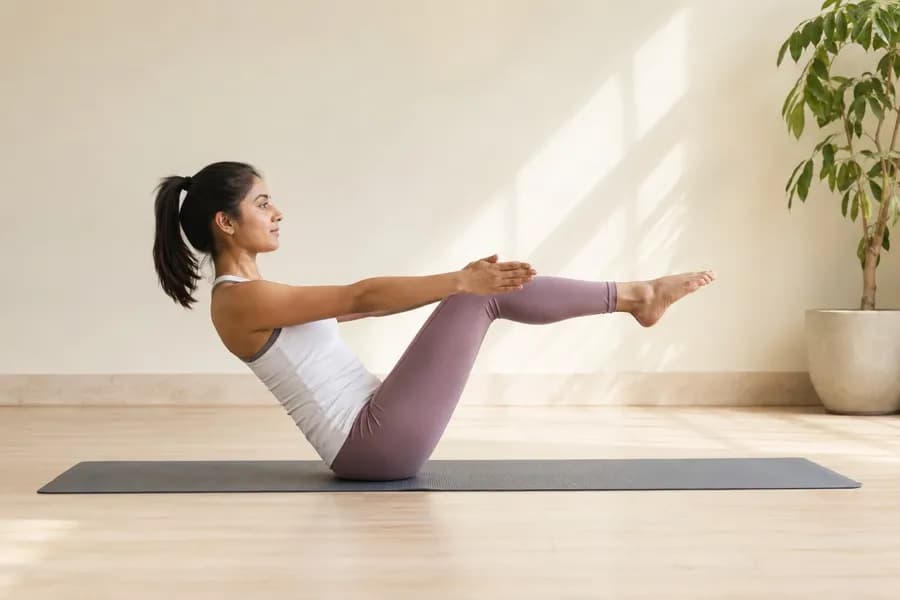
Ardha Naukasana (Half Boat Pose): Steps, Benefits & Precautions
Learn Ardha Naukasana (Half Boat Pose) — steps, benefits, variations & common mistakes.
Utthita Parsvakonasana (Extended Side Angle Pose): Steps, Benefits & Precautions
The front knee bends to 90 degrees while the torso extends laterally and one arm stretches overhead in a long diagonal line — a foundational standing.