
Utthita Parsvakonasana (Extended Side Angle Pose): Steps, Benefits & Precautions
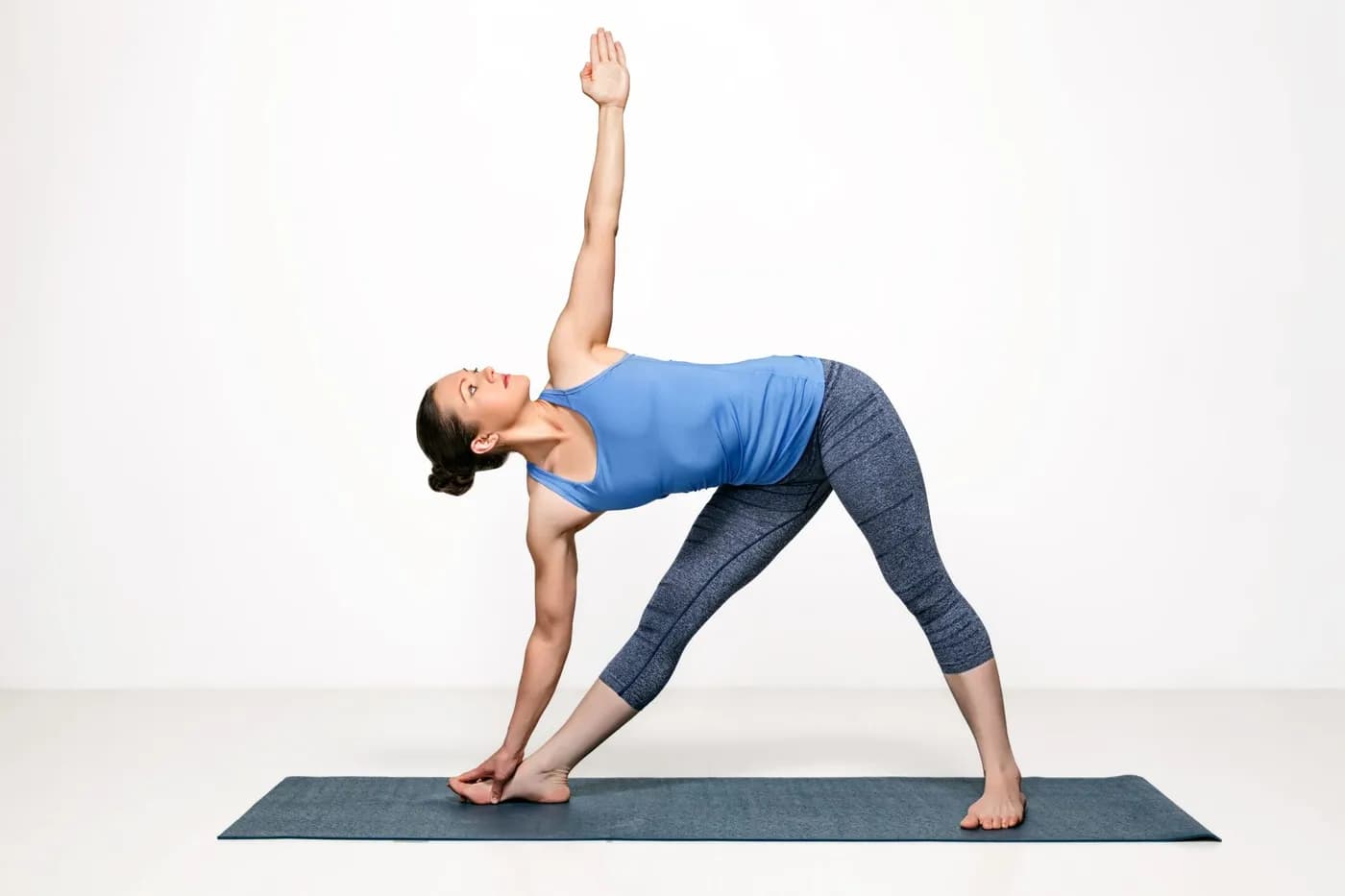
The front knee bends to 90 degrees while the torso extends laterally and one arm stretches overhead in a long diagonal line — a foundational standing.
Key Takeaways
- The front knee bends to 90 degrees while one arm stretches overhead in a long diagonal line.
- The ankle of the front foot works hard to maintain stability throughout the hold.
- The wide stance and lateral extension open the inner thighs and hip flexors deeply.
- Lengthens the entire side body, stretching the intercostals and obliques for a toning effect.
- Sequenced after standing warm-up poses and before deeper hip openers or twists.
- Sustained muscular effort combined with steady breath eases anxiety within the first few weeks.
What is Utthita Parsvakonasana?
Utthita Parsvakonasana (pronounced oo-TEE-tah parsh-vah-cone-AHS-anna) is a foundational standing yoga posture from the Ashtanga and Hatha traditions. The name comes from four Sanskrit words: Utthita (extended), Parsva (side or flank), Kona (angle), and Asana (pose). In English, it is widely known as the Extended Side Angle Pose.
In the posture, the practitioner stands in a wide-legged stance with the front knee bent to 90 degrees, the torso extending laterally over the front thigh, and one arm stretched overhead in a long diagonal line from the back foot to the fingertips. The full body — from the outer edge of the back foot all the way to the raised hand — forms one continuous, extended angle.
Within the broader yoga system, Utthita Parsvakonasana belongs to the family of Parsvakonasana poses, which includes its rotated counterpart Parivrtta Parsvakonasana. It is typically sequenced after standing warm-up poses and before deeper hip openers or twists. Its combination of strength, stretch, and breath awareness makes it a cornerstone of any well-rounded standing sequence.
Utthita Parsvakonasana Benefits
Physical Benefits
- Strengthens the Legs, Knees, and Ankles Holding the deep lunge position activates the quadriceps, hamstrings, and glutes simultaneously. The ankle of the front foot works hard to maintain stability, and over time consistent practice builds functional lower-body strength that supports everyday movement.
- Improves Flexibility in the Hips, Groin, and Hamstrings The wide stance and lateral torso extension create a deep opening across the inner thighs and hip flexors. One of the most valued benefits of extended side angle pose is the gradual improvement in groin flexibility, which supports better posture and range of motion in the lower body.
- Tones the Waist and Stretches the Intercostal Muscles The lateral reach lengthens the entire side body — from the hip to the fingertips — stretching the muscles between the ribs (intercostals) and the obliques. Practised regularly, this toning effect along the waist is one of the more noticeable benefits of Utthita Parsvakonasana over time.
- Stimulates Digestive Organs and Improves Circulation The compression and gentle rotation around the abdominal area stimulate the digestive organs, supporting better gut function with consistent practice. Improved blood circulation through the legs and torso is another physical gain that emerges over time. If yoga for digestion is a goal, this pose is an excellent addition to your sequence.
Mental and Emotional Benefits
- Calms the Nervous System and Reduces Stress The combination of focused breath and sustained muscular effort in Utthita Parsvakonasana draws attention inward and away from mental chatter. Holding the pose while breathing steadily gradually eases feelings of anxiety and tension when practised regularly — a key mental benefit of Utthita Parsvakonasana that practitioners notice within the first few weeks.
- Builds Mental Focus and Body Awareness Maintaining proper alignment in this pose requires concentration — there is too much happening in the body to let the mind wander. Over weeks of practice, this sustained attention builds a stronger mind-body connection and the kind of present-moment focus that carries over into daily life.
- Builds Focused Determination
- Utthita Parsvakonasana held for 5–10 breaths is genuinely demanding — maintaining the full extension and the breath through this discomfort builds the focused determination that yoga systematically develops.
How to Do Utthita Parsvakonasana — Step-by-Step Instructions
Key Principles
Before you begin, keep these alignment anchors in mind: the front knee tracks directly over the front ankle (not caving inward), the back leg stays active and straight with the outer edge of the foot pressing firmly into the mat, and the chest remains open — not collapsed toward the floor. Breath drives the pose: lengthen on the inhale, deepen on the exhale.
Step 1: Starting Position
Stand in Tadasana (Mountain Pose) at the top of your mat. Take a deep breath in. On an exhale, step your feet wide apart — roughly 4 to 4.5 feet — so both feet are on the mat. Your arms can be extended at shoulder height as a guide for foot distance. Feel the ground under both feet before moving on.
Step 2: Positioning the Feet and Hips
Turn your right foot out 90 degrees so the toes point toward the short edge of the mat. Turn your left foot in about 15 degrees. Align the right heel with the arch of the left foot. Engage the thigh muscles of both legs — you should feel the back leg activating immediately. The hips face the long edge of the mat.
Step 3: Bending the Front Knee
Exhale and bend your right knee to a 90-degree angle. The shin should be perpendicular to the floor and the knee directly above the ankle — not pushing forward over the toes. Press the outer edge of the back foot firmly into the mat. You will feel a strong engagement throughout both legs at this point.
Step 4: Extending the Torso and Lowering the Arm
Inhale to lengthen the spine. Exhale and extend your torso over the right thigh, bringing the right forearm to rest on the right thigh (beginner-friendly option) or placing the right hand on the floor to the outside of the right foot. Do not collapse the chest — keep it open and facing the side wall, not the floor.
Step 5: Final Position and Hold
On an inhale, sweep the left arm up and over your ear, stretching it toward the front of the room. The entire left side of the body — from the outer edge of the back foot to the left fingertips — should form one long, unbroken diagonal line. Turn your gaze up toward the raised arm if comfortable for the neck. Hold for 5 steady breaths.
Step 6: How to Come Out of Utthita Parsvakonasana
To exit, press firmly into the back foot, engage the core, and on an inhale, straighten the front leg and bring the torso upright. Lower both arms to your sides. Take one or two neutral breaths, then turn your feet to centre and repeat on the left side. Never push out of the pose — use the breath to guide you.
Breathing in Utthita Parsvakonasana
Inhale to set up length in the spine before each major movement. Exhale to deepen into the bend and the lateral extension. While holding the final position, breathe slowly and fully — each inhale should expand the ribcage of the raised side, deepening the intercostal stretch. Shallow or held breath is a sign to ease back slightly until natural breathing resumes.
Preparatory Poses Before Utthita Parsvakonasana
Warming up the hips, thighs, and side body before entering the pose makes the experience more productive and reduces injury risk.
- Tadasana (Mountain Pose) — grounds the feet and activates postural awareness before the wide-legged stance.
- Vrksasana (Tree Pose) — builds single-leg balance and the hip-opening awareness needed for the front leg.
- Utthita Trikonasana (Extended Triangle Pose) — opens the side body and hips in a straight-leg position, preparing the body for the deeper bent-knee version in Parsvakonasana.
- Virabhadrasana II (Warrior II) — pre-loads the exact lower-body position used in Utthita Parsvakonasana, making the transition into the full pose feel familiar and steady.
Variations of Utthita Parsvakonasana
Variation 1: Ardha Parsvakonasana (Half / Supported Version)
Difficulty: Beginner
Instead of taking the hand to the floor, rest the forearm on the front thigh. This maintains the long side-body line without requiring deep hip flexibility or shoulder mobility. It is the ideal entry point for those new to the pose, allowing the body to build strength and range of motion over time without compromising alignment.
Variation 2: Parsvakonasana with a Bind
Difficulty: Intermediate–Advanced
The raised arm wraps under the front thigh while the back arm reaches behind the lower back, and the hands clasp. This variation — sometimes called Baddha Parsvakonasana — dramatically deepens the chest opening and shoulder stretch. The bind also encourages the torso to rotate upward, making it a natural bridge toward Parivrtta Parsvakonasana.
Variation 3: Extended Side Angle with a Block
Difficulty: Beginner–Intermediate
Placing a yoga block on the inside or outside of the front foot brings the floor up to meet the hand, allowing the chest to stay open without the side body collapsing. This prop-supported variation is excellent for those working on hip flexibility and is a confident step between the forearm-on-thigh version and the full floor-hand expression.
Variation 4: Reverse Extended Side Angle
Difficulty: Intermediate
Instead of reaching the top arm forward, sweep it back and behind the ear in the opposite direction, creating a back-body stretch and a subtle chest opener. This variation shifts the muscular emphasis, providing variety in a sequence and targeting areas of the thoracic spine that the standard version does not reach.
Common Mistakes to Avoid in Utthita Parsvakonasana
- Front Knee Collapsing Inward The front knee has a tendency to drift toward the midline, especially as fatigue sets in. Keep pressing the knee outward in the direction of the little-toe side of the front foot. A collapsed knee puts unnecessary strain on the joint and reduces the hip-opening benefit of the pose.
- Dropping the Chest Toward the Floor The torso should rotate open — chest facing the side wall — not fold down like a forward bend. Imagine the front of your body as a wide-open door. If the chest is pointing at the mat, reduce the depth of the side bend until you can maintain the open rotation.
- Overloading the Front Arm or Losing the Diagonal Line Putting too much weight on the hand or forearm causes the side body to sag rather than extend. Think of the bottom arm as a light contact point only — the real work happens in the legs and core. The goal is a clean, continuous diagonal from the back foot to the raised fingertips.
- Back Foot Lifting or Rolling The outer edge of the back foot must stay grounded throughout the pose. If it lifts, the back leg loses its active role as an anchor and the pelvis tips out of alignment. Press firmly through the back heel and engage the outer hip to keep the foot flat.
- Holding the Breath Many practitioners unconsciously hold the breath when the pose becomes demanding. This increases muscular tension and shortens the hold time. Slow, deliberate breathing is not optional — it is what transforms the pose from a static shape into a moving, dynamic practice.
- Raising the Shoulder of the Bottom Arm When the forearm rests on the thigh, the shoulder of that arm often creeps up toward the ear, compressing the neck. Actively draw the shoulder blade down and back before you extend the top arm overhead. This small adjustment creates significantly more space across the chest and neck.
Who Should Practise Utthita Parsvakonasana?
- Those with Back Pain or Poor Posture The lateral extension and spinal lengthening in this pose make it a supportive choice for people who experience mild lower back stiffness from long hours of sitting. It helps engage the muscles along the spine and may gradually ease the tightness that comes from sedentary work — though it should always be practised mindfully and is best learned under guidance. Exploring yoga for back pain as a broader practice may also be worthwhile.
- Those Managing Stress or Anxiety The full-body engagement combined with controlled breathing gives the mind a clear focal point, which is particularly helpful for those managing stress. The pose demands enough physical attention that it naturally quiets mental noise. Paired with a yoga for stress management routine, it can be a meaningful part of daily emotional regulation.
- Is Utthita Parsvakonasana Good for Beginners? Yes — with the forearm-on-thigh modification, Utthita Parsvakonasana is entirely accessible for beginners. The key is not forcing depth. Starting with a slightly shorter stance, using a block if needed, and focusing on the breath and open chest rather than how low the hand goes will yield far better results than pushing too hard too soon. With a few weeks of consistent practice, the full expression of the pose becomes achievable for most people.
- Intermediate and Regular Practitioners For those with an established practice, Utthita Parsvakonasana offers continued depth through the bound variation, the longer hold, and the challenge of maintaining perfect alignment while fatigued. It also serves as an excellent strength-endurance drill when held for extended breaths in a flowing sequence.
Make Utthita Parsvakonasana a Part of Your Life
Utthita Parsvakonasana is a full-body standing pose that builds leg strength, opens the hips and side body, supports digestive health, and cultivates the mental focus that comes from breath-led movement. It suits a wide range of practitioners — from beginners using the forearm modification to experienced students exploring the bound variation.
Whether you are a complete beginner or returning to yoga after a break, the pose is more accessible than it looks. With the right modification, a block, and clear alignment cues, most people can practise it safely from day one. Live instruction removes the guesswork and means corrections happen in real time — not after a habit has already formed.
The most effective way to build a consistent Utthita Parsvakonasana practice is to show up daily, in a structured session, with a teacher watching. Habuild’s live morning classes are built for exactly this — a community of over 50,000 members practising together, every day, with expert guidance and real-time feedback.
Frequently Asked Questions
Related Articles
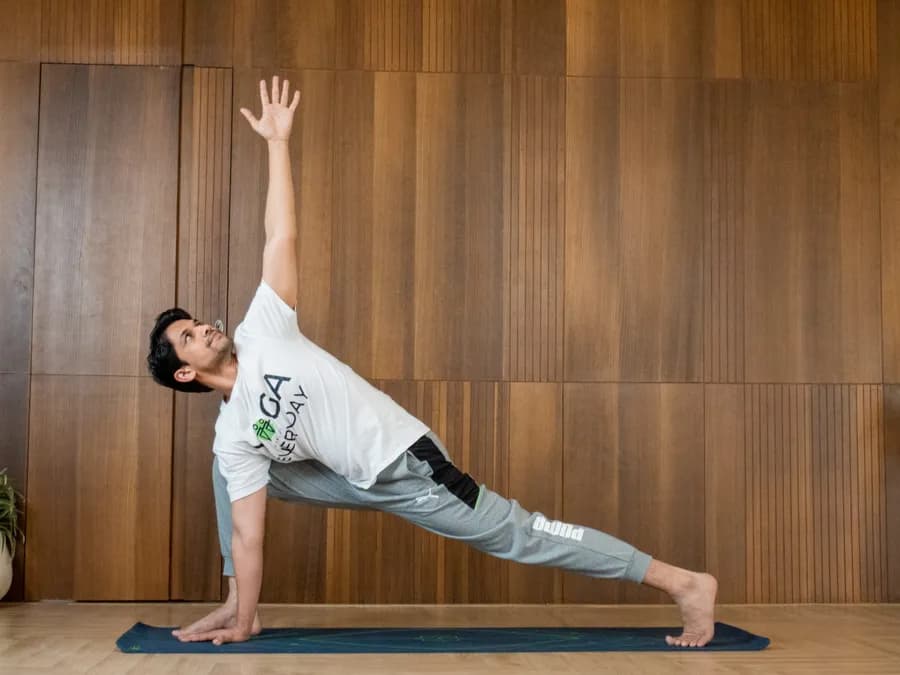
Parsvakonasana (Side Angle Pose): Steps and Full Body Benefits
Practice Parsvakonasana with Habuild. Follow the side angle pose steps to strengthen your legs, open your hips, and boost lateral flexibility. Start today!
20 Benefits of Yoga
Yoga acts simultaneously on the musculoskeletal system through asana, the autonomic nervous system through pranayama and meditation, and the endocrine system through parasympathetic activation. See all 20 benefits.

Health Benefits of Yoga
Unlike single-modality exercise — running for cardio, weights for muscle, stretching for flexibility — yoga delivers measurable improvements across all these domains at once. See the full range of benefits.