
Ardha Kurmasana (Half Tortoise Pose): Steps, Benefits & Precautions
Folding forward with arms stretched ahead and the forehead resting toward the floor resembles a tortoise withdrawing into its shell. See the steps, benefits, and precautions.
Key Takeaways
- Named for its resemblance to a tortoise withdrawing into its shell in the folded position.
- The accessible half version of full Kurmasana, appropriate for nearly all practitioners.
- Held for extended durations as a deep restorative posture within Bikram sequences.
- The forehead-to-floor position quiets sensory input, making it excellent meditation preparation.
- Often used as a calming pose at the end of sequences before final relaxation.
- Framed as a restful pose to sink into rather than a strength pose to push toward.
What is Ardha Kurmasana?
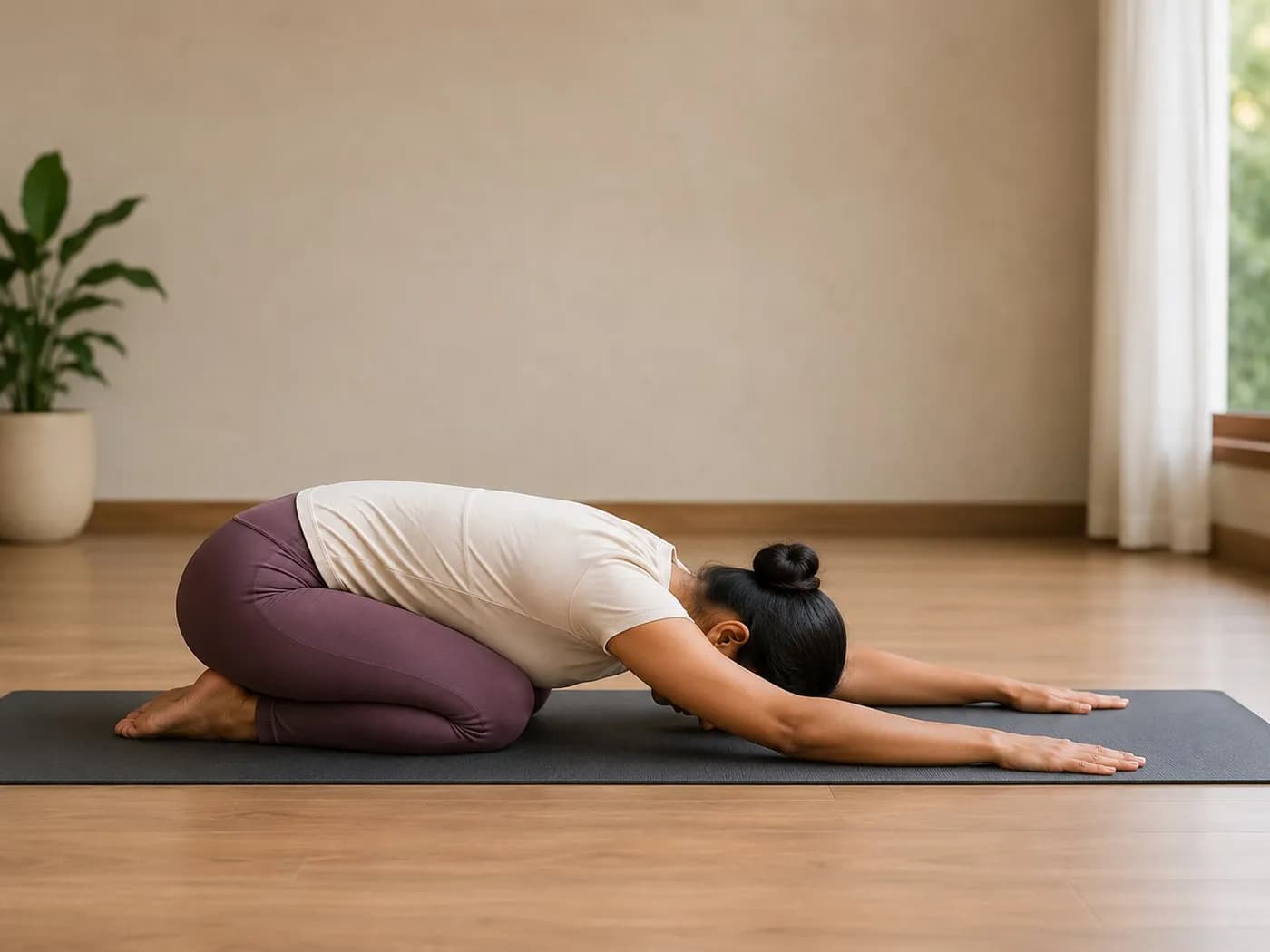
Ardha Kurmasana — pronounced ar-dha koor-mah-sa-na — translates as “Half Tortoise Pose.” “Ardha” means half, and “kurma” means tortoise. The pose is named for its visual resemblance to a tortoise withdrawing into its shell — the body folds forward in a deeply restful, contained shape with the arms stretched ahead and the forehead resting toward the floor.
Ardha kurmasana is part of classical hatha and Bikram yoga traditions, where it is held for extended durations as a deep restorative posture. It is the half version of full kurmasana (tortoise pose), which is a much more advanced seated forward fold. The half tortoise pose is appropriate for almost everyone, including beginners, and is often used as a recovery pose between more demanding sequences.
In Habuild’s daily practice, ardha kurmasana is used as a calming pose at the end of sequences — to release the spine, stretch the shoulders, and quiet the mind before final relaxation.
Ardha Kurmasana Benefits
Physical Benefits
- Stretches the Spine, Shoulders, and Upper Back Half tortoise pose benefits include a deep, gentle elongation of the entire spine. The forward extension of the arms also opens the shoulders and upper back — particularly valuable for desk workers.
- Releases Tension in the Lower Back The kneeling forward-fold position decompresses the lower back. Many practitioners report immediate lower-back relief in the pose.
- Improves Hip Flexibility The kneeling foundation gently opens the hips and ankles. Daily practice deepens hip mobility over weeks.
- Stimulates the Abdominal Organs The compression of the abdomen against the thighs supports digestion and abdominal organ health.
- Calms the Mind and Reduces Stress The contained, inward-folding shape signals deep relaxation to the nervous system. Half tortoise pose is one of the most calming asanas in the practice.
- Promotes Introspection and Self-Awareness The forehead-to-floor position quiets sensory input and turns attention inward — making the pose excellent preparation for meditation.
Mental and Emotional Benefits
How to Do Ardha Kurmasana — Step-by-Step Instructions
Key Principles
This is a restful pose, not a strength pose. Sink into it; don’t push. The breath should deepen naturally as you settle.
Step 1: Starting Position
Begin in vajrasana (thunderbolt pose) — kneeling with the buttocks resting on the heels, knees together, spine tall.
Step 2: Raise the Arms Overhead
Inhale. Raise both arms straight overhead, palms together. Lengthen the spine upward.
Step 3: Begin the Forward Fold
Exhale. Fold forward from the hips, keeping the arms extended overhead and the spine long.
Step 4: Lower the Forehead to the Floor
Continue folding until the forehead rests on the floor (or close to it). The arms remain extended forward, palms together.
Step 5: Final Position and Hold
Settle into the pose. Buttocks stay connected to the heels. Arms reach forward. Forehead rests on the floor or on a folded blanket. Hold for 1–5 minutes — the longer the better.
Step 6: How to Come Out of Ardha Kurmasana
Inhale. Slowly lift the torso back up, arms still overhead. Exhale, lower the arms to the sides. Return to vajrasana for several breaths.
Breathing along with the pose
Slow, natural breath. As you settle, the breath deepens by itself. Don’t force; allow.
Preparatory Poses Before Ardha Kurmasana
Vajrasana (Thunderbolt Pose) — The kneeling foundation.
Balasana (Child’s Pose) — A close cousin that prepares the forward fold.
Cat-Cow — Mobilises the spine before the deep fold.
For a fuller restorative practice, see our yoga for stress management programme.
Variations of Ardha Kurmasana
Variation 1: Balasana (Child’s Pose) Variation
With knees wide apart and arms extended forward — a wider, more accessible version of half tortoise.
Variation 2: Half Tortoise with Bolster
Place a bolster lengthwise between the knees and rest the torso along it. Excellent for those who can’t fold fully.
Variation 3: Full Kurmasana (Advanced)
The full tortoise pose involves seated forward folding with the arms threaded under the legs — a much more advanced shape requiring deep hamstring and hip flexibility.
Common Mistakes to Avoid
Mistake 1: Buttocks lifting off the heels. Reduces the spinal stretch. Correction: Keep the buttocks connected to the heels; if hip mobility doesn’t allow, use a bolster between hips and heels.
Mistake 2: Hunching the upper back. Correction: Lengthen the spine forward as you fold; reach the arms long.
Mistake 3: Forcing the forehead down. If it doesn’t reach the floor, that’s fine. Correction: Use a folded blanket or block under the forehead for support.
Mistake 4: Rushing the pose. This is a long-hold restorative pose. Correction: Hold 1–5 minutes. The benefits emerge from sustained holds.
Who Should Practise Ardha Kurmasana?
- People with Stress, Anxiety, or Insomnia The deeply calming nature of the pose makes it ideal for nervous-system reset. Pair with our yoga for anxiety guide.
- Desk Workers with Tight Shoulders and Back The forward extension stretches the shoulders and back in ways most desk workers desperately need.
- Beginners Seeking a Restful Practice Ardha kurmasana is one of the most accessible restorative poses. Anyone can do it.
- Is Ardha Kurmasana Good for Beginners? Yes — extremely. With a folded blanket under the forehead and (if needed) a bolster between the hips and heels, the pose is accessible from day one. Pair with our yoga for beginners guide.
Frequently Asked Questions
Related Articles
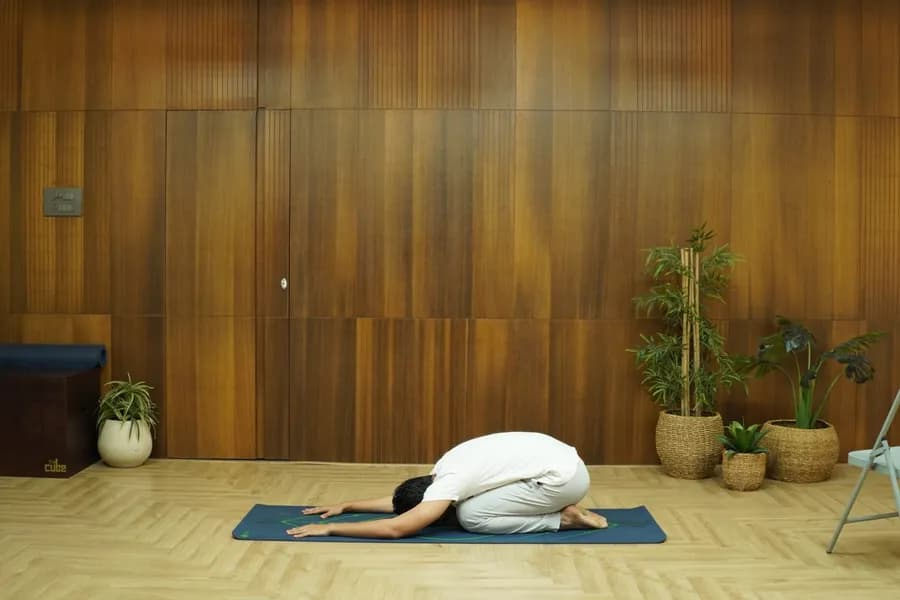
Balasana (Child’s Pose): Steps and Benefits for Mind and Body
Try balasana with Habuild. Practice the balasana pose to relieve stress, ease back tension, and deeply relax your body and mind. Start your yoga session now!

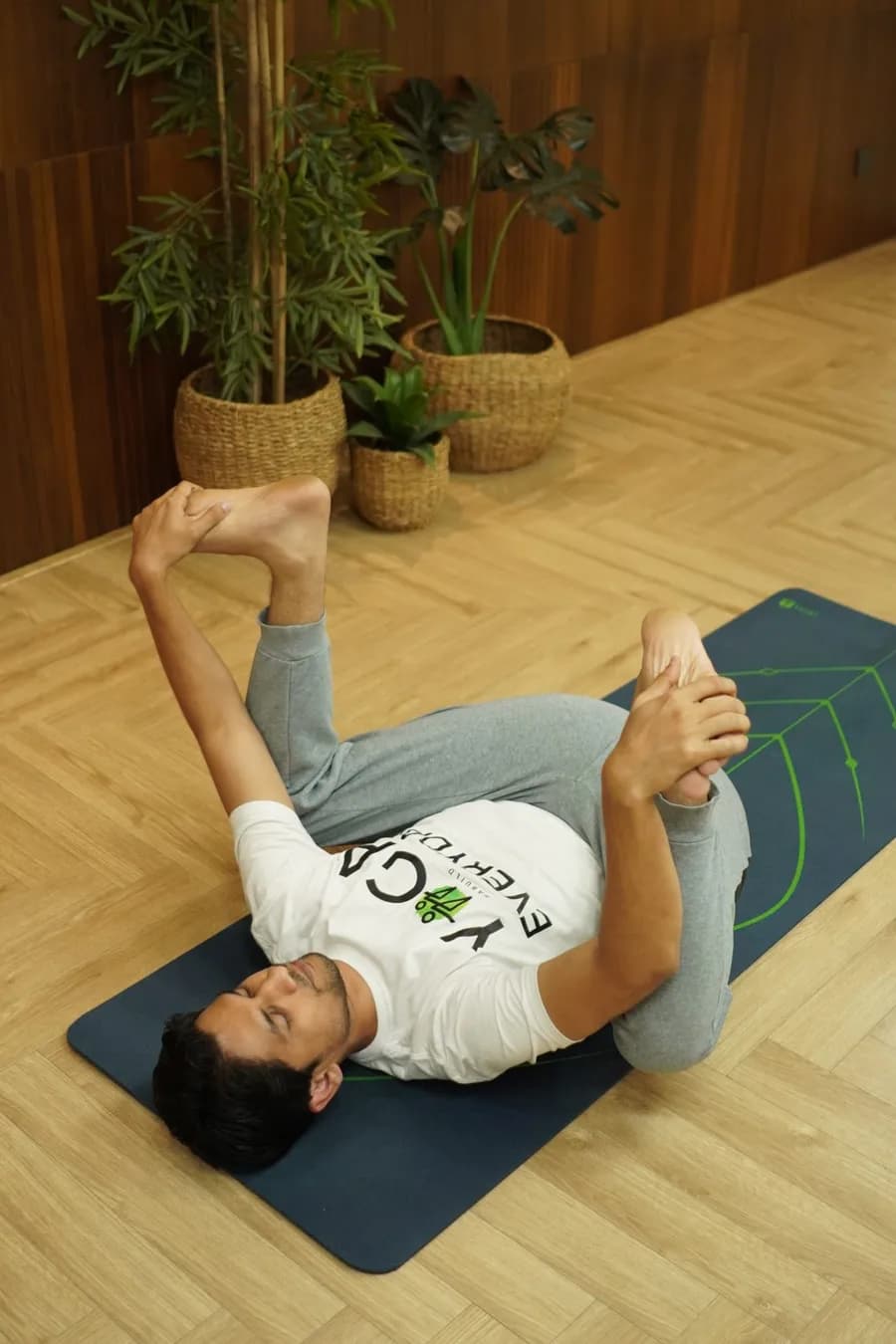
Ananda Balasana (Happy Baby Pose): Steps and Restorative Benefits
Practice Ananda Balasana with Habuild. Follow the happy baby pose steps to relieve lower back pain, open your hips, and calm your nervous system. Start today!
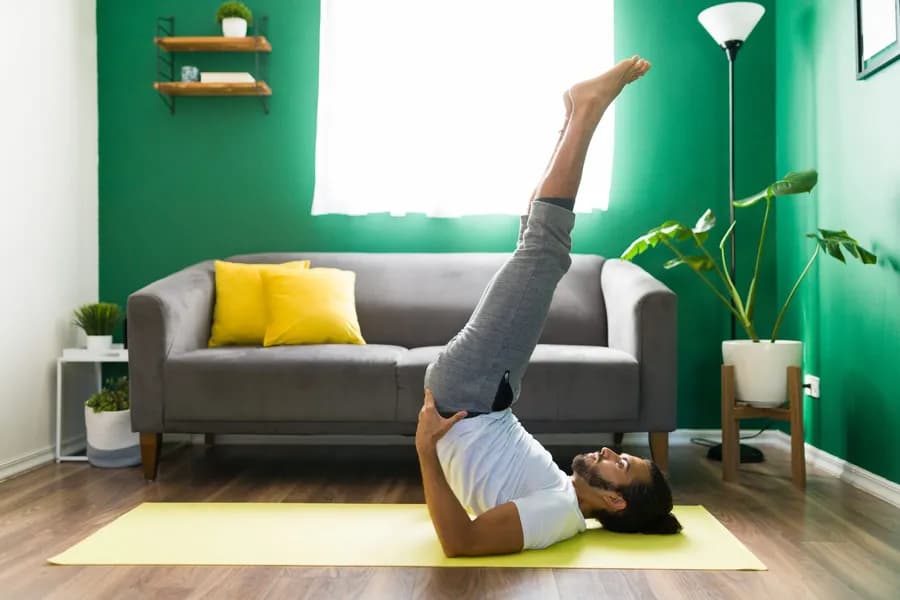
Sarvangasana: Steps Benefits and How to Practice Safely
Practice sarvangasana with Habuild. Explore the sarvangasana pose to boost thyroid health, improve circulation, and calm your mind. Start your session today!