
Ashtang Namaskar (Eight Limbed Pose): Steps and Sun Salutation Role
Practice Ashtang Namaskar with Habuild. Follow eight-limbed salutation steps to build upper body strength, improve posture, and advance your practice. Start!
Key Takeaways
- Eight body points touch the floor at once – both palms, knees, chest, and chin.
- Named the sixth step of Surya Namaskara, bridging the descending and ascending phases.
- Serves as the accessible beginner alternative to full Chaturanga Dandasana.
- Builds the specific elbow-tracking mechanics that progressing to Chaturanga requires.
- Maintaining elevated hips while chest and chin touch down actively engages spinal extensors.
- Provides a stable transitional pause for breath recovery within the Sun Salutation sequence.
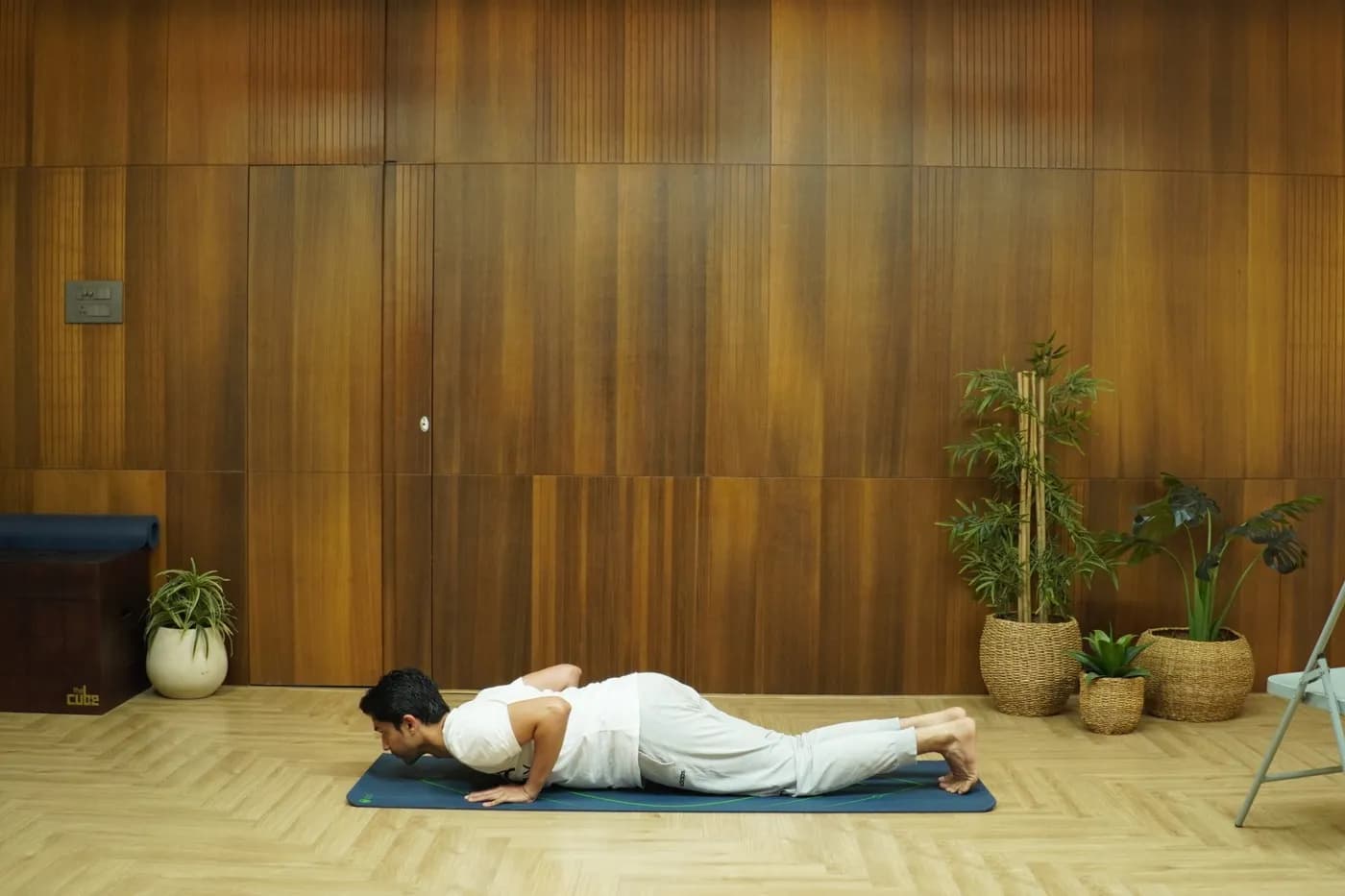
Ashtang Namaskar is the sixth step of Surya Namaskara — a transitional posture where eight body points touch the floor simultaneously: both knees, chest (sternum), chin, and both palms. It bridges the descending and ascending phases of the Sun Salutation sequence, builds upper body strength, and forms the correct preparatory foundation for Chaturanga Dandasana.
What is Ashtang Namaskar?
Ashtang Namaskar — known in English as Eight-Limbed Salutation or Eight-Point Bow — derives from Sanskrit: Ashta (eight), Anga (limb), and Namaskar (salutation or bow). The name precisely describes the posture’s defining feature: eight points of the body touch the floor simultaneously — both palms, both knees, the chest (sternum), and the chin — with the hips remaining elevated.
Ashtang Namaskar is the sixth step of Surya Namaskara in the classical Hatha yoga tradition — forming the critical transition between the descending phase (Plank to the floor) and the ascending phase (Cobra to Downward Dog). It is the accessible alternative to Chaturanga Dandasana for beginners and those building upper body strength — providing the same elbow-tracking mechanics and directional movement in a fully supported, floor-contact position.
At Habuild, Ashtang Namaskar is taught with the specific elbow positioning and shoulder mechanics that make it a genuine foundation for developing Chaturanga — not merely a simpler transition to rush through without attention.
Ashtang Namaskar Benefits
Physical Benefits
- Develops the Upper Body Strength Foundation for Chaturanga Ashtang Namaskar builds the tricep and shoulder strength that forms the foundational preparation for progressing toward Chaturanga Dandasana — developing the specific elbow-backward-tracking mechanics and controlled lowering that the more demanding four-limbed staff pose requires. Practitioners who master correct Ashtang Namaskar progress to Chaturanga both more safely and more quickly.
- Opens the Chest and Anterior Body The eight-limbed position — chest pressing toward and contacting the floor, chin lowered — provides a gentle anterior body opening that complements the chest-opening postures of the ascending phase of Surya Namaskara.
- Strengthens the Spinal Extensors Maintaining the elevated hip position while the knees, chest, and chin contact the floor requires the spinal extensors to actively hold the posterior chain lift — building the posterior chain awareness that all backbend progression in Surya Namaskara depends on.
- Provides a Stable Transitional Pause Within Surya Namaskara As a full-body contact posture, Ashtang Namaskar provides a stable, restorative transitional moment within the Surya Namaskara sequence — allowing breath recovery and postural re-establishment before the ascending Cobra and Downward Dog phases.
Mental and Emotional Benefits
- Develops Attentive Transitional Practice Ashtang Namaskar is most commonly performed as a rushed, mindless transition. Bringing deliberate attention to the eight-point placement — feeling the elbow tracking, the sequential contact, the breath — transforms the posture from mechanical movement into conscious practice. This quality of attentive transitioning develops the present-moment awareness that the complete Surya Namaskara flow cultivates.
How to Do Ashtang Namaskar — Step-by-Step Instructions
Key Principles
Key Principles Two principles govern correct Ashtang Namaskar: the elbows track directly backward alongside the ribcage — the same elbow mechanics as Chaturanga, which is why this pose is its preparation; and the hips remain elevated throughout — the buttocks do not contact the floor in the correct execution, distinguishing it from prone lying position.
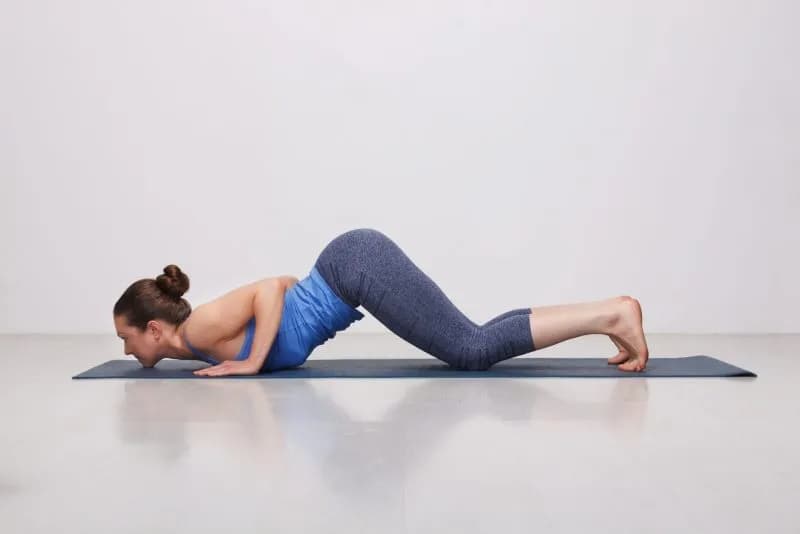
Ashtang Namaskar — Step by Step Step 1: Starting Position in Plank Begin in Plank Pose — from the lunge transition, bring both feet back and establish a strong, aligned plank. Core engaged, body straight from heels to crown.
Step 2: Begin the Controlled Descent On an exhalation, begin lowering the body. Keep the elbows tracking directly backward — alongside the ribcage, pointing toward the feet. The elbows should not flare outward.
Step 3: Lower the Knees to the Floor Lower the knees to the floor first — making controlled contact. The hips begin to rise slightly as the knees make contact.
Step 4: Lower the Chest to the Floor Continue lowering the chest to the floor — the sternum making contact between the two hands. The elbows continue tracking backward throughout.
Step 5: Lower the Chin to the Floor Lower the chin — not the forehead or nose — to the floor. The chin contact is the eighth contact point that completes the eight-limbed position. Hips remain elevated.
Step 6: Transition to Bhujangasana (Cobra) Retain the breath briefly in the eight-limbed position, then inhale and glide the body forward and upward into Bhujangasana (Cobra Pose) — the inhalation initiating the ascending phase of the Surya Namaskara sequence.
Breathing in Ashtang Namaskar
In the classical Surya Namaskara sequence, the breath is retained briefly at the base of the descent (Ashtang Namaskar) before the inhalation that initiates Bhujangasana. For beginners learning the sequence, a gentle natural breath at this transitional point is appropriate — the classical breath retention is developed as the complete sequence becomes more fluid.
Preparatory Poses Before Ashtang Namaskar
These poses develop the shoulder mechanics and upper body awareness that Ashtang Namaskar requires.
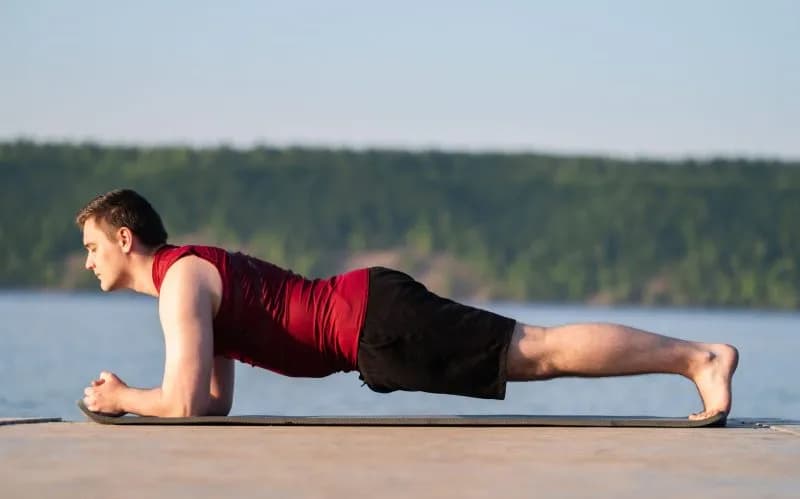
- Plank Pose (held 30-60 seconds) — Establishes the shoulder alignment and core engagement before the controlled descent.
- Shoulder warm-up (rolls, cross-body stretch) — Warms the shoulder joint before the weight-bearing demands of the descent.
- Wrist warm-up (circles, prayer stretch) — Prepares the wrist joints for the floor-contact load of the position.
Variations of Ashtang Namaskar
- Variation 1: Classical Eight-Point Bow — Standard Form The complete form as described — knees, chest, chin, and both palms contacting the floor with hips elevated. This is the universal standard appropriate for all beginners in Surya Namaskara.
- Variation 2: Forehead to Floor — Gentle Cervical Variation For those with neck sensitivity, the forehead contacts the floor rather than the chin — providing a more neutral cervical position while maintaining all other alignment principles. A valid modification that preserves the complete transitional mechanics.
- Variation 3: Progression to Chaturanga Dandasana — Advanced As upper body strength develops through consistent Ashtang Namaskar practice, the posture is replaced by Chaturanga — the body held parallel to the floor throughout the descent without floor contact. The progression from Ashtang Namaskar to Chaturanga typically occurs over four to eight weeks of consistent daily Surya Namaskara practice.
Common Mistakes to Avoid in Ashtang Namaskar
- Elbows Flaring Outward Rather Than Tracking Backward The most consequential alignment error — elbows flaring outward during the descent concentrates load on the wrist and lateral elbow in a mechanically compromised position. The elbows must track directly backward alongside the ribcage — the same mechanics required for safe Chaturanga. This single correction is the most important quality to establish in Ashtang Namaskar practice.
- Hips Dropping to the Floor The hips must remain elevated throughout Ashtang Namaskar. Hips contacting the floor eliminates the posterior chain engagement and converts the posture from a strength-building transition to a passive collapse that provides no preparation for Chaturanga.
- Rushing Through as a Transition Ashtang Namaskar deserves the same deliberate attention as any standalone posture. The elbow mechanics, hip elevation, chin contact, and breath retention that make it the correct Chaturanga preparation are all lost in a rushed transition.
Who Should Practise Ashtang Namaskar?
- Beginners Learning Surya Namaskara Ashtang Namaskar is the universally appropriate transitional option for all beginners learning Surya Namaskara — providing the correct elbow mechanics and descending pattern in a fully supported, floor-contact form that is immediately accessible.
- Those Building Toward Chaturanga The elbow-tracking and shoulder mechanics of Ashtang Namaskar are the exact prerequisites for safe Chaturanga. Consistent daily Ashtang Namaskar in every Sun Salutation round systematically builds the tricep and shoulder control that the more demanding four-limbed staff pose requires.
- Is Ashtang Namaskar Good for Beginners? Yes — it is specifically designed as the beginner-appropriate Surya Namaskara transition. Safer and more accessible than Chaturanga while developing the same mechanics, Ashtang Namaskar is the universally recommended starting form for all new Surya Namaskara practitioners.
Make Ashtang Namaskar a Part of Your Daily Practice
Ashtang Namaskar is the classical gateway to Chaturanga — the transition posture that every Surya Namaskara practitioner encounters multiple times in every session and whose correct elbow mechanics are the single most important technical element to establish before progression.
Whether you are learning the eight-limbed salutation as your entry into Surya Namaskara or refining the elbow mechanics that make it the correct Chaturanga preparation, each deliberate repetition builds the shoulder intelligence and upper body control that the complete Sun Salutation sequence requires.
The most effective way to learn Ashtang Namaskar correctly — with the elbow-tracking cue, hip-elevation instruction, and Chaturanga progression guidance — is under live expert guidance with Habuild.
Start your 14 day free yoga journey with Habuild, today!
Related reads: Surya Namaskar (Sun Salutation): Steps, Benefits & Precautions for Men · Surya Namaskar (Sun Salutation): 12 Steps, Names, Benefits & Instructions
As a transition within Surya Namaskar, Ashtang Namaskar only really builds upper-body strength and postural control when it’s repeated through full rounds of the salutation, day after day, rather than practiced as an isolated shape. The strength carries over into everything else in a vinyasa sequence once your arms and shoulders adapt to the load. Habuild’s Yoga Everyday program threads this pose through its daily sun salutation sequences so that progression happens naturally.
Frequently Asked Questions
Related Articles
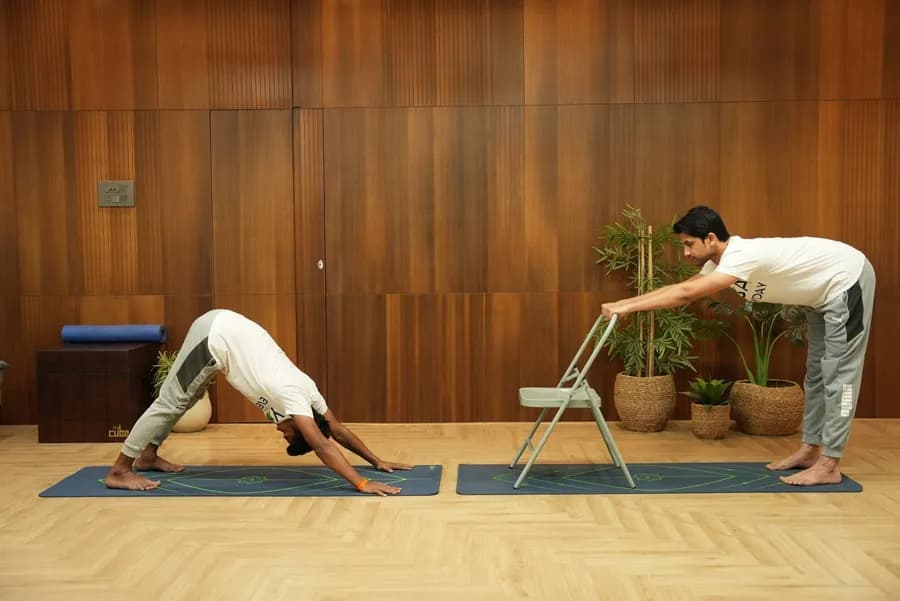
Adho Mukha Svanasana (Downward Dog): Steps Benefits and Alignment
Practice Adho Mukha Svanasana with Habuild. Follow downward facing dog steps to strengthen your arms, stretch your spine, and improve flexibility. Start today!
Chaturanga Asana: Steps Alignment Tips and Upper Body Benefits
Practice Chaturanga Asana with Habuild. Follow the four-limbed staff pose steps to build arm and core strength and develop full-body stability. Start today!
Surya Namaskara: Steps Benefits and Daily Practice Guide
Explore Surya Namaskara with Habuild. Discover the powerful benefits of Surya Namaskara to boost energy, improve flexibility, and transform your health today!
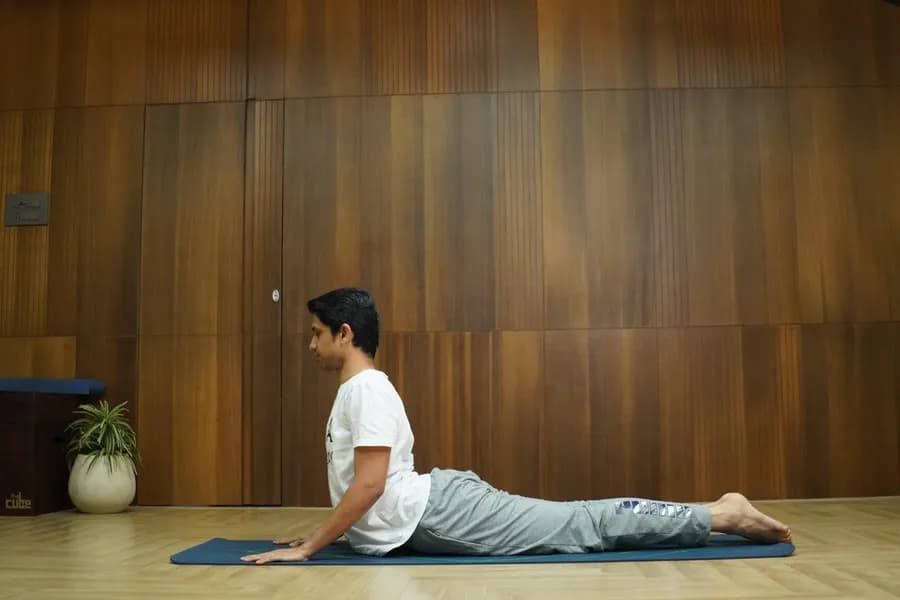
Bhujangasana: Cobra Pose Steps, Benefits & Tips
Bhujangasana, or Cobra Pose, strengthens the spine and entire back musculature, opens the chest, stimulates abdominal organs, and corrects the postural damage of prolonged sitting.