
Chakki Chalanasana (Grinding Pose): Steps, Benefits & Precautions
Rotating the upper body in a wide circular motion while seated mimics the action of a traditional Indian grinding stone, particularly used in postnatal and abdominal-toning sequences. See the steps, benefits, and precautions.
Key Takeaways
- Its name references the traditional Indian grinding stone used to mill grain into flour.
- Unlike most asanas, it is movement-based – a continuous circular rotation, not a static hold.
- Particularly emphasised in postnatal yoga for gentle, joint-friendly core engagement.
- The rhythmic circular motion continuously massages the digestive organs during the movement.
- Practised as 10 rotations clockwise followed by 10 rotations counterclockwise.
- The unfamiliar movement pattern builds body-mind coordination over weeks of practice.
What is Chakki Chalanasana?
Chakki Chalanasana pronounced cha-kee cha-la-nah-sa-na translates as “Grinding Wheel Pose.” “Chakki” refers to the traditional Indian grinding stone used to grind grain, and “chalan” means moving. The pose mimics the action of grinding flour by rotating the upper body in a wide circular motion while seated with legs extended.
Chakki chalanasana is a classical dynamic asana from the hatha yoga tradition, particularly emphasised in postnatal yoga and abdominal-toning sequences. Unlike most asanas which involve holding a static position, grinding pose is movement-based the rhythmic circular motion engages the entire core, hips, and abdominal organs continuously.
In Habuild’s daily practice, chakki chalanasana is offered both as a warm-up dynamic movement and as a stand-alone abdominal toner particularly valuable for postpartum recovery and for those wanting to engage the core through gentle, joint-friendly movement.
Chakki Chalanasana Benefits
Physical Benefits
- Tones the Abdominal Muscles Chakki chalanasana benefits include direct engagement of the rectus abdominis, obliques, and deep core. Regular practice contributes to a flatter, stronger abdomen.
- Massages and Stimulates the Abdominal Organs The rotational motion gently massages the digestive organs, supporting digestion and metabolic health.
- Strengthens the Lower Back and Spine The rotation, performed correctly, builds spinal mobility and lower-back endurance.
- Tones the Hips, Thighs, and Pelvic Floor The seated position with legs extended also engages the hip flexors and pelvic floor making this an excellent postnatal recovery pose.
- Releases Stress and Builds Mental Engagement The rhythmic, circular motion is meditative the mind tends to follow the body’s smooth rotation, leaving stress behind.
- Encourages Body-Mind Coordination The simple but unfamiliar movement pattern develops body awareness over weeks of practice.
Mental and Emotional Benefits
How to Do Chakki Chalanasana Step-by-Step Instructions
Key Principles
Move slowly and smoothly. The benefits come from the controlled rotation, not the speed. Breathe rhythmically with the motion.
Step 1: Starting Position
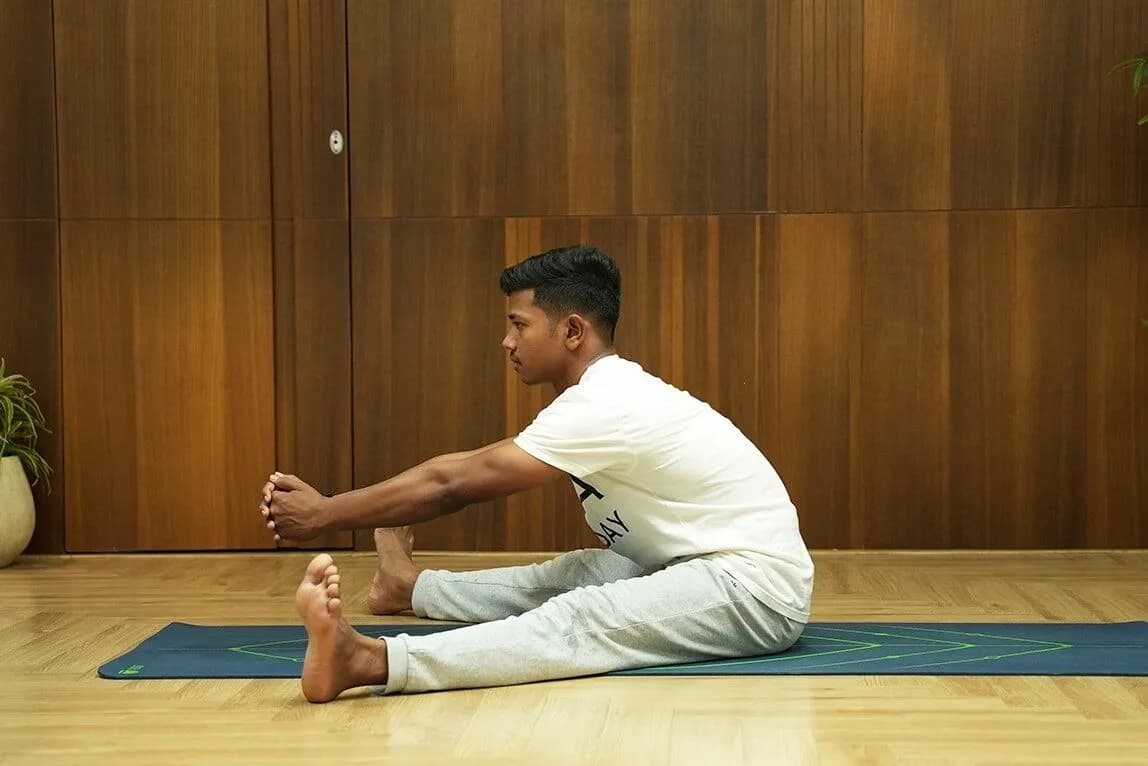
Sit on the mat with legs extended in front, hip-width apart. Spine tall.
Step 2: Interlace the Fingers
Interlace the fingers of both hands and extend the arms forward at shoulder height.
Step 3: Begin the Forward Reach
Inhale. Lean forward and reach the hands toward the toes without bending the knees.
Step 4: Begin the Circular Motion
Move the arms in a wide circle forward, around to the right side, back toward the body, around to the left side, and forward again. The torso moves with the arms in the same circular pattern. The motion mimics grinding wheat with a large stone wheel.
Step 5: Final Position and Hold
Continue the circular rotation. 10 rotations clockwise, then reverse for 10 rotations counterclockwise. Keep the legs straight and the spine engaged throughout.
Step 6: How to Come Out of Chakki Chalanasana
Return to the starting seated position with arms relaxed. Take 3–5 breaths in stillness, observing the sensation in the core.
Breathing in Chakki Chalanasana
Inhale as the arms reach forward; exhale as they return toward the body. The breath naturally syncs with the rotational pattern after a few rounds.
Preparatory Poses Before Chakki Chalanasana
Sukhasana (Easy Pose) settles the body before dynamic movement.
Cat-Cow mobilizes the spine.
Janu Sirsasana (Head-to-Knee Pose) Prepares the seated leg-extended position.
For broader core work, see our core strength routine.
Variations of Chakki Chalanasana
Variation 1: Bent-Knee Chakki Chalanasana (Beginner)
Practise with knees bent rather than legs extended. Reduces hamstring demand significantly.
Variation 2: Standing Chakki Chalanasana
Performed standing with feet wide apart, arms extended forward, rotating the torso in the same circular pattern. Works well for people who can’t sit on the floor comfortably.
Variation 3: Weighted Chakki Chalanasana (Advanced)
Hold a small dumbbell or kettlebell while performing the rotation. Adds significant core challenge.
Common Mistakes to Avoid in Chakki Chalanasana
Mistake 1: Bending the knees. Reduces the abdominal engagement. Correction: Keep the legs straight; if hamstrings are tight, sit on a folded blanket to elevate the hips.
Mistake 2: Rushing the rotation. Speed reduces the benefit. Correction: Move slowly each rotation should take 6–8 seconds.
Mistake 3: Hunching the upper back. Correction: Keep the chest open and the spine engaged throughout the movement.
Mistake 4: Holding the breath. Correction: Inhale as you reach forward, exhale as you return.
Who Should Practice Chakki Chalanasana?
- Postnatal Women (After Doctor’s Clearance) Chakki chalanasana is widely recommended in postnatal yoga for abdominal toning and pelvic floor recovery. Always check with your doctor first.
- Those Wanting Abdominal Toning The pose engages the entire abdominal wall and is more joint-friendly than crunches.
- Beginners and Older Adults With the bent-knee or standing variation, the pose is accessible to almost anyone.
- Is Chakki Chalanasana Good for Beginners? Yes with the bent-knee modification or seated on a cushion. Pair with our yoga for beginners guide.
Frequently Asked Questions
Related Articles
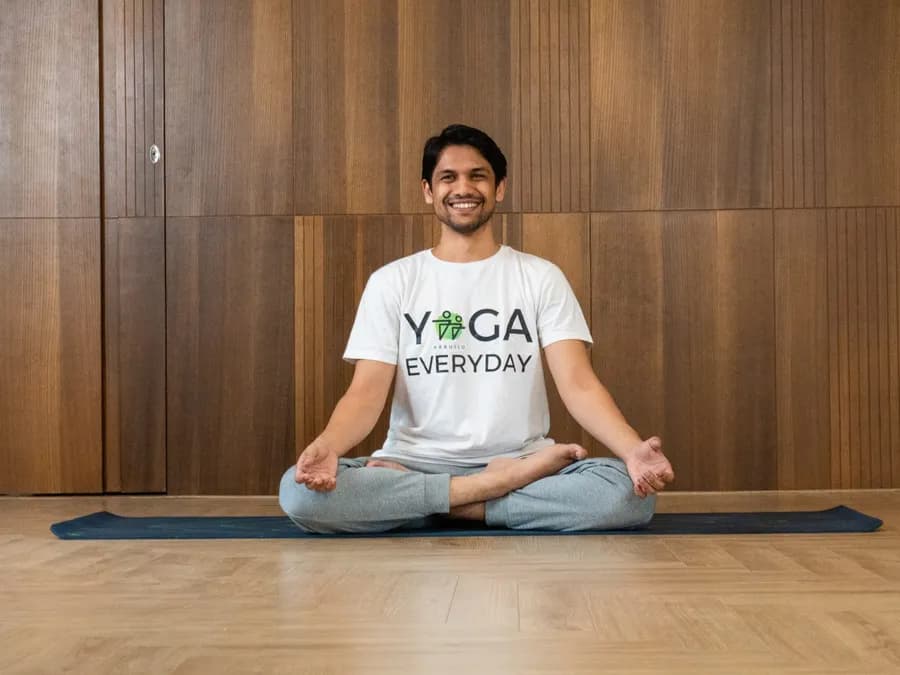
Sukhasana (Easy Pose): Steps Benefits and Meditation Foundation
Try sukhasana with Habuild. Discover the sukhasana pose to improve posture, reduce stress, and cultivate a calm and focused mind. Start your session today!

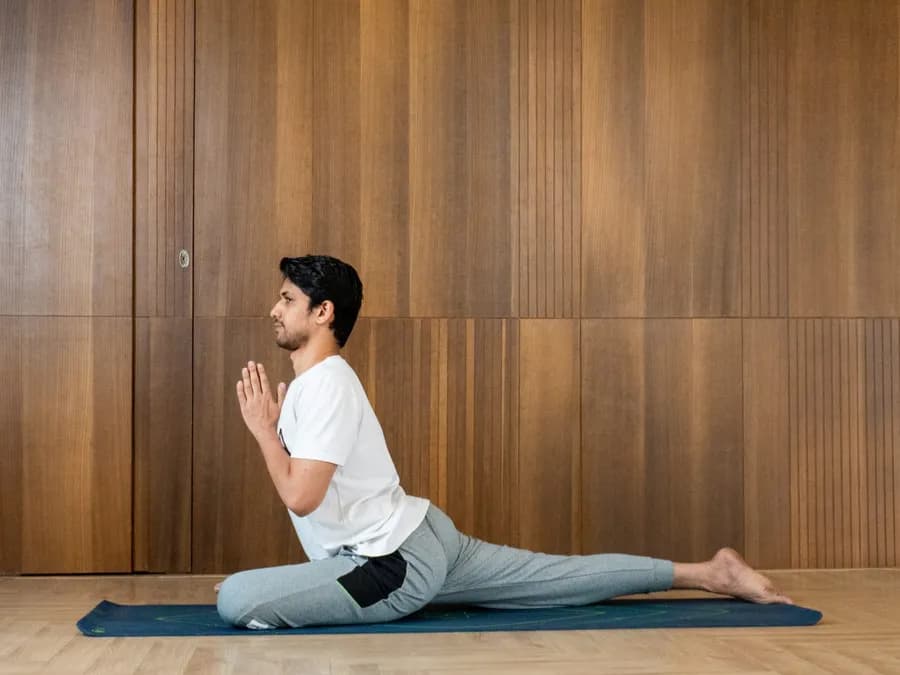
Eka Padasana (One-Legged Pose): Steps, Benefits & Precautions
One leg extends backward parallel to the floor while the torso tilts forward, creating a horizontal line from fingertips to back foot, structurally similar to Warrior III. See the steps, benefits, and precautions.

Vajrasana (Thunderbolt Pose): Steps, Benefits and Alignment Tips
Master Vajrasana (Thunderbolt Pose) with Habuild. Practise Vajrasana to improve digestion, strengthen your posture, calm the mind, and enhance meditation. Start your wellness journey today.
