
Chakra asana (Wheel Pose): How to Do It, Steps & Key Benefits
The term carries two meanings — the full backbend arching the spine into a wheel shape, and the broader practice of asanas that activate each of the seven chakra centres. See how to do it and the key benefits.
Key Takeaways
- Chakra Asana has two meanings – the wheel-pose backbend, and poses activating chakra centres.
- Wheel pose builds toward full expression gradually starting from bridge pose over months.
- Classical texts say the deep backbend’s adrenal compression increases vitality and energy.
- Muladhara, the root chakra, is grounded specifically through Tadasana and Malasana.
- Names Bhujangasana, Ustrasana, Setu Bandhasana, and wheel as heart-chakra openers.
- Sirsasana and meditation are named the poses that activate the crown chakra, Sahasrara.
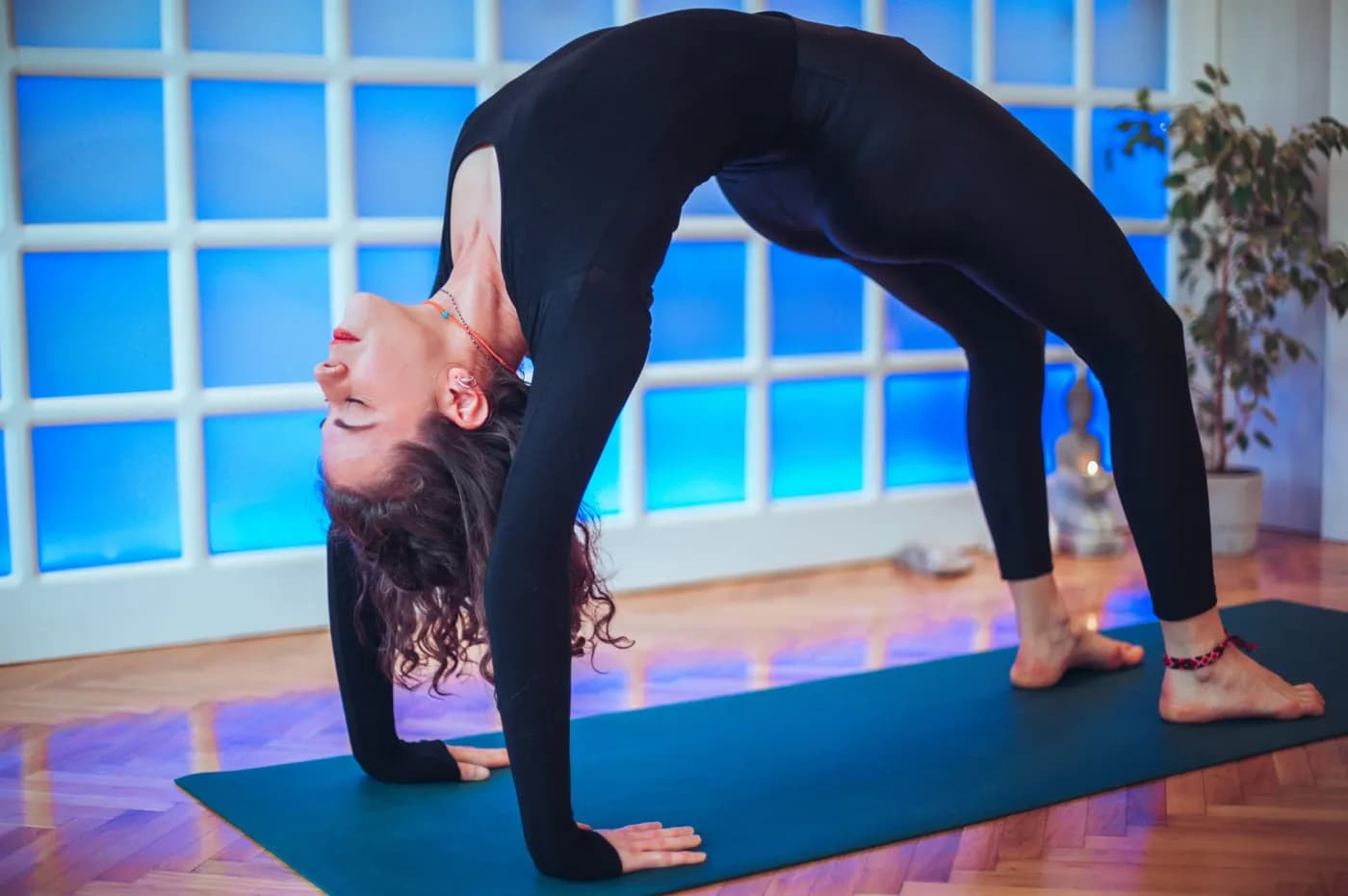
Chakra Asana refers both to the classical wheel pose (Chakrasana/Urdhva Dhanurasana) — one of yoga’s most powerful backbends — and to the systematic yoga practice of asanas that activate and balance each of the seven chakra energy centres.
What is Chakra Asana?
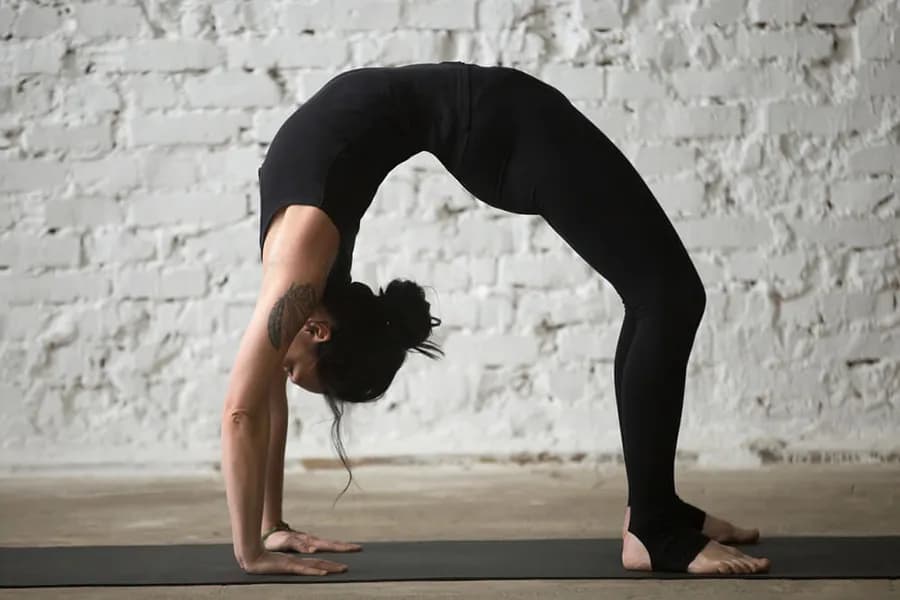
The term Chakra Asana has two meanings in yoga. First, Chakrasana (also called Urdhva Dhanurasana or wheel pose) is a full backbend that arches the entire spine into a wheel shape — one of the most challenging and transformative asanas in the yoga repertoire. Second, in the chakra yoga tradition, ‘chakra asanas’ refers to the category of yoga poses specifically selected to activate, balance, and clear each of the seven chakra energy centres along the subtle body’s central axis.
In the first sense, the Chakra pose is a demanding intermediate-to-advanced asana requiring open shoulders, thoracic flexibility, and strong wrists. In the second sense, chakra yoga asanas form a complete therapeutic system — hip openers for Svadhisthana, core poses for Manipura, backbends for Anahata, inversions for Vishuddha, and meditation for Ajna and Sahasrara.
At Habuild, both dimensions of Chakra Asana are addressed — progressive preparation for the wheel pose and the complete chakras in yoga practice that balances the full energy system.
Benefits of Chakra Asana
Physical Benefits of Wheel Pose (Chakrasana)
Opens the Entire Anterior Chain
Chakrasana provides the most comprehensive anterior chain opening in all of yoga — simultaneously opening the hip flexors, abdominals, chest, and anterior shoulders in a single full-arch backbend. This makes it uniquely effective for reversing the chronic forward posture of modern sedentary life.
Stimulates the Adrenal Glands and Nervous System
The deep backbend of Chakrasana directly compresses the adrenal glands — classical yoga texts associate this stimulation with increased vitality and energy. The significant cardiovascular activation of holding wheel pose also makes it one of yoga’s most energising poses.
Yoga Poses for Each Chakra
Chakrasana — Wheel Pose
From lying on the back: place hands by the ears, feet hip-width. Press into hands and feet, lift the hips, and arch up into the full wheel. Begin with bridge pose and gradually build toward full wheel over months. Hold 5 breaths, 3 repetitions.
Muladhara Chakra — Tadasana and Malasana
Root chakra asanas ground the energy system: Tadasana (mountain pose) for stable standing awareness and Malasana (deep squat) for earth connection and root chakra activation.
Anahata Chakra — Heart-Opening Asanas
Heart chakra asanas open the anterior chest: Bhujangasana (cobra), Ustrasana (camel), Setu Bandhasana (bridge), and Chakrasana (wheel) all powerfully open Anahata — the heart energy centre governing love, compassion, and emotional openness.
Sahasrara Chakra — Sirsasana and Meditation
Crown chakra asanas include Sirsasana (headstand) and deep meditation — the inversion and stillness that open the crown to the transcendent dimension of yoga practice.
Common Mistakes to Avoid
Attempting full wheel before building foundations — Chakrasana requires significant shoulder flexibility and wrist strength. Build through Bridge, Camel, and wall-supported wheel over months before attempting free wheel.
Forcing Chakrasana before the thoracic spine is ready — The most common injury in Chakrasana is lumbar compression from a stiff thoracic spine. Build thoracic mobility first with preparatory backbends.
Neglecting the preparatory warm-up — Chakrasana without thorough warm-up risks shoulder and lower back injury. Always warm up with Bhujangasana, Setu Bandhasana, and shoulder openers.
Practising chakra asanas intellectually rather than experientially — The chakra dimension of asana practice is experiential — the subtle sensations of energy activation felt in specific poses. Approach with awareness rather than theory.
Senior Citizens (50+)
Full Chakrasana is not appropriate for most seniors without extensive preparation. Setu Bandhasana and Ustrasana provide the chakra activation benefits of backbending safely. All chakra meditation practices are fully appropriate. Consult your doctor before beginning.
Start your 14 day free yoga journey with Habuild, today!
Wheel Pose asks a lot of the shoulders, spine, and hip flexors at once, and that combination only opens up with repeated, patient practice rather than forcing the lift on a stiff day. Practitioners who return to backbends like this regularly tend to notice the chest and spine loosening session over session, which is the real marker of progress here. Building toward it gradually is easier inside a structured sequence like Habuild’s Yoga Everyday program, where backbends are paced alongside the counter-stretches that keep the spine balanced.
Frequently Asked Questions
Related Articles
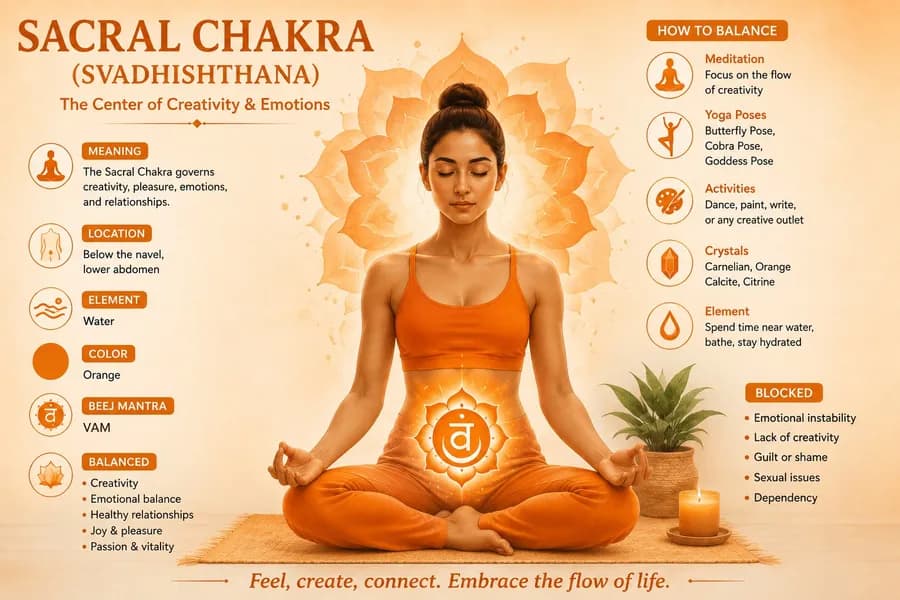
Yoga Pose for Sacral Chakra: Steps, Benefits & Precautions
Discover the best yoga pose for sacral chakra — with step-by-step instructions, benefits, variations, and beginner tips. Start your ₹1 trial with Habuild.
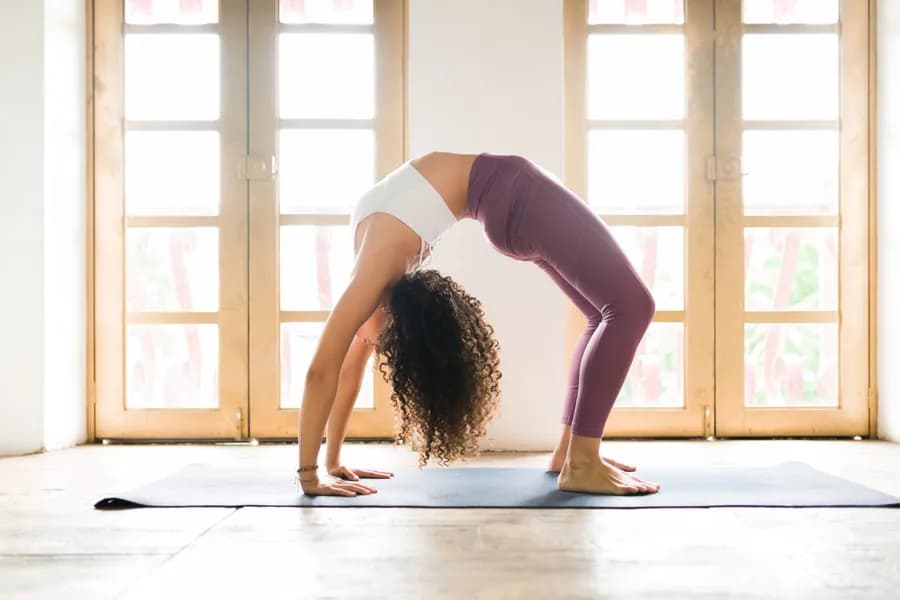
Chakrasana (Wheel Pose): Steps Benefits and Safety Precautions
Practice Chakra Asana with Habuild. Follow the wheel pose steps to open your chest, strengthen your spine, and improve flexibility and hormonal health. Start!
Chakrasana (Wheel Pose): Steps, Benefits & Precautions
Arching the spine into a full backbend with both hands and feet pressed into the floor traces a near-perfect arc, touching breath, focus, and the nervous.