
Chakrasana (Wheel Pose): Steps Benefits and Safety Precautions
Practice Chakra Asana with Habuild. Follow the wheel pose steps to open your chest, strengthen your spine, and improve flexibility and hormonal health. Start!
Key Takeaways
- Known in Western yoga specifically as Urdhva Dhanurasana, Upward-Facing Bow Pose.
- Encompasses a family from standing Ardha Chakrasana, half wheel, to full Purna Chakrasana.
- Ardha Chakrasana, the standing backbend variant, is accessible to all levels daily.
- Thoracic kyphosis, the region most resistant to extension, receives particular training focus.
- Progression builds from Ardha Chakrasana and Setu Bandhasana before attempting the full wheel.
- Chest cavity expansion here is said to counteract respiratory effects of sedentary posture.
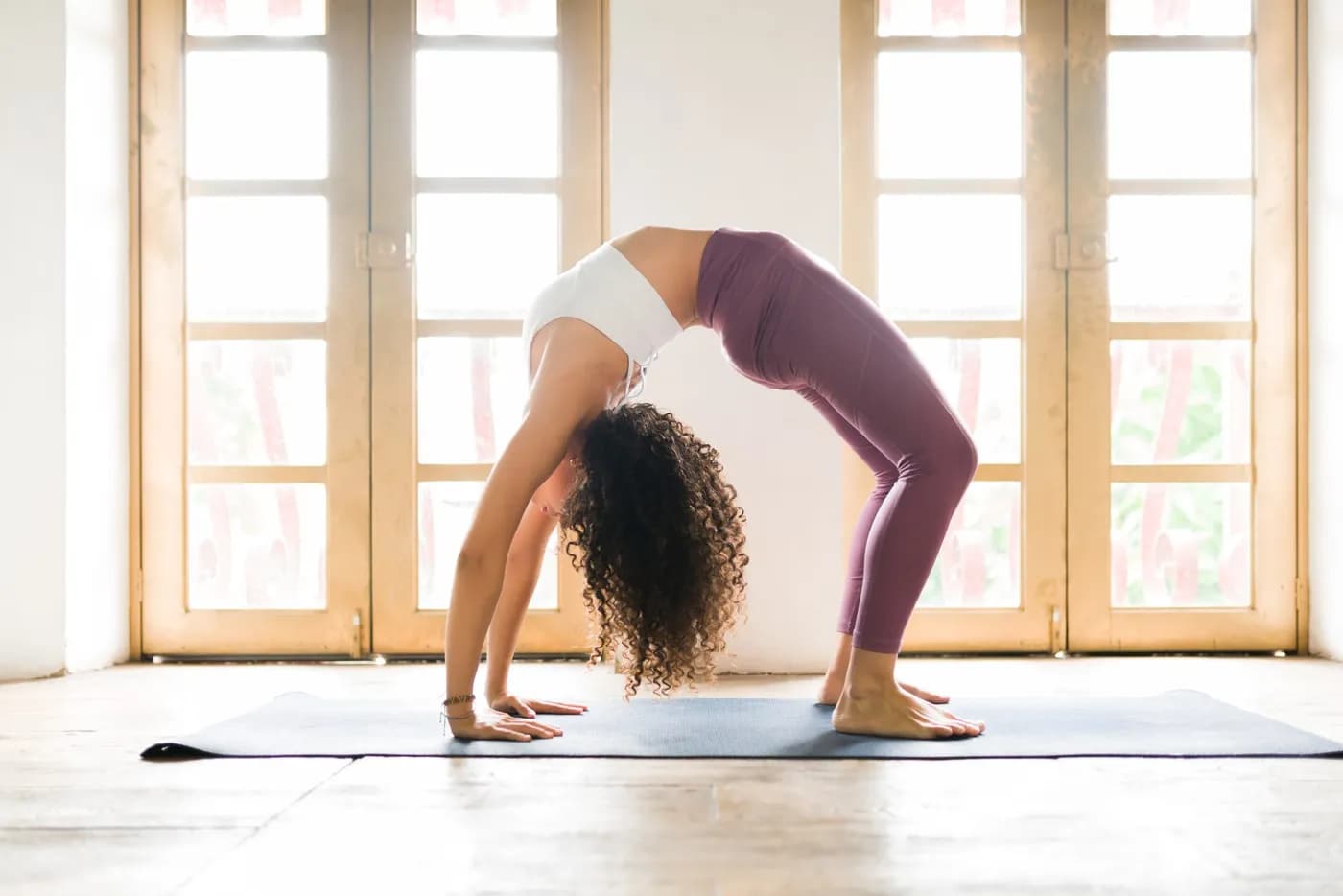
Chakrasana, or Wheel Pose, is a full-body backbend in which the practitioner arches the spine into a complete wheel or bridge shape — palms and feet pressing into the floor, hips lifted, chest opening toward the sky. It strengthens the arms, legs, and entire posterior chain while deeply expanding the chest and spine — the most comprehensive backbend in the yoga system.
What is Chakrasana?
Chakrasana — the Wheel Pose — derives from Sanskrit: Chakra (wheel) and Asana (posture or seat). The pose creates the shape of a wheel with the body — palms and feet planted firmly on the ground, arms and legs straightened, hips lifted as high as possible, and the spine arching into a complete backwards curve. Known in Western yoga as Urdhva Dhanurasana (Upward-Facing Bow Pose), Chakrasana is one of the most expansive and physically demanding postures in the Hatha yoga system.
Chakrasana encompasses a family of postures — from Ardha Chakrasana (Half Wheel Pose, a standing backbend) to the full Purna Chakrasana (Full Wheel from standing). Each variation progressively develops the spinal flexibility, shoulder and hip mobility, and arm and leg strength that the full Wheel requires. The standing backbend variation of Ardha Chakrasana is accessible to all levels and forms the most important daily spinal extension practice in the Chakrasana family.
At Habuild, Chakrasana is taught progressively — building from Ardha Chakrasana and Setu Bandhasana (Bridge Pose) through the complete backbend curriculum at a pace that develops the genuine prerequisites before advancing to the full Wheel.
Chakrasana Benefits
Physical Benefits
- Strengthens the Entire Posterior Chain and Core Chakrasana simultaneously activates and strengthens every major posterior chain muscle — spinal extensors, glutes, hamstrings, and upper back — through the sustained loaded extension of the full backbend. The core engagement required to maintain the hip height and spinal extension simultaneously builds the deep core integration that no isolated exercise replicates. Regular practice progressively builds the posterior chain strength that spinal health, athletic performance, and postural integrity require.
- Opens the Chest and Improves Lung Capacity Chakrasana’s deep spinal extension maximally expands the chest cavity — stretching the intercostal muscles, anterior shoulder capsule, and pectoral fascia that chronic forward-hunching progressively compresses. This thoracic expansion directly improves lung capacity and the quality of breathing, counteracting the respiratory consequences of sedentary posture to a degree that no other single backbend matches.
- Develops Full-Spine Flexibility from Cervical to Lumbar The complete wheel shape of Chakrasana requires flexibility across the entire spine — cervical, thoracic, and lumbar — with particular emphasis on the thoracic region whose natural kyphosis most resists extension. Progressive Chakrasana practice is the most comprehensive single practice for complete spinal flexibility development.
- Strengthens the Arms, Shoulders, Wrists, and Legs Supporting the full body weight through extended arms in Chakrasana progressively strengthens the triceps, deltoids, wrist flexors, and shoulder girdle. The active leg pressing — feet planted and legs working against the floor — activates the quadriceps, glutes, and hamstrings simultaneously. Chakrasana is one of yoga’s most complete full-body strength postures.
Mental and Emotional Benefits
- Builds Courage, Confidence, and Mental Fearlessness Chakrasana requires a specific quality of trust — the willingness to extend the spine backward into empty space. This courage-building quality is among its most distinctive psychological benefits: practitioners consistently report increased confidence and fearlessness in daily life alongside the development of their physical backbend practice.
- Energises, Elevates Mood, and Reduces Depression The deep sympathetic nervous system stimulation of a full backbend — combined with the expansive, anti-depressant quality of maximal chest opening — produces the most energising and mood-elevating effects of any yoga posture. The chest-opening quality specifically activates the Anahata chakra and produces the mood elevation that heart-opening practices reliably generate.
How to Do Chakrasana — Step-by-Step Instructions
Key Principles
Key Principles Two principles govern safe Chakrasana: the spine extends rather than compresses — the wheel shape results from whole-spine lengthening rather than crunching at the lumbar; and weight distributes between hands and feet equally — neither the wrists nor the heels should bear the majority of the pose’s load.
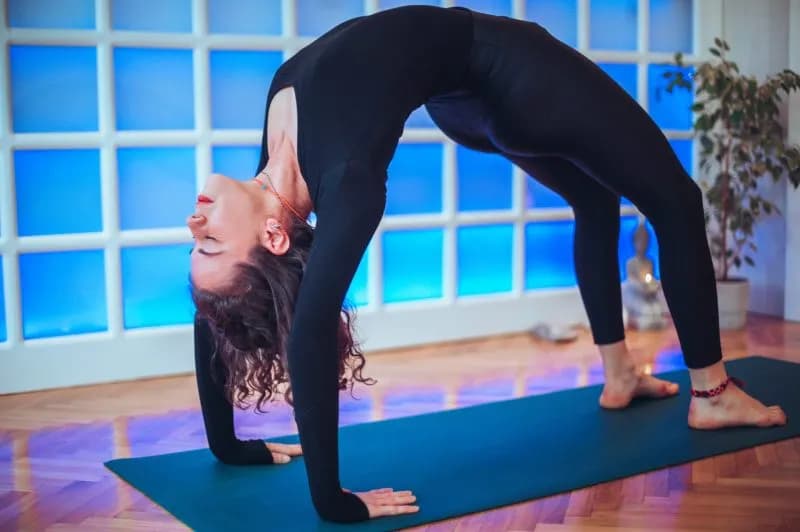
Full Chakrasana — Step by Step Step 1: Starting Position Lie on your back. Bend the knees and plant the feet hip-width apart, toes pointing forward, heels as close to the sitting bones as possible.
Step 2: Place the Palms Bring both palms to the floor beside the ears — fingers pointing toward the shoulders, elbows pointing toward the ceiling.
Step 3: Lift to the Crown Press the feet firmly into the floor. Inhale. On an exhale: press the palms and lift the hips — come onto the crown of the head briefly as a checking point that the hands are well-placed.
Step 4: Press into Full Wheel Press the palms firmly and straighten the arms — lifting the head off the floor and arching into the full wheel shape. Actively press the feet and extend the legs to lift the hips as high as possible.
Step 5: Final Position and Hold Hold for 3 to 5 breath cycles. Breathe expansively — each inhale creating more chest space, each exhale deepening hip and shoulder extension. Never hold the breath in the Wheel Pose.
Step 6: How to Come Out of Chakrasana Tuck the chin, bend the arms, and lower the back of the head and then the spine to the floor with control — never collapsing. Rest in Savasana or draw knees to chest for a counter-posture before the next attempt.
Breathing in Chakrasana
The exhale drives the lift into Chakrasana — the chest rising as the ribs drop and the posterior body presses. Once in the pose, breathe expansively: each inhale creating more space in the chest, each exhale deepening the hip and shoulder extension. Never hold the breath while in the full Wheel Pose.
Preparatory Poses Before Chakrasana
These poses build the shoulder flexibility, hip extension, and wrist strength that Chakrasana requires.
- Cat-Cow and thoracic extension on a rolled blanket — Warms the complete spine through all ranges before the intensive backbend.
- Setu Bandhasana (Bridge Pose, daily) — The most essential Chakrasana preparation — builds hip extension, chest opening, and posterior chain strength.
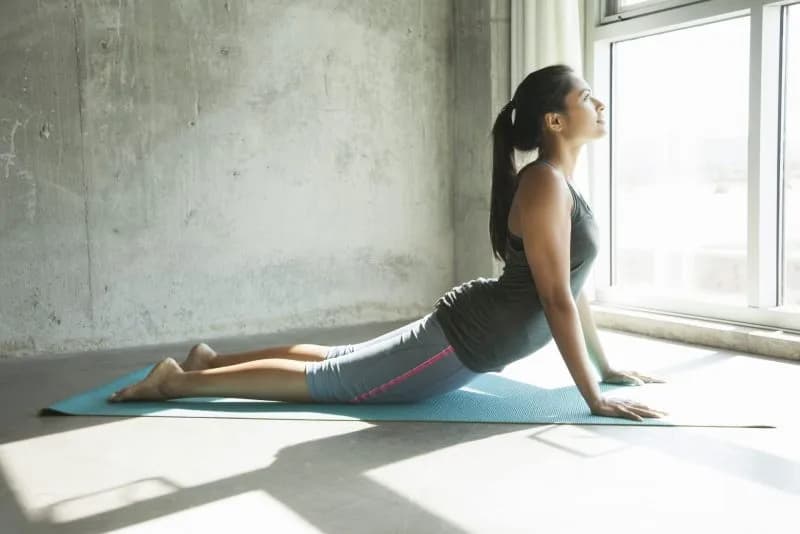
- Bhujangasana and Sphinx Pose — Prone backbends that warm the spinal extensors specifically.
- Wrist warm-up (circles, prayer stretch) — Prepares the wrist joint for full body weight in the extended arm position.
Variations of Chakrasana
- Variation 1: Ardha Chakrasana — Standing Backbend (All Levels) From standing, hands on the lower back, gently arch the upper back and thoracic spine backward — the chest lifting toward the ceiling. This is the most accessible Chakrasana variation, appropriate for all levels as a daily spinal extension practice within any morning sequence.
- Variation 2: Full Chakrasana — Intermediate to Advanced The complete supine Wheel Pose as described in the step-by-step instructions. Requires comfortable Setu Bandhasana and adequate shoulder flexibility as prerequisites. Practised 2 to 3 times per week, always after complete warm-up.
- Variation 3: Eka Pada Chakrasana — One-Legged Wheel (Advanced) From the full Wheel — one leg extends upward while maintaining the three-point wheel shape. Requires exceptional hip and shoulder stability alongside full Wheel flexibility and should only be attempted after complete mastery of the standard Chakrasana.
Common Mistakes to Avoid in Chakrasana
- Attempting Full Wheel Before Adequate Shoulder Flexibility The most common cause of wrist and shoulder injury in Chakrasana. If the shoulders cannot open sufficiently to allow the arms to straighten above the head while lying down (preparatory test), attempting the full Wheel Pose will load the wrists in a compromised position. Always assess and develop shoulder flexibility through Bridge, Cobra, and shoulder-opening postures before progressing to the full Wheel.
- Compressing the Lumbar Rather Than Extending the Thoracic The Wheel shape should distribute evenly across the whole spine — not concentrate at the lumbar. Local lumbar crunching rather than whole-spine extension is the most common technical error in Chakrasana. Focus on thoracic extension: lifting the sternum toward the ceiling and broadening the chest, rather than pushing the lower back upward.
- Allowing the Elbows to Flare Outward The elbows must press toward each other throughout — shoulder-width and parallel. Allowing the elbows to flare outward reduces the shoulder stability of the arm position and increases the risk of elbow joint strain. If the elbows flare despite effort, it is a sign that more shoulder flexibility development is needed before the full extension is appropriate.
Who Should Practise Chakrasana?
- Intermediate to Advanced Practitioners Developing Backbends Full Chakrasana’s strength and flexibility requirements make it most appropriate for practitioners with six months to a year of consistent yoga practice who have developed the shoulder flexibility, hip flexor length, and wrist strength through foundational backbend work. Ardha Chakrasana (standing backbend) is appropriate from day one of practice.
- Athletes Seeking Spinal Mobility and Full-Body Strength Chakrasana’s complete posterior chain strengthening and thoracic mobility development make it specifically valuable for athletes — gymnasts, swimmers, dancers, and any sport requiring spinal extension, shoulder mobility, and hip strength that Wheel Pose systematically develops.
- Is Chakrasana Good for Beginners? Ardha Chakrasana (standing backbend) is excellent for beginners as a daily spinal extension practice. Full Chakrasana requires adequate preparatory development and is not appropriate for beginners who have not yet built sufficient shoulder flexibility and bridge pose comfort. Begin with Ardha Chakrasana daily, develop Bridge Pose, and approach full Wheel when the prerequisites are genuinely established.
Make Chakrasana a Part of Your Practice
Chakrasana is the yoga tradition’s most expansive and physically complete backbend — its full-body wheel shape delivering simultaneous spinal flexibility, posterior chain strength, chest opening, energy activation, and courage-building benefits that no other single posture approaches. The progressive path from standing Ardha Chakrasana through Bridge to the full Wheel is one of yoga’s most rewarding developmental journeys.
Whether you are practising Ardha Chakrasana daily as a spinal extension habit, building toward your first full Wheel through consistent Bridge Pose preparation, or deepening an established Chakrasana practice toward advanced variations, every stage of the journey delivers meaningful and progressive benefits.
The most effective way to learn Chakrasana safely — with complete preparatory sequencing, precise technique guidance, and the progressive advancement structure that makes the Wheel genuinely achievable — is under live expert guidance with Habuild.
Start your 14 day free yoga journey with Habuild, today!
Related reads: Purna Chakrasana (Full Wheel Pose): Steps Benefits and Safety · Matsyasana (Fish Pose): Steps Benefits and Safety Tips
Wheel Pose is demanding enough that its benefits — chest opening, spinal strength, hormonal balance — build gradually as your body adapts to backbending over repeated sessions, not from attempting the full expression once. Chakrasana rewards patience and proper warm-up more than ambition. Habuild’s Yoga Everyday program sequences backbends progressively, building toward poses like this as part of a structured daily practice.
Frequently Asked Questions
Related Articles
Surya Namaskara: Steps Benefits and Daily Practice Guide
Explore Surya Namaskara with Habuild. Discover the powerful benefits of Surya Namaskara to boost energy, improve flexibility, and transform your health today!
Vajrasana: How to Do It Benefits and Precautions
Practice vajrasana pose with Habuild. Try vajrasana to ease digestion, reduce back pain, and calm your mind. Ideal for all levels. Start your session today!
Gomukhasana (Cow Face Pose): Steps Benefits and Modifications
Practice gomukhasana with Habuild. Explore gomukhasana benefits to relieve shoulder tension, improve your posture, and enhance hip flexibility. Try it today!
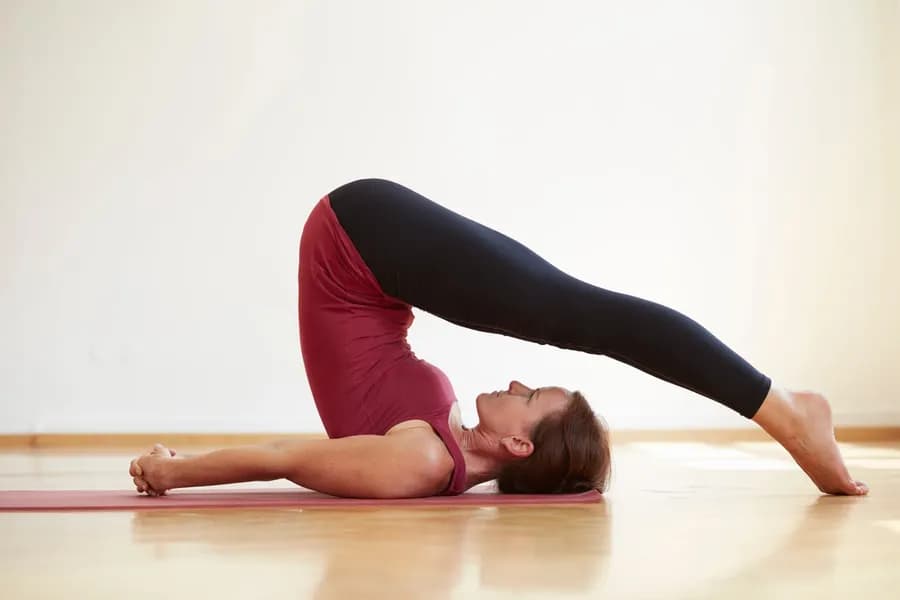
Halasana (Plow Pose): Steps Benefits and Precautions
Try halasana with Habuild. Learn halasana benefits like better flexibility, improved sleep, and relief from back pain. Master the yoga plow pose. Start today!