
Jyestikasana (Superior Pose): Steps, Benefits & Precautions
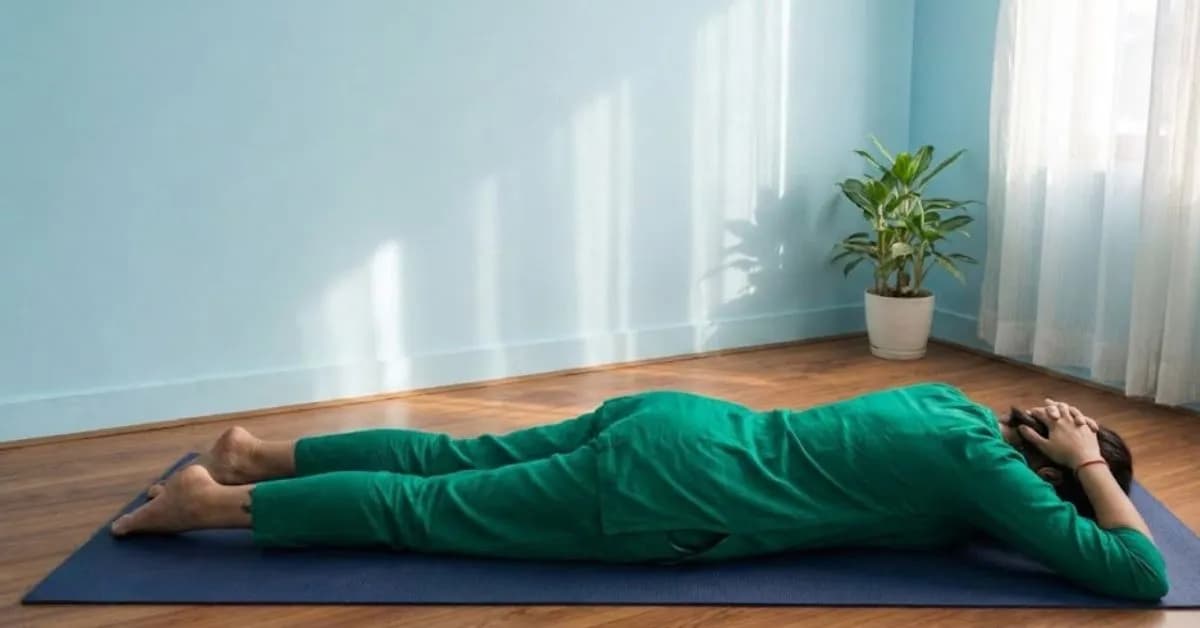
Lying face-down with legs extended and hands clasped behind the head, elbows resting on the floor, the chin gently lifts in this deceptively simple pose.
Key Takeaways
- Documented in the Gheranda Samhita among the seated and resting poses preparing for pranayama.
- Its name, meaning ‘superior’ or ‘eldest,’ reflects its high status in classical tradition.
- The prone position with hands behind the head supports cervical spine alignment directly.
- Typically used as a counter-pose after backbends and as a restorative session-closer.
- Creates gentle spinal traction that releases lower back tension from prolonged sitting.
- Directly counteracts the forward-head posture that screen time produces.
What is Jyestikasana?
Jyestikasana derives from two Sanskrit words: ‘jyestha’ meaning superior, elder, or first-born and ‘asana’ meaning pose — together translating to “the superior pose” or “the elder pose.” Pronounced yesh-TEE-kah-suh-nuh, the pose is also known in English as Superior Pose or Eldest Pose. Visually, the practitioner lies face-down on the mat with the legs extended together, the hands clasped behind the head with elbows resting on the floor, and the chin gently lifted. The pose appears deceptively simple but carries significant therapeutic and meditative value when practised correctly.
The pose is documented in the Gheranda Samhita, one of the foundational texts of Hatha Yoga, where it appears among the seated and resting postures essential for pranayama and meditation preparation. The traditional name “superior” or “eldest” reflects the pose’s status in classical tradition — it was considered one of the most important meditative resting poses, supporting the inward turning of awareness that pranayama and meditation require. The prone orientation creates a feeling of being supported by the earth, while the hand position behind the head supports cervical spine alignment.
In the broader yoga system, Jyestikasana belongs to the family of prone resting and meditative poses — alongside Makarasana (Crocodile Pose), Advasana (Reverse Corpse Pose), and other recovery postures. It is most commonly practised as a counter-pose after backbends, as a preparation for advanced pranayama, and as a restorative finishing pose at the end of yoga sessions. Most teachers introduce Jyestikasana as a beginner-appropriate pose that grows in depth as practice deepens.
Jyestikasana Benefits
Physical Benefits
Benefit 1: Releases Lower Back Tension and Realigns the Spine
The prone position with extended legs creates gentle traction along the spine, releasing lower back tension that accumulates from prolonged sitting and standing. Daily practice progressively realigns spinal posture. Members managing concurrent back pain often pair Jyestikasana with ouryoga for back pain programme to develop the comprehensive spinal support healthy posture requires.
Benefit 2: Supports Cervical Spine Alignment and Reduces Neck Tension
The hand position behind the head with elbows on the floor creates gentle traction through the cervical spine, releasing neck tension and supporting healthy cervical alignment. The pose directly counteracts the forward-head posture that screen-time produces.
Benefit 3: Stretches the Front Body and Hip Flexors
The prone position with extended legs progressively lengthens the abdominal muscles, hip flexors, and front-body fascia — addressing the chronic shortening that prolonged sitting produces.
Mental and Emotional Benefits
Benefit 4: Calms the Nervous System and Reduces Stress
The supported prone position activates the parasympathetic nervous system — slowing heart rate, lowering cortisol, and producing a deeply restorative state. The pose is one of the most effective stress-management postures in classical yoga. Members managing concurrent stress concerns often pair their practice with ouryoga for stress management programme.
Benefit 5: Prepares the Mind for Meditation
The traditional name “superior” reflects the pose’s value in preparing the mind for meditation — the physical stillness, supported posture, and inward orientation create the conditions for genuine meditative experience. Members focused on broader posture work often pair their training with ouryoga for posture programme.
Benefit 6: Restores Energy after Demanding Practice
After demanding asana sequences, Jyestikasana provides the restorative recovery that allows the body to integrate the practice’s effects — restoring energy and producing the post-practice calm that yoga’s deeper benefits depend on.
How to Do Jyestikasana — Step-by-Step Instructions
Key Principles
Three foundational principles must be in place: lie comfortably on the floor without straining the lower back, maintain neutral cervical spine (do not over-extend the neck), and breathe steadily throughout. The pose should feel restful rather than effortful.
Step 1: Starting Position (Prone)
Lie face-down on the mat with legs extended and feet together (or hip-width apart for comfort). Forehead rests on the mat or a folded blanket. Arms extend alongside the body. Take three steady breaths to settle.
Step 2: Place Hands Behind the Head
Bring both hands behind the head with fingers interlaced. Allow the elbows to rest comfortably on the floor on either side of the head.
Step 3: Slightly Lift the Chin off the Floor
Gently lift the chin a few centimetres off the floor, creating mild cervical extension. The lift should be small — the goal is gentle alignment, not deep backbend. Maintain neutral cervical position.
Step 4: Engage the Body Gently
Gently engage the legs by pressing the tops of the feet into the floor. Engage the gluteal muscles softly. Lengthen through the spine from the tailbone toward the crown of the head.
Step 5: Final Position and Hold
In the final position, the body rests in gentle alignment — chin slightly lifted, hands behind the head, elbows on the floor, legs extended. Hold for 1–5 minutes initially, building to 10–20 minutes over weeks of consistent practice. Breathe steadily and turn awareness inward.
Step 6: How to Come Out of Jyestikasana
Slowly lower the chin back to the floor. Bring the arms back alongside the body. Gently roll to one side and use the hands to push up to a seated position. Pause for 2–3 breaths in seated position before transitioning to the next pose.
Breathing in Jyestikasana
The breath in Jyestikasana follows a slow, deep diaphragmatic pattern — the prone position naturally encourages belly breathing as the abdomen expands against the floor. Long slow inhales through the nose, equally long slow exhales. As the practice deepens, the breath naturally lengthens and softens, supporting the meditative quality of the pose.
Preparatory Poses Before Jyestikasana
Preparation is minimal because Jyestikasana itself is a restorative pose — but a brief grounding helps establish the pose’s full benefit.
Balasana (Child’s Pose)
A brief 30-second Child’s Pose helps settle the body before transitioning to prone position.
Makarasana (Crocodile Pose)
A simpler prone resting pose — useful as an introductory prone posture before progressing to Jyestikasana.
Diaphragmatic Breathing
Three rounds of slow diaphragmatic breathing prepare the nervous system for the meditative quality of the pose.
Gentle Cervical Mobility
Slow neck movements (not too vigorous) prepare the cervical spine for the chin-lift component.
Variations of Jyestikasana
Variation 1: Jyestikasana with Folded Blanket Support
Difficulty: Beginner / Senior-Friendly Performed with a folded blanket under the abdomen for additional support — particularly useful for those with lower back sensitivity or pregnancy (in early stages, with medical clearance).
Variation 2: Standard Jyestikasana
Difficulty: All Levels The classical version described in this guide — performed flat on a yoga mat with hands behind the head. Suitable for almost all adults.
Variation 3: Jyestikasana with Gentle Backbend
Difficulty: Intermediate A deeper variation where the chest lifts slightly off the floor while maintaining the prone position — adds gentle backbend element while preserving the restorative quality.
Variation 4: Extended Jyestikasana with Pranayama
Difficulty: All Levels Jyestikasana held for 10–20 minutes combined with specific pranayama techniques — the destination practice for meditation preparation. Members focused on broader flexibility often pair their work with ouryoga for flexibility programme.
Common Mistakes to Avoid in Jyestikasana
- Mistake 1: Lifting the Chin Too High Forcing excessive cervical extension by lifting the chin too far compresses the back of the neck dangerously. Correction: keep the chin lift small (a few centimetres only); the goal is gentle alignment, not deep backbend.
- Mistake 2: Tensing the Body During the Hold The pose is restorative — tensing the muscles eliminates its calming benefit. Correction: actively relax all unnecessary tension; keep only the minimal engagement needed to maintain alignment.
- Mistake 3: Holding the Breath or Breathing Shallowly Some practitioners breathe shallowly into the chest only — eliminating the diaphragmatic breathing the prone position naturally supports. Correction: breathe fully and slowly into the belly, letting the abdomen expand against the floor with each inhale.
- Mistake 4: Holding the Pose Too Briefly Many practitioners exit after only 30 seconds, missing the deeper restorative effects that emerge with longer holds. Correction: build hold duration to 5–10 minutes for full meditative and restorative benefit.
- Mistake 5: Practising Without Proper Recovery After Transitioning quickly to demanding poses after Jyestikasana defeats its restorative purpose. Correction: respect the pose’s nature — follow with gentle transitions or end the practice altogether.
Who Should Practise Jyestikasana?
- Beginners and Stressed Adults The audience that benefits most. Adults managing chronic stress, those new to yoga, and anyone seeking restorative practices find Jyestikasana an immediately accessible meditative pose. Members managing concurrent stress often pair their practice with our yoga for stress management programme.
- Is Jyestikasana Good for Beginners? Yes — Jyestikasana is one of the most beginner-friendly meditative poses available. Most beginners can comfortably hold the pose within their first session. Those with neck or lower back conditions should consult a doctor first.
- Working Professionals with Chronic Stress Office workers and stressed professionals benefit dramatically from daily 5–10 minute Jyestikasana practice — the pose addresses both the physical (chronic neck and back tension) and emotional (sympathetic nervous system overload) consequences of professional life. Members managing concurrent back stiffness often pair their training with our yoga for back pain programme.
- Practitioners Building Meditation Practice For those building toward formal meditation practice, Jyestikasana serves as the physical preparation that supports inward-turning awareness. Members focused on broader posture work often pair their training with ouryoga for posture programme.
Jyestikasana’s benefits, like most prone resting poses, depend on the body learning to release into the position more fully each time you return to it, rather than on how long you hold it in a single try. Making it a regular part of your cool-down or restorative practice gives the shoulders and spine repeated chances to soften. Yoga Everyday can help keep restorative work like this consistent day to day.
Frequently Asked Questions
Related Articles
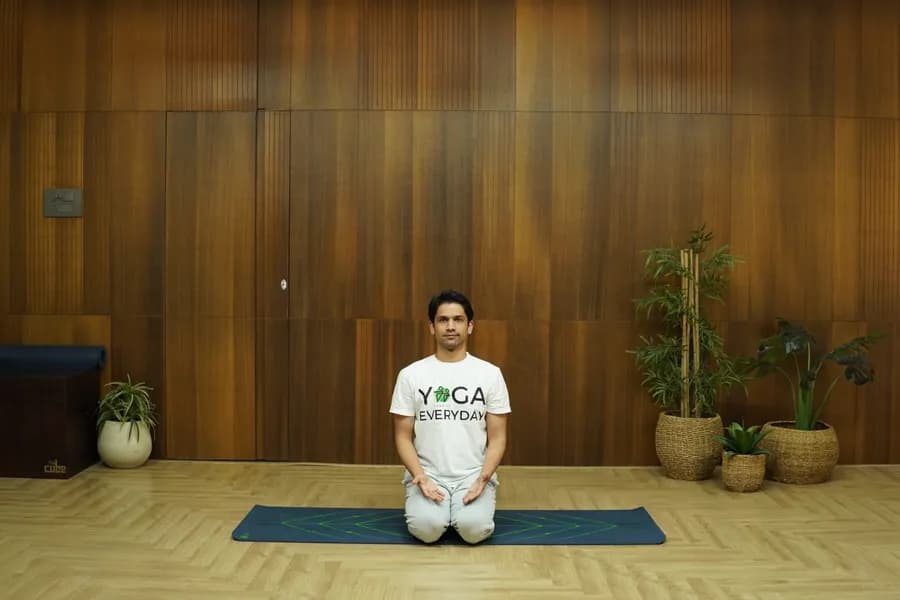
Vajrasana: How to Do It Benefits and Precautions
Practice vajrasana pose with Habuild. Try vajrasana to ease digestion, reduce back pain, and calm your mind. Ideal for all levels. Start your session today!

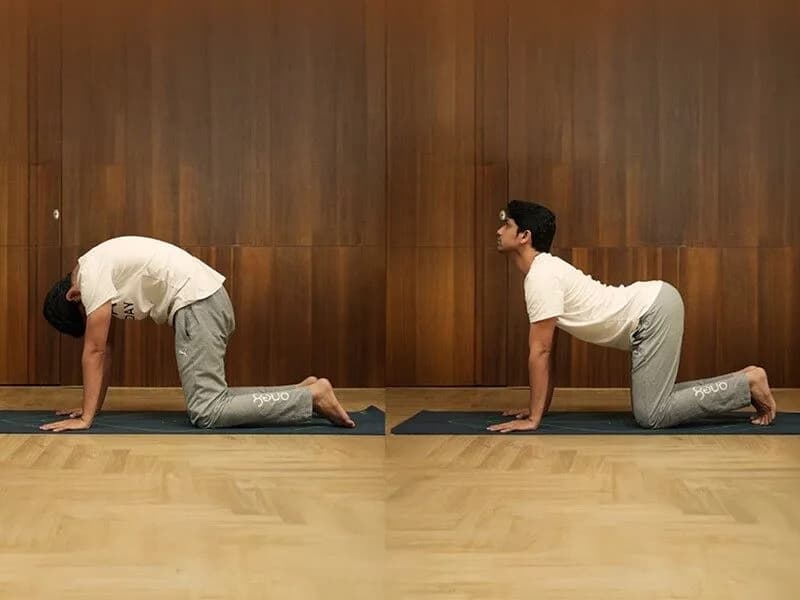
Chakravakasana (Ruddy Goose Pose): Steps, Benefits and Precautions
This four-point kneeling anti-rotation exercise builds lumbar stability and shoulder alignment, named after the ruddy shelduck of Hindu mythology. See the steps, benefits, and precautions.
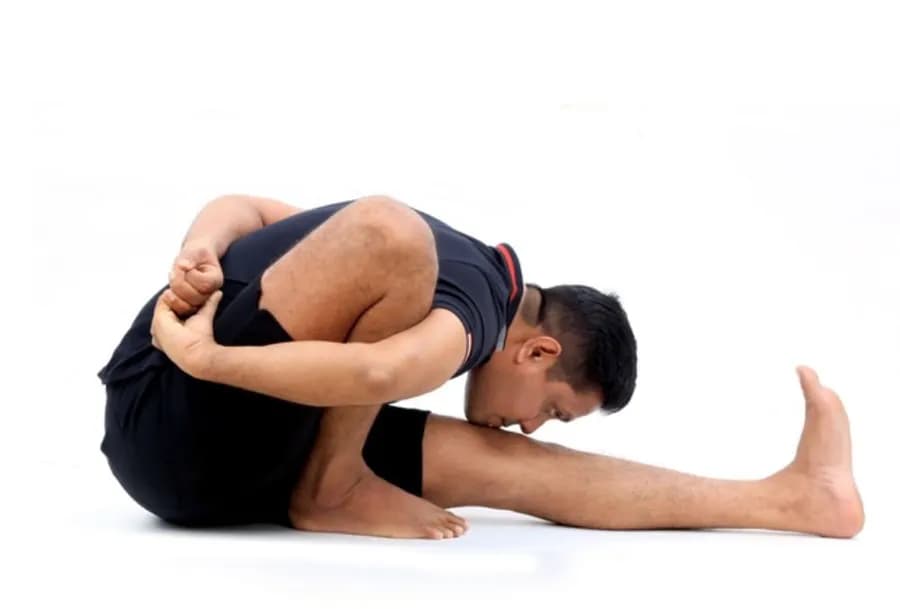
Marichyasana a (Sage Marichi’s Pose a): Steps, Benefits and Precautions
The first of four Marichi poses, this seated forward fold with one knee bent and an arm wrapped behind the back establishes the base that the more complex C and D variations build upon. See the steps, benefits, and precautions.