
Kapalbhati Side Effects: Heart, Pranayama Risks & Safety Guide
Lightheadedness, mild headaches, and occasional nausea are the most common side effects, typically resolving within the first 1-2 weeks of consistent
Key Takeaways
- Mild side effects appear in roughly 20-30% of beginners during the first 1-2 weeks.
- A 2009 International Journal of Yoga study found heart rate returns to baseline in 2 minutes.
- Lightheadedness, the most common side effect, stems from hyperventilating too fast or forcefully.
- Blood pressure elevations during practice stay within normal aerobic exercise range.
- Significant heart and blood pressure risks specifically concern those with pre-existing conditions.
- Almost all side effects resolve within 1-2 weeks as form and pacing improve.
What is Kapalbhati?
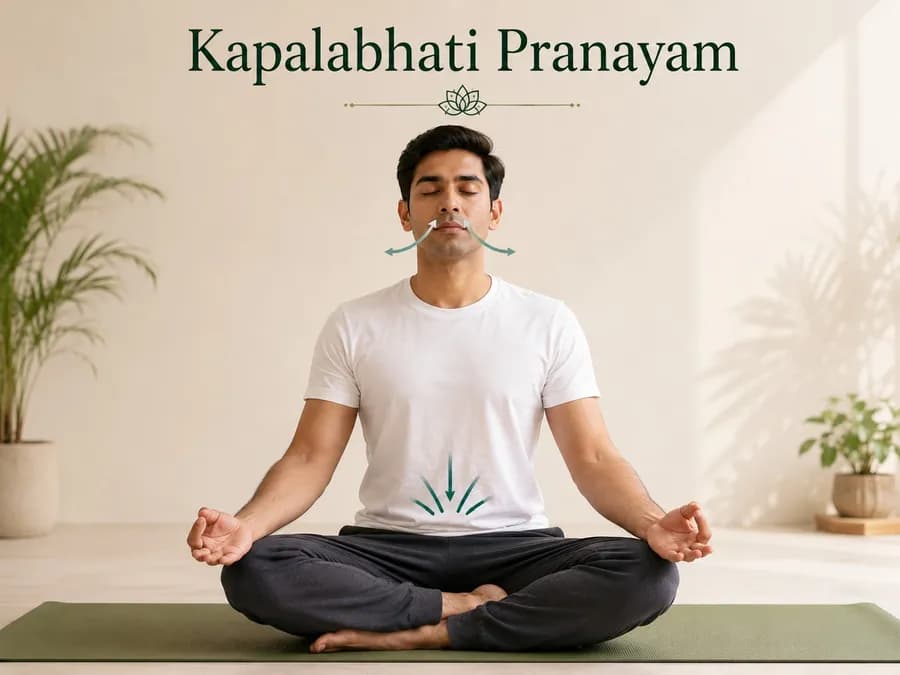
Kapalbhati — from the Sanskrit kapala meaning “skull” and bhati meaning “shining” — is a classical pranayama and one of the six shatkarma purification practices in Hatha yoga. The technique involves rapid, forceful exhalations through the nose with passive inhalations, performed at 60–120 breaths per minute. A 2009 study published in the International Journal of Yoga measured cardiovascular parameters during kapalbhati and confirmed that in healthy adults, heart rate and blood pressure elevations stay within normal aerobic exercise range and return to baseline within 2 minutes of stopping — validating the safety profile for healthy practitioners while underscoring the caution required for those with pre-existing cardiac conditions.
For the full breakdown of the practice itself — including the classical context, benefits, and technique — the dedicated kapalbhati pranayama guide covers what well-practised kapalbhati delivers across the body and mind. This page focuses specifically on the side-effect profile — what can go wrong, why, and how to recognise the warning signs. Understanding the side effects is not a reason to avoid kapalbhati; it is the foundation for practising it safely.
Common Kapalbhati Side Effects (Usually Mild and Temporary)
These kapalbhati side effects appear in roughly 20–30% of beginners during the first 1–2 weeks. Almost all resolve as the practice settles and form improves.
Physical Side Effects
- Lightheadedness and Dizziness The most common kapalbhati pranayama side effect. Usually caused by hyperventilation — breathing too fast, too forcefully, or for too many strokes too soon. Resolves immediately when the rate is moderated and round count is reduced.
- Mild Headaches A dull frontal headache during or after practice typically signals over-breathing or tension in the shoulders and neck. Slowing the rate and softening the upper body usually resolves it within a few days.
- Tingling in Hands or Face A tingling or numb sensation in the fingertips and around the mouth — a classic hyperventilation marker. Slowing the breath rate immediately resolves it.
- Mild Nausea Occasionally appears if practising on a partially full stomach or with poor posture. Resolves with empty-stomach practice and proper seated alignment.
- Eye Pressure or Tearing Some practitioners notice mild eye pressure during the practice. Usually caused by facial clenching — relaxing the jaw and brow eliminates it.
- Lower Back Discomfort A rounded lower back during practice transfers force into the spine instead of the diaphragm. Sitting on a cushion to elevate the hips and lengthen the spine typically fixes this within one session.
These mild kapalbhati side effects are not warning signs of damage — they are feedback that form needs adjustment. Live correction in the first 1–2 weeks resolves most of them before they become habits.
Kapalbhati Side Effects on Heart
The kapalbhati side effects on heart are the most important to understand clearly, because this is where serious complications can emerge for the wrong practitioner.
What Happens to the Heart During Kapalbhati
Kapalbhati activates the sympathetic nervous system briefly. Heart rate rises modestly, blood pressure increases slightly, and the cardiovascular load rises. For a healthy practitioner, this is mild and well within normal exercise range — comparable to a brisk walk. For someone with underlying cardiovascular conditions, however, the same activation can be problematic.
Specific Cardiac Concerns
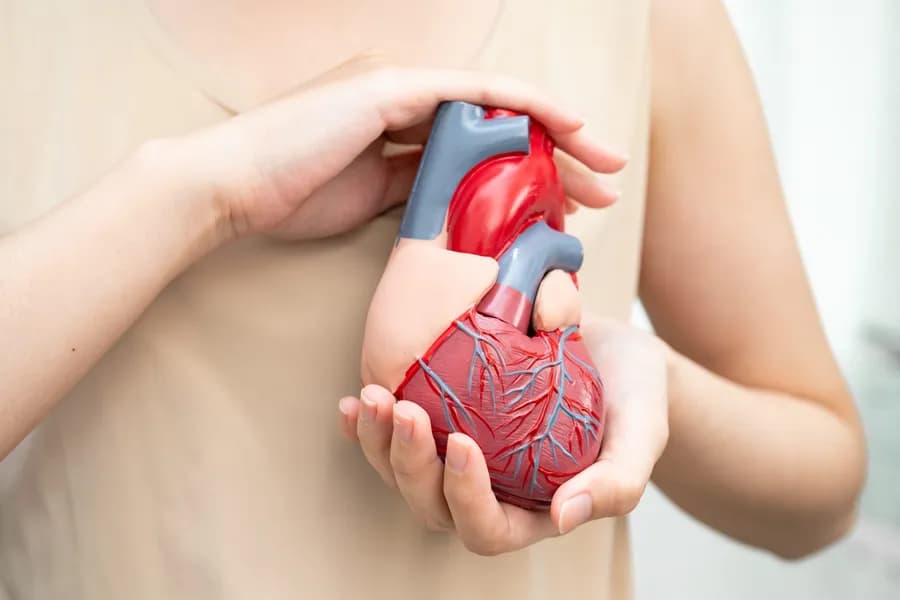
Hypertension (High Blood Pressure) The temporary blood pressure rise during kapalbhati can be problematic for those with uncontrolled hypertension. People with diagnosed high BP should consult their physician before starting and explore complementary approaches like a structured yoga for high blood pressure routine that emphasises calming pranayama instead of stimulating breathwork.
Heart Disease and Arrhythmias The forceful exhalations and brief sympathetic activation can trigger arrhythmias in those with pre-existing rhythm disorders. People with heart disease should not start kapalbhati without cardiology clearance, and should begin with gentler practices through a structured yoga for heart health programme first.
Recent Cardiac Events Anyone within 6 months of a heart attack, cardiac surgery, or stent placement should avoid kapalbhati entirely until cleared by a cardiologist.
Stop immediately and consult a physician if any of these occur during kapalbhati:
- Chest pain or pressure during or after practice.
- Heart palpitations that persist beyond the practice session.
- Significant shortness of breath that doesn’t resolve quickly.
- Persistent dizziness lasting beyond the session.
These are not normal kapalbhati side effects. They require medical attention.
Other Kapalbhati Pranayama Side Effects to Know
Pregnancy
Kapalbhati is contraindicated throughout pregnancy. The forceful abdominal pumping is not safe for the developing fetus. Resume gently 6 weeks postpartum with medical clearance.
Menstruation
The intense abdominal engagement is contraindicated during the heaviest days of menstruation. Most teachers recommend pausing the practice for the first 2–3 days of the cycle.
Hernia and Recent Abdominal Surgery
The repeated abdominal contraction can aggravate inguinal, umbilical, and hiatal hernias. Recent abdominal surgery (within 6 months) is also a contraindication.
Acid Reflux and GERD
Severe GERD or active gastric ulcers can be aggravated by the abdominal pressure changes. Mild acid reflux is generally fine; severe cases need medical guidance before starting.
Vertigo and Severe Migraine Disorders
The forceful breathing can trigger episodes in those with vertigo (Meniere’s disease, BPPV) or severe migraine disorders. Approach with extra caution and start with very few strokes (10–15).
Eye Conditions
Recent eye surgery, glaucoma, or detached retina can be aggravated by the intracranial pressure changes during kapalbhati. Consult an ophthalmologist before starting if any of these apply.
How to Avoid Kapalbhati Side Effects
Most kapalbhati pranayama side effects are preventable with these guidelines:
Start Slow
Begin with 30 strokes per round, 3 rounds per session. Build over 4–6 weeks to 60 strokes, then 90, then 120. Beginners trying to do 200 strokes on day one account for the majority of negative early experiences.
Practise on an Empty Stomach
Wait at least 3 hours after a full meal, 2 hours after a light snack. Practising too soon after eating causes nausea and discomfort almost every time.
Sit Correctly
Spine tall, shoulders relaxed, hips slightly higher than knees (sit on a cushion if needed). Poor posture transfers the force into the wrong areas and is the root cause of most back and neck side effects.
Breathe through the Nose Only
Both inhale and exhale through the nose. Mouth breathing during kapalbhati causes excessive drying and disrupts the natural pressure regulation of the practice.
Stop If Anything Feels Wrong
Lightheadedness, chest pressure, persistent dizziness — these are signals. Stop, rest, and reassess. Never push through cardiac warning signs.
Get Live Form Correction in the First 2 Weeks
This is the single most effective way to prevent side effects. A trained teacher catches form errors that videos cannot — and the early weeks are precisely when most side effects emerge.
Common Mistakes That Cause Kapalbhati Side Effects
- Mistake 1: Going too fast too soon. Speed before rhythm wastes the practice and causes hyperventilation. Two clean exhales per second beats four sloppy ones.
- Mistake 2: Forcing the inhale. The inhale should be passive — automatic. Active inhalation causes lightheadedness within 60 seconds.
- Mistake 3: Pumping the chest, not the belly. If shoulders rise on each exhale, the diaphragm isn’t engaging. The belly does the work; the chest stays still.
- Mistake 4: Practising during a cold or fever. The body is already stressed — adding kapalbhati intensity is counterproductive and can prolong illness.
- Mistake 5: No rest between rounds. Continuous 5-minute kapalbhati without rest is not advanced — it is unsafe. 30-second rest between rounds is the standard.
- Mistake 6: Self-teaching from short video clips. The form details that prevent side effects are precisely what video clips skip.
Who Should Practise Kapalbhati Cautiously?
- Beginners in Their First 2 Weeks Even healthy beginners often experience mild side effects in the first week. Pairing kapalbhati with a structured yoga for concentration foundation before starting builds the body awareness that reduces side-effect frequency. A complete yoga for beginners base for 4–6 weeks before adding kapalbhati also significantly reduces early discomfort.
- Working Professionals with Stress-Related Headaches Those prone to tension headaches should start with 15–20 strokes per round and build slowly. The headache risk usually disappears once the breath rhythm is established and shoulder tension is corrected.
- People with Mild GI or Digestive Issues Mild acidity or indigestion usually improves with kapalbhati over time — but the first week may include temporary worsening. Practising on a fully empty stomach minimises this consistently.
- Established Practitioners Returning after a Break Even experienced practitioners returning after months away should reduce stroke count and rounds for the first 1–2 weeks. The body adapts quickly but early sessions can produce mild dizziness if the previous tolerance is assumed.
Make Kapalbhati a Safe Part of Your Practice
You now have a complete view of kapalbhati side effects — the common mild ones, the more serious kapalbhati side effects on heart for those with cardiovascular concerns, the full list of contraindications, and the practical guidelines that prevent almost all of them. The technique is one of the most powerful in yoga, and the same intensity that delivers benefits is what makes the side-effect profile real.
What Live Guidance Changes
The practitioners who experience problems with kapalbhati are almost always those who started too aggressively, ignored early warning signs, or had a pre-existing condition that wasn’t accounted for. The practitioners who build slowly, get live form correction in the early weeks, and respect the contraindications experience the benefits with minimal discomfort. Habuild’s instructors screen for the most common risk factors in the first session and adjust pace and stroke count based on what they observe — not what a beginner self-reports.
The Right Progression
30 strokes per round, 3 rounds — every morning, on an empty stomach, with a teacher watching for the first two weeks. This is the protocol that produces the benefits without the side effects. It is not dramatic, it is not fast, and it produces the cleanest results. Habuild’s morning curriculum follows this progression systematically — the same approach that has allowed members with mild hypertension, post-recovery conditions, and digestive sensitivities to build a safe daily practice.
What 1.5 Crore+ Members Already Know
The single thing that most distinguishes Habuild members from self-taught kapalbhati practitioners is that the form was corrected before it became a habit. Shoulder rise, forced inhale, collapsed lower back — these are the three errors that cause the majority of kapalbhati side effects, and all three are invisible to the practitioner in the mirror and immediately visible to a live instructor. Your first 7 days are ₹1, and the form correction in the first two sessions is worth more than months of self-practice.
Most of the side effects covered here trace back to rushing the technique or skipping the buildup, which is exactly why correct, guided, and consistent practice matters more than intensity — mild light-headedness and headaches tend to ease once the body adjusts to a steady daily rhythm rather than sporadic, forceful attempts. If you’d rather learn the technique with proper guidance from the start, Habuild’s Yoga Everyday program offers guided daily sessions that build practices like kapalbhati up safely.
Frequently Asked Questions
Related Articles
Kapalbhati Pranayam: How to Practice Benefits and Precautions
Practice Pranayam Kapalbhati with Habuild. Follow the skull-shining breath steps to boost digestion, strengthen your core, and energise your body. Start today!
Kapalbhati (Skull Shining Breath): Steps, Benefits & Precautions
Considered the most accessible and widely beneficial of all six classical Shatkarmas, this practice is recommended for almost everyone. See the steps, benefits, and precautions.

Shatkarma: the Six Cleansing Techniques of Hatha Yoga
These six cleansing techniques of Hatha yoga range from gentle trataka eye gazing to advanced practices like vaman dhauti that carry real medical risks if