
Shatkarma: the Six Cleansing Techniques of Hatha Yoga
These six cleansing techniques of Hatha yoga range from gentle trataka eye gazing to advanced practices like vaman dhauti that carry real medical risks if
Key Takeaways
- The six shatkarmas are dhauti, basti, neti, trataka, nauli, and kapalbhati specifically.
- Jal neti and trataka are the two most accessible shatkarmas for general students.
- Advanced techniques like vaman dhauti and vastra dhauti carry real medical risks if done wrong.
- Described in both the Hatha Yoga Pradipika and the Gheranda Samhita as preparatory cleansing.
- The traditional view holds the body must be physically cleansed before subtle practices work fully.
- Still taught as a complete system in classical hatha yoga schools across India today.
What is Shatkarma?
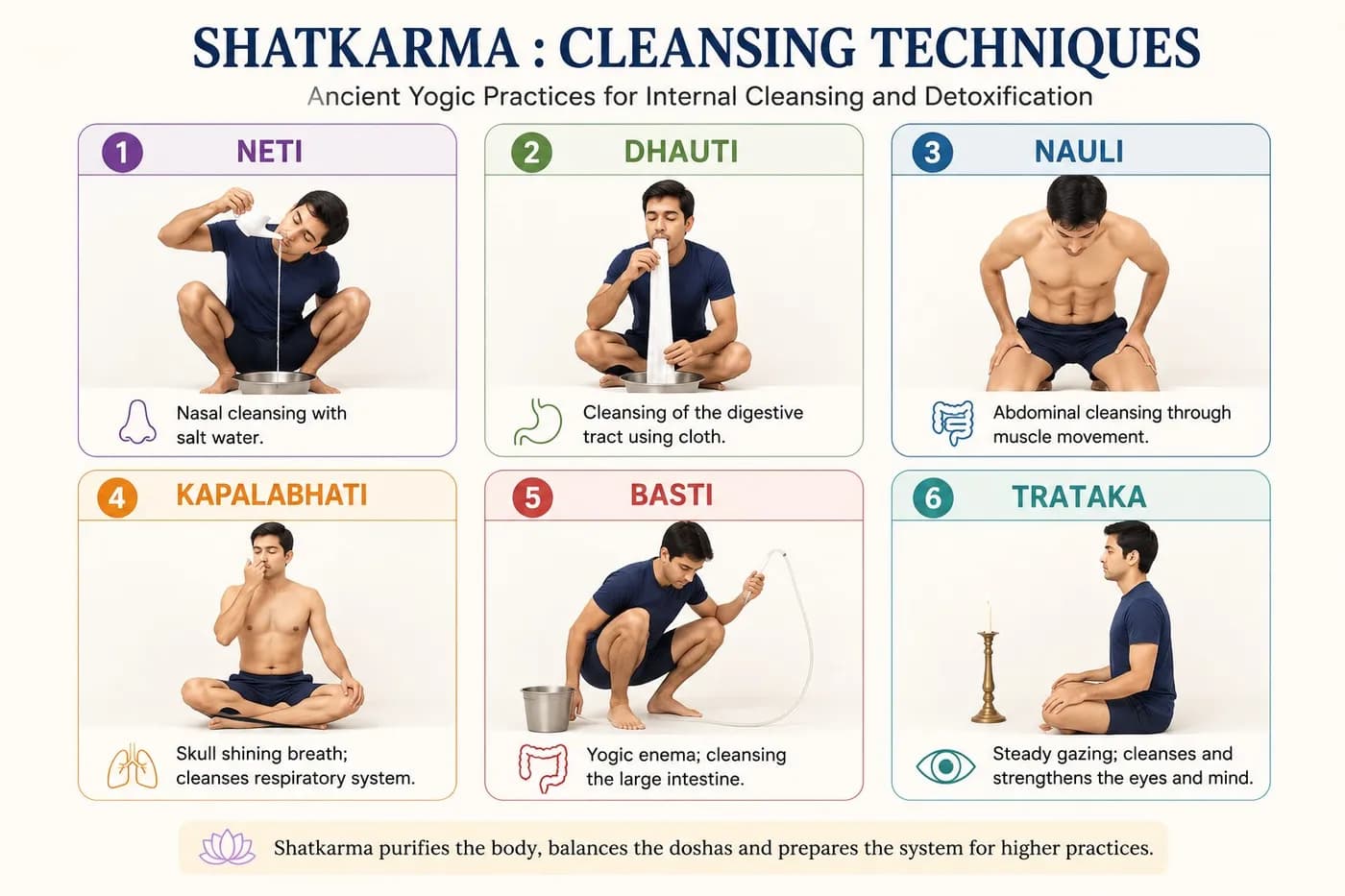
Shatkarma (sometimes spelled shatkarmas) refers to the six classical cleansing techniques of hatha yoga. The word comes from Sanskrit: shat meaning “six” and karma meaning “action” or “process”. These techniques are described in detail in classical hatha yoga texts including the Hatha Yoga Pradipika and the Gheranda Samhita, where they are presented as preparatory cleansing practices that ready the body for advanced asana, pranayama, and meditation. The six shatkarmas in hatha yoga are dhauti (digestive cleansing), basti (colon cleansing), neti (nasal cleansing), trataka (eye gazing), nauli (abdominal massage), and kapalbhati (skull-shining breath).
In the traditional view, the body must be physically cleansed before subtle practices can produce their full effect. Shatkarma kriya is the umbrella term for these cleansing actions, and shatkarmas cleansing techniques are still taught in classical hatha yoga schools across India today. While modern yoga has largely focused on asana and breathing, shatkarmas remain part of the foundational tradition. Each technique requires its own training, and the more advanced ones are not appropriate for general practitioners. The full hatha yoga framework is detailed in our work on hatha yoga, where shatkarmas sit alongside asana and pranayama in the classical sequence.
Shatkarma Benefits
Physical Benefits
- Benefit 1: Supports Respiratory Cleanliness Neti (nasal cleansing) clears the nasal passages of accumulated mucus and dust. Many practitioners find it reduces seasonal allergy symptoms and supports clearer breathing.
- Benefit 2: Stimulates Digestive Function The dhauti and nauli practices stimulate the digestive system through direct mechanical action. The traditional claim is improved digestive function and reduced sluggishness.
- Benefit 3: Improves Lung and Sinus Health Kapalbhati and neti together support clearer airways and stronger respiratory muscles. The combination is widely practised in modern yoga schools.
- Benefit 4: Trataka Builds Concentration The candle-gazing or fixed-point staring technique trains sustained attention. Many practitioners use trataka as a foundation for longer meditation practice.
- Benefit 5: Builds the Discipline of Daily Practice Shatkarmas are typically practised in the morning. The structure itself encourages a disciplined daily routine that supports broader wellbeing.
Mental and Emotional Benefits
Benefit 4: Trataka Builds Concentration
The candle-gazing or fixed-point staring technique trains sustained attention. Many practitioners use trataka as a foundation for longer meditation practice.
Benefit 5: Builds the Discipline of Daily Practice
Shatkarmas are typically practised in the morning. The structure itself encourages a disciplined daily routine that supports broader wellbeing.
How to Practise Shatkarma. Step-by-Step Overview
Each of the six shatkarmas is its own technique with its own steps. This overview covers the general approach. For specific techniques, see the dedicated pages on each.
Step 1: Choose the Appropriate Technique
Beginners should start with jal neti (saline water nasal rinse) and trataka (candle gazing). These are the safest entry points into shatkarma practice.
Step 2: Gather the Required Equipment
Jal neti requires a neti pot and warm saline water. Trataka requires a candle and a quiet darkened room. Other shatkarmas require more specific equipment and supervision.
Step 3: Practise in a Calm Environment
Shatkarmas are traditionally practised in the early morning before eating, in a calm and quiet environment. The setting is part of the practice.
Step 4: Move Slowly and Mindfully
Shatkarmas are not exercises. They are cleansing rituals practised with slow, mindful attention. Rushing defeats the purpose.
Step 5: Stop If Discomfort Arises
Any technique that produces sharp pain, dizziness, or distress should be stopped immediately. Consult your teacher or doctor before continuing.
Step 6: Build up Gradually
Start with one shatkarma practice (jal neti is the most common entry point). Build to two or three only after each is mastered.
Breathing in Shatkarma Practice
Each technique has its own breathing pattern. Kapalbhati uses forceful exhalations. Trataka uses slow nasal breathing. Always learn the breathing alongside the technique itself.
Preparatory Practices Before Shatkarma (Optional)
Light preparation makes shatkarma practice more effective and safer.
- 5 minutes of gentle stretching: Loosens the body for the postures some shatkarmas require.
- 10 cycles of slow nasal breathing: Settles the mind for the focused work of shatkarma.
- Hydrate adequately the day before: Particularly important before any cleansing practice.
Variations of Shatkarma. the Six Classical Practices
Variation 1: Neti (Nasal Cleansing. Beginner-Safe)
Jal neti uses warm saline water poured through a neti pot to cleanse the nasal passages. The most accessible shatkarma. The dedicated practice is detailed in our work on jal neti.
Variation 2: Trataka (Eye Gazing. Beginner-Safe)
Steady gazing at a fixed point (typically a candle flame) until tears form and the eyes close naturally. Builds concentration and is widely accessible.
Variation 3: Kapalbhati (Skull-Shining Breath. Beginner to Intermediate)
Forceful, rhythmic exhalations through the nose with passive inhalations. Stimulates the abdominal area and brain. Modern yoga classes often include it.
Variation 4: Dhauti (Digestive Cleansing. Advanced, Supervision Required)
Various sub-techniques including drinking and vomiting saline water (vaman dhauti) and swallowing a long cloth (vastra dhauti). These require expert supervision and have real medical risks.
Variation 5: Nauli (Abdominal Massage. Advanced)
Isolation and rolling of the abdominal muscles in specific patterns. Difficult to learn without direct teacher guidance.
Variation 6: Basti (Colon Cleansing. Advanced, Medical Caution)
Traditional yogic colon cleansing technique. Modern equivalents include enemas under medical supervision. Should never be attempted without expert guidance.
Common Mistakes to Avoid in Shatkarma
- Mistake 1: Attempting Advanced Practices Without Supervision Vaman dhauti, vastra dhauti, basti, and nauli should only be learned under direct supervision of an experienced hatha yoga teacher. Self-teaching from videos has caused real harm.
- Mistake 2: Practising When Unwell Shatkarmas should be skipped during illness, fever, or significant stress. The body cannot process additional intervention during recovery.
- Mistake 3: Practising Too Frequently Most shatkarmas are practised once daily or even less frequently. Excessive practice can disrupt natural body function.
- Mistake 4: Skipping Medical Consultation If you have any medical condition (gastrointestinal, cardiovascular, neurological), consult a doctor before attempting any shatkarma beyond jal neti or trataka.
Who Should Practise Shatkarma?
- Beginner Yoga Practitioners (Jal Neti and Trataka Only) The two safest shatkarmas are appropriate for general students under teacher guidance.
- Serious Hatha Yoga Students Practitioners committed to learning the full classical tradition under qualified teachers.
- Adults with Specific Goals (Under Guidance) Adults with chronic sinus issues may benefit from supervised jal neti. Adults working on concentration may benefit from trataka.
- Is Shatkarma Good for Beginners? Jal neti and trataka are accessible to beginners with proper instruction. The advanced shatkarmas are not suitable for general students and should only be attempted under expert supervision after years of preparatory practice.
The six shatkarmas were designed as a system, not a single trick to try once — trataka and jal neti in particular reward the practitioner who returns to them regularly far more than the one who samples each technique out of curiosity. Given the injury risk in the more advanced cleansing practices, correctly sequenced, guided instruction matters as much as the consistency itself. Habuild’s Yoga Everyday program is a safe starting point for folding the gentler shatkarmas into a structured daily practice.
Frequently Asked Questions
Related Articles

Gyan Mudra: How to Do It and Its Benefits for Focus and Memory
Practice Gyan Mudra with Habuild. Follow the wisdom hand gesture steps to improve focus, reduce anxiety, and enhance your meditation practice. Start today!

Prana Mudra: How to Practice and Its Life Energy Benefits
Practice Prana Mudra with Habuild. Follow the life force hand gesture steps to boost energy, strengthen immunity, and improve your eye health. Start today!

Kapalbhati Pranayam: How to Practice Benefits and Precautions
Practice Pranayam Kapalbhati with Habuild. Follow the skull-shining breath steps to boost digestion, strengthen your core, and energise your body. Start today!
