
Naukasana (Boat Pose): Steps, Benefits & Precautions
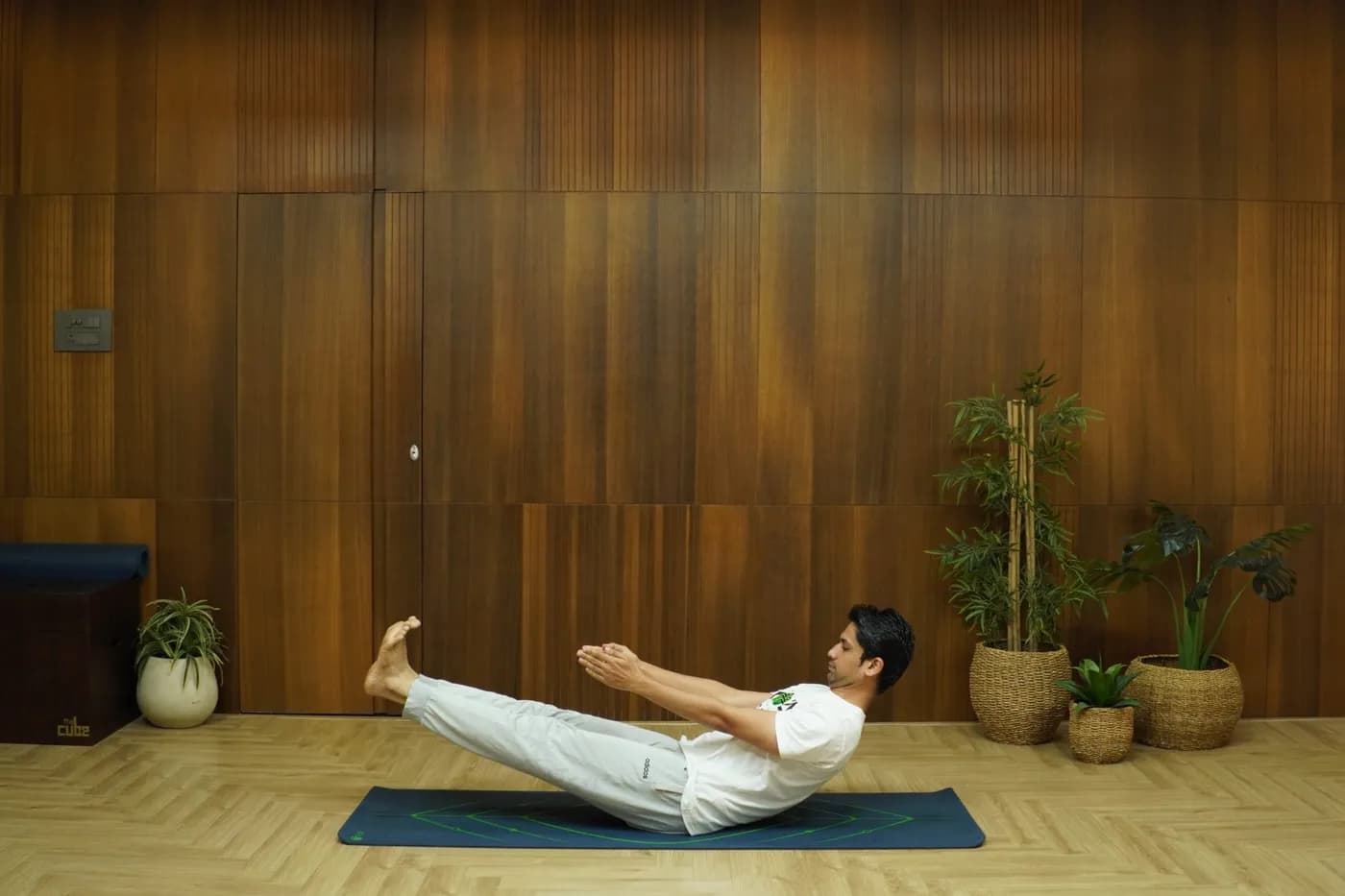
Boat Pose forms a V-shape with the legs and torso lifted, arms extended forward, balancing on the sitting bones to strengthen the core and hip flexors.
Key Takeaways
- The body forms a clear V-shape, balancing entirely on the sitting bones.
- Two versions exist – a supine variation lying down and the more commonly taught seated form.
- Named after the silhouette of a boat cutting through water.
- Serves as a preparatory pose for deeper core work and a counter-balance to backbends.
- Lifting the legs at an angle intensely activates the hip flexors and front-thigh muscles.
- Isometric contraction of the rectus abdominis and obliques builds functional core strength.
What is Naukasana?
The word Naukasana comes from Sanskrit — nauka meaning “boat” and asana meaning “posture.” Pronounced now-kah-sah-nah, the pose is named after the shape your body forms while holding it: legs and torso lifted off the floor, arms extended forward, the whole frame balancing on the sitting bones in a clear V — the silhouette of a boat cutting through water.
In the traditional yogic system, Naukasana is grouped with the abdominal and balancing postures. It appears in classical sequences as a preparatory pose for deeper core work and as a counter-balance to backbends. The symbolism is straightforward: just as a boat must stay balanced to move forward, the practitioner must engage core, breath and focus simultaneously to hold the pose.
Two main versions exist — the supine variation, performed lying on the back, and the seated balancing variation, which is the more commonly taught form today. Both target the same muscle groups but emphasize different aspects of strength and stability. You will find naukasana referenced across most modern yoga asanas manuals because it is one of the few postures that combines strength, balance and breath awareness in a single shape.
Naukasana Benefits
The naukasana pose works on the body and the mind in equal measure. For a deeper look at long-term outcomes, see our detailed breakdown of the benefits of Naukasana. Below is a structured view of what consistent practice supports.
Strengthens the abdominal and core muscles. The most direct effect of naukasana is on the rectus abdominis, obliques and deep transverse abdominal muscles. Holding the V-shape forces these muscles to contract isometrically, building the kind of functional core strength that supports daily movement, lifting, and posture. Over weeks of consistent practice, most people notice a tighter, more stable midsection.
Builds hip flexor and quadriceps strength. Lifting and holding the legs at an angle activates the hip flexors and front-thigh muscles intensely. This makes naukasana steps particularly valuable for people who sit for long hours, as it reverses the weakening of hip flexors that comes from prolonged desk work.
Improves digestion and stimulates abdominal organs. The compression created by the lifted-leg position gently massages the digestive organs — stomach, intestines and pancreas. This can help support smoother digestion when practised regularly on an empty stomach in the morning.
Supports lower back stability. While the pose looks like a purely abdominal challenge, a strong core directly supports the lumbar spine. Many practitioners with mild postural back discomfort find that naukasana benefits include a gradual reduction in everyday back fatigue when paired with proper technique.
Improves focus and mental endurance. Holding naukasana is as much a mental exercise as a physical one. The wobble in the early seconds, the rising heat in the abdomen, the urge to drop the legs — all of these become opportunities to train concentration. Over time, this carries into daily life as a steadier attention span.
Builds self-discipline through daily practice. Few poses give such immediate feedback on whether you actually practised yesterday. The pose rewards consistency in a way that builds quiet self-trust — exactly the kind of daily-practice discipline our members at Habuild build through daily online yoga classes.
How to Do Naukasana — Step-by-Step Instructions
Key Principles
Three principles guide a clean naukasana: lengthen the spine before you lift, lead with the chest rather than the chin, and use the breath as the anchor for the hold. If the lower back rounds heavily or the breath goes shallow, you have lost the pose even if the shape looks right.
Step 1: Starting Position
Sit on the mat with your legs extended in front of you, similar to Paschimottanasana. Place your palms beside your hips, fingers pointing forward. Lengthen the spine, draw the shoulders away from the ears, and root the sitting bones firmly into the mat. This is your foundation.
Step 2: Lean Back Slightly
Bend the knees and lean your torso back to roughly a 45-degree angle. Engage the lower abdomen — you should feel the core switch on. Keep the chest open and avoid collapsing through the shoulders.
Step 3: Lift the Legs
Slowly lift the feet off the floor so the shins are parallel to the ground. This is the half-boat position and a perfectly valid stopping point for beginners. Maintain steady breathing — do not hold the breath.
Step 4: Extend the Legs
If your core feels stable, straighten the knees and extend the legs upward at roughly a 45-degree angle. Your body should now form a V-shape. The toes are pointed, the legs active.
Step 5: Final Position and Hold
Stretch the arms forward, parallel to the floor, palms facing each other. Gaze softly toward the toes. Hold for 10 to 30 seconds initially, working up to a full minute over weeks of practice. Breathe steadily — inhale to lengthen, exhale to engage.
Step 6: How to Come Out of Naukasana
To release, exhale and slowly lower the legs and torso back to the mat. Do not drop suddenly — control the descent. Lie flat for a few breaths, allowing the abdominal muscles to relax fully before repeating or moving on.
Breathing in Naukasana
Breathe through the nose throughout the hold. Inhale gently into the upper chest, exhale to deepen the abdominal engagement. Holding the breath in this pose creates unnecessary tension and shortens the hold. Smooth, even breathing is the marker of a well-practised naukasana.
Preparatory Poses Before Naukasana
Warm up the core, hip flexors and spine before attempting the full pose. A few minutes of preparation reduces the risk of strain and lets you hold the pose longer.
- Pawanmuktasana — releases the lower back and gently activates the abdominals.
- Marjariasana (Cat-Cow) — mobilizes the spine and primes the core for engagement.
- Setu Bandhasana (Bridge Pose) — strengthens the glutes and lower back, balancing the abdominal load that follows and working well as a counter-pose afterwards.
- Half boat hold — practise the bent-knee version for a few breaths before attempting the full extension.
Variations of Naukasana
Variation 1: Ardha Naukasana (Half Boat)
Difficulty: Beginner. The knees stay bent with the shins parallel to the floor. This reduces the lever arm and makes the pose accessible to those still building core strength. Hold here until you can manage 30 seconds with steady breath before progressing.
Variation 2: Supta Naukasana (Supine Boat)
Difficulty: Beginner to Intermediate. Performed lying on the back, this version lifts the head, shoulders, arms and legs off the floor simultaneously. It removes the balance challenge and isolates the abdominal contraction, making it useful for those who struggle with the seated balance.
Variation 3: Paripurna Navasana (Full Boat with Variations)
Difficulty: Advanced. An advanced version where the hands clasp behind the head or the legs lift higher, increasing the demand on the core and hip flexors. Some practitioners add slow leg-lowering sequences for additional strength work. Attempt only after holding standard full Navasana for a full minute with ease.
Common Mistakes to Avoid in Naukasana
- Rounding the lower back heavily — this shifts the load away from the abdominals and onto the lumbar spine. Correction: sit taller before lifting, lengthen through the crown.
- Holding the breath — a clear sign of overexertion. Correction: drop to the half-boat variation and rebuild capacity.
- Shoulders creeping up to the ears — creates tension in the neck. Correction: actively draw the shoulder blades down the back.
- Pointing the chin to the chest — strains the neck and signals core fatigue. Correction: keep the gaze on the toes and lift the sternum.
- Bouncing or jerking into the pose — increases injury risk. Correction: move slowly, especially when lifting the legs.
- Holding too long, too soon — leads to lower-back strain. Correction: short, clean holds repeated several times are better than one long sloppy hold.
Who Should Practise Naukasana?
Those with Weak Core or Postural Concerns
If your goal is to manage everyday core weakness, sluggish digestion, or postural fatigue from long sitting hours, naukasana is one of the most efficient asanas you can add. It complements other core muscle exercises and addresses the deep abdominal layers that surface workouts often miss.
Working Professionals with Desk-Based Routines
For anyone seated for six or more hours a day, naukasana directly addresses the hip flexor weakness and abdominal disengagement that develop over time. A daily 5-minute practice — three rounds of 20 seconds — is enough to begin feeling a shift within a few weeks.
Is Naukasana Good for Beginners?
Yes, with the right modification. Beginners should start with Ardha Naukasana (knees bent) and progress only when the half-version feels stable. The supine variation is also an excellent entry point. What matters more than depth is consistency — three honest holds done daily outperform a single perfect hold done once a week.
Make Naukasana a Part of Your Life
You have just learned what naukasana is, how to perform it step by step, the benefits it offers across the core, hips and mind, and the variations that let you progress at your own pace. The pose is simple in shape but rich in what it asks of you — and that is exactly what makes it worth practising daily.
If you are a complete beginner or unsure about form, the half-boat version and the supine variation are designed for you. With live guidance from a certified yoga instructor, real-time corrections and modifications matched to your body, naukasana is accessible regardless of where you are starting from. You do not need to be flexible or strong to begin — you only need to begin.
Frequently Asked Questions
Related Articles
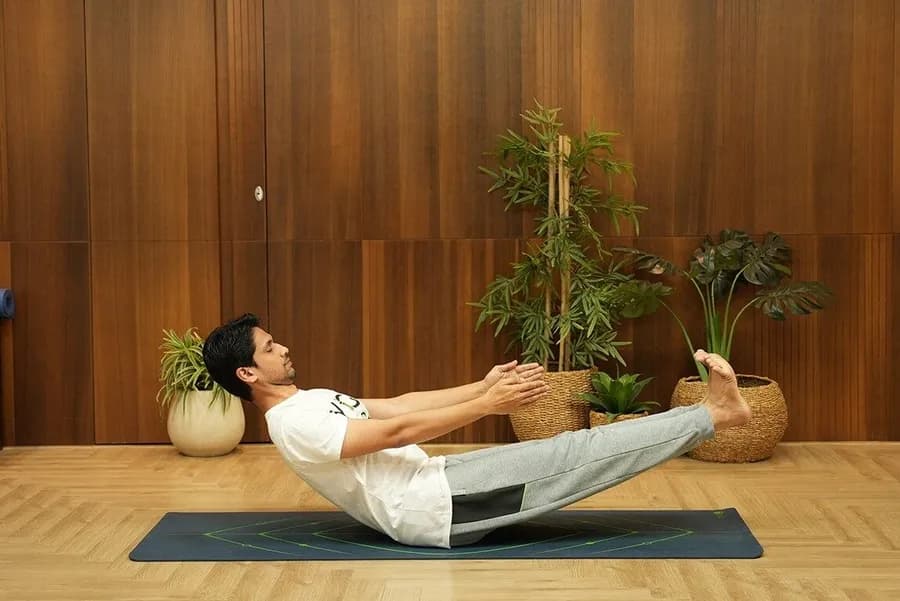
Navasana (Boat Pose): Steps Core Strength and Digestive Benefits
Practice Navasana with Habuild. Follow the boat pose steps to strengthen your core, improve balance, and build the abdominal strength you need. Start today!

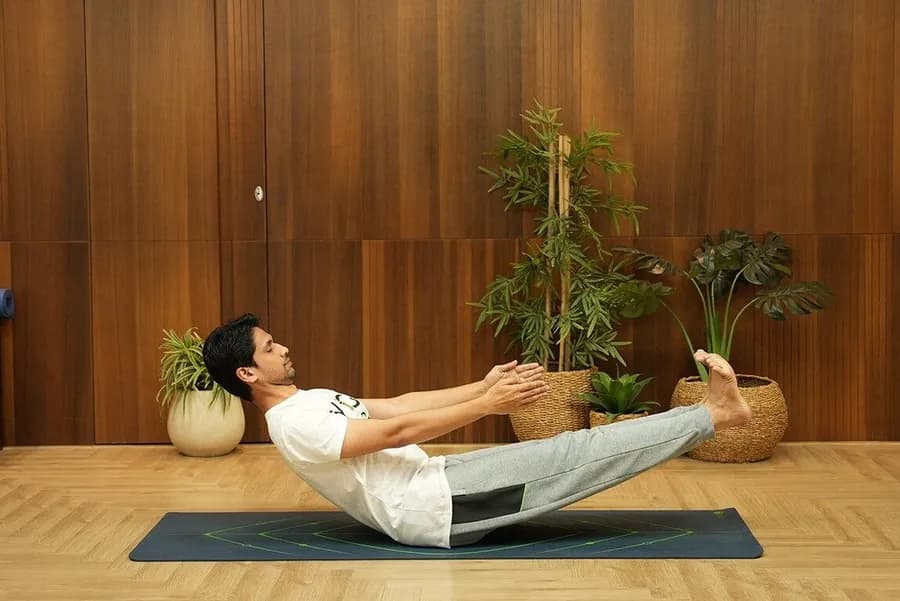
Paripurna Navasana (Boat Pose): Steps, Benefits and Precautions
Balanced on the coccyx with legs and torso elevated in a V-shape resembling a boat’s hull, this is one of the most important core-strengthening poses in all of yoga. See the steps, benefits, and precautions.
Ardha Navasana (Half Boat Pose): Steps, Benefits and Precautions
A lower leg angle of roughly 30 degrees, a slightly rounded back, and hands interlaced behind the head distinguish this from the full boat pose, producing a genuinely different muscle activation pattern. See the steps, benefits, and precautions.