
Navasana (Boat Pose): Steps Core Strength and Digestive Benefits
Practice Navasana with Habuild. Follow the boat pose steps to strengthen your core, improve balance, and build the abdominal strength you need. Start today!
Key Takeaways
- Balances entirely on the sitting bones with no floor support for the back, unlike Uttanpadasana.
- Forms a V-shape resembling a boat’s hull, legs as prow and torso as stern.
- Progresses through bent-knee and half-boat stages before the full straight-leg expression.
- Simultaneously demands abdominals, hip flexors, spinal extensors, and quadriceps engagement.
- Named the most comprehensive seated core demand of any yoga posture.
- Builds the lumbar stability specifically credited with preventing lower back pain.
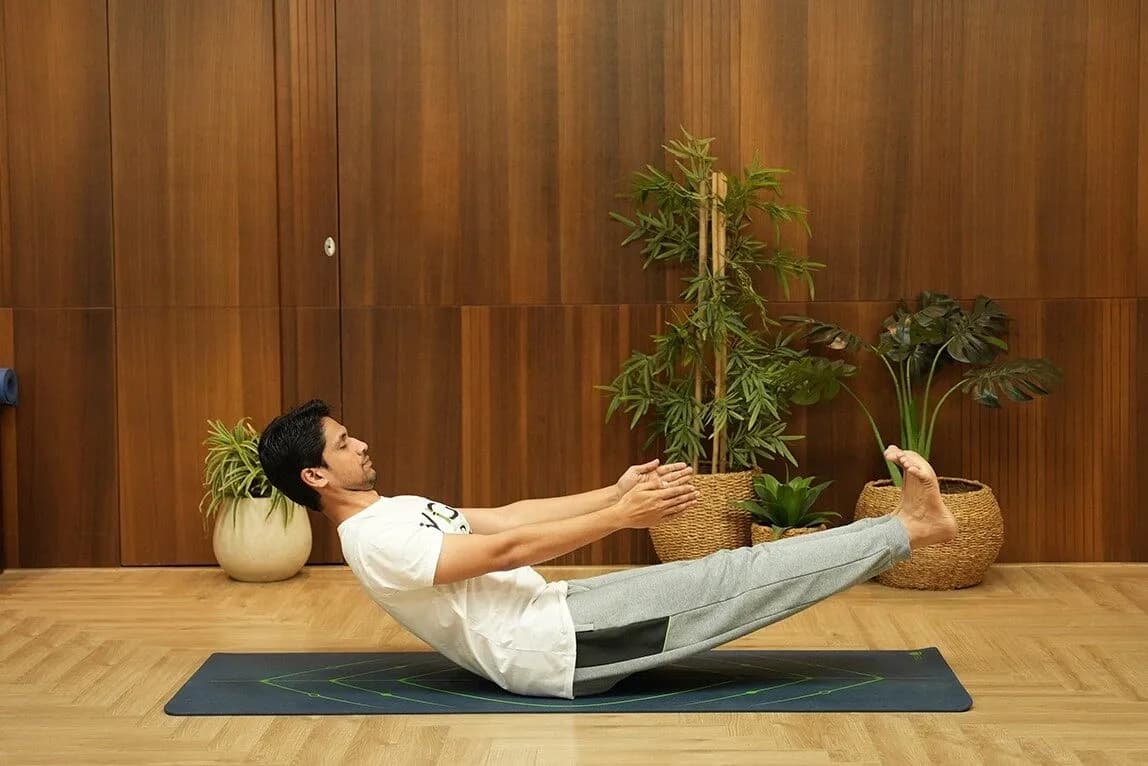
Navasana, or Boat Pose, is a seated yoga balance where the body is supported on the sitting bones with legs raised, forming a V-shape. It builds the deepest and most comprehensive core strength of any seated yoga posture, strengthens the hip flexors, stimulates the digestive organs, and builds the mental toughness that progressive challenge develops. Accessible to all levels through bent-knee and half-boat progressions.
What is Navasana?
Navasana — known in English as Boat Pose — derives from Sanskrit: Nava (boat) and Asana (posture). Balanced on the sitting bones with the legs raised, the body forms the V-shape of a boat’s hull rising from the water — legs as the prow, torso as the stern.
Navasana is yoga’s definitive seated core posture — simultaneously demanding the engagement of the deep abdominals, hip flexors, spinal extensors, and quadriceps while balancing on the two sitting bones without any external support. Unlike Uttanpadasana where the floor supports the back, Navasana removes all support entirely — the core must simultaneously balance the body, support the raised legs, and prevent the torso from collapsing.
At Habuild, Navasana is taught through a careful progression — bent-knee with hands behind thighs, half-boat with shins parallel, and full straight-leg expression — ensuring core strength and hip flexor endurance are developed appropriately before the full challenge is attempted.
Navasana Benefits
Physical Benefits
- Develops the Most Comprehensive Core Strength in Yoga Navasana requires the transverse abdominis, rectus abdominis, obliques, and hip flexors to simultaneously balance the body, support the raised legs, and maintain the upright torso without any external support — creating the most comprehensive seated core demand in yoga. This integrated core activation builds the functional trunk stability that protects the lower back, supports athletic performance, and improves postural integrity throughout daily life.
- Builds Core Strength That Protects the Lower Back The deep core activation of Navasana is the most effective yoga intervention for building the lumbar stability that prevents lower back pain. The transverse abdominis and multifidus engagement during the unsupported balance creates the natural spinal corset that protects the lumbar region from the injury that core weakness produces.
- Strengthens the Hip Flexors and Quadriceps The sustained hip flexion and leg raise of Navasana develop iliopsoas and rectus femoris strength that directly supports all standing, running, cycling, and stair-climbing activities — the real-world strength transfer that makes yoga’s functional core postures uniquely valuable.
- Stimulates Digestive Organs and Abdominal Circulation The hip flexor compression and abdominal engagement of Navasana stimulate the digestive organs through the direct mechanical compression — improving gut motility, digestive circulation, and overall abdominal organ tone.
Mental and Emotional Benefits
- Builds Mental Toughness and Persistence Under Discomfort The burning abdominal and hip flexor sensation of a sustained Navasana hold requires significant mental determination to maintain. Consistent practice of staying present through muscular discomfort develops the resilience and composed determination that transfers directly to all demanding life situations.
- Builds Confidence Through Progressive Challenge The clear progression from bent-knee to half-boat to full Navasana provides measurable milestones — each stage achieved producing genuine confidence and the tangible experience of progressive physical development that consistent practice delivers.
How to Do Navasana — Step-by-Step Instructions
Key Principles
Key Principles Three principles: balance on the sitting bones — not the tailbone, which rounds the lower back; maintain spinal length throughout — the spine must remain long and tall, never collapsing into the lower back; and bent knees are always preferable — a long-spined half boat with bent knees is consistently superior to a rounded-back full boat with straight legs.
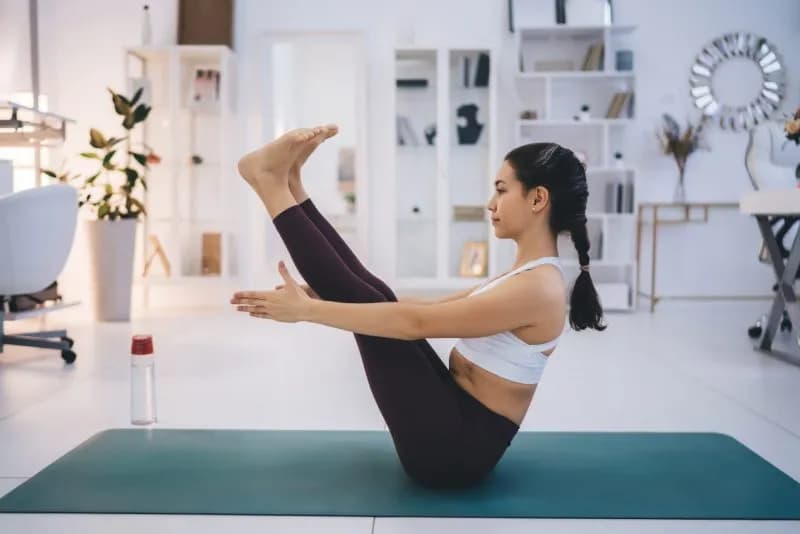
Navasana — Step by Step Step 1: Starting Position in Dandasana Sit in Dandasana with knees bent and feet flat on the floor. Place the hands behind the thighs for initial support. Check the sitting bones are grounded — not the tailbone.
Step 2: Lean Back and Find the Sitting-Bone Balance Lean back slightly from the hips — finding the balance point on the sitting bones. The spine remains long and the lower back does not round. Maintain this balance point throughout.
Step 3: Ardha Navasana — Lift the Feet On an exhalation, lift both feet off the floor and bring the shins parallel to the floor. This is Ardha Navasana (Half Boat). Hold for three to five breaths, establishing balance and spinal length.
Step 4: Release the Hands and Extend the Arms If the spine remains long in Ardha Navasana, release the hands from the thighs and extend both arms forward, parallel to the floor, shoulder-width apart.
Step 5: Full Navasana — Straighten the Legs (If Accessible) For the full expression: slowly straighten the legs to approximately 45 degrees — maintaining the long spine throughout. If the lower back begins to round, return to the bent-knee position.
Step 6: Hold and Come Out Hold for five to ten breath cycles, breathing continuously into the chest (not the belly). On an exhalation, lower the feet to the floor and return to Dandasana. Rest adequately before repeating.
Breathing in Navasana
Continuous, steady breathing into the chest — not the belly — throughout the hold. The abdominal muscles are engaged and should not be released to allow belly breathing. If the breath is being held or gasping, the pose has exceeded the current strength capacity — return to the bent-knee modification.
Preparatory Poses Before Navasana
These poses warm the core, hip flexors, and posterior chain before the full Navasana challenge.
- Surya Namaskara (3 rounds) — Warms the complete core and hip flexors before the unsupported balance demand.
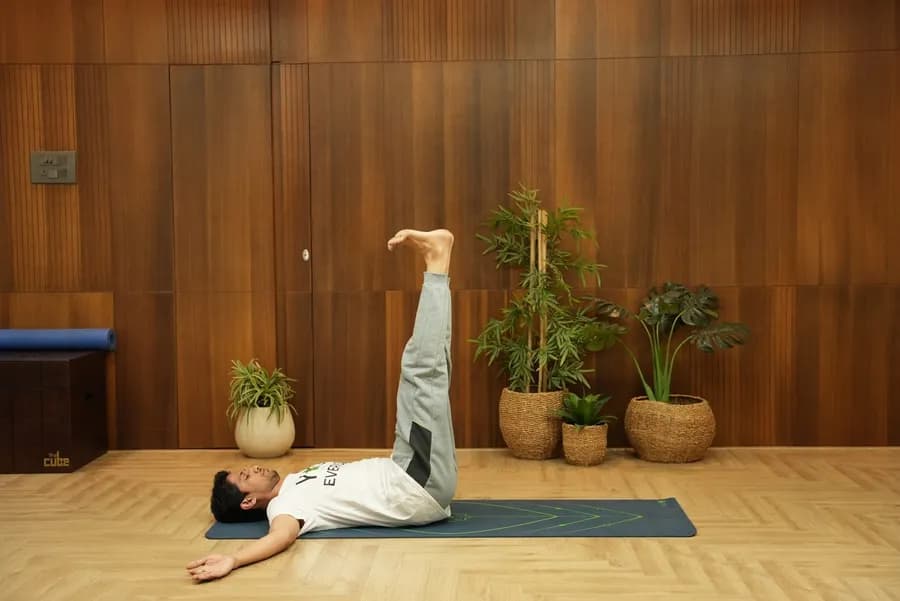
- Uttanpadasana (Raised Leg Pose, 10 breaths) — Warms the lower abdominals and hip flexors in the supported supine position before the unsupported seated balance.
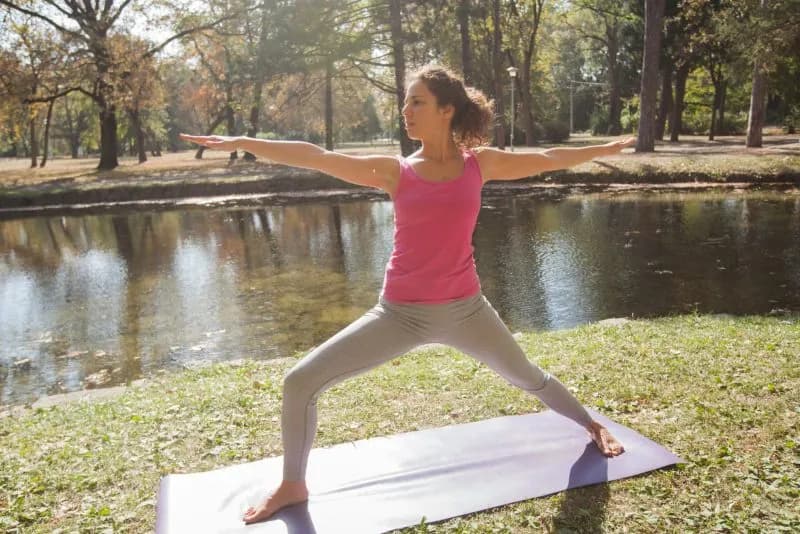
- Virabhadrasana I and II — Develops the hip flexor strength and core integration that Navasana requires.
- Dandasana (Staff Pose, 30-60 seconds) — Activates the posterior chain and establishes the seated upright awareness that Navasana builds upon.
Variations of Navasana
- Variation 1: Ardha Navasana — Half Boat (Beginner) Shins parallel to the floor, knees bent, arms extended forward. The most accessible stage that maintains the sitting-bone balance without the hip flexor demand of straight legs. This is the recommended daily practice for all beginners and the form that should be perfected before progressing.
- Variation 2: Full Navasana — Standard Legs fully extended at approximately 45 degrees, arms extending parallel to the floor. The standard expression requiring the core and hip flexor strength established through consistent Ardha Navasana practice.
- Variation 3: Dynamic Navasana — Exhale Lower From full Navasana, exhaling and lowering the legs toward the floor without touching, then inhaling them back up. The dynamic variation builds far greater abdominal endurance than static holds and is the most effective strength-building advancement for practitioners who have mastered the static full expression.
Common Mistakes to Avoid in Navasana
- Rounding the Lower Back The most common and consequential error — the lower back rounding as the core fatigues or the hip flexors are insufficient for the leg height. A rounded lower back places compressive stress on the lumbar discs rather than building the core strength the pose is designed to develop. Always return to the bent-knee Ardha Navasana when the spine begins to round.
- Holding the Breath Breath-holding during the Navasana hold significantly increases intra-abdominal pressure in a way that stresses the pelvic floor and lumbar spine. Breathe continuously into the chest throughout the hold — if breathing is impossible, the position has exceeded current capacity.
- Leaning Back on the Tailbone Rather Than the Sitting Bones Sitting on the tailbone rather than the sitting bones forces the lower back to round and reduces the core engagement to minimal. Find the two sitting bones as the balance point and maintain this position throughout — the challenge of the pose depends entirely on this correct weight placement.
Who Should Practise Navasana?
- Those Seeking Core Strength and Abdominal Development Navasana is yoga’s most demanding and effective seated core posture — producing rapid and measurable abdominal strength improvements over consistent daily practice. Its unsupported balance creates the integrated core demand that isolated abdominal exercises cannot replicate.
- Those with Lower Back Pain from Core Weakness The deep core activation of Navasana is the most direct yoga intervention for the lumbar instability that causes lower back pain. Building the Ardha Navasana progressively and then advancing to the full expression over weeks provides the core strengthening foundation that prevents recurrent lower back issues.
- Is Navasana Good for Beginners? Yes — Ardha Navasana with hands behind the thighs is accessible from early in yoga practice. Beginners should establish consistent Ardha Navasana with a long spine before progressing to the arm extension and subsequently the leg extension of the full posture.
Make Navasana a Part of Your Daily Practice
Navasana is yoga’s most comprehensive seated core challenge — its unsupported V-balance delivering deep abdominal strength, hip flexor development, and the mental toughness of sustained discomfort in a single posture that produces measurable results within weeks of consistent daily practice.
Whether you are building your first core foundation with the bent-knee Ardha Navasana modification, establishing the full expression, or developing the dynamic variation for advanced abdominal endurance, Navasana rewards every level of consistent practice with progressive strength gains.
The most effective way to learn Navasana correctly — with sitting-bone balance guidance, spinal length priority, and progressive modification structure — is under live expert guidance with Habuild.
Start your 14 day free yoga journey with Habuild, today!
Related reads: Uttanpadasana (Raised Leg Pose): Steps Core and Digestive Benefits · Utkatasana (Chair Pose): Steps Strength and Stamina Benefits
Boat Pose is unforgiving in the moment but rewarding over weeks — the shake in your abdominals during the hold is exactly the core strength building that also tends to support balance and digestion once it’s practiced regularly. A single hold won’t do much; showing up for it several times a week is where the real change happens. Habuild’s Yoga Everyday program includes core work like this as part of its daily sequencing.
Frequently Asked Questions
Related Articles
Uttanpadasana (Raised Leg Pose): Steps Core and Digestive Benefits
Practice Uttanpadasana with Habuild. Follow the raised leg pose steps to strengthen your core, relieve lower back pain, and improve digestion. Start today!
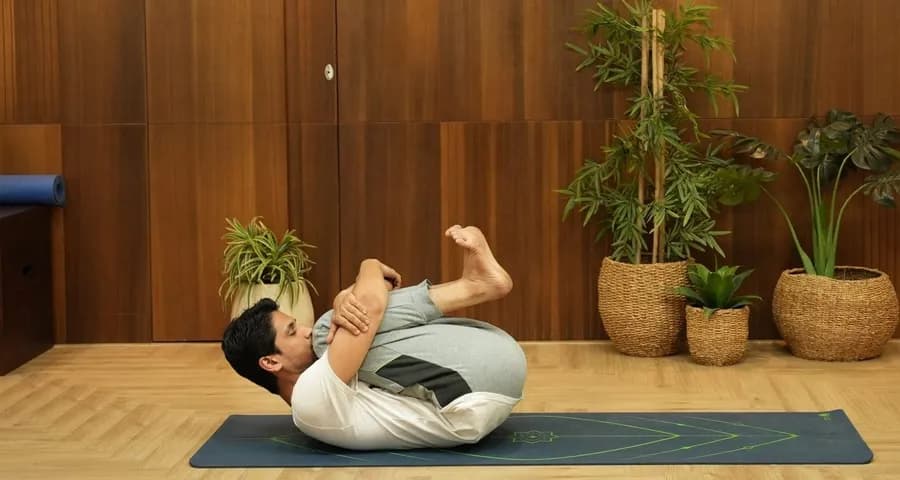
Pawanmuktasana (Wind Relieving Pose): Steps and Digestive Benefits
Try pawanmuktasana with Habuild. Discover pawanmuktasana benefits including gas relief, improved digestion, and reduced back tension. Start your session today!
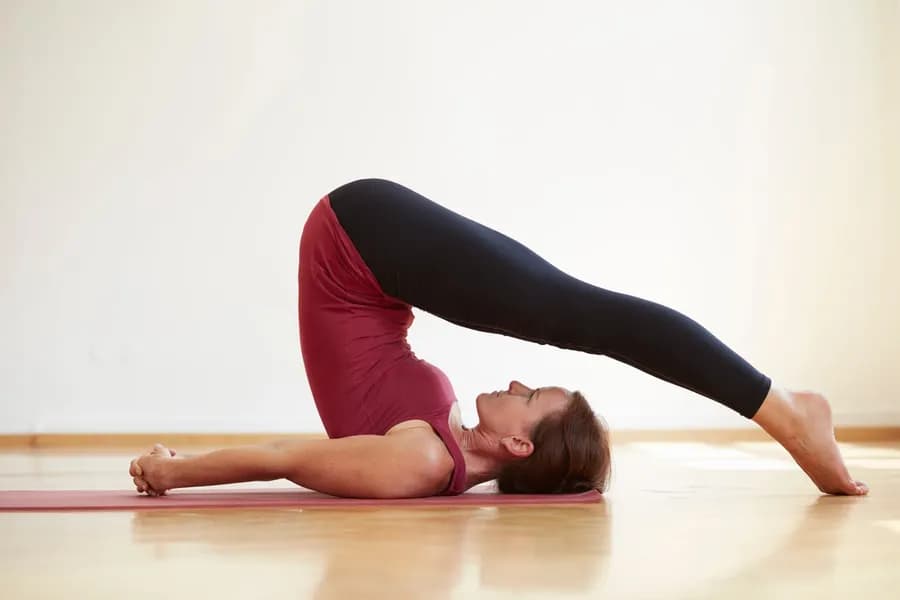
Halasana (Plow Pose): Steps Benefits and Precautions
Try halasana with Habuild. Learn halasana benefits like better flexibility, improved sleep, and relief from back pain. Master the yoga plow pose. Start today!
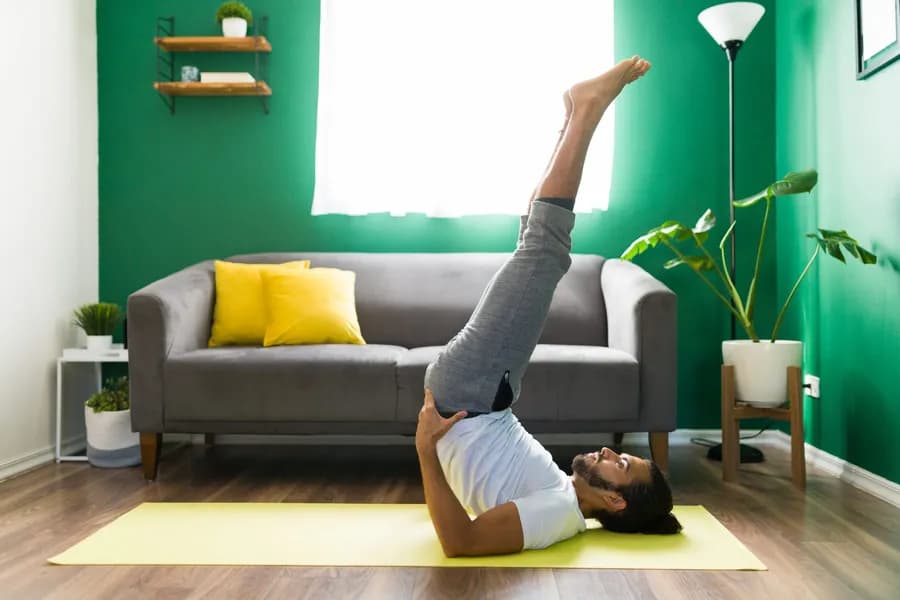
Sarvangasana: Steps Benefits and How to Practice Safely
Practice sarvangasana with Habuild. Explore the sarvangasana pose to boost thyroid health, improve circulation, and calm your mind. Start your session today!