
Sutra Neti Benefits: Procedure, Yoga Practice & Kriya Guide
A soft sterilised catheter mechanically cleanses the deeper nasal passages that water-based cleansing can’t reach, practised once or twice a week under

Key Takeaways
- A 2006 European study found mechanical cleansing reduces mucosal thickness and allergen load.
- The procedure has been documented and applied for over 800 years in Hatha yoga.
- Catheter size is selected through live visual assessment of each practitioner’s nasal passage.
- Combined with jal neti, it forms the most complete nasal cleansing sequence in Hatha yoga.
- Improves resistance to seasonal allergies alongside sharper mental clarity.
- Most practitioners notice immediate clearing after just the first session.
What is Sutra Neti?
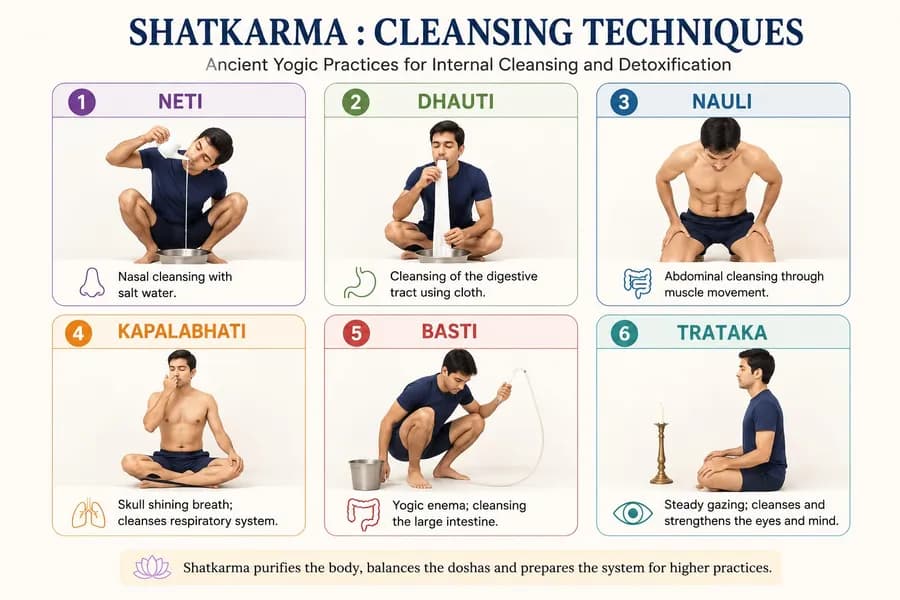
Sutra neti — sutra meaning “thread” and neti meaning “to guide” — is a deep nasal cleansing practice from Hatha yoga’s six classical purification techniques, the shatkarmas, documented in the Hatha Yoga Pradipika. A 2006 study published in the European Archives of Oto-Rhino-Laryngology confirmed that regular nasal saline irrigation combined with mechanical nasal cleansing significantly reduces mucosal thickness and allergen load in chronic sinusitis patients — the same mechanism the sutra neti procedure has been applying for over 800 years. Habuild’s instructors are certified in classical shatkarma and select catheter size based on a live visual assessment of each practitioner’s nasal passage — a variable that makes the difference between a clean first session and an uncomfortable one.
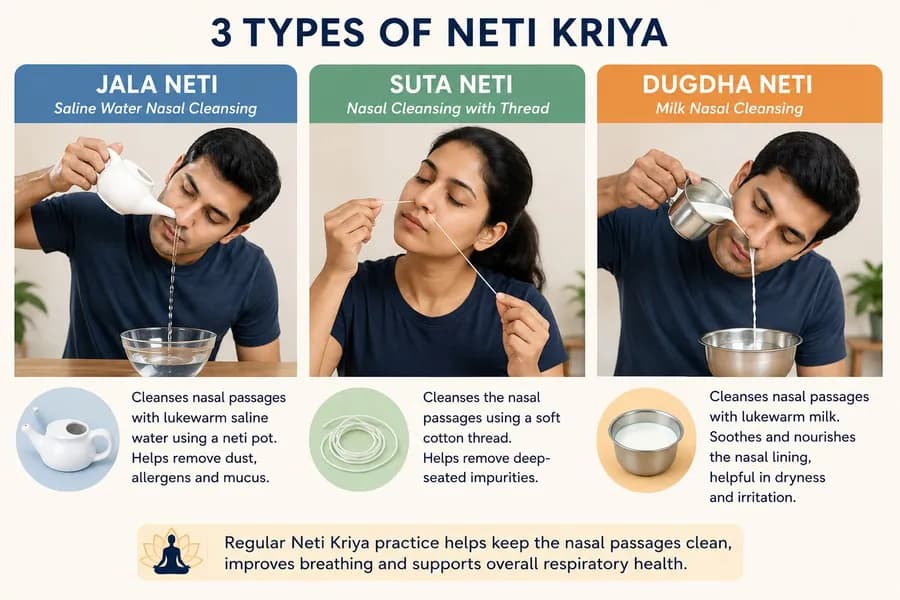
The practice is the deeper cousin of the jal neti cleansing practice, which uses a saline pot to flush the nasal passages with water. Where jal neti works on the surface, sutra neti reaches the deeper nasal tract — particularly the soft palate area where chronic mucus collects. The two practices form the most complete nasal cleansing sequence in Hatha yoga when used together.
The technique looks intimidating in photographs but is mechanically simple once shown live. The challenge is not the tube — it is the breath, the angle, and the willingness to relax through the brief gag reflex. Many practitioners describe sutra neti yoga as the most transformative cleansing practice they have added, precisely because the depth of clearing is unmatched by any other technique.
Sutra Neti Benefits
The benefits of sutra neti compound with weekly consistency. Most practitioners notice immediate clearing after the first session, with deeper effects emerging across 4–8 weeks of regular practice.
Physical Benefits
1. Clears Stubborn Deep-Tract Mucus****Standard saline rinses move only what’s loose. The catheter physically dislodges hardened mucus along the nasal floor and behind the soft palate — the exact area where chronic post-nasal drip originates. For those dealing with year-round congestion, combining sutra neti with a structured yoga for sinus routine addresses both the mechanical cleansing and the breath-pattern correction that chronic sufferers typically need together.
2. Reduces Sinus Pressure and Chronic Headaches****By restoring drainage in the nasal passages, sutra neti reduces the back-pressure that builds up behind the brow and cheekbones. Members with chronic sinus headaches often report meaningful relief within 4–6 weeks of weekly practice.
3. Improves Breath Quality for Pranayama****Pranayama practices like Anulom Vilom and Bhramari demand clear, equal airflow through both nostrils. Sutra neti restores that airflow — making subsequent breathwork noticeably deeper and more even.
4. Strengthens Resistance to Allergies****Regular practitioners report fewer dust, pollen, and seasonal-allergy flare-ups. The mechanical clearing reduces allergen residence time in the nasal mucosa — the mechanism behind the long-term allergy resilience.
5. Improves Sleep Quality and Reduces Snoring****Clearer airways at night mean less mouth breathing, less snoring, and deeper sleep. Most members notice improvement within 2–3 weeks of establishing a weekly practice.
Mental and Emotional Benefits
6. Sharpens Mental Clarity****Free nasal breathing improves oxygenation and reduces the dull-headed feeling many chronic mouth-breathers carry through the morning. Practitioners describe a “lifted” quality to the day after a sutra neti session.
7. Calms the Nervous System****The cleansing nature of sutra neti has a parasympathetic effect — practitioners describe a settled, light feeling immediately after the practice that lasts through the day.
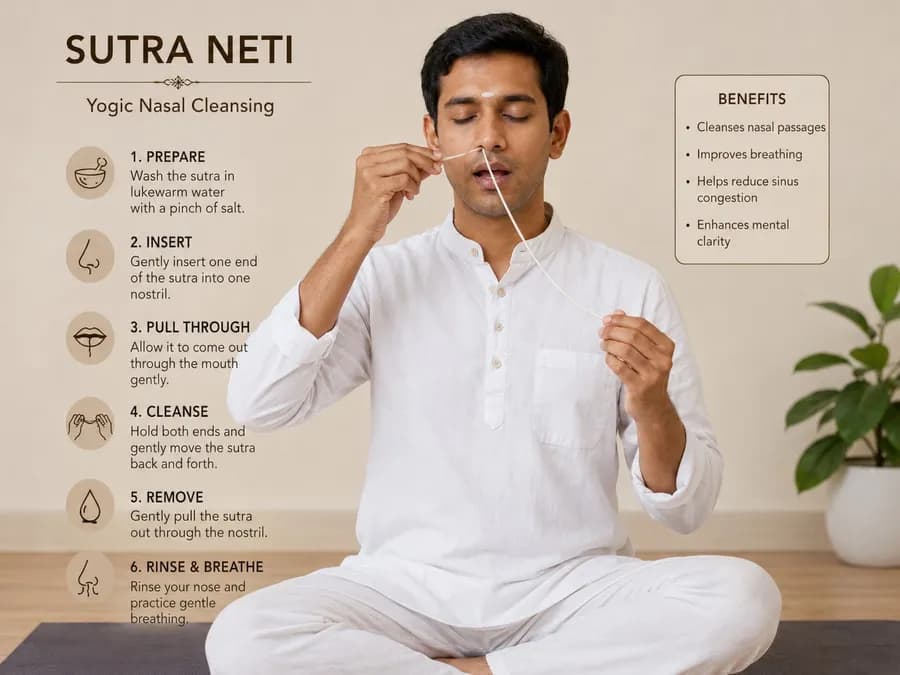
Sutra Neti Yoga Procedure — Step-by-Step
The sutra neti yoga procedure described below is for educational reference. The actual practice must be learned under live supervision for the first 3–5 sessions — the form variables that determine safety are invisible in a video.
Tools You Will Need
- A medical-grade soft rubber catheter (size 6–8 for adults — selected by the instructor).
- Lukewarm sterilised saline solution (¼ teaspoon non-iodised salt in 250 ml warm filtered water).
- A clean towel.
- Mild lubricant (ghee or food-grade glycerin) for the catheter tip.
Step 1: Sterilise the Catheter
Boil the rubber tube for 5 minutes before each use. Cool to body temperature. Never reuse without sterilisation.
Step 2: Lubricate the Tip
Apply a thin coat of ghee to the first 4–5 cm of the catheter to ease passage and reduce friction.
Step 3: Position
Stand or sit upright. Tilt the head slightly forward — never backward. This angle is critical.
Step 4: Gentle Insertion
Insert the lubricated tip into the more open nostril. Push gently, rotating slightly. Stop immediately if you meet hard resistance — never force.
Step 5: Reach the Throat
Once the tube reaches the soft palate, you’ll feel it at the back of the throat. Open the mouth, hook two clean fingers in, and gently draw the tip out through the mouth.
Step 6: Pull-Through Movement
With one hand on each end of the tube, gently move it back and forth 5–10 times. This is the cleansing action — the friction dislodges mucus along the nasal floor.
Step 7: Withdraw and Repeat
Slowly pull the tube out through the mouth, then repeat on the other nostril with the same care and preparation.
Step 8: Finish with Jal Neti and Drying
Always conclude with a jal neti rinse to flush loosened debris. Then dry the nasal passages with kapalbhati pranayama or rapid breathing — wet passages invite bacterial growth.
Preparatory Steps Before Sutra Neti
- Practise jal neti for 2 weeks first — to familiarise the nasal passages with intervention and reduce first-session discomfort.
- Train the gag reflex gently — by softly brushing the soft palate with a clean toothbrush daily for one minute over a week.
- Confirm both nostrils are clear — never attempt sutra neti during a cold, infection, or active allergy flare.
Variations of Sutra Neti
Single-Nostril Sutra Neti (Beginner)
The catheter is inserted and withdrawn through the same nostril without the pull-through. Less effective but a useful stepping stone for those still adapting to the gag reflex.
Classical Sutra Neti with Cotton Thread (Traditional)
The original yogic version uses a waxed cotton thread instead of rubber. More authentic but harder to sterilise. Most modern teachers prefer the rubber catheter for hygiene reasons.
Combined Sutra Neti Kriya Sequence (Advanced)
Sutra neti followed immediately by jal neti and a 30-stroke kapalbhati. This is the full cleansing sequence and the most effective protocol for chronic congestion sufferers.
Common Mistakes to Avoid in Sutra Neti
- Mistake 1: Reusing an unsterilised tube. This is the leading cause of nasal infection in self-practice. Boil before every single use without exception.
- Mistake 2: Forcing past resistance. If the tube won’t pass, the angle is wrong. Withdraw, reposition, try the other nostril.
- Mistake 3: Tilting the head back. This sends the tube into the wrong canal and causes gagging and nosebleeds. Slight forward tilt only.
- Mistake 4: Practising during an active cold or sinus infection. Wait until fully recovered. Sutra neti during infection spreads it deeper into the nasal tract.
- Mistake 5: Skipping the post-cleanse drying. Wet nasal passages invite bacterial growth. Always finish with kapalbhati or rapid breathing.
- Mistake 6: Self-teaching from video. This is the highest-risk mistake. The first 3–5 sessions need live, expert observation — catheter size, insertion angle, and gag-reflex management cannot be corrected from a screen.
Who Should Practise Sutra Neti?
- Chronic Sinusitis Sufferers People with year-round nasal blockage benefit most. Sutra neti, paired with a structured yoga for sinus routine, addresses both the deep mechanical cleansing and the breath-pattern correction that chronic sufferers usually need together.
- People with Recurring Tension Headaches By clearing sinus pressure, sutra neti often resolves the dull, recurring headaches that originate behind the eyes and brow. Combined with a yoga for headache routine, the effect compounds within 6–8 weeks as both the mechanical pressure and the postural contributors are addressed simultaneously.
- Serious Pranayama Practitioners Anyone moving past beginner pranayama into advanced practices needs clear, even nasal flow. Sutra neti is the standard cleansing prep for that level — and the difference it makes to breathwork depth is immediately noticeable.
- Yoga Beginners Ready to Go Deeper After 4–6 weeks of regular yoga foundation, sutra neti is a natural next step. A structured yoga for beginners base provides the bodily awareness and breath control the practice assumes.
Sutra neti isn’t a technique most people warm to overnight, and its real value — clearer sinuses through allergy season, steadier breath during pranayama — tends to show up only after the initial hesitation fades with repetition. Treating it as a once-a-week curiosity rarely gets you there; a short, regular slot alongside the rest of your practice does. For those easing into nasal cleansing and other Hatha techniques within a broader, guided routine, Yoga Everyday on the Habuild app sequences these alongside asana and breathwork so nothing feels isolated or intimidating.
Frequently Asked Questions
Related Articles
Sutra Neti (Thread Nasal Cleansing): Steps, Benefits & Precautions
A soft, sterile thread or rubber catheter passes through one nostril and out through the mouth — the deeper companion to water-based nasal cleansing. See the steps, benefits, and precautions.

Neti Kriya: Nasal Cleansing in the Hatha Yoga Tradition
Warm saline water or a soft thread passes through the nasal passages in this classical shatkarma cleansing practice — always with distilled or sterile
Shatkarma: the Six Cleansing Techniques of Hatha Yoga
These six cleansing techniques of Hatha yoga range from gentle trataka eye gazing to advanced practices like vaman dhauti that carry real medical risks if