
Neti Kriya: Nasal Cleansing in the Hatha Yoga Tradition
Warm saline water or a soft thread passes through the nasal passages in this classical shatkarma cleansing practice — always with distilled or sterile
Key Takeaways
- Jal neti, saline water, is far more accessible than sutra neti, the thread-based form.
- Only distilled, sterile, or boiled water should be used – tap water risks rare infections.
- Recommended as preparatory practice for pranayama and meditation in the Hatha Yoga Pradipika.
- Functions similarly to the saline rinse devices ENT specialists recommend for sinus health.
- Those with sinus infections or recent nasal surgery should consult a doctor first.
- Neti pots are now sold in pharmacies and supermarkets across most countries.
What is Neti Kriya?
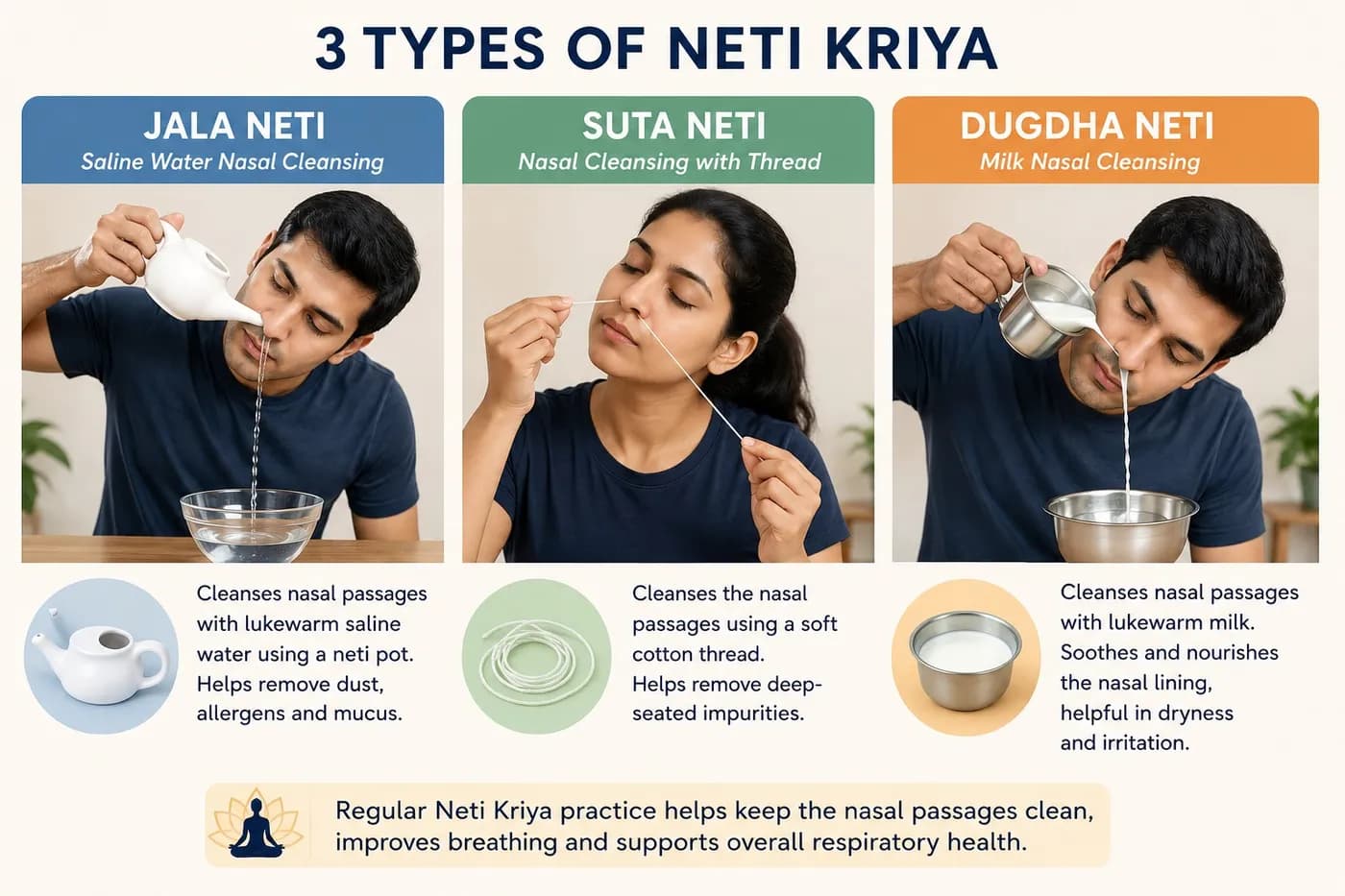
Neti kriya is one of the six classical shatkarma cleansing practices of hatha yoga. The Sanskrit word neti refers to nasal cleansing, and kriya means “action” or “process”. The practice involves passing warm saline water (jal neti) or a soft thread (sutra neti) through the nasal passages to clear accumulated mucus, dust, and pollutants. Of the two main forms, jal neti is by far the most accessible and is widely practised today as a daily wellness ritual. Neti kriya yoga is described in classical texts including the Hatha Yoga Pradipika, where it is recommended as a preparatory practice for pranayama and meditation.
In modern terms, neti kriya provides a mechanical flushing of the nasal passages that is similar to the saline rinse devices recommended by ENT specialists for sinus health. The practice has gained mainstream acceptance, with neti pots available in pharmacies and supermarkets across most countries. Beyond its sinus-clearing function, daily neti practice is traditionally believed to improve breath quality, support meditation, and reduce headache frequency. The full shatkarma framework is detailed in our work on hatha yoga, where neti sits alongside other classical cleansing practices.
Neti Kriya Benefits
Physical Benefits
- Benefit 1: Clears Nasal Passages and Supports Sinus Health The mechanical flushing action removes accumulated mucus, dust, and allergens from the nasal passages. Many practitioners report reduced seasonal allergy symptoms and clearer breathing.
- Benefit 2: Supports Recovery from Mild Cold and Sinus Symptoms Daily neti during early stages of a cold can ease congestion. The benefits of neti kriya for sinus health are widely documented in both traditional and modern sources.
- Benefit 3: Improves Breath Quality for Pranayama Clear nasal passages allow the slow, deep breathing that pranayama requires. Practitioners often report easier breath work after starting daily neti.
- Benefit 4: Supports Meditation and Concentration Cleared breathing pathways support the steady breath that meditation requires. The traditional view connects clear breath to clear mind.
- Benefit 5: Builds a Daily Wellness Ritual Morning neti becomes a structured wellness habit that often supports broader healthy routines.
Mental and Emotional Benefits
Benefit 4: Supports Meditation and Concentration
Cleared breathing pathways support the steady breath that meditation requires. The traditional view connects clear breath to clear mind.
Benefit 5: Builds a Daily Wellness Ritual
Morning neti becomes a structured wellness habit that often supports broader healthy routines.
How to Practise Neti Kriya. Step-by-Step Instructions
Step 1: Prepare the Saline Water
Mix half a teaspoon of clean (preferably non-iodised) salt into 250 ml of warm distilled or previously boiled water. The water should be lukewarm, similar to body temperature.
Step 2: Starting Position
Stand over a sink. Tilt your head sideways so one ear points downward toward the sink. Keep the mouth open and breathe through it throughout the practice.
Step 3: Insert the Neti Pot Spout
Place the spout gently into the upper nostril. Keep the lips firmly together and breathe only through the open mouth.
Step 4: Pour the Water Slowly
Gently tilt the neti pot so the water flows into the upper nostril. The water will travel through the nasal passages and exit through the lower nostril. Half the water (about 125 ml) per side is the typical amount.
Step 5: Final Position and Drainage
Once half the water has flowed through, gently exhale through the nose to clear the passages. Switch sides and repeat with the remaining water.
Step 6: How to Come Out of Neti Kriya
After completing both sides, blow the nose gently to clear residual moisture. Some practitioners follow with a few rounds of kapalbhati to dry the nasal passages completely.
Breathing in Neti Kriya
Mouth breathing throughout the water flow. Nasal breathing only after the nose has been cleared and dried. Trying to breathe through the nose during the water flow causes coughing and is unsafe.
Preparatory Practices Before Neti Kriya (Optional)
Brief preparation makes the practice more comfortable.
- Drink a glass of water: Hydrate the body before any cleansing practice.
- 5 cycles of slow breathing: Settle the nervous system for the focused practice.
- Gentle neck stretches: Loosen the neck for the side-tilt position.
Variations of Neti Kriya
Variation 1: Jal Neti (Water Neti. Beginner-Safe)
The water-based version described in the step-by-step section above. The most accessible and widely practised type of neti kriya. Detailed in our work on jal neti benefits.
Variation 2: Sutra Neti (Thread Neti. Advanced)
A soft cotton or rubber thread passed through one nostril and pulled out through the mouth. Removes deeper mucus that water cannot reach. Advanced practice that requires direct teacher supervision and should not be attempted from videos.
Variation 3: Dugdha Neti (Milk Neti. Specialised)
Warm milk used in place of saline water. A specialised variant used for specific therapeutic purposes under teacher guidance.
Common Mistakes to Avoid in Neti Kriya
- Mistake 1: Using Untreated Tap Water Tap water has been linked to rare but serious nasal infections. Always use distilled, sterile, or previously boiled water that has cooled to lukewarm.
- Mistake 2: Using Water That is Too Hot or Too Cold Both extremes are uncomfortable and can shock the nasal passages. Lukewarm body temperature is the right temperature.
- Mistake 3: Skipping the Drying Step Water remaining in the nasal passages can drip later or contribute to a temporary blockage. Always clear the passages thoroughly with gentle blowing.
- Mistake 4: Practising with an Active Sinus Infection Neti kriya during an active sinus infection can spread infection. Wait until acute symptoms have resolved or follow medical guidance.
Who Should Practise Neti Kriya?
- Adults with Seasonal Allergies Daily neti during allergy seasons reduces symptoms for many practitioners. The mechanical flushing removes the pollen and dust that drive allergic responses.
- Adults with Chronic Sinus Sluggishness Long-standing nasal congestion often improves with daily neti. Always rule out infection or structural issues with a doctor first.
- Yoga Practitioners The clearer breath supports pranayama and meditation. Many serious yoga students practise jal neti daily.
- Is Neti Kriya Good for Beginners? Yes. Jal neti is accessible from day one with a neti pot and proper instruction. The first few attempts may feel strange but most practitioners adapt within a week.
Nasal cleansing tends to feel unfamiliar the first handful of times, and the clearer breathing it’s associated with generally shows up once your system stops treating the water as an intrusion — a matter of careful repetition rather than a single session. Keeping it part of a regular morning routine, alongside the rest of your practice, is where the real payoff lives. Habuild’s Yoga Everyday program can help you build that kind of consistent daily rhythm with guided instruction throughout.
Frequently Asked Questions
Related Articles

Jala Neti (Water Nasal Cleansing): Steps, Benefits & Precautions
Tilting the head sideways and pouring warm saline water through one nostril and out the other is the most widely practised of all the Shatkarmas. See the steps, benefits, and precautions.

Kapalbhati Pranayam: How to Practice Benefits and Precautions
Practice Pranayam Kapalbhati with Habuild. Follow the skull-shining breath steps to boost digestion, strengthen your core, and energise your body. Start today!
Vajrasana: How to Do It Benefits and Precautions
Practice vajrasana pose with Habuild. Try vajrasana to ease digestion, reduce back pain, and calm your mind. Ideal for all levels. Start your session today!