
Yoga Asanas for Core Strength: Best Poses, Benefits & How to Start
These poses engage deep stabilising muscles — the transverse abdominis, multifidus, and pelvic floor — that conventional ab exercises often miss entirely. See the best poses and how to start.
Key Takeaways
- Boat Pose and Plank recruit the transverse abdominis, multifidus, and pelvic floor.
- Deep stabilising muscles support the spine in ways conventional ab exercises often miss.
- Standing and balancing poses like Warrior variations train better spinal alignment over time.
- Won’t spot-reduce belly fat alone, but supports metabolic function and cortisol regulation.
- A yoga mat and enough space to lie flat is all that’s needed – no weights required.
Yoga asanas for core strength engage deep stabilizing muscles — including the transverse abdominis, multifidus, and pelvic floor — that conventional ab exercises often miss entirely. Practiced daily, these poses build a functional, injury-resistant midsection while improving posture, balance, and spinal health from the very first session.
Yoga asanas for core strength are among the most effective — and underrated — ways to build a stable, functional midsection. Unlike crunches or ab machines, yoga engages deep stabilizing muscles that support your spine, improve posture, and help you move with greater ease. Whether you’re a complete beginner or returning to fitness, this guide walks you through the key poses, common mistakes, and how to build a practice that actually sticks.
6 Key Benefits of Yoga Asanas for Core Strength
- Builds Deep Stabilizer Muscles Yoga doesn’t just work the outer abs — poses like Boat Pose and Plank actively recruit the transverse abdominis, multifidus, and pelvic floor muscles. These deep layers of the core are what truly support your spine and protect you from injury during everyday movement.
- Improves Posture and Spinal Alignment A strong core keeps your spine upright. Regular practice of standing and balancing poses — such as Warrior variations and Tree Pose — gradually trains your body to hold better alignment, reducing the rounding and slouching that comes from long hours at a desk.
- Enhances Functional Strength Core strength from yoga transfers directly to daily life: picking up groceries, climbing stairs, or sitting through long work calls. Exercises for functional strength work best when the core is properly engaged, and yoga builds exactly that foundation.
- Supports Fat Loss Around the Midsection Consistent yoga practice supports metabolic function and helps manage stress hormones like cortisol — one of the main drivers of belly fat accumulation. While yoga alone won’t spot-reduce fat, regular practice combined with mindful habits may gradually ease abdominal bloating and support a leaner composition over time.
- Reduces Lower Back Discomfort Many people with lower back tension have weak or underactive core muscles. Yoga poses that strengthen the core also teach proper bracing and pelvic positioning, which may gradually ease lower back discomfort when practiced consistently over time.
- Builds Consistency — Which Is the Real X-Factor The biggest benefit isn’t one single pose — it’s the habit. A daily, guided yoga practice creates the kind of consistency that produces visible, lasting improvement in strength and mobility. That’s something most gym routines struggle to match.
How to Get Started with Yoga for Core Strength
What You Need to Begin
You need almost nothing to start. A yoga mat (or a non-slip floor surface), comfortable clothing, and enough space to lie flat is all it takes. No weights, no gym membership, no equipment. This makes core-focused yoga genuinely accessible for home practice from day one.
Setting Realistic Goals
Core strength builds gradually — most people notice meaningful improvement in stability and posture within 3–4 weeks of daily practice. Avoid the trap of overloading your first week with intense sessions. Start with 20–30 minute practices and focus on learning proper engagement before increasing duration or difficulty.
Instead of tracking reps, track your streak. Showing up every day — even for a shorter session — delivers more progress than sporadic intense workouts.
Start with the Basics
Begin with foundational poses: Cat-Cow for spinal awareness, Plank for core activation, and Boat Pose for direct abdominal engagement. Once you can hold these with controlled breathing, you’re ready to progress. If you’re new to the practice altogether, exploring beginner yoga poses first will give you the groundwork to move safely.
Best Yoga Asanas for Core Strength
Navasana (Boat Pose)
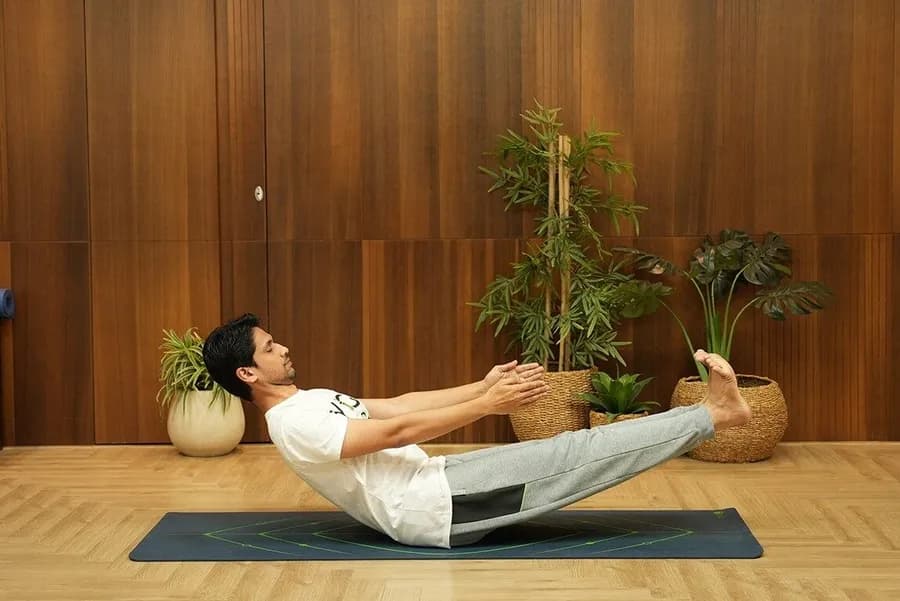
Navasana is one of the most direct core-strengthening poses in yoga. Sit with knees bent, lean back slightly, and lift both feet off the floor while extending your arms forward. The entire anterior chain — hip flexors, lower abs, and transverse abdominis — engages simultaneously. Hold for 5 breaths, rest, and repeat 3–5 times. Beginners can keep knees bent; advanced practitioners extend both legs straight.
Phalakasana (Plank Pose)
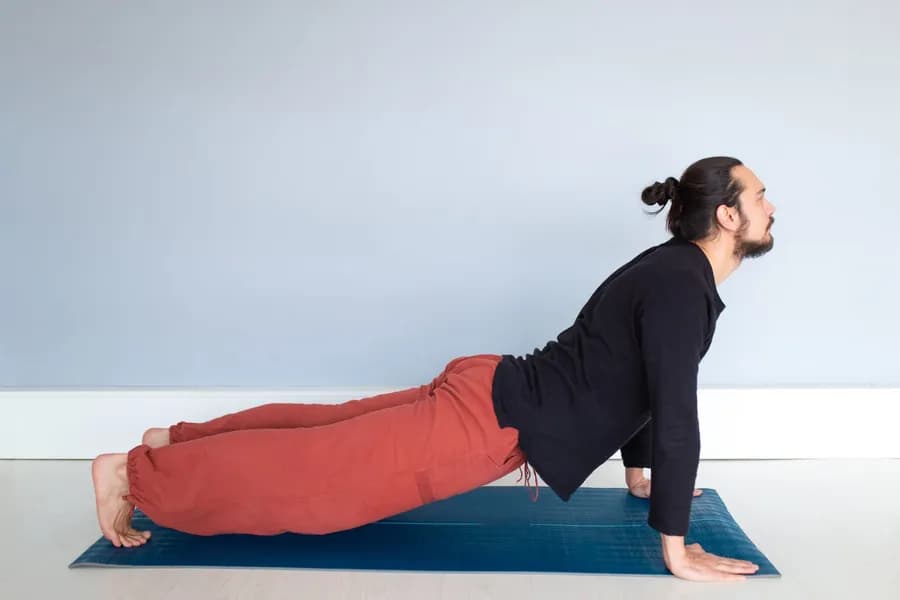
The yoga plank is a full-body isometric hold that demands deep core engagement, shoulder stability, and glute activation at the same time. Keep your hips level — neither sagging nor piked — and breathe steadily. Start with 20-second holds and work toward 60 seconds over two to three weeks. This is the single most foundational pose for overall core development.
Vasisthasana (Side Plank)
Side Plank targets the obliques and lateral core stabilizers — muscles that most forward-facing exercises miss entirely. Stack your feet (or stagger them for beginners), press the supporting hand into the mat, and lift your hips. The key is keeping your body in one straight line from heel to crown. Hold for 3–5 breaths per side.
Ardha Navasana (Low Boat Pose)
Lower from full Boat Pose until your shoulder blades hover just above the floor and your feet are at a 45-degree angle. This variation fires the lower abs intensely. It’s excellent for beginners building up to the full pose, and for experienced practitioners as a superset finisher. Hold for 3–4 breaths, then return to full Navasana.
Kumbhakasana with Knee Taps (Plank with Alternating Knee Taps)
From a full plank, slowly draw one knee toward the chest and then return — without letting your hips shift or rotate. This dynamic variation challenges anti-rotation stability, which is what the core actually does in real life. Perform 8–10 slow repetitions per side, focusing on control over speed.
Bhujangasana (Cobra Pose)
Often thought of as a backbend, Cobra actually requires active engagement of the core and lower back extensors simultaneously. Pressing the pubic bone gently into the mat while lifting the chest strengthens the posterior chain alongside the anterior core. Explore the full technique at Bhujangasana. Hold for 3–5 breaths and repeat twice.
Utkatasana (Chair Pose)
Chair Pose is a standing core and lower body challenge in one. With arms overhead and thighs parallel to the floor, your core must stay engaged to prevent the lower back from arching. Hold for 5–8 breaths. Progress by pulsing slightly in the lowered position or transitioning directly into a standing forward fold.
Common Mistakes to Avoid
- Poor Form and Passive Holding The most common error in core yoga — especially in Plank and Boat Pose — is holding the shape without actually engaging the muscles. You can spend two minutes in Plank and get almost nothing out of it if your core is passive. Before entering any pose, consciously draw your navel toward your spine and breathe into the resistance.
- Skipping the Warm-Up Jumping straight into Navasana or Side Plank on a cold body increases the risk of straining the hip flexors or lower back. Spend at least 5 minutes in gentle Cat-Cow, Child’s Pose, and Downward Dog before moving into core-intensive work. This is non-negotiable for long-term, injury-free practice.
- Overtraining Without Rest Core muscles — especially deep stabilizers — need recovery time just like any other muscle group. If you’re practicing daily, rotate between intense core sessions and gentler restorative practices. Doing Boat Pose and Plank variations every single day without variation will lead to plateau or fatigue, not faster results.
- Inconsistency — The Biggest Culprit Two sessions a week is not enough to build a strong core through yoga. Daily practice — even for just 20 minutes — produces dramatically better outcomes than occasional intense sessions. The gap isn’t effort; it’s consistency.
Who Should Try Yoga Asanas for Core Strength?
- Beginners If you’ve never exercised before, yoga is one of the most forgiving entry points. The poses scale from very gentle to quite challenging, and there’s no equipment barrier. Start with modified versions of Plank (knees down) and Boat Pose (knees bent) and build from there. The key is showing up daily, not performing perfectly from day one.
- Women Core yoga is especially valuable for women because it builds functional strength without the bulk concern that sometimes keeps women away from strength training. Poses like Side Plank, Utkatasana, and Vasisthasana tone and stabilize without increasing muscle mass significantly. They also support pelvic floor health — a core benefit that gym workouts rarely address directly.
- Older Adults For adults over 50 or 60, a strong core directly supports balance, reduces fall risk, and improves the quality of daily movement. Yoga is low-impact and joint-friendly, making it well-suited for this group. That said, if you have existing spinal conditions or osteoporosis, consult your doctor before starting a new practice and inform your instructor about any restrictions.
- Working Professionals Long hours of desk work tighten the hip flexors, weaken the glutes, and create chronic upper back tension — all of which stem from a disengaged core. A 20–30 minute morning yoga session targeting core stability can meaningfully counteract the postural damage of sedentary work. You don’t need a gym or a commute — just a mat and a consistent schedule.
Build Core Strength with a Routine That Actually Works
Building a strong core isn’t about doing the hardest pose — it’s about showing up every day with proper guidance and a structured plan. With the right support, you can develop genuine core strength from home and see real progress over time.
What You Get with Habuild’s Yoga Everyday Program:
- Daily live guided yoga sessions — including dedicated core-focused practices
- Beginner-to-advanced progression that builds strength safely over time
- No equipment needed — fully home-friendly
- Expert guidance to ensure correct alignment and muscle engagement
- Community accountability to help you maintain a daily streak
Explore Habuild’s full range of yoga exercises or try a session to experience what structured daily practice feels like. You can also discover the broader benefits of yoga beyond core strength — from stress management to sleep quality.
Start Your Core Strength Journey
Deep stabilizing muscles like the transverse abdominis don’t respond to a single session — they need repeated, correctly cued engagement to actually switch on and stay active through the day. That’s why a core practice held for a week rarely shows up in your posture, but one held for a season usually does. Habuild’s Yoga Everyday program can help you stay on that timeline with daily guided classes that build strength progressively.
Frequently Asked Questions
Related Articles

Yoga Poses for Strength (Power Yoga Asanas): Steps, Benefits & Precautions
Chaturanga Dandasana, Navasana, and Virabhadrasana build muscular endurance, core stability, and joint strength through sustained isometric holds. See the.

Navasana (Boat Pose): Steps Core Strength and Digestive Benefits
Practice Navasana with Habuild. Follow the boat pose steps to strengthen your core, improve balance, and build the abdominal strength you need. Start today!
Phalakasana (Plank Pose): Steps, Benefits & Precautions
The body holds a straight line from crown to heels, supported by the hands and toes — usually part of the sun salutation flow or held as a stand-alone exercise. See the steps, benefits, and precautions.