
A 2000 Calorie Diet Plan: A Flexible Indian Vegetarian Example
See how familiar vegetarian foods can add up to around 2,000 calories, with clear portions and room to adapt the day to your needs.
Key Takeaways
- 2,000 calories is a reference point, not a rule.
- Ordinary vegetarian meals can supply it.
- Adjust the food, not just the calorie number.
- Use the plan as an example, not a daily exam.
A 2,000-calorie diet is a reference point, not a standard requirement for every adult. It may maintain weight for one person, lead to weight loss for another or provide too little for someone with higher needs. If the amount is suitable for you, ordinary vegetarian meals can supply it without expensive diet foods. The useful plan is one that provides enough nourishment and fits your actual day.
Why 2,000 calories appears so often
Food labels commonly use 2,000 calories as a general reference for nutrition advice. It makes comparisons easier; it does not mean the label has estimated your personal needs.
Age, body size, activity, pregnancy, health and goals all influence energy requirements. The same menu cannot be assumed suitable for a sedentary older adult and a young person doing demanding physical work.
Do not judge suitability by the round number alone. Hunger, energy, weight trends and the wider health picture help determine whether an intake is appropriate. A plan that repeatedly leaves you weak or excessively hungry needs reconsideration.
What the day should provide
Energy is only part of the plan. Include protein foods, vegetables, fruit, fibre-rich staples and some useful fat rather than reaching the total mainly through snacks or sweetened drinks.
For vegetarian meals, pulses, beans, soy, milk and curd can provide substantial protein opportunities. The foods you choose should suit your preferences, digestion and budget.
There is also room for flexibility. You do not need five perfectly timed meals or a different recipe every day. The example below uses familiar foods to show how portions can add up, not to prescribe a rigid schedule.
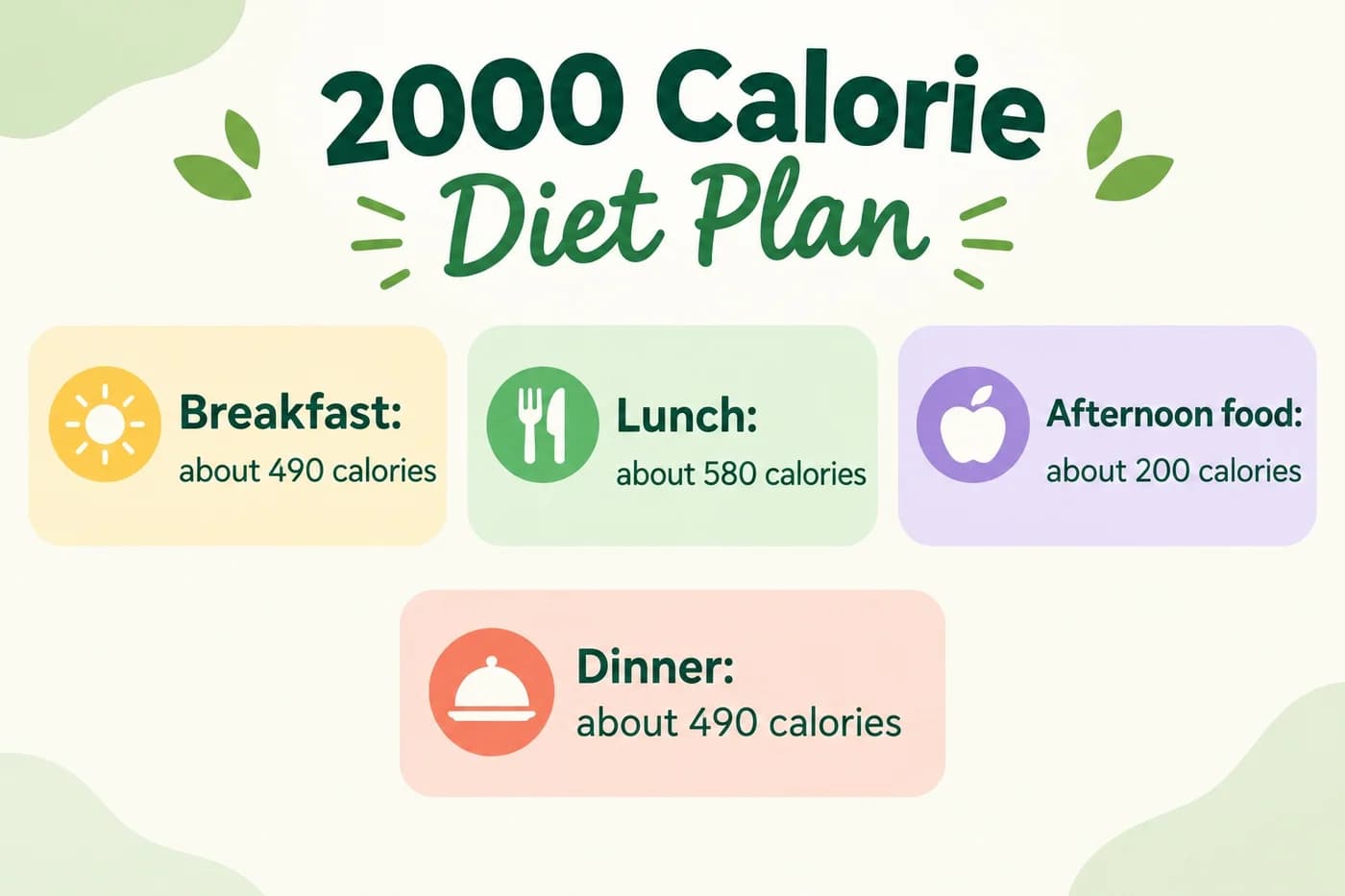
Breakfast: about 490 calories
Try oats cooked with milk and served with banana and a few nuts. For this illustration, the quantities and estimates are:
- 50 g dry oats: about 190 calories.
- 250 ml toned milk: about 150 calories.
- One small banana: about 90 calories.
- 10 g nuts: about 60 calories.
Together, that is roughly 490 calories. Milk type and banana size change the estimate. If you prefer a savoury breakfast, you can use a different meal with a comparable overall contribution rather than forcing oats every morning.
Lunch: about 580 calories
A roti-and-dal lunch can fit comfortably. This example counts the ingredients and cooking fat separately so the estimate is easier to understand:
- Two rotis made from about 60 g wholewheat flour in total: about 210 calories.
- Three-quarters of a cup of thick cooked dal: about 170 calories before separately counted cooking oil.
- A cup of non-starchy vegetables: about 60 calories before oil.
- Two teaspoons of oil allocated to your dal and vegetables: about 80 calories.
- 100 g plain curd: about 60 calories.
The total is approximately 580. If you use a calorie value for a finished dal or sabzi that already includes oil, do not add that oil again. Recipe differences are one reason household portions never give perfect precision.
Afternoon food: about 200 calories
A piece of fruit estimated at around 80 calories and 30 g roasted chana at about 120 gives a roughly 200-calorie snack.
This is useful when there is a long gap before dinner, but it does not have to happen at a fixed hour. You can move it earlier if work makes that easier.
Choose the fruit you enjoy and can obtain. If the snack does not suit your appetite, rearrange some food within the day rather than eating it simply to follow the plan. The full routine matters more than the name of the eating occasion.
Dinner: about 490 calories
A rice, tofu and vegetable meal offers another combination:
- One cup of cooked rice: about 200 calories.
- 150 g tofu: an illustrative 150 calories, depending substantially on the product.
- One cup of non-starchy vegetables: about 60 calories before oil.
- Two teaspoons of cooking oil allocated to your serving: about 80 calories.
That gives approximately 490 calories. Tofu varies in water, fat and protein content, so the estimate is not universal. Paneer can replace tofu in a meal, but an equal weight may provide a different amount of energy. Change the whole portion rather than assuming a one-for-one nutritional swap.
Another 240 calories, wherever useful

In this example, a second 250 ml milk serving contributes around 150 calories and another 15 g nuts around 90. Together, they add approximately 240 calories.
You might have the milk earlier and the nuts with fruit, or distribute them with other meals. There is no need to create a late-night snack if you prefer to finish eating sooner.
The five parts come to roughly 2,000 calories: 490, 580, 200, 490 and 240. These are rounded planning estimates. Different recipes, products and serving sizes can move the actual total noticeably.
Adjust the food, not just the calorie number
If you avoid dairy, choose suitable alternatives and account for their different nutrition. An unsweetened fortified soya drink may be closer in protein to milk than some other plant drinks, but products differ.
If pulses cause discomfort, build up portions gradually and use preparations you tolerate. If the plan feels too bulky, do not simply remove all vegetables to preserve the calorie target.
Keep food safety practical too. Cooked dal, rice and tofu meals prepared ahead need prompt cooling and appropriate refrigeration. Planning helps only when the food is both available and safely stored.
Use it as an example, not a daily exam
A festival meal, restaurant lunch or busy travel day will not match these numbers neatly. Return to a suitable routine afterwards rather than skipping meals to correct a small difference.
You can learn your usual portions without weighing every ingredient indefinitely. If calorie tracking creates anxiety or you have a history of disordered eating, a less numerical meal approach may be more appropriate.
A useful 2,000-calorie plan provides enough food in combinations you enjoy. The number helps organise the example; your needs determine whether the example belongs in your life.
Editorial sources
Frequently Asked Questions
Related Articles
Calorie Deficit Diet Plan: A Sample Indian Day, Plateaus and Maintenance
Turn a calorie deficit into a plan you can live with: a three-day audit, a sample vegetarian Indian day, weekends, plateaus and maintenance.

Vegetarian Weight Loss Diet Plan: Eating Well on a Plant-Based Plate
A vegetarian weight loss plan works on the same energy-balance principle as any other, but needs extra attention to protein and variety. See how to get.

Vegan Diet: Nutrients, Meal Planning and Common Mistakes
How to plan vegan meals that cover B12, calcium, iodine, iron, omega-3 and protein, with a sample Indian day and mistakes to avoid.
Buttermilk Calories: What’s Really in Your Glass?
Buttermilk calories depend on what is in your glass. Here is how plain chaas compares with shop-bought versions, and how to watch the sugar and salt.