
The 5:2 Diet: How It Works and Who Should Be Careful
The 5:2 diet means five regular eating days and two low-intake days a week. How it works, sample Indian meals and who should avoid it.
Key Takeaways
- 5:2 means five regular eating days and two non-consecutive low-intake days.
- Trials show weight loss similar to cutting calories daily, not better.
- Low-intake days still need protein, vegetables and water, not just tea.
- Avoid it in pregnancy, with eating disorders, or on insulin without advice.
- Stop if you feel dizzy, faint or preoccupied with food.
The 5:2 diet is a way of organising food across a week. You eat normally on five days and much less on two days, usually with a regular eating day between them. Some people find this easier than a small change every day; others feel hungry, distracted or tired. It is one form of intermittent fasting, and it is a choice, not a requirement for losing weight.
How the 5:2 pattern works
The US National Institute on Aging describes the 5:2 pattern as unrestricted eating on five days each week and restricted calories on the other two. Popular plans often quote around 500 to 600 calories for the low-intake days, but these are not universal prescriptions; a fixed low number may be far too little for someone with high energy needs.
"Normal" days mean balanced meals, not five days of making up for the fasts. If a low-intake day leaves you so hungry that you overeat the next day, the plan will be hard to keep and may not deliver the result you want.
What does the research say?
Reviews of randomised trials have found that intermittent energy restriction, including 5:2, produces weight loss similar to cutting calories every day when the total reduction is similar. One 2018 meta-analysis concluded that it is "as effective as" continuous restriction in the short term. Long-term evidence is limited, so choose the method you can live with. If you prefer a daily eating window instead, compare it with 16:8 intermittent fasting.
What a low-intake day can look like
If 5:2 suits you, plan the day before it starts. A small allowance is easily used up by sweet tea, biscuits or juice, so build meals around protein and vegetables:
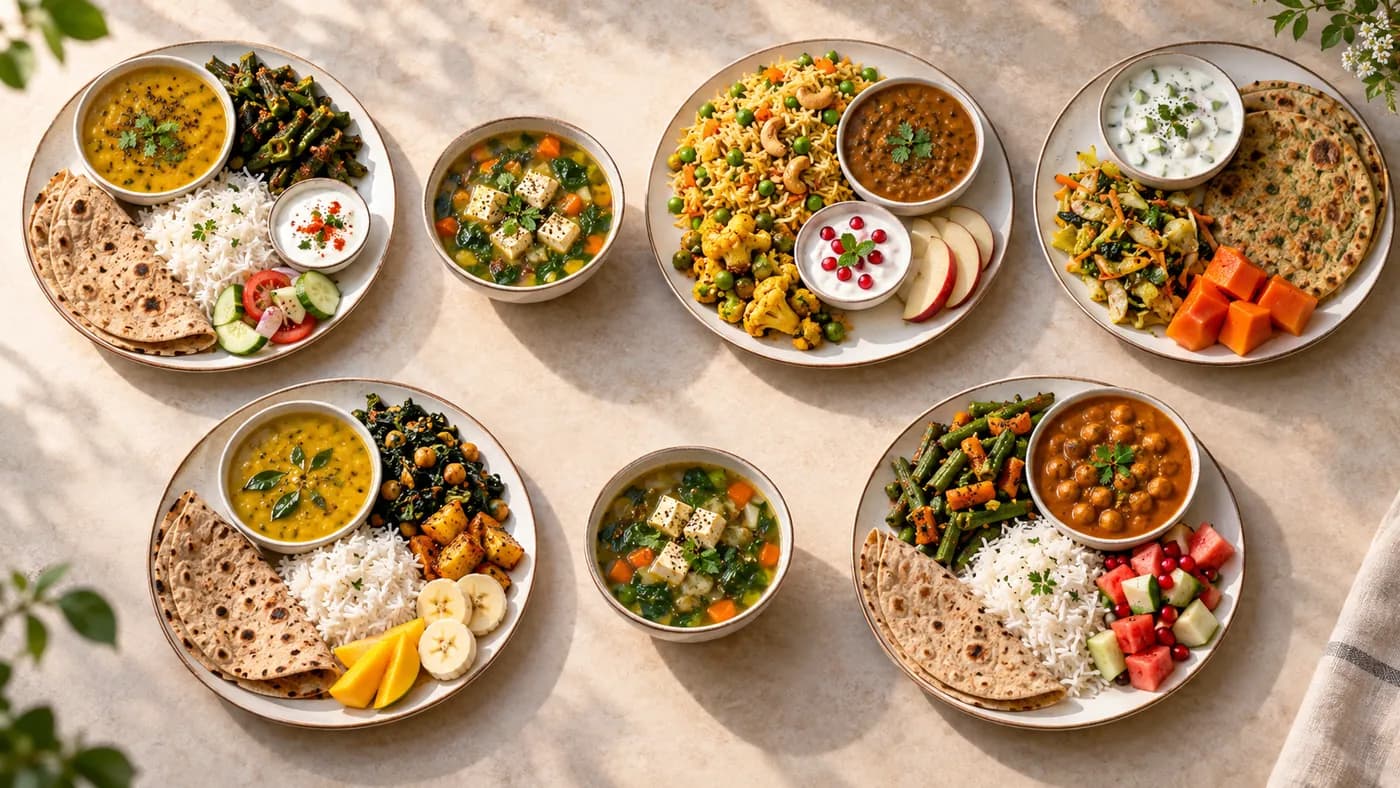
- Meal 1: a bowl of moong dal and vegetable soup.
- Meal 2: a modest serving of tofu or paneer with sautéed vegetables, or curd with cucumber.
- Drinks: water through the day; plain tea or coffee if they suit you. Milk and sugar in tea count as food.
These are ideas, not a calorie prescription. Caffeine on an empty stomach makes some people shaky or acidic, and feeling dizzy or unwell is not a sign that the plan is "working".
Keep the two low-intake days apart, for example Monday and Thursday. Avoid them on travel days, long shifts or days with hard exercise.
What the other five days should include
You do not need a special menu. Build ordinary meals around vegetables, a protein food and a comfortable portion of roti, rice or another grain: besan chilla with curd for breakfast, dal, sabzi and roti for lunch, tofu with vegetables and rice for dinner. Fruit, roasted chana or nuts work as snacks.
Getting enough protein matters if you want to keep muscle, especially as you age or if you strength train; our list of protein-rich vegetarian foods helps. If your strength or recovery drops, review the plan rather than pushing through.
The five days should also leave room for family meals. If you keep avoiding events, feel guilty after eating or swing between restriction and overeating, this method may not fit your life.
Who should avoid it or get advice first
Do not follow a generic fasting plan if you are pregnant or breastfeeding, a child or teenager, underweight, or have a current or past eating disorder. Older adults at risk of muscle loss and people with serious medical conditions need individual advice.
If you have diabetes and take insulin or medicines that can cause low blood sugar, cutting food sharply can be dangerous. Some medicines must be taken with meals. Speak with your care team first and never adjust a dose yourself to fit a diet.
Stop and seek advice if you faint, feel repeatedly dizzy, get severe headaches or find yourself preoccupied with food. Changes in periods, sleep, mood or exercise performance can also mean you are not eating enough.
Is 5:2 necessary for health?
No. Regular meals with more vegetables and pulses, sensible portions, movement and sleep help whether or not your week includes fasting days. A steady calorie deficit spread across every day is an equally valid route. A dietitian can help you pick an approach that suits your medicines, age, activity and relationship with food.
Editorial sources
- National Institute on Aging: Calorie restriction and fasting diets, what do we know?
- Intermittent versus continuous energy restriction: systematic review and meta-analysis (PMC)
- Intermittent fasting versus continuous calorie restriction: which is better for weight loss? (PMC)
- NHS: Eating disorders overview
Frequently Asked Questions
Related Articles
Intermittent Fasting: A Simple and Practical Guide
Intermittent fasting is a common wellness topic, but simple routines and realistic expectations matter more than quick fixes. Learn realistic benefits, simple uses, portions and safety in easy…


16:8 Intermittent Fasting: Evidence, Meals and Safety
How the 16:8 eating window works, what trials actually show, what to eat inside the window, and who should not try it.


Calorie Deficit Diet: Meaning, Meals and Sustainability
A calorie deficit occurs when average energy intake is lower than energy use. It can support weight loss when the gap is modest and meals stay nourishing.
Protein-rich vegetarian foods: 1/4th plate habit
Explore protein, carbohydrates, healthy fats and meal planning for strength training, muscle building and recovery.