
Chow Chow (Chayote): Nutrition, Benefits and Easy Indian Recipes
Chow chow, or chayote, is a mild, gentle gourd popular in South Indian kitchens. Here is what it offers and easy ways to cook it in everyday meals.
Key Takeaways
- Chow chow is a mild, low-calorie gourd that adds fibre and water to meals.
- It works well in kootu, sambar, poriyal and stir-fries.
- It fits a diabetes meal plan as part of a balanced plate, not as a treatment.
- Peeling under running water helps with its sticky sap.
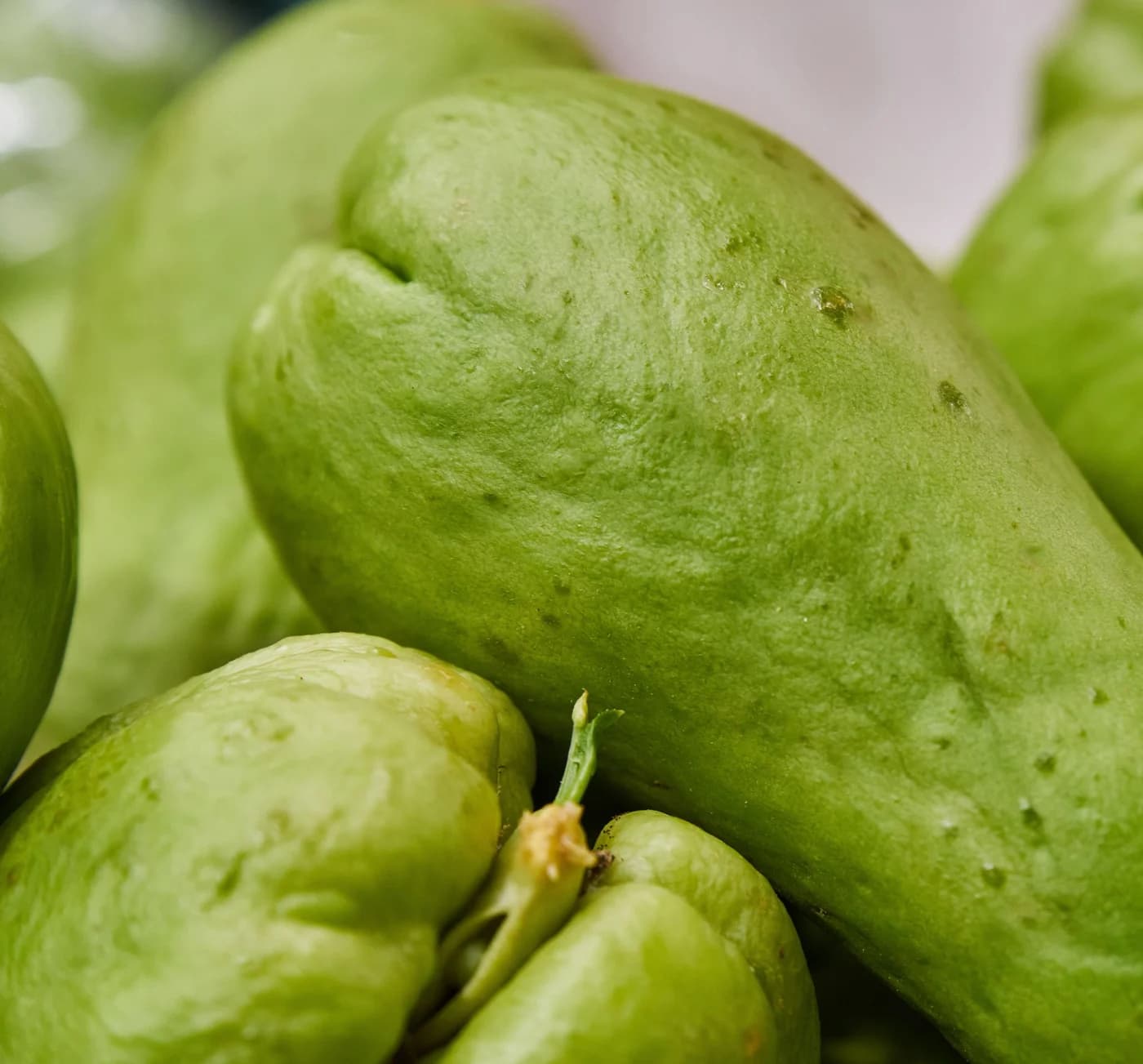
If you’ve walked past a pile of pale green, pear-shaped vegetables at the sabzi market and wondered what to do with them, that’s chow chow. Also called chayote, it’s a mild gourd that’s popular in South Indian kitchens. It’s not a miracle food, but it’s an easy, gentle vegetable that fits into everyday meals. Here’s what it offers and how to cook it.
What is chow chow?
Chow chow is a pale green gourd with a soft, mild taste. Because it doesn’t have a strong flavour of its own, it soaks up spices beautifully. You can steam it, sauté it or cook it with dal, and it works in all of them.
It’s mostly water, with some fibre, vitamin C and folate. A normal serving adds variety and volume to your plate, but the exact nutrients depend on how you cook it and how much you eat.
What’s in it for you
The water and fibre in chow chow can help a meal feel more filling and support regular digestion, as part of a decent overall diet. That’s really where the benefit comes from: the eating pattern as a whole, not any special medicinal property of the vegetable.
Swapping a very oily side dish for a lighter chow chow sabzi can bring down the energy of a meal. That doesn’t mean chow chow itself causes weight loss. No single vegetable does. Regular meals, movement and sensible portions matter far more.
Choosing and preparing it
Pick chow chow that feels firm, without large soft or rotten patches. Wash the outside well before cutting. You can peel it or leave the skin on, depending on how tender it is and what you like.
Some people notice a sticky sap on their hands while peeling. Wearing gloves or peeling under running water usually helps. Cut the pieces evenly so they cook through together. The soft seed in the centre is edible once cooked. Chow chow releases its own moisture, so a splash of water is often enough while cooking.
Easy Indian ways to cook it
Kootu: Cook chopped chow chow with moong dal or toor dal, turmeric and a light tempering. It turns into a comforting, filling dish.
Sambar: Add a few cubes alongside other vegetables for extra body.
Poriyal: Sauté with mustard seeds, curry leaves and a little grated coconut for a simple dry side.
Chutney or sabzi: Cook it down with mild spices, or make a dry sabzi to eat with roti and chana.
Coconut and oil add lovely flavour, but they also change how rich the dish is, so use amounts that suit the meal. And if you serve chow chow on its own, add a clear protein food like dal, curd or tofu. A plain boiled bowl won’t keep you full for long.
A simple weeknight dish
Cook chopped chow chow until just tender. Stir in cooked moong dal, a pinch of turmeric and a mild tempering of cumin and curry leaves. Serve it with a small bowl of rice and some curd. On another day, use the same vegetable in a dry sabzi with roti and chana.
You don’t need a special juice or supplement to enjoy its nutrition. An ordinary cooked dish does the job.
Chow chow and diabetes
People with diabetes can often enjoy chow chow, since it’s a light, non-starchy vegetable. But it doesn’t treat diabetes, and what really shapes your blood sugar is the whole meal, especially the rice, roti or other carbohydrates on the plate. Your doctor or dietitian can guide you on what suits you. For everyday habits that help, see our article on how to control sugar naturally.
Digestion and tolerance
Whenever you add more vegetables to your diet, a bit of gas is common at first. Start with a comfortable portion and cook it until it’s soft. If a dish keeps bothering you, look at the whole recipe before blaming the gourd. Dal, onion, strong spices and oil can all play a part.
Food safety matters too. Wash your produce, and put cooked leftovers in the fridge promptly. In hot weather, don’t leave kootu sitting out on the counter for hours.
Where it fits in your week
Chow chow is handy when you want a mild vegetable that goes well with dal and spices. But try not to rely on it as your only vegetable. Make kootu one day, then use beans, pumpkin or cabbage another day. Different vegetables bring different nutrients and flavours, and your meals stay interesting. For more ways to build a stronger plate, browse our Habitology health guides.
If you’re new to chow chow, begin with a small cooked portion and see how you like it. A rich festive version with coconut paste still has a place on your table. What matters is the overall pattern of your meals, not one dish.
And if you can’t find chow chow where you live, don’t worry. Another local gourd or vegetable can play the same role. Nobody needs this exact ingredient. Enjoy what’s in season and the recipes your family already loves.
A simple habit to try
Make one simple chow chow dish this week and pair it with dal or another protein source.
Frequently Asked Questions
Related Articles
Bitter Gourd Benefits: Nutrition and Diabetes Safety
Bitter gourd is a low-energy vegetable that provides fibre, vitamin C and other plant compounds.

Green Vegetables Benefits: Nutrition and Everyday Uses
Green vegetables include leafy greens, beans, peas, broccoli, okra and many local varieties.
Black chana and lauki sabzi: an easy lunch recipe
Black chana and lauki sabzi pairs a filling pulse with a light, water-rich vegetable in one lunch dish. See the full recipe.

Fibre for weight loss: how vegetables keep you full
Fibre-rich vegetables add bulk and slow digestion, which is why they keep you full longer. See how to use that for weight loss.