
Chia Seed Versus Flaxseed: Which Superfood Seed Wins?
Chia and flaxseed are both strong nutritional choices, but they differ in one crucial way — how your body actually digests and absorbs them. See the full.
Key Takeaways
- Chia’s soft coat lets it be absorbed whole; flaxseed needs grinding to release its nutrients.
- Flaxseed has a small omega-3 edge and far higher lignan content than chia.
- Whole flaxseed can pass through digestion largely intact if not ground first.
- Chia’s neutral flavour blends invisibly into smoothies and curd; flaxseed tastes nuttier.
- Many people use both across the week instead of picking just one.
Ask any nutrition-conscious eater about chia seed versus flaxseed and you’ll get strong opinions on both sides — and for good reason. These two tiny seeds are genuine nutritional powerhouses, but they differ in one crucial way: how your body actually digests and absorbs them.
Chia Seed Versus Flaxseed: Nutrition Comparison
| Factor | Chia Seeds (1 tbsp, ~12g) | Flaxseed (1 tbsp, ~10g) |
| --- | --- | --- |
| Calories | ~58 kcal | ~55 kcal |
| Omega-3 (ALA) | ~2.5 g | ~2.4-2.8 g (slightly higher per gram) |
| Fibre | ~4 g, mostly soluble | ~3 g, soluble and insoluble mix |
| Lignans (plant compounds) | Minimal | Very high — among the richest sources known |
| Needs grinding? | No | Yes, for absorption |
| Taste | Neutral, almost flavourless | Nutty, slightly earthy |
Both seeds are among the best plant sources of omega-3 ALA (alpha-linolenic acid), with flaxseed holding a small edge by weight. Flaxseed also stands out for its exceptionally high lignan content, a plant compound linked to hormone balance and antioxidant activity, which chia doesn’t offer in meaningful amounts. That trade-off is really the crux of chia seed versus flaxseed as a nutrition comparison.
Fibre and Digestion: Chia Seed Versus Flaxseed
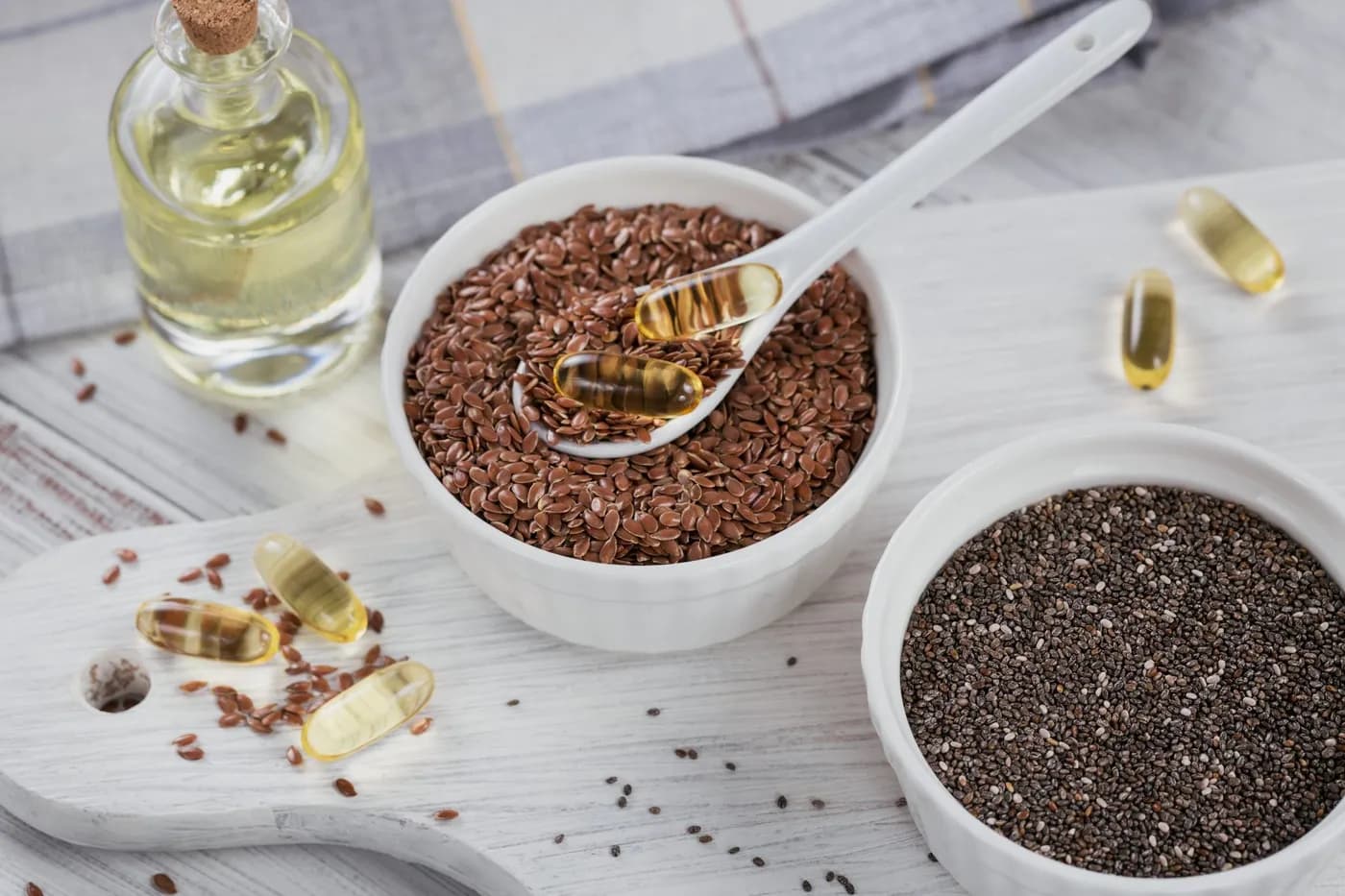
Here’s where the two seeds really diverge. Chia seeds have a thin, hydrophilic outer coat that absorbs liquid and forms a gel almost immediately when soaked — this is why chia pudding sets without any cooking. Because of this soft coat, chia seeds are digestible whole, and their nutrients, including the omega-3s, are absorbed even if you eat them without grinding. This is one of the clearest practical differences when you weigh chia seed versus flaxseed for everyday use.
Flaxseed is different. Whole flaxseeds have a much tougher outer shell that human digestion often can’t break down — meaning whole flaxseeds can pass through your gut largely intact, taking most of their omega-3s and lignans with them. To actually absorb flaxseed’s nutrition, it needs to be ground into a fine meal before eating. Pre-ground flaxseed also oxidizes faster, so it’s best ground fresh or stored in the fridge.
Taste and Culinary Uses
Chia’s neutral flavour makes it easy to stir into smoothies, yogurt, overnight oats, or water for a hydrating gel drink, without changing the taste of the dish. Flaxseed’s nuttier flavour works well in baked goods, rotis, and homemade granola, and ground flaxseed is a popular egg substitute in vegan baking (1 tbsp ground flax mixed with 3 tbsp water replaces one egg). Both can be added to the same meal for a combined fibre and omega-3 boost if you don’t want to choose just one. In fact, many people sidestep the chia seed versus flaxseed debate entirely by using both across the week.
Photo: Chia seeds in a cup, CC BY-SA 4.0, via Wikimedia Commons
Which One Should You Pick?
If convenience matters most, chia is the easier option since it works whole, straight out of the packet. If you’re specifically after lignans or want a slightly higher omega-3 yield, flaxseed is worth the extra step of grinding it fresh. Realistically, both are excellent additions to a balanced diet, and alternating between them — or using both — covers more nutritional ground than picking one as a permanent winner. However you land on chia seed versus flaxseed, rotating between the two is a simple way to hedge your bets.
Seeds like these are just one small piece of the plate — if you’re also weighing the bigger-ticket carb decisions, Rice vs Roti for Weight Loss and Jaggery vs Sugar tackle the same kind of head-to-head questions for the foods that make up the rest of your meal.
Who Should Be Cautious About Chia Seed Versus Flaxseed
Both seeds are generally safe, but a few groups should be more careful. If you’re on blood-thinning medication like warfarin, or have a bleeding disorder, check with your doctor before adding either seed regularly — both chia and flaxseed have a mild blood-thinning effect from their omega-3 content. Anyone with a diagnosed thyroid condition should go easier on flaxseed specifically, since it contains goitrogenic compounds that can interfere with thyroid hormone production in very large amounts (this isn’t a concern at the typical 1-2 tablespoon serving). If you have diverticulitis or a narrowed section of the gut, whole seeds can occasionally aggravate symptoms, so grinding both and starting small is the safer route. Whichever side of the chia seed versus flaxseed debate you land on, moderation and enough water matter more than the seed itself.
Chia Seed Versus Flaxseed: How Much Should You Actually Eat?
For most healthy adults, 1-2 tablespoons a day of either seed is a well-tolerated amount — roughly 12-24g of chia or 10-20g of flaxseed. Going beyond 3-4 tablespoons daily doesn’t meaningfully add more benefit and raises the odds of bloating or loose stools, since both are fibre-dense. If you’re new to either, start with a teaspoon and build up over one to two weeks rather than jumping straight to a full tablespoon. This dosage question comes up constantly in the chia seed versus flaxseed discussion, and the honest answer is that neither seed rewards eating more than this — the benefits plateau well before you’d reach an uncomfortable amount.
Frequently Asked Questions
Related Articles

Healthy fats: why your body needs fat
Healthy fats help your body absorb vitamins and support brain, hormones, joints, cells and daily meals. Learn simple vegetarian sources and habits.

Good fats vs bad fats: choose fats wisely
Understand good fats vs bad fats in simple words. Learn which vegetarian fats to choose, what to reduce and how to read food labels better.
