
Complete Protein Foods: Can Vegetarian Meals Cover Your Protein Needs?
You do not need to combine foods at every meal. What matters is how much protein you eat overall, how varied your food is and whether you eat enough.
Key Takeaways
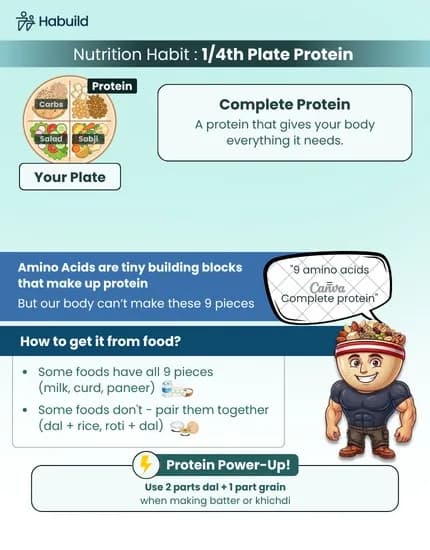
- A complete protein contains all nine essential amino acids your body cannot make.
- Dal, rajma and grains still count; variety across the day covers the gaps.
- You do not need to combine foods at every meal.
- Protein powder only makes sense if it fills a real gap.
If you’ve spent any time reading about protein, you’ve probably come across the term “complete protein” and wondered if your dal-roti dinner measures up. The good news is that you don’t need to panic about it.
The label is useful to know, but what matters far more is how much protein you eat overall, how varied your food is, and whether you’re eating enough through the day.
What “complete protein” actually means
Your body needs nine amino acids, the building blocks of protein, that it can’t make on its own. You have to get them from food. A complete protein is simply a food that contains all nine in useful amounts.
That’s all the term tells you. It doesn’t say whether a food is healthy overall. A packaged “complete protein” snack can still be loaded with sugar or salt, while a humble bowl of dal brings fibre and minerals that many fancy products don’t.
Vegetarian foods that are complete proteins
Soy and dairy are the easiest vegetarian options. Tofu, tempeh, soy chunks and soy milk all count, and so do milk, curd and paneer.
They differ in how concentrated the protein is. Dry soy chunks pack a lot into a small serving, while milk has more water, so you need more of it. When you buy packaged products, check the label and compare a realistic serving. Plain, unsweetened soy milk is also very different from a sugary flavoured drink. Pick the foods you enjoy and digest comfortably, because the best protein source is one you’ll actually eat regularly.
Dal, rajma and roti still count
Here’s something the “complete protein” talk often hides: foods that aren’t complete are still good sources of protein. Dal, chana, rajma, rice, roti, millets, oats, nuts and seeds all add protein to your day. Each may be a little lower in one amino acid, but together they fill each other’s gaps.
A plate of rajma-chawal with salad is a perfectly good meal. If you want a bit more protein, add a bowl of curd or some tofu. Traditional meals don’t need to be marketed as “complete” to work for you.
You don’t have to combine foods at every meal
Many people believe dal and rice must be eaten together, or that a meal fails without the perfect pairing. That isn’t true. Your body keeps drawing on the amino acids you eat across the whole day, so variety over the day is enough.
Dal with rice, rajma with roti, or peanut butter on whole-grain toast are all nice combinations, but nobody needs to calculate amino acids at each bite. Eat a good mix of pulses, grains, dairy, soy, nuts and seeds, and the pattern tends to work out on its own.
How to add protein through the day

Breakfast is where many of us slip. Tea and toast doesn’t give you much. Try besan chilla with curd, oats cooked in milk with a handful of nuts, or a tofu bhurji with roti.
At lunch, give your dal or beans a proper portion instead of a token spoonful. At dinner, include a protein source again, such as paneer, soy chunks, dal or curd. If your meals are far apart, a small snack like roasted chana or a bowl of curd can help.
How much you need depends on your body size, age, activity level and health, so treat these as ideas rather than fixed targets.
Exercise, age and protein
If you train, protein supports your muscles, but it works alongside strength training, not instead of it. A shake can’t do the work for you. Athletes and very active people may need more in total than someone who sits most of the day.
Older adults, especially those with a low appetite, often need to plan protein more carefully. And if you have kidney disease, get advice tailored to you before changing your intake. It’s also best not to copy a gym target from someone else, since their weight, training and goals are different from yours.
When protein powder makes sense
Powder is a convenience, not a requirement. If your regular meals genuinely fall short, whey or soy powder can help fill the gap. Check the protein per serving, any allergens and the other ingredients on the label.
Keep in mind that food gives you fibre and micronutrients that a scoop doesn’t. And if your diet is very limited or you’re simply not eating enough overall, adding powder won’t fix the bigger problem. A dietitian can help turn your needs into meals you can actually repeat.
What a good day of eating looks like
Picture besan chilla with curd for breakfast, rajma-rice with salad for lunch, and tofu with roti and vegetables for dinner. That day includes complete proteins and plenty of variety. Someone else might eat completely different dishes and meet their needs just as well.
If your appetite is poor, start by asking whether you’re eating enough food in total before worrying about amino acids. And if you rely only on plant foods, make sure each meal has a meaningful protein portion, because a tiny serving at every meal can still leave a gap. Build the plate around a decent serving of protein, and you won’t need to turn eating into a calculation.
A simple habit to try
Pick one meal today and add a clear protein food to it, like dal, soy, curd or paneer.
Editorial sources
Frequently Asked Questions
Related Articles
Complete protein for vegetarians: easy food pairs
Vegetarian meals can deliver complete protein too, once you know which everyday food pairs to combine. See the simple combinations that make it easy.

High Protein Vegetarian Foods: The Complete Indian Food List
Indian kitchens are already full of high protein vegetarian foods — dals, paneer, tofu, soy, and dairy. See the complete list, with protein counts, and.

Vegetarian protein: needs, myths and meal planning
Vegetarian meals can provide enough protein. Learn practical needs, simple Indian food sources, common myths and an easy meal-planning method.

Protein Per Day: How Much Do You Need? A Simple Vegetarian Guide
Protein needs depend on body size, age, activity, pregnancy and health. The basic adult requirement is a starting point, not a perfect target for everyone.