
DASH Diet Chart: A Structured Eating Plan for Blood Pressure
DASH stands for Dietary Approaches to Stop Hypertension — a research-backed eating plan with exact daily servings, not loose advice. See the structured.

Key Takeaways
- DASH gives exact daily servings per food group, not just general ‘eat healthier’ advice.
- Sodium is capped at 2,300mg a day, ideally 1,500mg for a stronger effect.
- Emphasises vegetables, fruits, whole grains, and low-fat dairy over red meat and sugar.
- Delivers more potassium, calcium, magnesium, and fibre than a typical diet.
- Shown to reduce blood pressure over 8-12 weeks of consistent use.
A dash diet chart gives you exact daily servings for each food group, turning “eat healthier” into a plan you can actually follow. DASH stands for Dietary Approaches to Stop Hypertension, a research-backed eating pattern designed specifically to lower blood pressure through portion targets rather than general advice.
What is the DASH diet, exactly?
Unlike loose guidance to “eat less salt,” DASH is a structured, clinically studied protocol with defined servings per food group, based on a roughly 2,000-calorie day. It emphasises vegetables, fruits, whole grains, and low-fat dairy while capping sodium, red meat, and added sugar. This structured approach is what separates a dash diet chart from generic “eat healthier” advice.
The DASH diet chart: daily food group targets
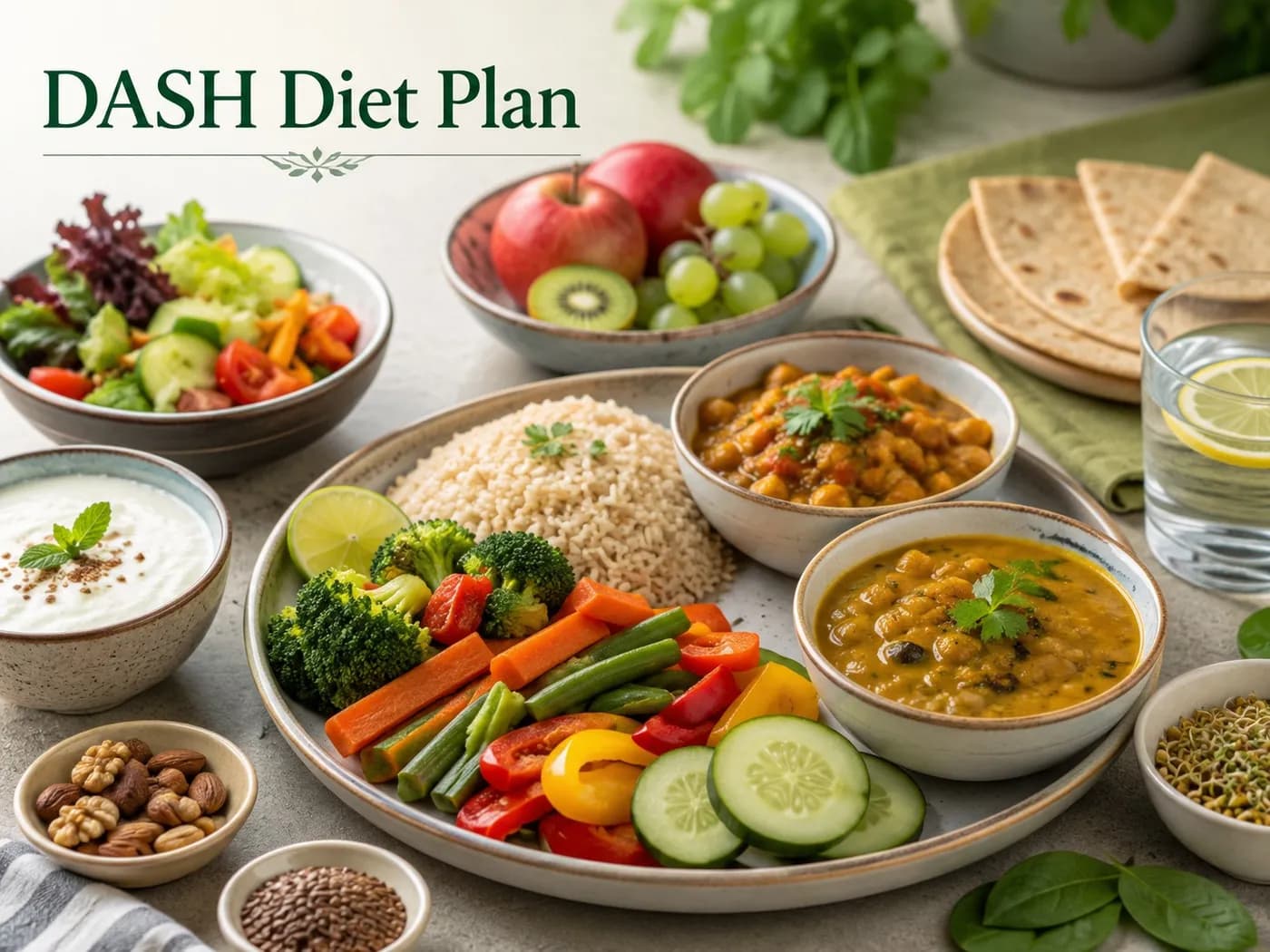
Here are the standard daily food group targets used in most clinical guidelines:
- Grains (whole grain preferred): 6–8 servings/day
- Vegetables: 4–5 servings/day
- Fruits: 4–5 servings/day
- Low-fat or fat-free dairy: 2–3 servings/day
- Dal, paneer, tofu, soy: 2 or more servings/day
- Nuts, seeds, legumes: 4–5 servings/week
- Fats and oils: 2–3 servings/day
- Sodium: capped at 2,300mg/day (ideally 1,500mg for greater effect)
- Sweets and added sugar: 5 or fewer servings/week
These numbers are the heart of any dash diet chart, and sticking close to them is what drives results.
Sample day on the DASH diet chart
Here’s what one day following this plan could look like:
- Breakfast: Vegetable-stuffed oats or dalia with a glass of low-fat milk and a small banana
- Mid-morning: A handful of unsalted almonds and walnuts
- Lunch: Brown rice or one bajra roti, a bowl of dal, sautéed leafy greens, and cucumber-tomato salad
- Evening: Sliced fruit or roasted chana, and green tea
- Dinner: Grilled paneer or tofu tikka, mixed vegetable sabzi, and a small whole-grain roti
- Throughout the day: 2–3 litres of water, with meals seasoned using herbs and lemon instead of extra salt
This structure naturally delivers more potassium, calcium, magnesium, and fibre than a typical diet, while keeping sodium and saturated fat low — the exact combination shown to reduce blood pressure over 8-12 weeks of consistent use.
Photo: dejankrsmanovic, CC BY 2.0, via Openverse (Flickr)
Tips to make the dash diet chart easier to follow
Start gradually rather than overhauling every meal at once — add one extra vegetable serving this week, then build from there. Batch-cook dal and sabzi so a DASH-aligned meal is always ready. Read labels for hidden sodium in sauces, bread, and packaged snacks, since these often account for more salt than what’s added while cooking. Keep unsalted nuts and fruit on hand for the “sweets” slot instead of biscuits or namkeen. Most people find the chart easier to sustain than they expect once meals are planned around it rather than memorised item by item.
How the DASH diet chart actually lowers blood pressure
The science behind a dash diet chart comes down to minerals, not willpower. Potassium, found generously in fruits, vegetables, and dal, helps the kidneys flush out excess sodium and relaxes the walls of blood vessels, which eases pressure directly. Calcium and magnesium — from low-fat dairy, leafy greens, nuts, and seeds — support this same vessel-relaxing effect, while the higher fibre content slows digestion and helps manage the weight gain that often drives blood pressure up over time. Lowering sodium matters too, but a dash diet chart works mainly by adding these minerals in generous amounts, not just by subtracting salt — which is why it consistently shows better results than a low-sodium diet alone in clinical studies.
If your numbers actually run in the other direction, it’s worth knowing the difference — our guides to high BP diet and low BP diet break down how food priorities shift depending on which one you’re managing.
Common mistakes when following a dash diet chart
- Focusing only on cutting salt — a dash diet chart is built around adding potassium- and calcium-rich foods too, not just removing sodium; skipping the “add” half means missing most of the benefit
- Missing hidden sodium — bread, sauces, papad, and packaged snacks often contribute more salt over a week than what’s added at the stove
- Treating dairy servings as optional — low-fat dairy is one of the few reliable calcium sources in this plan, and skipping it without a substitute (like fortified soy milk) leaves a gap
- Overdoing “healthy” salted snacks — roasted namkeen and salted nuts can undo sodium targets quickly even though they feel like better choices than fried food
- Expecting overnight results — a dash diet chart needs a few consistent weeks before blood pressure changes become noticeable on a home monitor
Who benefits most from this plan
While anyone can follow this eating pattern, it’s especially useful for people with prehypertension or stage 1 hypertension, where diet changes alone can sometimes bring numbers back to a normal range without medication. People already on blood pressure medication also benefit, since the DASH pattern often allows for better control at the same or lower dose, though any medication change should go through a doctor first. Older adults and anyone with a family history of hypertension can use a dash diet chart preventively, well before numbers become a concern.
Frequently Asked Questions
Related Articles

Diet for Strength Training: a Practical Eating Guide for Muscle and Recovery
Explore protein, carbohydrates, healthy fats and meal planning for strength training, muscle building and recovery.
Best Diet Plan for Muscle Building
A consistent supply of protein, quality carbohydrates, and healthy fats repairs muscle tissue and fuels workouts — training is only half the equation. See what the right nutrition looks like.

Strength Training Diet: Nutrition Guide for Better Results
Discover the best strength training diet to fuel your workouts, build muscle, and improve performance. Start your 14-day free trial trial with Habuild today.