
Foods That Support Healthy Blood Flow: Everyday Meals and Habits
No single food clears arteries. The eating pattern, salt habits and daily movement that support circulation, with simple Indian meal ideas.
Key Takeaways
- The AHA stresses overall eating patterns over single foods for heart health.
- Build meals on vegetables, fruit, pulses, whole grains and unsaturated fats.
- Beetroot and greens supply nitrate but do not unblock narrowed arteries.
- Cutting salty packaged extras helps keep blood pressure in check.
- Leg pain on walking or a cold, pale limb needs assessment, not a remedy.
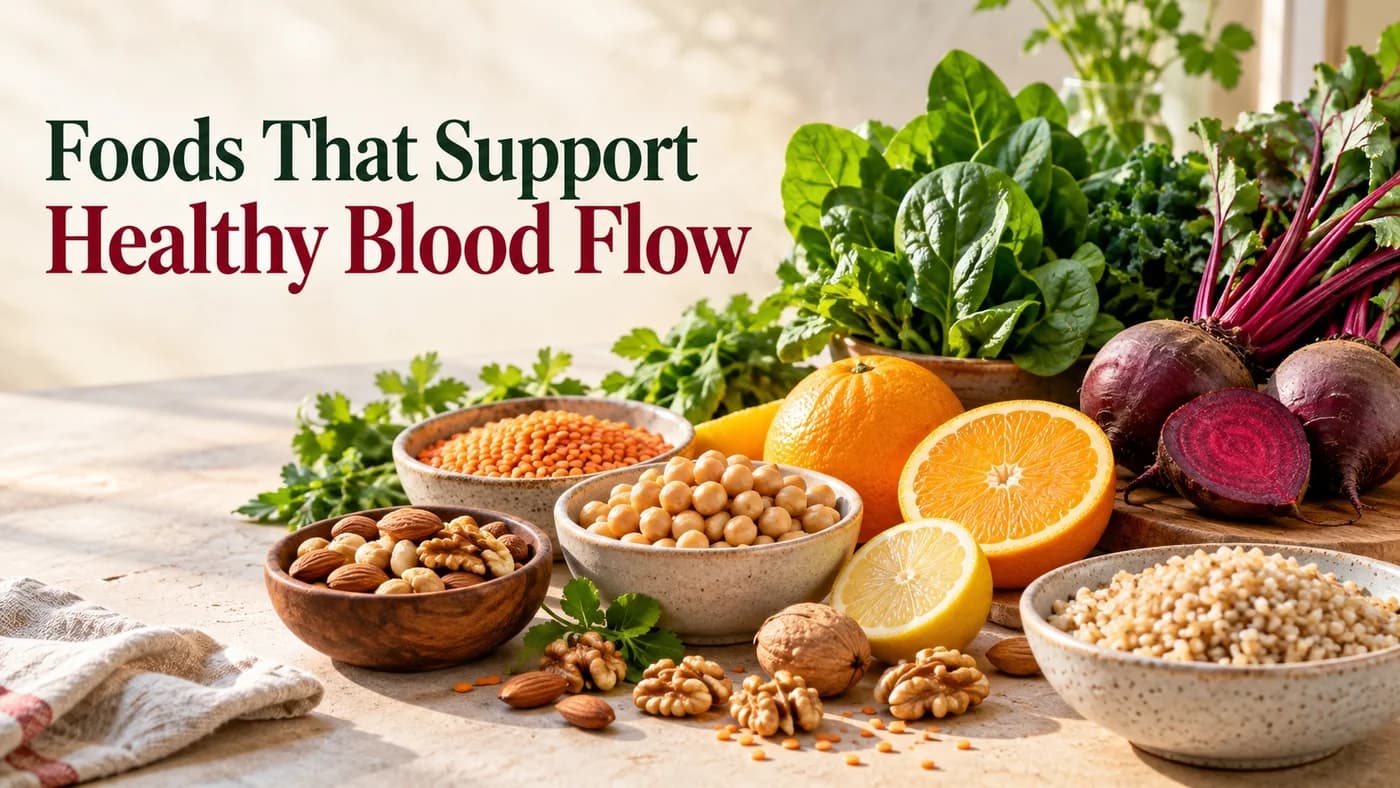
No single food can clean out arteries or instantly fix poor circulation. A pattern of meals that supports the heart and blood vessels is far more useful: plenty of vegetables and fruit, pulses, whole grains, nuts and seeds, with less salt and fewer highly processed foods. Movement, sleep and managing blood pressure matter too. These habits support circulation over months and years rather than after one meal.
What does healthy blood flow depend on?
The heart pumps blood through arteries, veins and smaller vessels. Blood pressure, the health of the vessel walls, and conditions such as diabetes and high cholesterol all shape long-term cardiovascular health. Food influences several of these factors, but a meal cannot diagnose or reverse a circulation problem. That is why the American Heart Association's 2026 dietary guidance focuses on overall eating patterns rather than single "blood-thinning" foods.
The features it highlights include eating plenty of varied vegetables and fruit, choosing mostly whole grains, picking healthy protein sources, using unsaturated fats in place of saturated fats, choosing minimally processed foods and keeping salt low.
Which foods are worth making routine?
Vegetables and fruit
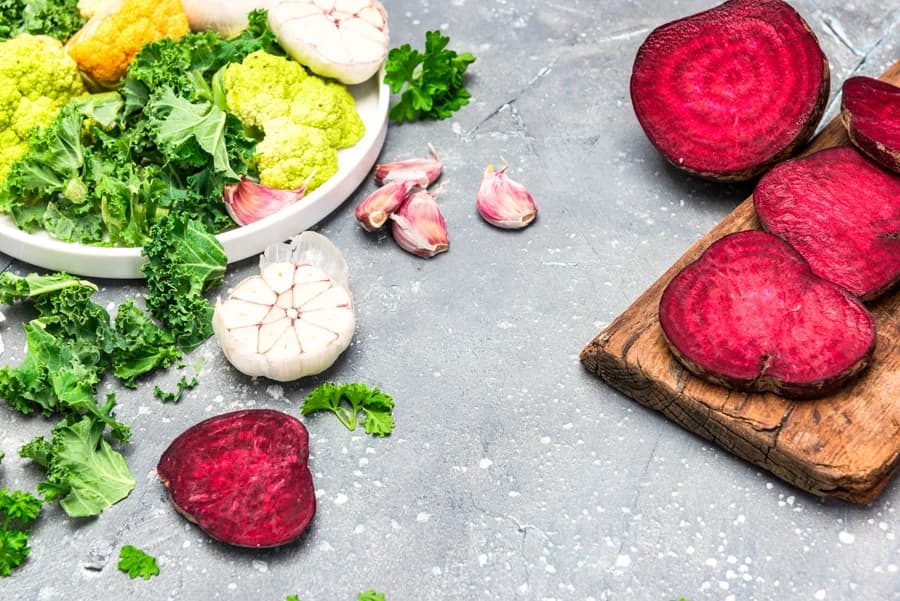
Spinach and other leafy greens, beetroot, tomatoes, carrots, citrus, guava and seasonal fruit all bring fibre and a range of nutrients. Frozen or cooked vegetables count, and you do not need expensive berries or powders for variety. Some vegetables contain dietary nitrate, which the body can convert into nitric oxide, a molecule involved in relaxing blood vessels. Our guide to nitric oxide rich foods explains this in detail. That mechanism does not mean a glass of beet juice cures high blood pressure or reopens narrowed arteries.
Pulses and whole grains
Dal, chana, rajma and other pulses provide fibre and protein and make a meal filling. Whole grains such as whole-wheat roti, oats and brown rice generally bring more fibre than refined grains, while white rice can still fit alongside dal and vegetables. Adding a bowl of dal and sabzi is often easier than replacing every grain at once.
Nuts, seeds and cooking fats
Nuts and seeds supply unsaturated fats. A small handful of unsalted nuts, or some ground flaxseed or sesame in food, is an easy addition. Oils high in unsaturated fat can replace some butter or ghee, though the total amount still deserves a sensible hand. Fish, for those who eat it, also fits a heart-supporting pattern.
Salt
Excess sodium raises blood pressure, and the WHO notes that most people eat far more than recommended. Packaged namkeen, instant noodles, pickles, papad and restaurant meals add a lot on top of cooking salt. Flavour food with ginger, garlic, cumin, coriander, lemon, chilli or fresh herbs instead, and start by cutting the salty extras you eat most often. See our guide to daily salt intake for practical swaps.
Three ordinary meal ideas
- Breakfast: vegetable oats or poha with peanuts, plus fruit or curd.
- Lunch: rajma or dal with roti or rice and a large serving of sabzi.
- Dinner: fish or tofu with greens and rice, or chana with salad and roti.
Water is the everyday drink; sugary beverages crowd out better choices. These are examples, not a prescribed circulation menu. One easy weekly change is to swap a packet snack for fruit with a few unsalted peanuts or roasted chana. Another is to add an extra vegetable to a dish you already cook, such as sambar, khichdi or a stir-fry. There is no special amount of beetroot, garlic or nuts needed to "keep blood moving."
What else makes a difference?
Regular walking and other physical activity, not smoking, enough sleep and following treatment for high blood pressure, diabetes or high cholesterol all support cardiovascular health. The AHA groups these with diet in its Life's Essential 8 checklist. Our article on improving heart health covers the exercise side. If you take medicine for a diagnosed condition, a beetroot, garlic or supplement routine is not a replacement.
Symptoms that need a doctor
- Leg pain or cramping when walking that eases with rest, which can be a sign of peripheral arterial disease
- Persistent coldness, numbness or colour change in a foot or leg
- Sores or wounds on the feet or legs that do not heal
Sudden severe limb pain, loss of movement, chest pain or stroke symptoms need emergency care. These signs have several possible causes, and guessing at a food fix can delay the right treatment.
Editorial sources
Frequently Asked Questions
Related Articles
Nitric Oxide Rich Foods: Nitrate Sources, Uses and Safety
Foods do not usually contain nitric oxide itself. Learn about practical uses, portions and safety.


Salt Intake: Hidden Sodium, Daily Limits and How to Cut Back
Most sodium comes from packaged foods, pickles and restaurant meals, not just the shaker. Learn the daily limit and easy ways to cut back.

DASH Diet Chart: A Structured Eating Plan for Blood Pressure
DASH stands for Dietary Approaches to Stop Hypertension — a research-backed eating plan with exact daily servings, not loose advice. See the structured.

Cholesterol Diet Chart: A Simple Daily Plan to Manage Your Levels
A cholesterol diet chart shows what to eat more of and what to cut back on to manage LDL and HDL levels. See a clear daily structure you can follow at.

How to Improve Heart Health: 8 Daily Habits and Exercises That Actually Work
Daily moderate exercise is among the strongest interventions known for reducing cardiovascular event risk, comparable in effect to many cardiac
