
Fortified Milk: What Added Vitamins A and D Mean for You
Fortified milk adds selected vitamins to a familiar food. Understand what changes, what stays the same and how to use it in everyday meals.

Key Takeaways
- Fortified milk in India commonly has added vitamins A and D.
- It still works like ordinary milk in the kitchen.
- Fortified milk alone may not correct a deficiency.
- Lactose intolerance and milk allergy still apply.
Two packets of milk can look almost identical, yet one carries a small +F symbol. That symbol points to fortification: the addition of selected nutrients. In India, fortified milk commonly has vitamins A and D added. It still serves the familiar purposes of milk, whether you drink a glass, make curd or pour it over breakfast.
Fortification can help improve nutrient intake, but it does not turn milk into a complete diet or a treatment for every deficiency. The useful question is what it adds to the milk you already buy, and whether that milk suits your household.
What is fortified milk?
Fortification means adding a nutrient during production in a controlled amount. It is different from simply describing a food as nutritious. Milk naturally contains protein, calcium and other nutrients, but the amount of some vitamins can vary with its fat content and processing.
India's food fortification programme includes adding vitamins A and D to milk. The +F logo identifies fortified foods under this framework. It does not mean that every packet of milk is fortified or that all fortified products have the same nutritional profile.
If you usually buy a particular type of milk, a fortified version may be a straightforward alternative. You do not need a special recipe, an extra glass or a different meal schedule to use it.
Why add vitamins A and D?
Vitamin A supports normal vision, immune function and the health of tissues. Vitamin D helps the body absorb calcium and supports bones and muscles. Both have roles that go beyond the appearance of healthy skin or a single claim about immunity.
Milk is not naturally a rich, dependable source of vitamin D. Adding it can make the food a more useful contributor. Fortification is particularly relevant where many people have low intakes of these nutrients, because it reaches people through foods they already consume.
That is a population-level advantage, not a promise that one glass will prevent illness. You still need a varied diet. Vegetables such as carrots, pumpkin and leafy greens supply carotenoids that the body can convert to vitamin A, while vitamin D intake and status depend on several factors.
What stays the same?
Adding vitamins A and D does not, by itself, make milk higher in protein or calcium. Those amounts are largely determined by the underlying milk and product formulation. It also does not remove the milk's fat, lactose or energy.
This matters when comparing packets. A fortified full-cream milk can still contain more fat and energy than a fortified toned milk. A flavoured fortified drink may contain added sugar. The added vitamins do not cancel those differences.
Likewise, fortification does not mean that antibiotics, hormones or protein powders have been added. These are separate subjects. The word tells you about added nutrients, not every aspect of how the milk was produced.
Which type makes sense for adults?
Start with the kind of milk you enjoy and use regularly. For many adults who want less saturated fat, an unsweetened toned or lower-fat option can be practical. If it is also fortified with vitamins A and D, that adds a nutritional advantage without requiring a richer milk.
A glass of around 200 to 250 ml is a familiar serving, though there is no compulsory glass count. Curd, paneer and other foods may already contribute to your dairy intake. Appetite, overall meals and any dietary restrictions influence the amount that works for you.
A quick comparison is enough: choose the milk type first, then look for the fortification statement or +F logo. There is no need to turn routine shopping into a calculation of every vitamin.
Easy ways to use it
Fortified milk fits the same kitchen jobs as ordinary milk:
- Use it in oats, dalia or another breakfast porridge.
- Drink it plain, warm or chilled, according to preference.
- Add it to an unsweetened smoothie with fruit.
- Use it for homemade curd following your usual method.
- Include it in cooking where you would otherwise use milk.
Small quantities in several cups of tea contribute less milk than a full glass, so they should not automatically be counted as the same serving. A sweet milkshake or dessert is also a different choice from plain milk, even when fortified milk is used to make it.
Normal preparation can still fit the product's purpose. Follow the packet's heating and storage directions rather than repeatedly boiling and cooling the same batch. Fortification is useful in an ordinary kitchen; it does not call for a complicated preservation routine.
Will it correct a vitamin deficiency?
Fortified milk can contribute to intake, but a diagnosed deficiency may require a treatment dose that food alone does not provide. Persistent bone pain, muscle weakness or other symptoms should not be managed by simply drinking more milk.
If you have been prescribed vitamin D or vitamin A, do not replace that plan with a fortified food. Equally, do not stack several high-dose supplements because a vitamin sounds beneficial. Excess amounts can cause harm.
For a generally well person, fortified milk is best viewed as one source of nutrients within meals. It is not a reason to order repeated vitamin tests without a clinical reason or to worry about every missed glass.
Lactose intolerance and milk allergy still matter
Fortification does not remove lactose. Someone who gets bloating, cramps or diarrhoea after ordinary milk may have similar trouble with the fortified version. Smaller portions, curd or lactose-free milk may suit some people, depending on tolerance.
Milk allergy is different: it involves a reaction to milk proteins. Fortified milk and lactose-free cow's milk are not safe substitutes for someone with that allergy. Swelling, breathing difficulty or faintness after milk needs urgent help.
Plant drinks are another category. If you avoid dairy, an unsweetened fortified soya drink may provide useful protein and calcium, but products vary. Almond, rice and oat drinks are not automatically nutritionally equivalent to milk. For infants, ordinary cow's milk or plant drinks should not replace breast milk or infant formula as the main drink before 12 months.
Keep the choice simple
Fortified milk is a useful version of an everyday food, especially when you already drink milk and the cost is similar. Keep unopened and opened packs according to their storage instructions; added vitamins do not make spoiled milk safe.
Choose a type that suits your meals, use it normally and keep the rest of your food varied. That gives fortification a sensible role without asking a packet of milk to do the work of an entire diet.
Editorial sources
Frequently Asked Questions
Related Articles

Which Milk Is Good for Health? Choose for Your Needs
A practical milk comparison based on nutrition, tolerance, age and household needs.

Whole Milk: Nutrition, Portions and Everyday Uses
A practical look at whole milk for everyday meals, different appetites and dietary goals.

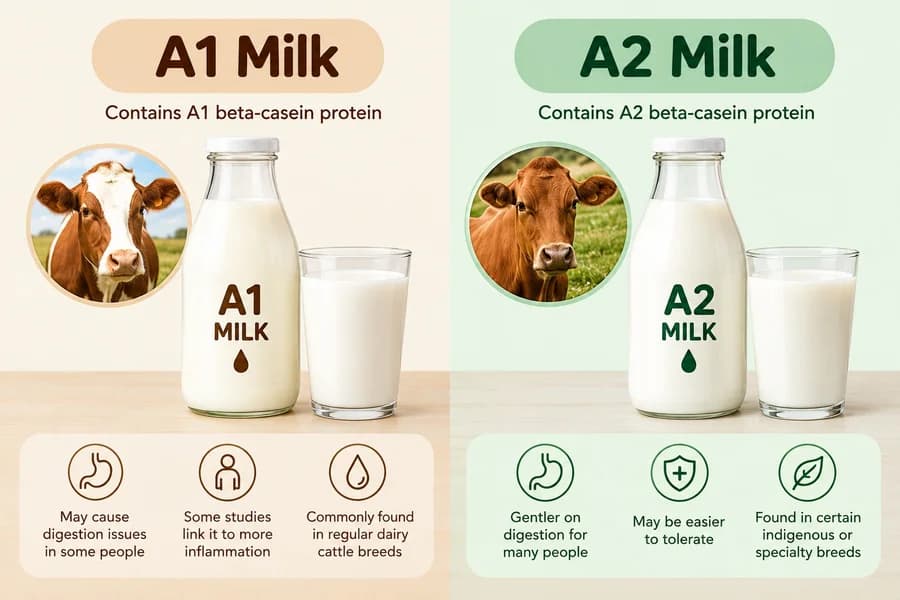
A1 and A2 Milk: What Is the Difference?
A clear comparison of milk protein variants and what they mean for everyday choices.

Drinking Milk at Night: Nutrition, Sleep and Stomach Comfort
Nighttime milk can be comforting, but timing does not transform its nutrition. Choose an amount and routine that suit you.