
A1 and A2 Milk: What Is the Difference?
A clear comparison of milk protein variants and what they mean for everyday choices.
Key Takeaways
- A1 and A2 refer to variants of one milk protein.
- A2 milk is not higher in protein or calcium.
- A2 milk still contains lactose.
- Milk allergy is a separate issue from A1 or A2.
Two milk packets can look almost identical, yet one costs much more because it says A2. The claim can sound like a simple upgrade: better digestion, better health, better everything. The actual difference is narrower. A1 and A2 refer to variants of one milk protein, and they do not tell you everything about nutrition, lactose or food safety.
What do A1 and A2 describe?
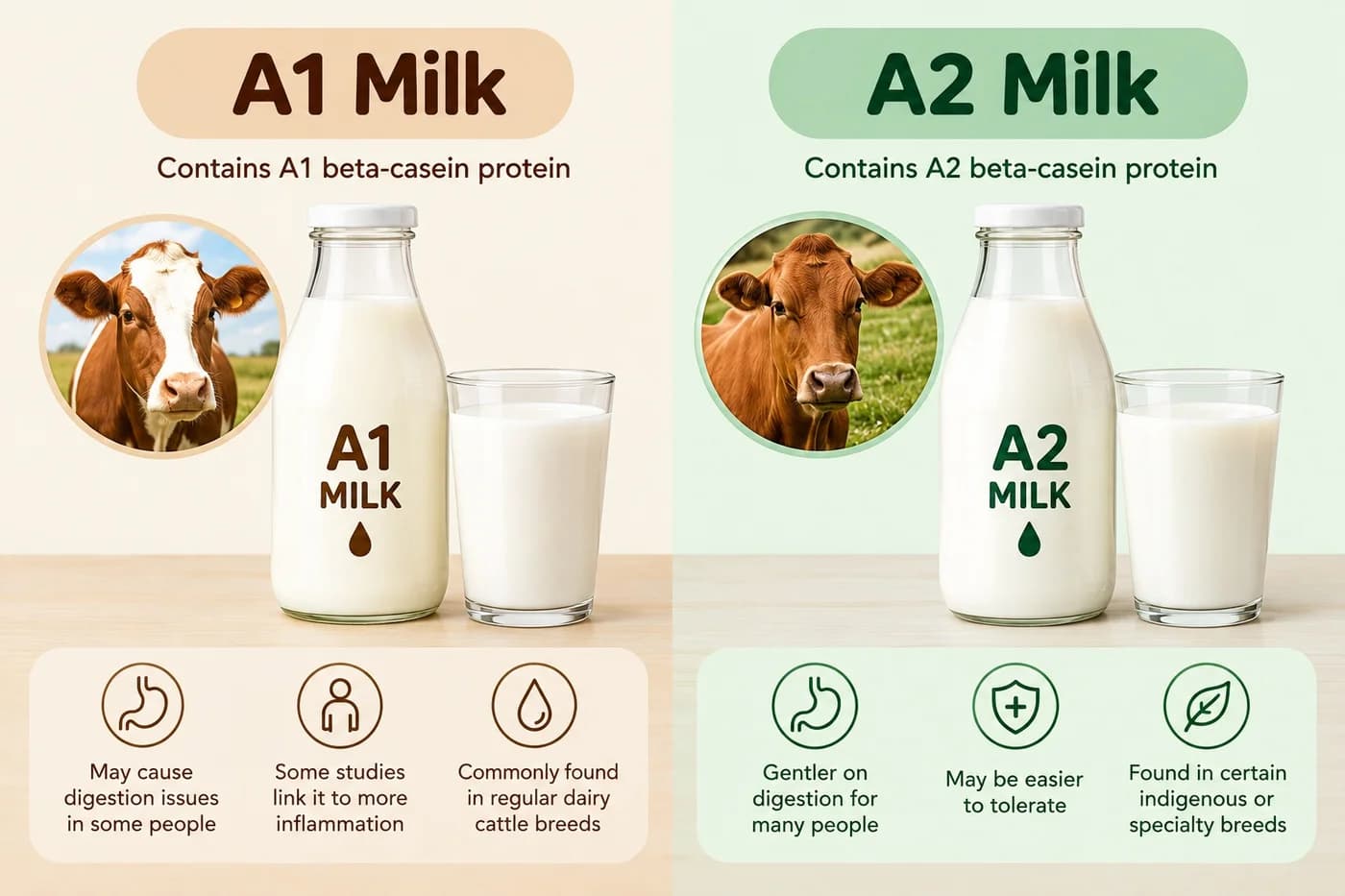
Cow's milk contains several proteins, including beta-casein. A1 and A2 are two variants of beta-casein that differ slightly in their structure. Conventional milk can contain a mixture, while milk sold as A2 is intended to contain the A2 variant without A1 beta-casein.
This is different from a whole-milk, toned-milk or skimmed-milk distinction, which relates mainly to fat content. A2 milk can still vary in fat content and energy.
It is also different from organic, pasteurised or lactose-free milk. One packet may carry several of these descriptions because each tells you something separate. The A2 claim is not a complete nutritional ranking.
Does A2 milk have more protein or calcium?
Not automatically. Both conventional cow's milk and A2 cow's milk can provide protein and calcium. The amount depends on the actual product and serving rather than the A1 or A2 name alone.
If your aim is to add protein to breakfast, ordinary milk or curd can already contribute. There is no need to pay a premium solely because you assume A2 must contain much more.
Likewise, a sweetened A2 milk drink is still sweetened. The protein variant does not cancel added sugar or change a large dessert into an everyday milk serving. Compare foods that are otherwise similar when deciding whether a price difference is worthwhile.
What does research say about digestion?
Some small controlled trials have found differences in particular digestive symptoms when participants drank A2-only milk instead of milk containing both variants. This suggests that some people may experience a difference, but it does not establish that everyone will digest A2 better.
For example, a 2024 crossover trial included 40 adults with milk-related digestive discomfort. Results varied between symptom measures, illustrating why “easier digestion” is a more complicated claim than it first sounds.
The research does not justify saying ordinary milk is harmful to everyone. Digestive symptoms can also depend on quantity, lactose, other foods and conditions unrelated to the beta-casein variant.
A2 milk still contains lactose
Lactose is the naturally occurring sugar in milk. Lactose intolerance happens when someone has difficulty digesting enough of it, and can cause gas, bloating or diarrhoea.
Changing the beta-casein variant does not remove lactose. An A2 milk product is only lactose-free if it has separately been made that way.
If lactose is the reason milk causes symptoms, lactose-free milk or a smaller amount with meals may be more directly relevant. Some people tolerate curd better than a large glass of milk. The right choice depends on what is causing the symptoms, rather than the most expensive packet on the shelf.
Milk allergy is another issue entirely

Milk allergy involves an immune reaction to milk proteins. A2 milk still contains milk proteins and should not be assumed safe for someone with a cow's-milk allergy.
Do not use it as a home test after a reaction involving hives, wheezing, facial swelling or repeated vomiting. Someone with a diagnosed allergy should follow their allergy plan and use an appropriate alternative.
Lactose-free cow's milk also still contains milk proteins. This is why lactose intolerance and milk allergy need different decisions, even though both may be casually described as “milk not suiting me”.
How to decide whether to try it
If you tolerate your usual milk well and it fits your budget, there is no clear reason to change because of fear-based claims. Keep using a suitable product you enjoy.
If milk causes mild digestive discomfort, begin by noticing the amount and setting. A large glass taken quickly may affect you differently from a small amount with breakfast. It can help to make one change at a time so you know what actually helped.
Trying A2 for preference is reasonable if you can afford it, but it is not a diagnosis. Persistent pain, blood in stools, unexplained weight loss or ongoing diarrhoea needs assessment rather than repeated switches between milk brands.
Pasteurisation and storage still matter
A2 status does not make raw milk free from harmful microbes. Choose appropriately heat-treated milk and follow storage instructions. Raw milk requires safe heat treatment before drinking; a claim about the cow or protein does not replace that step.
Keep perishable milk refrigerated and avoid leaving an open packet or prepared milk drink out in warm weather. Buy quantities you can finish safely.
These ordinary handling choices matter whichever protein variant is present. A premium label cannot compensate for poor storage or a spoiled product.
Spend according to what helps your household
Milk is one food among many. If A2 costs substantially more, think about whether that purchase improves anything you can notice. It may be worth it for taste or personal tolerance, but it need not crowd out dal, vegetables, fruit or other useful foods.
For someone avoiding dairy, choose alternatives according to their nutritional contribution. Fortified unsweetened soy milk can provide protein and added calcium; many other plant drinks contain much less protein. None should automatically replace infant formula.
The useful conclusion is a calm one: A2 describes a protein variant. It may suit some people, but ordinary milk is not automatically a poor choice, and A2 is not a solution to every milk-related problem.
Editorial sources
Frequently Asked Questions
Related Articles

Milk Nutrition: Protein, Calcium, Lactose and Choosing a Type
Milk provides protein, calcium, vitamin B12 and other nutrients, and fortified products may also add vitamin D. Learn how to choose a type.


Buffalo Milk: Nutrition, Portions and Safety
Buffalo milk is richer than cow milk in fat, protein and energy. See how it compares, sensible portions, lactose and allergy facts, and safe handling.

Toned Milk: Meaning, Nutrition and Who It Suits
What toned, double toned, full-cream and skimmed milk mean on Indian milk packets, and how to pick the right one for children, adults and tea.

Buttermilk Calories: What’s Really in Your Glass?
Buttermilk calories depend on what is in your glass. Here is how plain chaas compares with shop-bought versions, and how to watch the sugar and salt.