
Glutamine: What It Does and Whether You Need a Supplement
Glutamine is an amino acid your body makes and food supplies. What the evidence says about L-glutamine powder for muscle, recovery and gut health.
Key Takeaways
- Glutamine is the most abundant free amino acid in muscle and blood.
- Your body makes it, and protein foods supply roughly 3 to 6 g a day.
- Research does not support glutamine alone for strength or performance.
- "Gut repair" claims go far beyond the human evidence.
- Prescription L-glutamine for sickle cell disease is not a gym supplement.
Glutamine is an amino acid, one of the building blocks your body uses to make proteins. Your body normally makes it, and protein foods add more. L-glutamine powder is often sold for muscle growth, recovery or "gut healing," but for most healthy adults who eat enough protein, the evidence does not show a clear reason to add a scoop.
What does glutamine do?
Glutamine is the most abundant amino acid in muscle, blood and the body's pool of free amino acids. It supplies nitrogen for many reactions and fuels rapidly dividing cells in the gut and immune system. The body makes it mainly from other amino acids, and NIH estimates that adults get about 3 to 6 g a day from protein-containing foods. To see how it fits with the other amino acids, read our guide to amino acids and their sources.
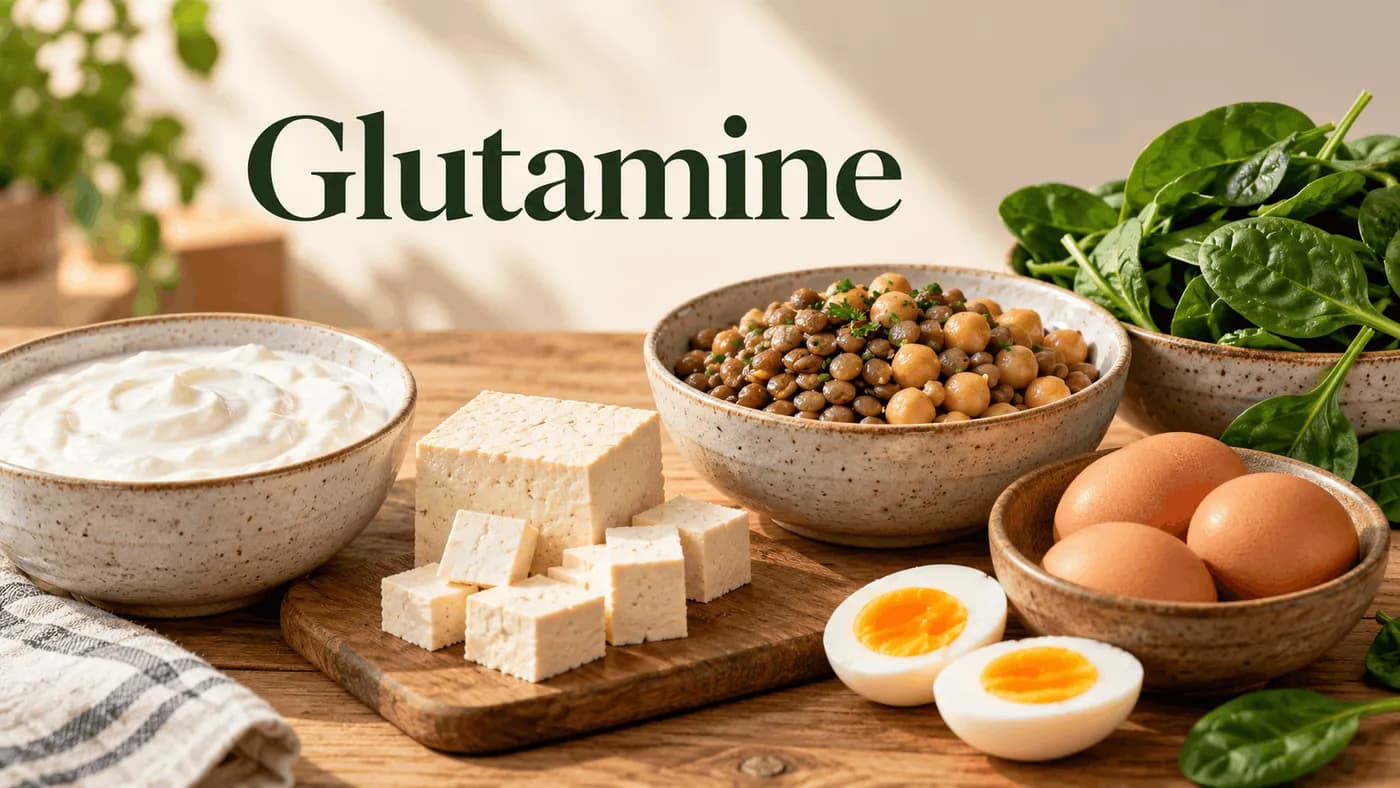
In vegetarian meals, dal, chana, rajma, soy, tofu, paneer, curd, milk, nuts and grains all contribute to protein intake. You do not need a separate "glutamine food." If your meals are mostly plain rice, roti or poha, adding dal, curd, chana or tofu improves the meal more broadly than focusing on one amino acid.
During critical illness, burns or major injury, the body's need can exceed what it makes, and clinical teams may use glutamine in those specialised settings. That does not mean a healthy person who feels tired after a workout is deficient.
Will it build muscle or improve workouts?
The NIH Office of Dietary Supplements concludes that research does not support taking glutamine alone to improve exercise or athletic performance. In one 6-week trial, weightlifters taking almost 45 g a day gained no more strength or lean mass than those taking a placebo. A review of glutamine in sport also found little support for the usual reasons people take it, such as immune support or preventing muscle breakdown.
Training that gradually becomes more challenging, enough total food, regular protein and good sleep give you a far more dependable foundation. If you are hungry after a workout, have a normal snack or meal such as curd with fruit, dal and rice, or tofu with roti. Our muscle recovery diet guide has more ideas.
If performance is falling, look first at total food, sleep and training load. One amino acid will not fix eating too little overall. The same caution applies to other single-ingredient powders such as BCAAs.
What about gut health?
Gut cells use glutamine, but that fact does not prove a supplement cures bloating, acidity, IBS or an undefined "leaky gut." These complaints have very different causes, and a powder cannot tell you whether lactose, constipation, a medicine or a medical condition is responsible.
If a product promises to "seal the gut" for everyone, ask which human condition and outcome the claim refers to. Persistent diarrhoea, blood in the stool, unexplained weight loss or ongoing abdominal pain need medical assessment, not months of supplement trials.
Are there real medical uses?
Yes, but they are specific. In 2017 the US FDA approved an oral L-glutamine powder for people aged five and over with sickle cell disease, to reduce serious complications such as painful crises. It is prescribed and monitored for that condition. Hospital nutrition for seriously ill patients is likewise chosen by clinical teams. Neither establishes a benefit for someone buying an over-the-counter tub.
Is the powder safe?
Studies in healthy adults have reported few side effects at commonly used doses. Still, flavoured recovery blends may also contain caffeine, sweeteners or other ingredients, which makes it hard to know what caused any stomach upset. Stop a product that clearly makes you feel worse.
People with kidney or liver disease should not add high-dose amino acid powders on their own, because protein and nitrogen handling may need individual planning. During pregnancy, breastfeeding or cancer treatment, do not treat a supplement label as personal advice. If you compete in sport, multi-ingredient products also carry a contamination risk.
The practical answer
If you eat varied protein foods and train for general fitness, you probably do not need glutamine powder. Spend first on meals you enjoy and can repeat, a sensible exercise routine and enough rest. If your clinical team has recommended L-glutamine for a specific condition, follow that plan rather than copying a dose from a gym product.
Editorial sources
- NIH Office of Dietary Supplements: Dietary supplements for exercise and athletic performance
- Gleeson M. Dosing and efficacy of glutamine supplementation in human exercise and sport training. J Nutr, 2008 (PubMed)
- US FDA: FDA approves new treatment for sickle cell disease
- ICMR-NIN: Dietary Guidelines for Indians
Frequently Asked Questions
Related Articles
Amino Acids: Types, Functions, Vegetarian Sources and Safety
Nine amino acids are called essential because the body cannot make enough of them and must get them from food. Learn vegetarian sources.

BCAA Benefits, Uses, Evidence and Supplement Safety
Branched-chain amino acids are leucine, isoleucine and valine. Learn about practical uses, portions and safety.
Diet for Muscle Recovery: What to Eat After Training
A good muscle recovery diet isn’t about building bigger muscles — it’s about helping the muscles you already worked repair and refuel. See what actually.

Creatine: Benefits, Uses, Dosage Basics and Safety
Creatine is made in the body and stored mainly in muscle, where it helps supply quick energy during short, intense activity.
