
Kombucha: Is It Worth Drinking? Sugar, Caffeine and Safety
Kombucha is a fermented tea with variable sugar, caffeine, acidity and alcohol. How to read the label, drink it safely and keep expectations realistic.
Key Takeaways
- Compare sugar per 100 ml; one bottle can hold two servings.
- Kombucha contains caffeine from tea and can contain a little alcohol.
- Microbe types and amounts vary by brand; gut benefits are not guaranteed.
- Its acidity can worsen reflux and wear teeth if sipped all day.
- Pregnant women, young children and people with weak immunity should ask first.
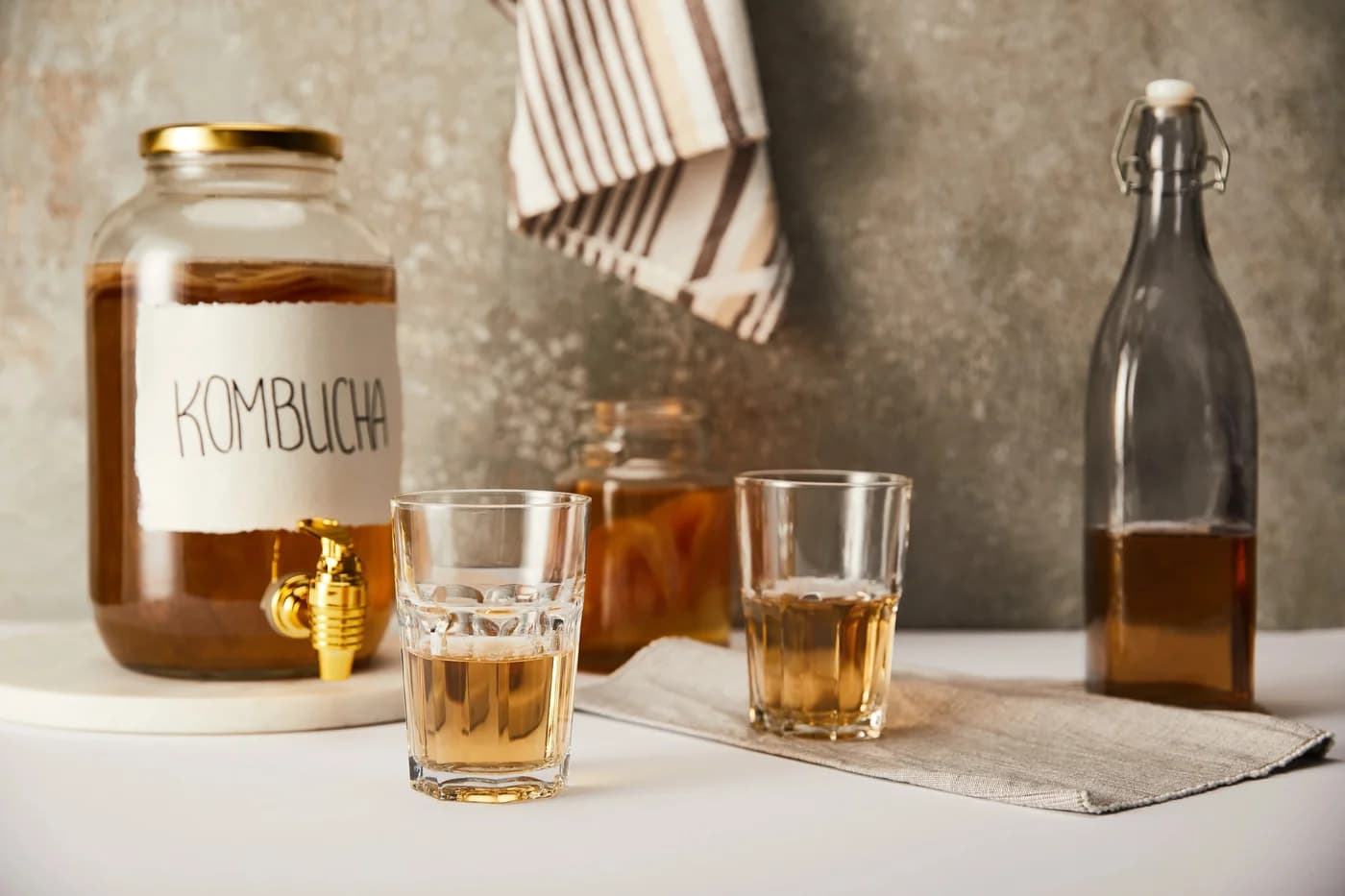
Kombucha is sweetened tea fermented with a mixture of bacteria and yeast. The result is a fizzy, tangy drink that may contain live microbes, caffeine, sugar and a small amount of alcohol. Bottles vary widely, so the name alone tells you very little. The label, storage and way it was prepared are more useful than broad claims about detoxing or gut health.
Start with the bottle, not the promise
- Check sugar, caffeine and serving size.
- Water should remain your main drink.
- Benefits are possible, not guaranteed.
- Homemade batches need extra care.
What is in the bottle?
Fermentation uses some of the added sugar, but it does not always remove all of it, and some brands add juice or sweetener afterwards. Compare sugar per 100 ml as well as per bottle, because a bottle may contain more than one serving. Tea also contributes caffeine unless the product uses a caffeine-free base; if caffeine affects your sleep, see our guide to caffeine side effects.
Kombucha is often sold as a probiotic drink, yet the types and amounts of microbes are not consistent across products. A systematic review found very little direct human evidence of health benefit. If you enjoy it and tolerate it, treat it as a beverage, not a treatment.
The drink is acidic. People with reflux, sensitive teeth or a delicate stomach may feel worse after it, especially on an empty stomach. Sipping acidic drinks for hours also exposes teeth repeatedly, so a smaller serving with a meal is often easier than carrying a bottle through the day.
Reading sugar, alcohol and storage information
- Sugar: check grams per 100 ml and the full bottle size.
- Caffeine: look for a caffeine statement if you are sensitive.
- Alcohol: fermentation can leave a small amount, and it can rise if the bottle is stored warm.
- Storage: if the label says keep refrigerated, the cold chain helps control further fermentation and pressure.
Do not drink from a bottle that is leaking, bulging, foul-smelling or past its use-by date. Floating strands or sediment can be normal in an unfiltered product, but they do not prove quality. Words such as raw, live, craft or gut-friendly on the front are less useful than the back label.
How should you choose and drink it?
Buy a sealed product from a reliable maker with a clear use-by date. Choose a flavour you like without assuming that herbs or berries make it medicinal. If the bottle is very sweet, treat it like a soft drink.
Start with about half a small glass. Notice acidity, bloating, bowel changes and sleep, and avoid it late in the day if caffeine affects you. Carbonation can cause fullness or burping; pouring it into a glass and drinking it slowly with food may help. Try one brand on two or three occasions without starting other supplements at the same time, and stop if reflux, sleep or bowel symptoms worsen.
Home brewing
Home brewing is less predictable. Poor hygiene, the wrong acidity or contaminated equipment can allow unwanted microbes to grow, and appearance or smell is not a reliable safety check. US health authorities have investigated serious illness in people drinking homemade kombucha, although a direct cause was not confirmed. Use a tested method and clean equipment, and when in doubt, throw the batch away.
Who should skip it?
Pregnant women, young children, people with weakened immunity and anyone with serious liver or kidney disease should seek medical advice and may be better off avoiding unpasteurised kombucha. The small amount of alcohol also matters for people who avoid alcohol completely.
Stop drinking it if it repeatedly causes pain, vomiting, a racing heartbeat or a rash, and seek medical help for severe symptoms. A drink that does not suit you is not causing a helpful detox reaction.
You do not need kombucha for gut health
Regular meals with vegetables, fruit, pulses, whole grains and fermented foods such as curd are more affordable and predictable; see our guides to probiotic foods and a gut health diet. Kombucha also does not cancel a heavy meal or remove toxins after alcohol; the liver and kidneys already do that job. If you are cutting down on soft drinks, plain sparkling water with lemon or chilled unsweetened herbal tea are simpler alternatives.
Editorial sources
- Kapp JM, Sumner W. Kombucha: a systematic review of the empirical evidence of human health benefit. Annals of Epidemiology, 2019 (PubMed)
- US Centers for Disease Control and Prevention: Unexplained Severe Illness Possibly Associated with Consumption of Kombucha Tea, Iowa 1995
- Alcohol and Tobacco Tax and Trade Bureau (US): Kombucha
Frequently Asked Questions
Related Articles
Probiotic Foods: Real Indian Sources and How Much You Need
Probiotic foods contain live, beneficial bacteria that support your gut when eaten regularly — dahi, buttermilk, and fermented pickles are everyday.

Prebiotics and Probiotics: Differences, Food Sources and Safety
Prebiotics are substrates selectively used by microorganisms, while probiotics are live microorganisms that provide a demonstrated health benefit…

Gut Health Diet: What to Eat for a Healthier Digestive System
A good gut health diet isn’t about one superfood — it’s consistent daily habits: enough fibre, a variety of plants, some fermented food, and enough.

Caffeine Side Effects: How Much Is Too Much for You?
Caffeine comes from far more than coffee. See how total daily intake, timing and sensitivity shape jitters, sleep loss and other side effects.
Curd Benefits: Why This Everyday Staple Matters
Curd (dahi) is one of the most consistently eaten foods in Indian households — a solid daily source of protein, calcium, and live probiotic cultures in.