Lutein and Zeaxanthin: Food, Eye Health and Supplements
Greens, peas and corn can contribute eye-supporting carotenoids. Learn where food helps and why AREDS2 supplements have a specific medical role.

Key Takeaways
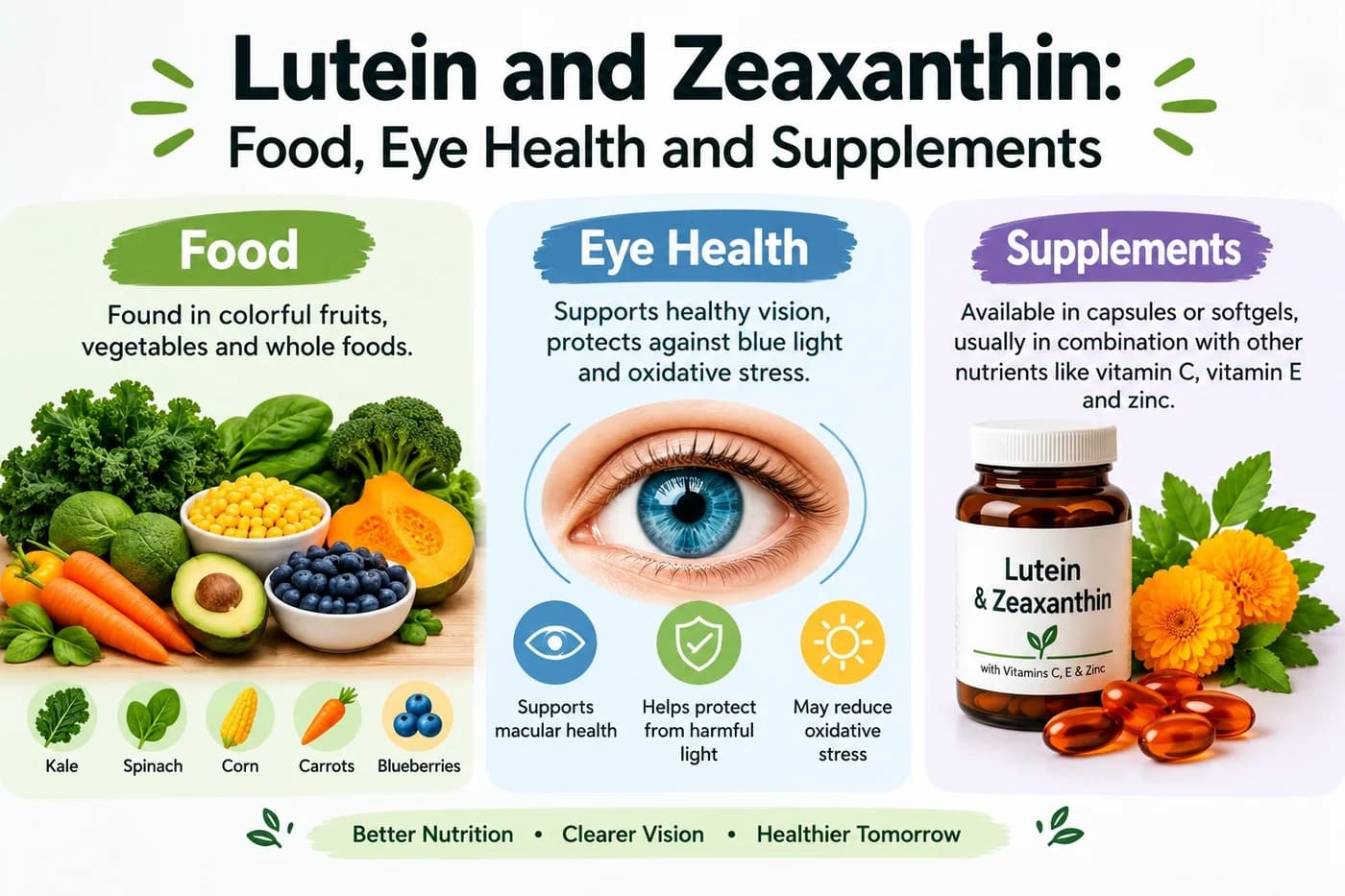
- Palak, peas and corn supply lutein and zeaxanthin.
- Cooking with a little fat helps absorption.
- AREDS2 supplements suit only specific eye conditions.
- Supplements do not replace glasses or screen breaks.
A bowl of palak, some peas and a serving of sweet corn have something in common beyond their colour: they can contribute lutein or zeaxanthin to your diet. These plant pigments are often advertised in eye supplements, sometimes with promises that make them sound essential for everyone who uses a screen.
Their role is more specific. Lutein and zeaxanthin occur in the retina, and certain supplement combinations can help selected people with age-related macular degeneration. For most readers, the useful starting point is a varied diet and appropriate eye care, rather than a capsule added to every breakfast.
What are these nutrients?
Lutein and zeaxanthin belong to a family of pigments called carotenoids. They help give some foods their yellow or orange colour, although the green chlorophyll in leafy vegetables can hide them.
In the eye, they are concentrated in the macula, the central part of the retina that supports detailed vision. This is the vision you use to read, recognise faces and see fine detail. The pigments help filter some light and have antioxidant roles.
That biological role explains scientific interest in them. It does not mean that eating more will sharpen every person’s eyesight, remove glasses or prevent every eye condition. A nutrient being present in a tissue is the beginning of a question about benefit, rather than proof of a treatment.
Put the food first
Leafy green vegetables are useful sources of lutein. Spinach, along with other dark greens, can contribute to a varied diet. Corn, peas and orange or yellow vegetables add further carotenoids, although amounts differ between foods and varieties.
There is no need to find one perfect ingredient or eat the same salad every day. Rotate vegetables you can buy and prepare easily. Frozen peas and corn are practical options when fresh produce is inconvenient.
Try building them into familiar meals:
- Stir chopped spinach into dal rather than keeping greens for a separate dish.
- Add peas and a little corn to vegetable pulao, alongside a protein food.
- Use cooked greens in a besan chilla filling.
- Add a vegetable side to a lunch that otherwise consists mainly of roti and curd.
Egg yolks also provide these pigments for people who eat eggs. A vegetarian diet can obtain them from plant foods, so eggs are not a requirement.
Cooking and a little fat help
You do not need to eat all vegetables raw to get their nutrients. Chopping and cooking can help release carotenoids from the plant structure, while preparation also affects how much is retained. A mix of cooked and raw vegetables is a sensible approach.
Because carotenoids are fat-soluble, eating them in a meal containing a little fat supports absorption. The oil already used in a sabzi, or nuts and seeds in the meal, can serve that purpose. Extra spoonfuls of ghee are unnecessary.
The aim is a meal you will keep eating. Overcooking greens until they are unappealing or turning every serving into a rich gravy makes the habit harder to sustain. A quick palak dal or lightly cooked vegetable filling is enough to begin with.
Where AREDS2 supplements fit
Age-related macular degeneration, usually shortened to AMD, affects central vision. The AREDS and AREDS2 studies tested specific combinations of nutrients in people with particular stages of this condition.
An AREDS2 formula includes lutein and zeaxanthin alongside other vitamins and minerals. The evidence applies to that tested combination and the patients studied; it is not proof that a standalone lutein tablet has the same effect.
These supplements can reduce the risk of progression in selected people with AMD. They do not restore vision already lost, and they are not a general prescription for healthy eyes. An eye examination establishes whether the disease and its stage make the formula appropriate.
If an ophthalmologist recommends AREDS2, ask for the exact formulation rather than buying any product with an eye picture on the box. The doses are higher than those in ordinary food and can interact with health conditions or medicines.
Why beta-carotene matters
Older eye formulas may contain beta-carotene. This ingredient is associated with increased lung cancer risk in people who smoke or used to smoke. AREDS2 replaced beta-carotene with lutein and zeaxanthin.
That distinction matters more than choosing a brand with the longest ingredient list. Tell your eye specialist about a smoking history, including past smoking, when discussing an eye supplement. Do not assume that all products called eye vitamins are interchangeable.
For someone without an indication for a high-dose formula, food offers a simpler way to include these nutrients without making supplement selection a daily task.
Will they help with screens or glasses?
Lutein and zeaxanthin do not correct short-sightedness, long-sightedness or astigmatism. These involve how the eye focuses light. A bowl of greens or a supplement cannot replace the right spectacles.
Claims about preventing screen damage or treating all digital eye strain are also broader than established evidence supports. Screen discomfort often involves long periods of near work, reduced blinking, dryness or an outdated prescription.
Break up close work, look into the distance regularly and adjust lighting to reduce glare. If discomfort persists, an eye assessment is more useful than continually adding nutrients. Food remains valuable, but it should not carry a promise it cannot fulfil.
Give changes in vision proper attention
New distorted or wavy lines, a blurred central patch or difficulty reading with one eye deserve prompt assessment. Sudden vision loss, a curtain-like shadow or new flashes with floaters need urgent eye care.
These are reasons to act on a change, rather than wait for a supplement to work. People with known AMD should follow the monitoring plan their eye team provides.
For everyday prevention, think beyond a single nutrient: avoid smoking, manage diabetes or blood pressure if present, wear suitable sun protection and keep eye appointments appropriate to your age and risk. Lutein-rich meals fit within that pattern. They are one useful part of caring for your eyes, without needing to become the whole story.
Editorial sources
Frequently Asked Questions
Related Articles
Eye Vitamins: When Supplements Help and When They Do Not
Eye supplements have specific uses, not universal benefits. Understand food, deficiency treatment and the role of AREDS2 in particular AMD stages.

Spinach Benefits: Nutrition and Simple Meal Ideas
Spinach provides folate, vitamin K and carotenoids. Learn its benefits, cooking tips, iron facts and cautions for warfarin or kidney stones.
Carrot Nutrition: Beta-Carotene and Easy Ways to Eat Them
Carrots provide beta-carotene, fibre, potassium and natural sweetness. The body can convert beta-carotene into vitamin A.

Yoga Poses for Eyes (Eye Yoga): Steps, Benefits & Precautions
Netra Vyayama, or eye yoga, uses deliberate, mindful movements applied specifically to the eyes and surrounding muscles, part of the traditional Hatha.