
Lysine: Vegetarian Food Sources, Uses and Supplement Safety
Lysine is an essential amino acid you must get from food. Pulses, soy and dairy cover most vegetarians' needs without a supplement.
Key Takeaways
- Lysine is essential: your body cannot make it, so it must come from food.
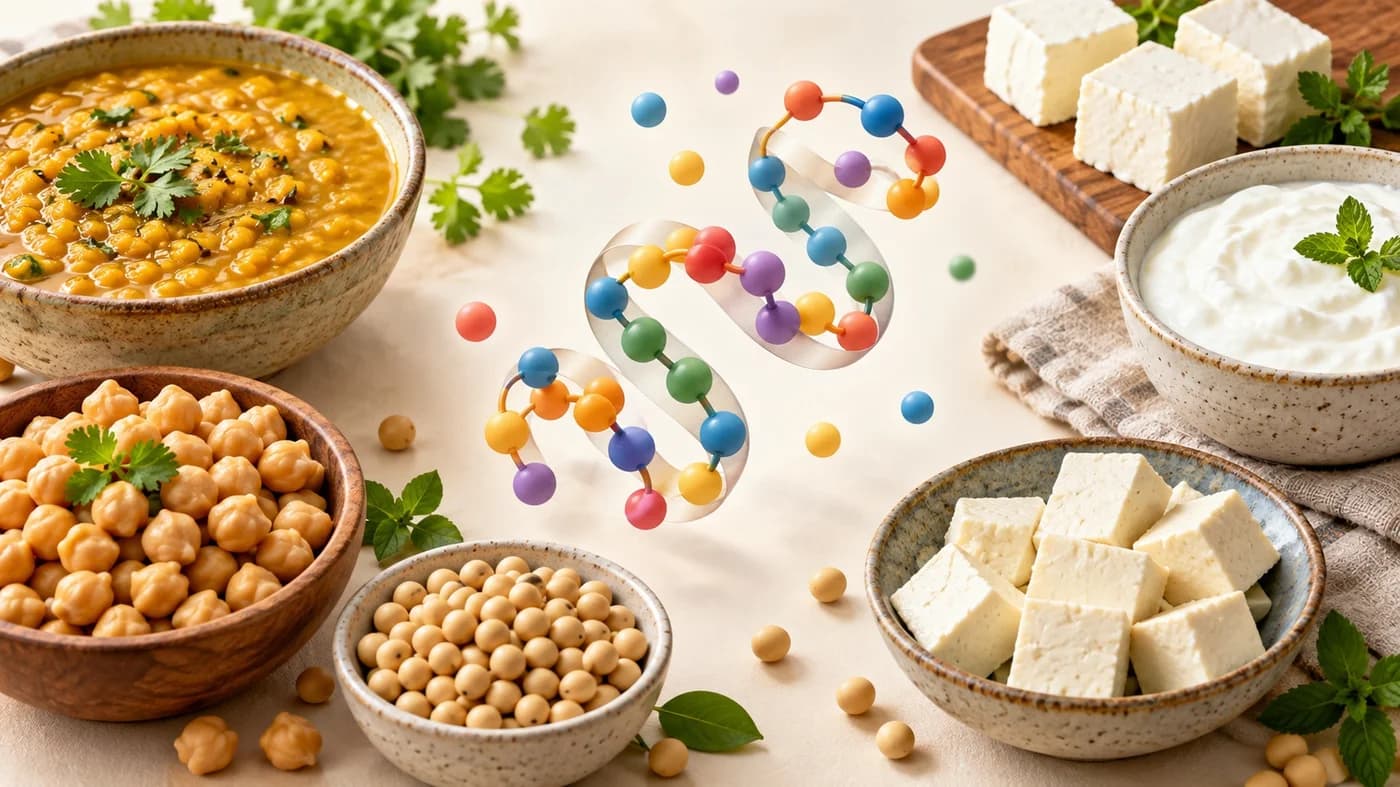
- Dal, rajma, chana, soy, tofu, milk, curd and paneer are good veg sources.
- Cereals are low in lysine; pairing them with pulses fills the gap.
- For cold sores, doses under 1 g a day show little benefit in studies.
- Avoid high-dose supplements with kidney or liver disease, or in pregnancy.
Lysine is an essential amino acid, which means your body cannot make it and must get it from food. It is one of the building blocks your body uses to make proteins. Most people who eat enough varied protein meet their needs without a supplement, including people on a well-planned vegetarian diet. For the bigger picture on all nine essential amino acids, see our guide to essential amino acids.
What does lysine do in the body?
Your body joins lysine with other amino acids to build proteins for muscles, enzymes, hormones and immune cells. Lysine is also involved in making collagen and carnitine, but that does not mean extra lysine improves skin, energy or fat burning.
Who might fall short?
A true deficiency is unusual when total food and protein intake are adequate. Risk rises when diets are very restricted, appetite is poor, or meals are built mostly on cereals with little dal, soy or dairy. Symptoms such as tiredness, slow healing or hair changes have many causes and cannot confirm a lysine problem on their own.
Vegetarian food sources of lysine
Pulses and soy are the richest plant sources. USDA data show that 100 g of cooked lentils supply about 0.6 g of lysine. Good everyday options include:
- Dals such as masoor, moong, toor and urad
- Rajma, chana, lobia and other beans
- Soybeans, soy chunks, tofu and tempeh
- Milk, curd and paneer, if you eat dairy
- Quinoa, amaranth (rajgira), nuts and seeds, in smaller amounts
Why grains plus pulses work
Cereals such as rice and wheat are relatively low in lysine, while pulses are rich in it. Traditional pairings like dal-rice, rajma-roti and khichdi naturally balance each other, as we explain in complete protein for vegetarians. You do not need to combine them at every bite; variety across the day is what counts.
Lysine needs in different groups
Older adults often eat less as appetite falls, so total protein needs attention. Soft options such as dal, curd, tofu bhurji and well-cooked beans are easier than simply serving bigger portions.
Athletes need enough total protein and energy, spread across meals, along with resistance training. Isolated lysine cannot replace either.
Vegans can meet lysine needs when pulses and soy appear regularly. Vitamin B12 is a separate issue that usually needs fortified foods or a supplement.
Do lysine supplements help?
Cold sores
Lysine is often marketed for cold sores caused by the herpes simplex virus. A review of the evidence found that doses below 1 g a day were ineffective, while doses above 3 g a day seemed to improve how people experienced outbreaks. It does not cure herpes or replace antiviral treatment. Seek care for severe, frequent or eye-area outbreaks, or if your immunity is reduced. Not every mouth sore is a cold sore, so confirm the problem first.
Other claims
Lysine products sometimes promise stronger bones, better calcium absorption or faster muscle gain. Bone health depends on calcium, vitamin D, protein, hormones and activity, and muscle gain depends on training and total protein. One amino acid cannot carry these jobs.
Safety and side effects
High doses can cause stomach pain, nausea or diarrhoea. Long-term safety data are limited. People with kidney or liver disease, heart or gallbladder disease, and anyone pregnant or breastfeeding should not self-prescribe concentrated doses.
Check whether a protein powder already contains added amino acids before stacking products. Labels may highlight the daily total while the per-tablet amount appears in smaller print.
A simple self-check: look at three ordinary days of meals. If each includes dal, beans, soy or dairy in useful portions, lysine is unlikely to be the missing piece. If meals are mostly tea, biscuits, rice or bread, improve the whole protein pattern rather than buying one amino acid.
Editorial sources
Frequently Asked Questions
Related Articles
Amino Acids: Types, Functions, Vegetarian Sources and Safety
Nine amino acids are called essential because the body cannot make enough of them and must get them from food. Learn vegetarian sources.


Complete protein for vegetarians: easy food pairs
Vegetarian meals can deliver complete protein too, once you know which everyday food pairs to combine. See the simple combinations that make it easy.

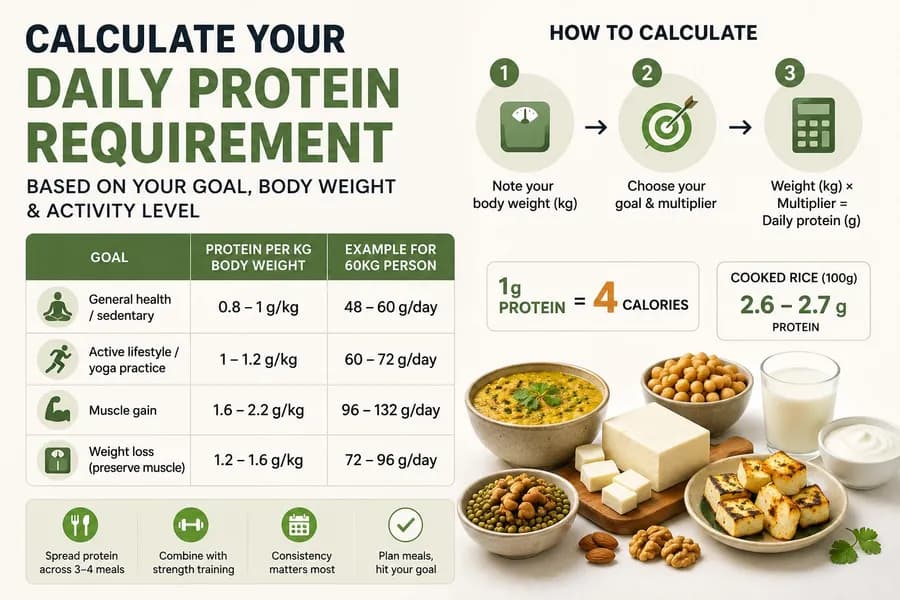
Daily Protein Requirement: How to Calculate What You Need
Your daily protein requirement isn’t a fixed number — it depends on your body weight, activity level, and goal. See exactly how to calculate it for.
How to Get Enough Protein on a Vegetarian Diet
Learn how protein rich vegetarian foods support energy, strength and fullness. Use the perfect plate habit with greens, grains and protein.