
Moong Dal Soup Recipe: A Light Protein-Rich Meal
Moong dal soup recipe made with yellow moong dal, jeera, haldi and ghee. A light vegetarian meal for lunch, dinner or easy digestion.
Key Takeaways
- Yellow moong dal cooks fast and mashes into a soup with no cream or thickeners needed.
- Soaking the dal for 30 minutes helps it cook faster and turn softer.
- Adjustable thickness – thin for sipping, thicker for eating with roti.
- A light jeera-haldi tadka gives flavour without making the dish feel heavy at night.
- Works as lunch, dinner, or a gentle recovery meal after a tiring day.
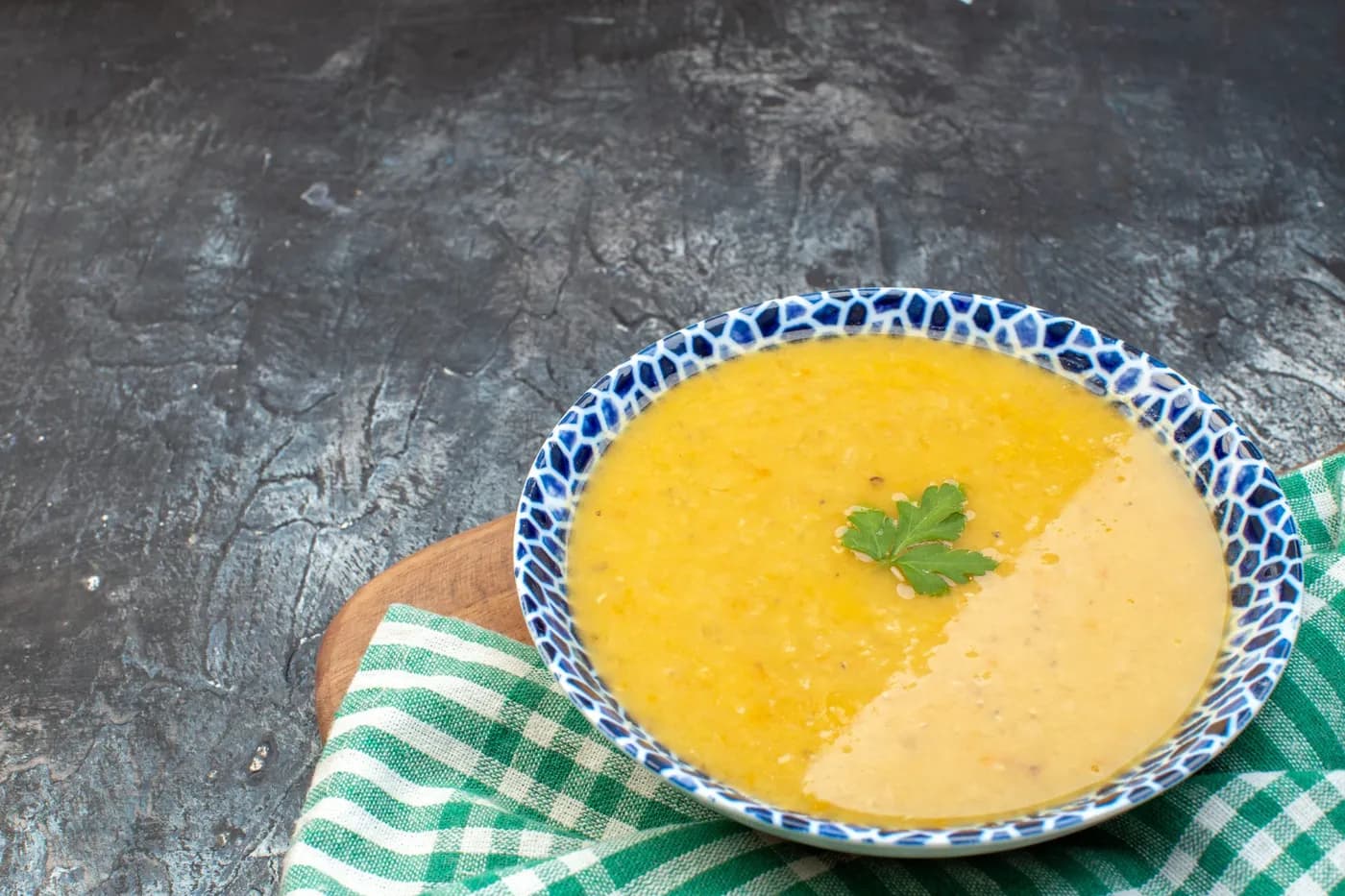
Moong dal soup recipe is one of the simplest ways to make a warm, light and protein-rich meal at home. It uses yellow moong dal, water, jeera, haldi, ghee and salt. The taste is mild, the texture is soft, and the recipe works well when you want something filling without feeling heavy.
This soup is not a fancy restaurant soup. It is regular Indian food made slightly lighter. You cook the dal until soft, mash it, add a small jeera tadka and serve it warm with phulka, millet roti or a small bowl of rice. It can work as lunch, dinner or a recovery meal after a tiring day.
Indian dietary guidance encourages meals with different food groups, including cereals, pulses, vegetables and curd or milk where suitable. A simple bowl of dal soup fits well into that idea because it gives vegetarian protein and can be paired with grains and vegetables for a complete plate. Source: ICMR-NIN My Plate
Why moong dal soup works as a light meal
Yellow moong dal is popular in Indian homes because it cooks fast and feels gentle for many people. It becomes soft quickly, so the final soup does not need cream, cornflour or heavy thickeners. When mashed well, the dal itself gives body to the soup.
It gives simple vegetarian protein
Moong dal is a pulse, and pulses are one of the easiest vegetarian protein foods in Indian kitchens. A small bowl may not replace a full meal by itself, but it can improve a plate that is otherwise mostly roti or rice. This is why dal-based soups are useful for people who want everyday protein from normal home food.
It feels warm but not too heavy
Some meals feel too oily or spicy at night. Moong dal soup is different. It is warm, soft and easy to sip. You can keep the tadka very light and still get good flavour from jeera, haldi and a little ghee.
It is easy to adjust
Make it thin if you want a sipping soup. Make it thicker if you want to eat it with roti. Add more water for a light dinner. Add cooked vegetables if you want more fibre. The base recipe stays the same.
Ingredients for moong dal soup
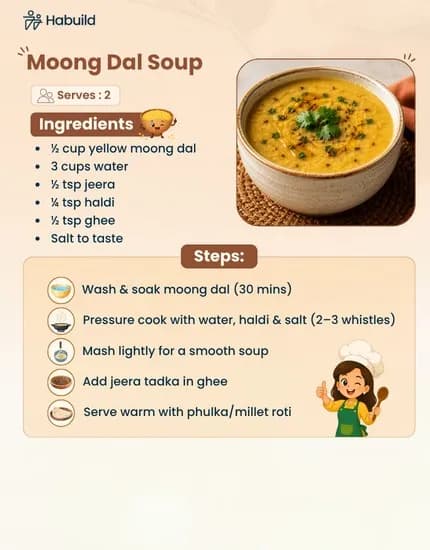
This recipe serves 2 people.
- 1/2 cup yellow moong dal
- 3 cups water
- 1/2 teaspoon jeera
- 1/4 teaspoon haldi
- 1 teaspoon ghee
- Salt to taste
Optional: coriander leaves, black pepper, grated ginger or lemon juice
Choosing the dal
Use yellow split moong dal for this recipe. Wash it well until the water looks clearer. Soaking for 30 minutes is helpful because it cooks faster and becomes softer, but you can still make the soup without soaking if you are short on time.
How to make moong dal soup
- Wash the moong dal well and soak it for 30 minutes if possible.
- Add the soaked dal, water, haldi and salt to a pressure cooker.
- Pressure cook for 2 to 3 whistles, or until the dal is very soft.
- Let the pressure release naturally. Open the cooker and mash the dal lightly.
- Add more hot water if the soup looks too thick.
- Heat ghee in a small pan. Add jeera and let it crackle.
- Pour the jeera tadka into the soup and simmer for 2 minutes.
- Taste and adjust salt. Add coriander or a few drops of lemon if you like.
- Serve warm with phulka, millet roti, soft rice or vegetable sabji.
Texture tip
For a smooth soup, mash the dal well with a ladle. For a rustic soup, leave some grains whole. Avoid blending it too much if you like a home-style texture.
How to serve it for better balance
Moong dal soup is good, but it should not be the only thing on your plate every time. A balanced meal needs some grain, some protein and some vegetables. The soup gives the protein part. Add roti, rice or millet roti for energy, and add sabji or salad for fibre.
Lunch idea
Serve one bowl of moong dal soup with two phulkas and a simple sabji. This works well when you want a warm meal that is not too oily.
Dinner idea
Keep dinner lighter with moong dal soup, one millet roti and cooked vegetables. If you are very hungry, make the soup slightly thicker.
For children
Keep the spices mild. Mash the dal properly and serve it lukewarm. For very young children, follow age-appropriate food guidance from a doctor or dietitian.
Tips, variations and storage
Add vegetables
Add small pieces of carrot, lauki, spinach or tomato while cooking the dal. This makes the soup more colourful and adds fibre.
Make it more filling
Serve it with millet roti or add a spoon of cooked rice while simmering. This turns the soup into a fuller meal without making it complicated.
Who should be careful
Most people can enjoy moong dal soup as part of normal meals. People with kidney disease, a strict medical diet or digestion issues should follow medical advice before changing their diet.
Related reads: Moong dal kosambari: a light protein salad · Protein rich foods: how protein helps recovery
Moong dal soup is the kind of meal that feels gentle on the body while still doing real work — supplying protein without weighing you down. A short yoga session offers the body that same combination of ease and benefit, especially on days when you want to move without pushing too hard. If a bowl of this soup is part of a lighter day for you, Habuild's free yoga challenge can round it out well.
Frequently Asked Questions
Related Articles
Jowar Ambali: Light Gluten-free Millet Drink
Jowar Ambali is a light gluten-free millet drink made with jowar flour, water, salt and buttermilk for a simple summer-friendly variation.
Veg Daliya Recipe: A Simple High-Fibre Meal
Veg daliya recipe made with broken wheat or millet daliya, mixed vegetables, jeera and ghee. A simple high-fibre meal for breakfast or lunch.

Types of Millets: Ragi, Jowar, Bajra, Foxtail and Kodo
Types of millets like ragi, jowar, bajra, foxtail and kodo bring different nutrients to your plate. Learn how to rotate millets simply.
Ambali Benefits: Cooling Summer Millet Drink
Ambali benefits include hydration, cooling comfort and steady energy when made with ragi or millet, water, salt and buttermilk in a simple way.