
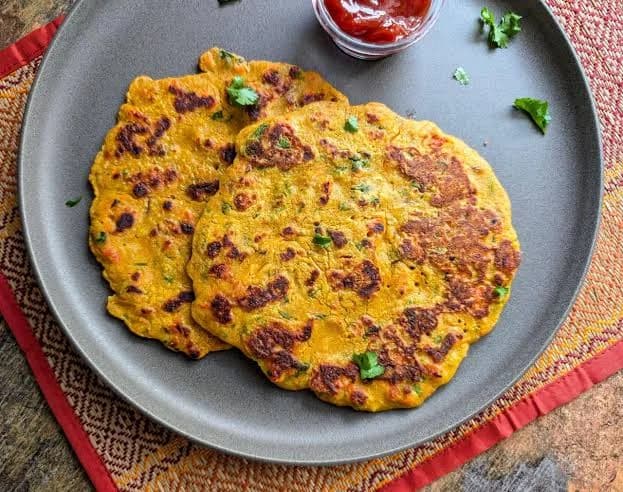
Oats Chilla Recipe: A Quick, Eggless Savoury Breakfast
This eggless oats chilla recipe uses ground oats, besan, curd and vegetables for a quick savoury breakfast with fibre and plant protein.
Key Takeaways
- Oats chilla uses ground oats, besan and curd, with no egg and no fermentation.
- Oats bring soluble fibre called beta-glucan, which may help you feel full.
- Besan adds plant protein, and curd adds more protein and a soft texture.
- Load the batter with vegetables to make the plate more filling.
- Choose plain oats, not flavoured instant packs with added sugar or salt.
This oats chilla recipe is for mornings when you want something warm and savoury in about half an hour. You grind plain oats into a powder, mix it with besan, curd and chopped vegetables, and cook thin pancakes on a tawa. It needs no egg and no fermentation, and it uses very little oil.
The combination is what makes it work. Oats give you soluble fibre, besan gives you plant protein from chickpeas, and the vegetables add bulk and colour. Together they make a breakfast that can keep you going until lunch.
Source: Harvard T.H. Chan School of Public Health – Oats, The Nutrition Source
Why this oats chilla recipe is a healthy choice
Oats add soluble fibre
Oats are a whole grain, and their main soluble fibre is beta-glucan. Harvard's Nutrition Source explains that beta-glucan absorbs water and thickens food in the gut. This slows digestion and may increase fullness. It may also help prevent sharp spikes in blood sugar after meals. A meta-analysis of 28 randomised trials found that at least 3 g of oat beta-glucan a day modestly lowered LDL ("bad") cholesterol. One chilla breakfast will not reach that amount on its own, but regular oats in your week can contribute to it.
Besan and curd add protein
Besan, the base of the classic besan cheela, is made from chickpeas, which are a pulse. Harvard describes legumes as an inexpensive source of plant protein that also brings fibre and resistant starch, with very little saturated fat or sodium. Curd adds dairy protein and makes the batter soft without any egg. Protein and fibre together may help you feel satisfied, which can make it easier to manage portions through the day.
It can support steadier energy
Legumes have a low glycaemic index, and the fibre in both oats and besan slows down digestion. Harvard notes that less-processed oats tend to have a lower glycaemic load than highly processed instant oats. So a chilla made from plain rolled oats and besan, with plenty of vegetables, may give steadier energy than a breakfast of white bread or sweetened cereal. Results vary from person to person.
Ingredients for oats chilla
Prep time: 10 minutes (+ resting 10 minutes) | Cook time: 15 minutes | Serves: 2 | Difficulty: Easy
This recipe serves 2 and makes about 6 medium chillas.
- 1 cup plain rolled oats
- 1/4 cup besan (gram flour)
- 1/4 cup plain curd
- 1 small onion, 1 small tomato and 1/4 cup capsicum, finely chopped
- 2 tbsp grated carrot and 2 tbsp chopped coriander
- 1 green chilli and 1/2-inch ginger, finely chopped
- 1/2 tsp jeera, a pinch of ajwain and a pinch of haldi
- Salt to taste and about 1/2 cup water
- 2 tsp oil or ghee for cooking
Choosing the oats
Use plain rolled oats or quick-cooking oats without any flavouring. Avoid flavoured instant packs, which often contain added sugar, salt and flavour enhancers. Harvard advises checking the label for no added sugar. If you have coeliac disease, choose oats labelled gluten-free, because most commercial oats are processed in facilities that also handle wheat.
Healthy swaps
Swap besan with moong dal flour for a lighter taste. Use more curd and skip the besan if you want a softer, tangier chilla. Add grated bottle gourd, chopped spinach or methi to bring in more greens. For a dairy-free version, use water with a squeeze of lemon instead of curd.
How to make oats chilla
- Dry roast the oats for two minutes on low heat, cool them and grind to a fine powder.
- In a bowl, mix the oats powder, besan, curd, salt, haldi, jeera and ajwain.
- Add water little by little to make a thick but pourable batter.
- Stir in the onion, tomato, capsicum, carrot, green chilli, ginger and coriander.
- Rest the batter for 10 minutes so the oats absorb the liquid.
- Heat a tawa on medium and brush it with a few drops of oil.
- Pour a ladle of batter and spread it gently into a circle.
- Cook until the base is golden, then flip and cook the other side for a minute.
Texture tip: Oats keep soaking up water as the batter rests, so you may need to add a spoon or two of water before making the last few chillas. If the chilla sticks, the tawa is not hot enough. Keep the heat at medium so the centre cooks through while the outside turns golden.
How to eat it for better health
Oats chilla is one of the easiest high-fibre breakfast recipes, and it also works as an early, light dinner. Two to three chillas make a good portion for most adults, depending on your hunger and activity level.
Serve it with a bowl of plain curd or a raita for extra protein. A green chutney of mint, coriander and lemon adds freshness without sugar, while a tomato chutney with little oil is another good choice. Skip the ketchup. Add a small salad of cucumber and carrot on the side if you want a more complete meal. For more protein, spread a spoon of crumbled paneer over the chilla before folding it.
Tips, variations and storage
You can grind a larger batch of oats powder and store it in an airtight jar for a couple of weeks, which makes weekday mornings faster. Mix the batter fresh each time, since vegetables in a stored batter release water and turn it runny. Cooked chillas taste best warm but can go into a tiffin and be eaten within a few hours.
For variations, try a palak oats chilla with blended spinach, a beetroot version for colour, or a stuffed chilla with leftover sabzi folded inside. Kids often enjoy smaller, thicker chillas served like mini uttapam.
Who should be careful
If you are allergic to chickpeas or dairy, skip the besan or curd and use the swaps above. People with kidney disease may need to watch potassium from vegetables and pulses, so ask your doctor or dietitian about portions. If you take diabetes medicines, check with your doctor before changing your breakfast, since a different carbohydrate load can change your blood sugar. This recipe does not contain soy, so it suits people with thyroid conditions who limit soy. Oats may carry traces of gluten, so people with coeliac disease should use certified gluten-free oats and check that their hing is not blended with wheat flour.
How Habuild can help
Habuild's live yoga and fitness sessions, along with mindful eating habits, can support a healthy lifestyle alongside balanced meals like this oats chilla recipe.
Editorial Sources
- Harvard T.H. Chan School of Public Health – Oats, The Nutrition Source
- Harvard T.H. Chan School of Public Health – Legumes and Pulses, The Nutrition Source
- Whitehead A et al. – Cholesterol-lowering effects of oat β-glucan: a meta-analysis of randomized controlled trials, Am J Clin Nutr (2014)
Health Disclaimer
This article is for general information only and is not medical advice. If you have diabetes, a kidney condition or any food allergy, please talk to your doctor or a registered dietitian before changing your diet.
Frequently Asked Questions
Related Articles
Protein in 50 g Paneer: How Much Does a Small Portion Provide?
A 50 g portion of regular paneer often supplies about 9 to 10 g protein. Learn the simple calculation and how the serving fits a full meal.

Oats Nutrition: Types, Fibre, Portions and Breakfast Ideas
Oats provide carbohydrate, soluble fibre called beta-glucan, protein and minerals. Steel-cut, rolled and instant oats differ in cooking time.

High Fibre Breakfast Recipes: Indian Ideas to Start Your Day
A fibre-rich breakfast keeps you full till lunch and gets digestion moving early. See five practical, Indian-kitchen-friendly recipes that swap refined.
Besan cheela recipe with millet and veggies
Besan millet veggie cheela combines vegetarian protein from besan, variety from millet flour, and fibre from grated vegetables in one simple pan-cooked.