
Pickle Juice: What the Cramp Claims Really Mean
Pickle juice has attracted attention for cramps, but evidence is limited. Learn what the research means and why a salty daily shot is rarely necessary.
Key Takeaways
- Small studies on cramps do not make pickle juice an everyday drink.
- Pickle juice is not a hydration plan.
- Its sodium content is easy to overlook.
- Use it for flavour if you enjoy it.
Pickle juice has moved from the bottom of a jar to gym videos and sports advice. It is promoted for muscle cramps, hydration, digestion and even hangovers. The attention comes partly from small studies on cramps, but those findings do not make salty brine a useful everyday drink for everyone.
Before trying it, it helps to know what people mean by pickle juice. The liquid around a cucumber pickle is very different from the spicy oil at the bottom of an Indian mango achar jar. Neither needs a place in your morning routine simply because it has become popular online.
Which pickle juice are we talking about?
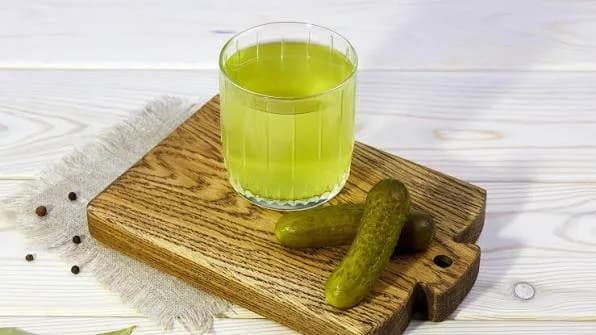
Most sports discussions refer to an acidic, salty brine from cucumber pickles. It commonly contains water, salt and vinegar, with herbs or spices. Some pickles are fermented, while others are made sour mainly by added vinegar.
Indian pickles vary widely. Achar may contain oil, salt, chilli and pieces of mango, lemon or vegetables, with little watery brine. Drinking the oily liquid does not reproduce the products used in cramp research. It can also deliver a substantial amount of salt and, when oil is present, energy.
There is no single nutritional value for pickle juice. Salt concentration, added sugar and serving size differ between recipes and commercial products. A low-calorie description does not mean a drink is low in sodium.
Why athletes sometimes use it for cramps
In a small controlled study, pickle juice shortened electrically induced muscle cramps compared with water. The cramps were produced in a laboratory, and the participants and conditions were limited. That is useful early evidence, not proof that pickle juice stops every running cramp or night-time leg cramp.
The speed of the reported effect is also interesting. It was too quick to be explained by replacing all the fluid and salts lost through sweat. Researchers have suggested a reflex triggered in the mouth or throat, which may influence the nerves involved in cramping. The mechanism is not fully settled.
This means that the usual explanation, that the salt instantly fixes an electrolyte shortage, is too simple. Exercise cramps can involve muscle fatigue and several other factors. A salty drink does not address all of them.
What about cramps at home?

A separate trial studied pickle juice for cramps in people with cirrhosis, a serious liver condition. Findings from that specific group should not be turned into general home-treatment advice. People with liver disease may also have sodium or fluid restrictions that make unsupervised use inappropriate.
For an ordinary exercise cramp, stop the activity and gently stretch the affected muscle. Rest and cool down if you have been exercising in heat. Repeated cramps deserve attention to the circumstances: a sudden jump in training, muscle fatigue, heat exposure or medicines can all matter.
Seek prompt care for cramps accompanied by marked weakness, confusion, faintness or significant swelling. Persistent or frequent cramps are worth assessing rather than repeatedly treating with a food remedy. A drink should not distract from a new or worsening problem.
Pickle juice is not a hydration plan
For an ordinary walk or a short yoga session, water is usually enough. You do not need an electrolyte product simply because you have sweated a little.
Long, strenuous exercise in hot weather can require more planning around fluids, food and sodium. Pickle juice supplies little fluid when taken as a small shot, and its composition is inconsistent. It is not a balanced substitute for a suitable sports hydration plan.
It is also not oral rehydration solution. ORS has a measured combination of salts and glucose to support absorption during dehydration from diarrhoea or vomiting. Drinking salty brine instead can delay proper rehydration. Severe dehydration, inability to keep fluids down or unusual drowsiness needs medical help.
The sodium issue is easy to overlook
A small drink can contain a lot of salt without feeling like a salty meal. If you also eat achar, papad, namkeen and packaged foods, the amounts add up across the day.
WHO recommends that adults keep sodium below 2,000 mg a day, equivalent to less than 5 g of salt from all sources. This is a daily total, not an allowance to add on top of the salt already in food.
People managing high blood pressure, heart failure, kidney disease or a prescribed sodium restriction should not add regular pickle-juice shots as a wellness habit. Diluting the brine changes its taste and concentration, but drinking the entire diluted amount still delivers the same total sodium.
Is it good for the gut?
A sour taste does not prove that a food contains live beneficial microbes. Vinegar-pickled products may not be fermented at all. Heating and processing can also affect whether live organisms remain.
Even a fermented brine containing live microbes is not automatically a proven probiotic treatment. A specific probiotic benefit requires evidence for the organisms and the condition being treated. Pickle juice has not earned a general role as a remedy for constipation, bloating or poor digestion.
Acidity can instead aggravate reflux or irritate the stomach in some people. If a small taste leaves you uncomfortable, there is no reason to persist for a promised gut benefit.
Use the flavour if you enjoy it
A little safe pickle brine can have a culinary use. Add a small amount to a dressing, stir it into a dip or use it to season a chickpea salad. Taste before adding extra salt. You get the sharp flavour without making a drink out of it.
Keep the jar as directed and use clean utensils. Discard pickles or brine that show mould or other signs of spoilage. Do not reuse old brine to preserve a fresh batch of vegetables at room temperature; safe pickling depends on a tested recipe and the right acidity.
There is no established daily health dose of pickle juice. For most people, its most useful role remains a flavouring. Muscle-cramp research is interesting, but it does not justify a salty daily shot for general health.
Editorial sources
Frequently Asked Questions
Related Articles
Electrolyte Rich Foods: Natural Sources for Everyday Hydration
For everyday hydration, electrolyte rich foods usually do the job just as well as a sports drink — often with less added sugar. See the best natural.

Electrolyte Drinks: When They Help, Ingredients and Safety
Electrolytes such as sodium and potassium help regulate fluid balance, nerves and muscles.


Salt Intake: Hidden Sodium, Daily Limits and How to Cut Back
Most sodium comes from packaged foods, pickles and restaurant meals, not just the shaker. Learn the daily limit and easy ways to cut back.
Diet for Muscle Recovery: What to Eat After Training
A good muscle recovery diet isn’t about building bigger muscles — it’s about helping the muscles you already worked repair and refuel. See what actually.