
Protein in Almonds: Amount, Portions and Nutrition Facts
Almonds contribute protein, but they are mainly an energy-dense mix of unsaturated fat, fibre and micronutrients, so portion size matters.

Key Takeaways
- A 28 g handful (about 23 almonds) provides roughly 6 g of protein and 160-170 calories.
- Almonds are a mixed-nutrient food, not a protein concentrate to replace dal, tofu or paneer.
- Most almond drinks contain little protein; check grams per serving on the carton.
- Soaking softens almonds but does not add protein; refrigerate soaked nuts and eat them promptly.
Almonds contribute protein, but they are primarily an energy-dense combination of unsaturated fat, fibre and micronutrients. Calling them a "protein food" without discussing portion size can make their contribution sound larger than it is.
How much protein is in a serving of almonds?
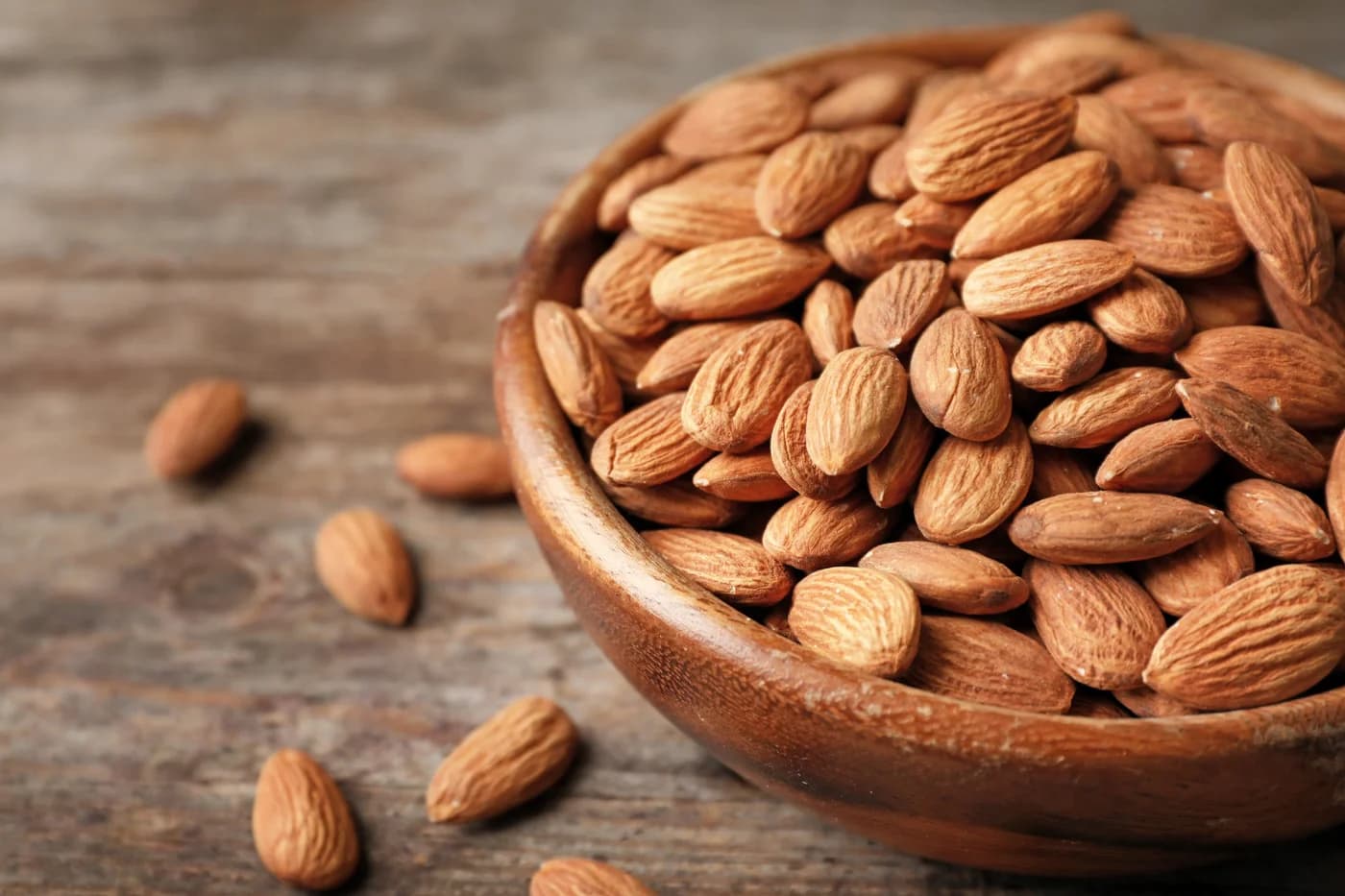
About 28 g of almonds, often described as a small handful or roughly 23 nuts, provides around 6 g of protein. Counts vary with almond size, so weighing is more accurate when it matters. That amount is useful, but it is lower than many normal servings of dal, soy, dairy, beans or paneer.
Nutrition databases usually report values per 100 g, which is far more than a usual handful. Convert the figure to the amount you actually eat before comparing almonds with other foods. Small differences between brands often reflect rounding and moisture.
Calories come with the protein
The same handful supplies roughly 160-170 calories because almonds are rich in fat. Most of that fat is unsaturated, and the combination of fat, fibre and protein may improve fullness. Still, eating enough almonds to meet a whole protein target would bring far more energy than most people expect, and repeatedly reaching into a large packet can turn one serving into several.
For this reason, treat almonds as a mixed-nutrient food rather than a direct substitute for dal, tofu, paneer or curd. For general almond nutrition, including vitamin E and magnesium, see our main almonds guide.
Is almond protein complete?
Almonds contain all the essential amino acids, but some are present in relatively low amounts, and the profile differs from soy or dairy. Across a varied vegetarian day, grains, pulses, nuts, seeds and dairy or fortified alternatives complement one another without needing to be combined in a precise ratio at every meal.
Almond butter and almond flour
Processing changes texture and eating behaviour more than it changes the protein in almonds. Whole nuts take time to chew and keep the portion visible. Almond butter has similar underlying nutrients, but it is easy to spread generously, so spoonfuls are often underestimated. Choose a butter with almonds as the main ingredient and check for added sugar, oil and salt.
Almond flour is finely ground and calorie-dense by volume, and it can disappear into baked food. It is not automatically a lighter baking option, even when the recipe is gluten-free. Measure unfamiliar forms until the serving becomes intuitive.
Almond milk is a different proposition
Many commercial almond drinks are mostly water and contain only a small percentage of almonds, so they usually provide much less protein than dairy milk or soy drink. Fortified products may add calcium, vitamin D or B12, but formulations differ and homemade versions may not be fortified at all. Read the nutrition panel rather than assuming the word "almond" guarantees the nutrition of whole nuts.
Shake fortified cartons, because minerals can settle, and refrigerate after opening. For a child, during pregnancy or on a diet with limited protein, choose a milk alternative with professional guidance rather than by taste alone.
Does soaking increase protein?
Soaking softens almonds, and some people prefer the flavour or find them easier to chew. It does not create extra protein or remove all antinutrients, and peeling removes part of the skin that contributes fibre and plant compounds. There is no universal requirement to eat them first thing in the morning.
If soaking overnight, use clean water, refrigerate in warm weather and eat them promptly, because added moisture encourages spoilage. Discard nuts that smell rancid, show mould or taste unusually bitter.
Making almonds work within a meal
Sprinkle chopped almonds over oats or curd, add them to a vegetable stir-fry, or pair a small portion with fruit. Combining them with another protein source creates a more substantial breakfast or snack than expecting a few nuts to replace lunch.
For weight management, pre-portion almonds instead of eating from a large packet. Dry-roasted almonds remain nutritious, but salted, coated and sweetened varieties deserve separate label checks. A "high protein" snack containing almonds may get its protein from added soy, dairy or pulse protein rather than the nuts, so read the ingredient list.
Allergy, choking and kidney considerations
Tree-nut allergy can be severe. People with a diagnosed almond allergy must avoid almonds and check cross-contact labels. Swelling of the lips or throat, breathing difficulty, widespread hives or collapse requires emergency care.
Whole nuts are a choking hazard for young children; use an age-appropriate smooth paste or finely ground form under caregiver guidance. Almonds also contain potassium, phosphorus and oxalate, so some kidney conditions or stone-prevention plans need personalised portions. A generic "handful a day" rule should not override a renal diet.
Buying and storing almonds
Choose sealed packs without moisture or insect damage. Store nuts airtight away from heat and light; refrigeration can extend freshness in a warm climate. Rancid almonds may smell stale, waxy or paint-like and should be discarded. If you roast a batch at home, let it cool fully before closing the container to avoid condensation.
Editorial sources
Frequently Asked Questions
Related Articles
Almonds: Nutrition, Portions and Smart Everyday Uses
Almonds provide protein, fibre, unsaturated fat, vitamin E and magnesium in a compact serving. Learn smart portions and everyday uses.
Protein in Soya Chunks: How Much Is Really in There?
Protein in soya chunks is roughly 52g per 100g dry — one of the most concentrated vegetarian protein sources around, though the number changes once you.
High Protein Vegetarian Foods: The Complete Indian Food List
Indian kitchens are already full of high protein vegetarian foods — dals, paneer, tofu, soy, and dairy. See the complete list, with protein counts, and.
