
Prunes Benefits: Constipation Relief, Portions and Safety
How prunes help constipation, what trials show, a gentle starting portion, prunes vs prune juice, bone health research and who should be careful.
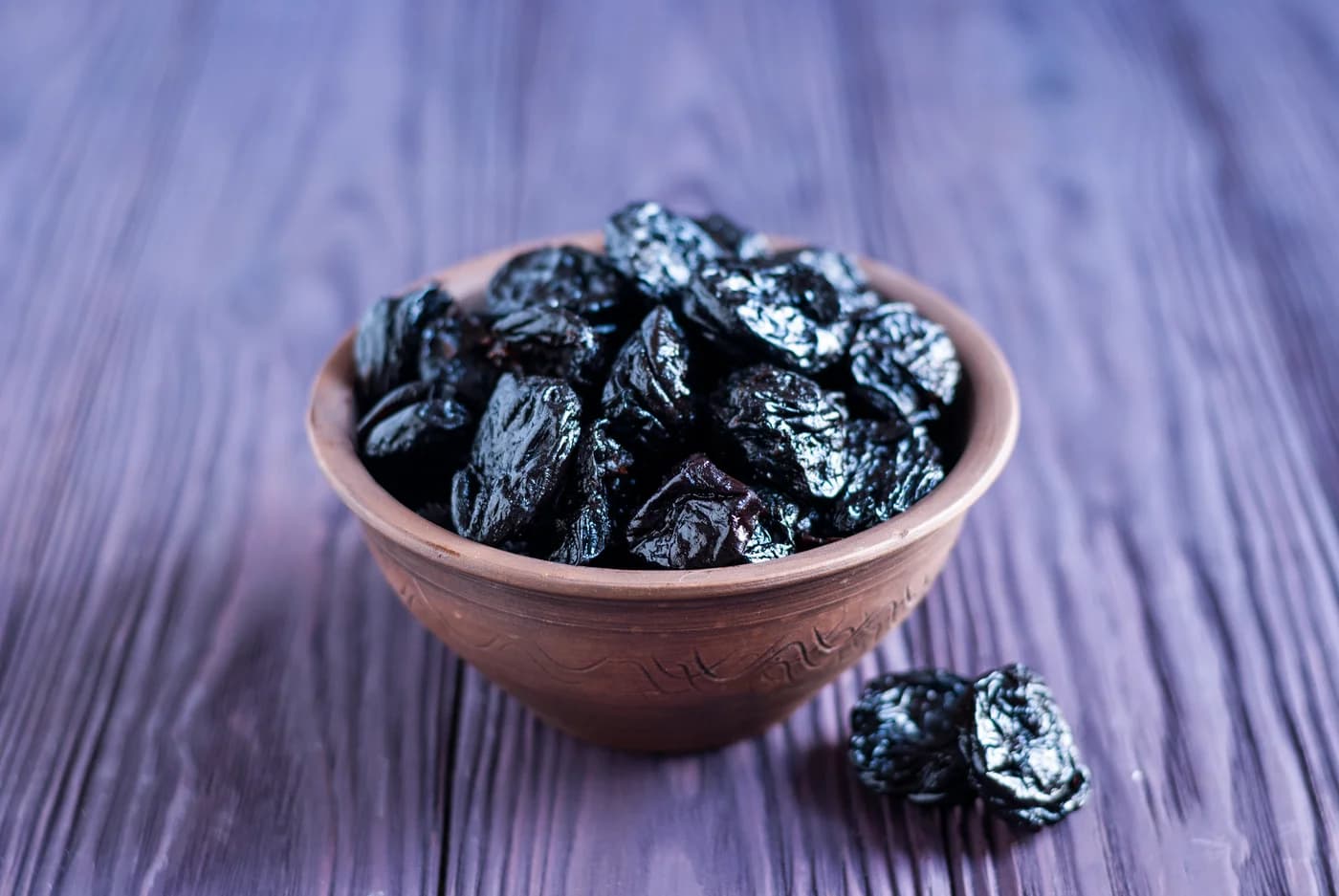
Key Takeaways
- Prunes are dried plums with fibre and sorbitol, which together help soften stools.
- In a trial, prunes beat psyllium on weekly bowel movements and stool consistency.
- Start with 3 to 4 prunes a day plus water; large jumps can cause gas and cramps.
- Whole prunes give more fibre than prune juice; count the carbs if you track blood sugar.
- Blood in stool, weight loss or constipation that keeps returning needs a doctor's review.
Prunes are dried plums. They are one of the better-studied foods for constipation, thanks to a mix of fibre and sorbitol, a naturally occurring sugar alcohol. A small daily portion can help many people, but more is not always better: large servings concentrate natural sugar and can cause gas, cramps or loose stools.
How prunes help constipation
Fibre holds water in the stool and adds bulk, which makes it softer and easier to pass. Sorbitol draws extra water into the bowel. Prunes also contain potassium and some polyphenols. The effect is gentle rather than instant, and it works best alongside enough fluid, movement and a regular toilet routine. For a wider list of helpful foods, see our guide to foods for constipation.
What the research shows
Prunes compared with psyllium
In a 2011 trial, 40 adults with chronic constipation took either prunes (50 g twice a day) or psyllium husk with the same fibre content for three weeks each. Prunes led to more complete bowel movements per week and better stool consistency. Straining and overall symptom scores were similar, and both were well tolerated.
Prunes in people with low fibre intake
A 2019 trial gave 120 healthy adults with low fibre intake and infrequent stools 80 g or 120 g of prunes a day for four weeks. Stool weight and frequency rose compared with water alone, but flatulence was also more common. Trial portions are larger than most people need to start with.
Bone health
In a 12-month trial in 235 postmenopausal women, 50 g of prunes a day (roughly 5 to 6 prunes) helped preserve hip bone density compared with no prunes. This is promising, but it does not show that prunes prevent fractures or replace calcium, vitamin D, strength exercise or prescribed osteoporosis treatment.
How to start gently
Try 3 to 4 prunes with breakfast or as an afternoon snack, drink water through the day and give it a few days before judging. If you are also adding dal, vegetables and whole grains, increase fibre step by step; a sudden jump from several sources can worsen bloating. The NIDDK suggests adults aim for 22 to 34 g of fibre a day, added a little at a time.
Simple ways to eat them:
- Chopped into plain curd or oats porridge
- With a few almonds or walnuts as a snack
- Soaked overnight if you prefer a softer texture
Put a portion in a bowl rather than eating from the packet, because dried fruit is easy to overeat.
Prunes or prune juice
Whole prunes keep the fibre and are more filling. Prune juice still contains sorbitol but usually has less fibre and is quick to drink in large amounts. Check labels for added sugar and keep juice portions small. If you monitor blood glucose, count the carbohydrate in either form and pair prunes with a meal or with curd or nuts.
Who should be careful
- IBS: some people are sensitive to sorbitol and get pain or bloating; other fibre sources may suit them better.
- Kidney disease: prunes contain potassium, so check with your dietitian if you have a potassium limit.
- Children: ask a paediatrician for age-appropriate advice rather than using an adult routine.
- Swallowing difficulty: remove stones and chop or soften prunes.
Buy plain prunes, check whether stones have been removed and discard any with mould or a fermented smell.
A routine that supports regular bowels
Sit on the toilet at a regular time, especially after a meal, without rushing or straining. Respond to the urge when it comes, stay active and drink enough fluids. Prunes are one helpful tool, not a requirement; other fruit, whole grains, pulses and seeds such as chia seeds can also help. Judge success by comfort and ease of passing stool, not by meeting a fixed daily number.
When food is not enough
See a doctor if constipation lasts for weeks, keeps coming back or needs frequent laxatives. Get prompt care for blood in the stool, severe abdominal pain, vomiting, unexplained weight loss or a sudden change in bowel habit. Medicines such as iron tablets, some painkillers and antacids can cause constipation, so mention everything you take.
Editorial sources
- NIDDK: Eating, diet and nutrition for constipation
- NHS: Constipation
- Attaluri et al., 2011: Dried plums (prunes) vs psyllium for constipation (PubMed)
- Lever et al., 2019: The effect of prunes on stool output and gut transit time (PubMed)
- De Souza et al., 2022: Prunes preserve hip bone mineral density in postmenopausal women (PubMed)
Frequently Asked Questions
Related Articles

Foods for Constipation: Everyday Choices That Help
Which fruits, grains, pulses and vegetables ease constipation, how to add fibre without gas, and how to use isabgol safely.

Plum Fruit Benefits: Nutrition, Digestion and Serving Ideas
Plums are smooth-skinned stone fruits, and knowing how fresh plums differ from concentrated prunes makes portions and digestive effects easier to judge.
Chia Seeds for Constipation: How to Use Them Correctly
Chia seeds work for constipation mainly through soluble fibre, which absorbs water and adds soft bulk to stool. See how to use them correctly, with.
How to Relieve Constipation: 7 Natural Methods That Actually Work
Diet, hydration, movement, and specific yoga poses address the root causes of both occasional and chronic constipation. See 7 natural methods that
