
TMG Supplements: What Betaine Can and Cannot Do
TMG has a normal metabolic role and a specific medical use. Learn why that does not make it a necessary heart-health or exercise supplement for everyone.
Key Takeaways
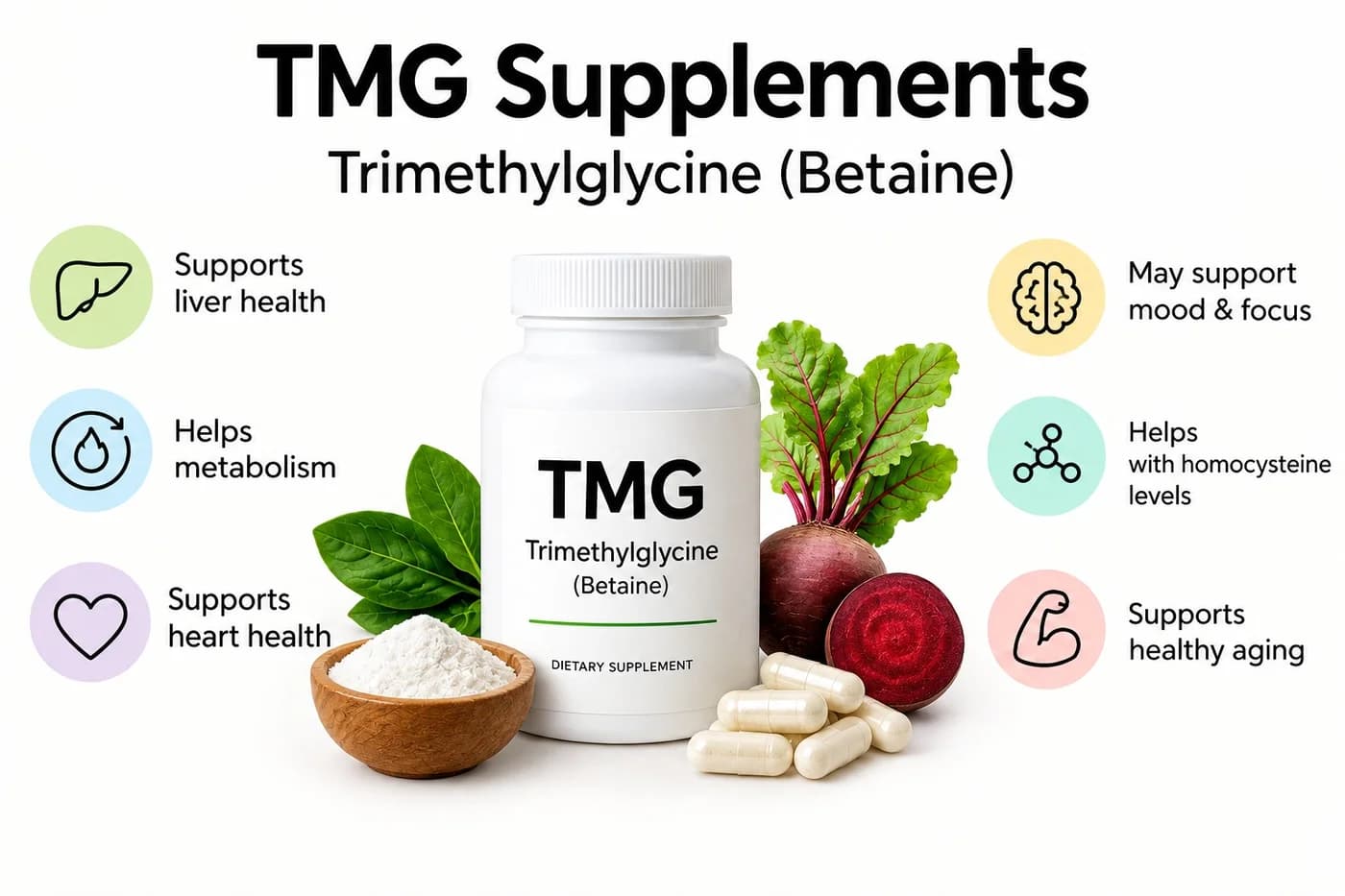
- TMG helps the body process homocysteine.
- Lower homocysteine does not guarantee fewer heart attacks.
- Exercise claims for TMG are not well proven.
- TMG is not the same as betaine HCl.
TMG, short for trimethylglycine, is also called betaine. You may see it in supplements sold for methylation, heart health or exercise performance. Those claims can make a normal metabolic process sound like something everyone needs to upgrade.
Betaine does have important roles in the body, and a prescription form is used for a rare inherited condition. That does not establish a daily supplement requirement for otherwise healthy adults. The reason for taking it matters much more than the popularity of the term methylation.
What TMG does in the body
Betaine helps cells manage fluid balance and participates in transferring methyl groups during metabolism. One of its roles is helping convert homocysteine to methionine, both substances involved in amino-acid metabolism.
The body can make betaine from choline, and foods also contribute it. Beetroot, spinach and some whole-grain foods are examples of dietary sources. You do not need to track every milligram to eat a varied diet.
Methylation is a broad family of normal chemical processes, not a wellness score that should always be pushed higher. Feeling tired or having a genetic test result does not, by itself, prove that more TMG will help.
Where its medical use is established
Prescription betaine anhydrous is used in the treatment of homocystinuria, a group of inherited disorders in which homocysteine builds up. It is given within specialist care and may be combined with a specific diet and other treatments.
That use involves monitoring and a particular diagnosis. It should not be borrowed as a routine dose guide for someone who wants more energy or better gym performance.
A person prescribed betaine for homocystinuria should follow their metabolic team’s plan. Replacing it with an online supplement or changing the amount because of a general article can disrupt treatment of a serious condition.
Lower homocysteine does not automatically mean fewer heart attacks
Supplemental betaine can lower homocysteine in some circumstances. The important next question is whether that produces better health outcomes in the people taking it.
A change in a blood marker does not automatically establish a reduction in heart attacks, strokes or mortality. For general cardiovascular prevention, there is not a sound basis to treat a TMG supplement as an alternative to managing blood pressure, cholesterol, tobacco use and activity.
Some trials using gram-level betaine supplements have also found increases in LDL cholesterol. This does not mean every serving has that effect, but it undermines the simple claim that lowering one marker necessarily makes a supplement heart-protective.
What about strength and endurance?

Some small exercise studies have reported potential benefits from betaine, while others have not. Studies differ in training, participants, supplement schedules and outcomes. The evidence is not consistent enough to promise a substantial improvement for everyone.
A result in a small group of trained men cannot be assumed to apply equally to an older beginner, a woman doing yoga or someone returning to exercise after illness. A multi-ingredient pre-workout also cannot establish which component caused a change.
If training progress has stalled, first examine the programme, recovery, food intake and sleep. Those factors can make a much larger practical difference than adding another powder to an already complicated routine.
TMG is not betaine hydrochloride
Betaine hydrochloride, often sold as betaine HCl, is marketed for stomach acid and digestion. It is a different product from betaine anhydrous used in TMG supplements and medical treatment.
You should not substitute one for the other or assume their safety considerations are identical. A product intended to acidify the stomach raises different questions, particularly for someone with reflux, ulcers or certain medicines.
This naming distinction is more useful than choosing the product with the strongest-sounding dose. If the front of the bottle says betaine, the form and purpose still need to be clear.
Who is least likely to benefit from a casual trial?
Someone with no clear problem to address may find that TMG adds expense without a noticeable benefit. It is not an established treatment for general fatigue, a detox aid or insurance against every methylation-related claim online.
Pregnancy and breastfeeding are also poor settings for self-prescribing a concentrated wellness product with limited safety information. Children should not receive an adult sports supplement to improve performance.
People with a metabolic disorder, significant kidney or liver disease, or complex treatment need a decision based on their condition. This is particularly relevant when the proposed supplement overlaps with something already being monitored medically.
Side effects and dose claims
Digestive upset can occur, including nausea or loose stools. Higher amounts are not necessarily more effective, and trial doses are not a universal recommendation for long-term use.
There is no established TMG supplement dose that every healthy adult should take. A number printed on a scoop tells you the product amount; it does not establish that you need it or that the same dose has been studied for your goal.
Avoid stacking several products containing betaine without noticing the combined amount. A pre-workout, a methylation blend and a separate TMG powder can quietly duplicate the same ingredient.
Food does not need to become a dosing exercise
You can include beetroot as a salad or sabzi, rotate leafy vegetables and choose whole grains where they suit your meals. These foods provide more than betaine, including fibre and other nutrients.
They do not need to be eaten in medicinal quantities or at a special hour. Trying to reproduce a supplement trial through huge portions of one ingredient can make the diet less varied rather than better.
For most readers, the useful decision is whether there is a specific, evidence-supported reason for a supplement. TMG has a real biochemical role and a specialist medical use, but those facts should not be expanded into a promise that everyone needs more.
Editorial sources
Frequently Asked Questions
Related Articles

Vitamin B12 Benefits: What It Does and Who Is at Risk
What vitamin B12 does for blood cells, DNA and nerves, why absorption can fail, and which groups need to plan intake or get tested.


Vitamin B Complex Supplements: Doses, Labels and Safety
Before you take a B complex tablet: who actually needs one, how to read the doses on the label, and when high B6, niacin or biotin cause harm.

Choline: What It Does and Where to Find It
Understand this essential nutrient and include useful food sources in everyday meals.

High-Cholesterol Foods: What to Limit and What to Eat Instead
Look beyond a food's cholesterol number. Learn which everyday fats to reduce and what to put on the plate instead.