
Water Retention: Causes, Relief and Warning Signs
Why fluid builds up in the feet, hands or face, what eases mild swelling, and which signs mean you should see a doctor quickly.
Key Takeaways
- Salty meals, long sitting, heat and hormonal shifts commonly cause mild, temporary swelling.
- Walking, ankle pumps and raising the legs help move fluid out of the lower legs.
- Never stop a prescribed medicine or take water tablets without your doctor's advice.
- Painful swelling in one leg, or swelling with breathlessness, needs urgent care.
- A bloated abdomen after meals and fluid in the tissues are different problems.
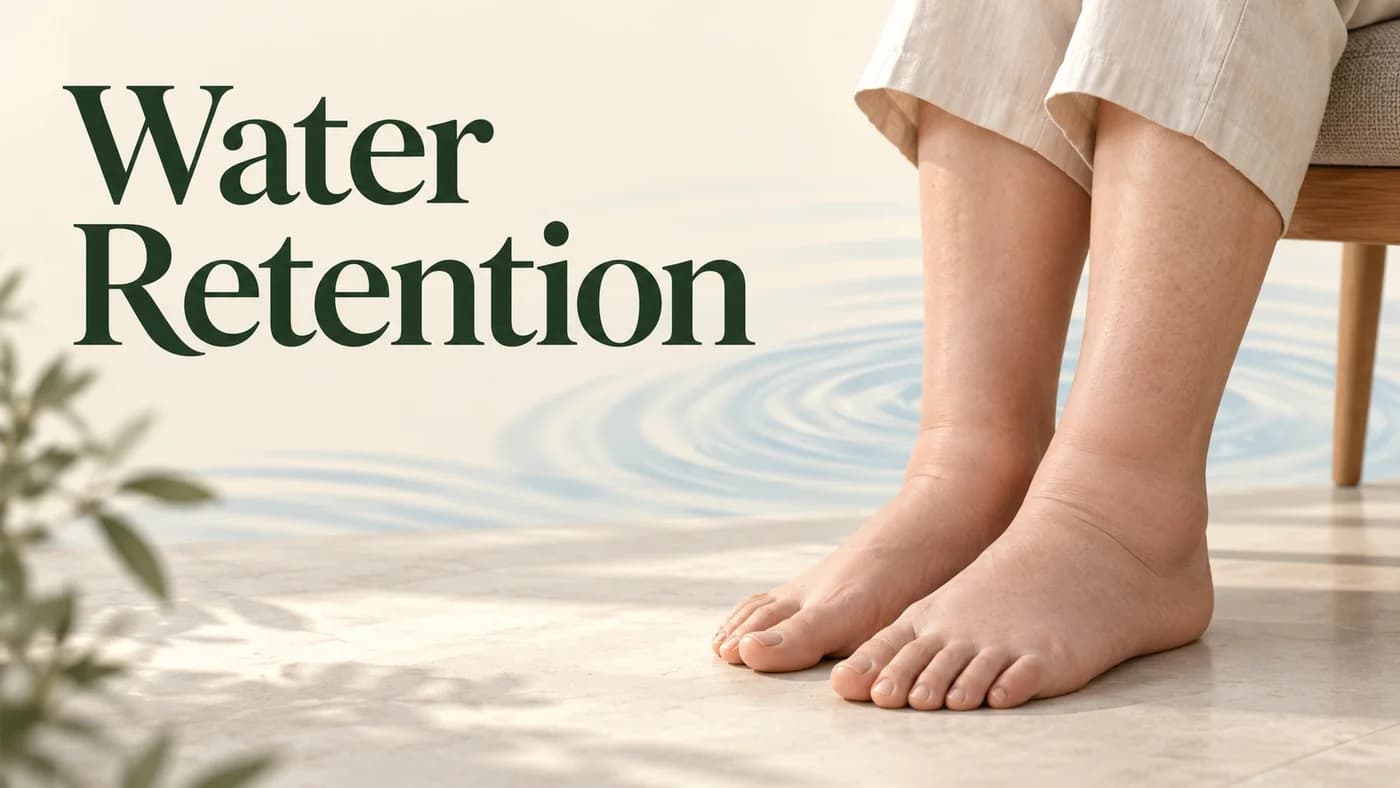
Water retention, also called fluid retention or oedema, is extra fluid collecting in body tissues. It most often shows as puffy feet, ankles, hands or face. Mild swelling after a hot day, a long journey, a salty meal or around a period is common and usually settles. Swelling that persists, appears suddenly or affects one side can signal a heart, kidney, liver, vein or medicine-related problem, so the pattern matters.
Why does fluid collect?
Gravity and staying still
Sitting or standing in one position for hours lets fluid pool in the lower legs. It usually improves after walking or resting with the legs raised.
Salt
Sodium makes the body hold on to water. Restaurant meals, namkeen, pickles, sauces and instant foods often contain more than you expect, even when you add little salt at the table. Our guide to salt intake shows where hidden sodium comes from.
Hormones and medicines
Changes around menstruation and pregnancy can cause temporary swelling. Some blood pressure medicines, steroids, hormone treatments, antidepressants and pain relievers can also contribute. Do not stop a prescription on your own; speak to the prescriber.
Underlying conditions
Heart, kidney or liver disease, varicose veins, thyroid problems, infection and blood clots can all cause oedema. Where the swelling is, how fast it appeared and whether it hurts help a doctor find the cause.
What can you safely try at home?
- Move regularly during desk work or travel. Ankle pumps and short walks help the calf muscles push fluid back up.
- Raise swollen legs on a pillow or stool when resting.
- Return to ordinary lower-salt meals after a salty day. Flavour food with lemon, herbs and spices instead.
- Wear comfortable shoes and avoid tight socks, waistbands or rings on swollen fingers.
- Use compression stockings only if they fit properly and a clinician agrees, especially if you have circulation problems.
- Drink according to thirst. People with heart or kidney disease should follow their own fluid advice.
Avoid extreme juice cleanses, "detox" teas and forcing large volumes of water. They do not treat the cause of swelling.
Water retention is not the same as bloating
A tight belly after a large meal usually comes from gas, constipation or the amount eaten, not fluid in the tissues. Visible ankle swelling needs a different assessment. If you mainly feel gassy, see our tips on how to reduce bloating.
Daily changes on the scale also reflect food in the gut and short-term fluid shifts, not body fat. Avoid skipping meals because of one reading. A quick weight gain together with swelling or breathlessness, however, needs medical advice.
A note on potassium and salt substitutes
Potassium-rich foods such as fruit, vegetables, dal and curd are part of a healthy diet for most people; see our list of potassium-rich foods. Potassium tablets and potassium-based salt substitutes are different. They can be dangerous with kidney disease or with medicines that raise potassium, so check with your doctor first.
What to tell your doctor
Note whether the swelling affects one side or both, when it started, whether it hurts, and whether it is worse by evening. Mention recent travel, injury, pregnancy, new medicines and any supplements. A short diary of these details is more useful than a list of remedies you have tried.
When should you get help?
- Call emergency services for swelling with chest pain or tightness, breathlessness, coughing blood, fainting, or swelling of the lips, tongue or throat.
- Get same-day care for new swelling in one leg with pain, warmth or redness, which may be a blood clot.
- Pregnant? Sudden swelling of the face or hands, especially with headache, vision changes or upper tummy pain, needs urgent maternity advice.
- Book a review if swelling lasts more than a few days, keeps getting worse, leaves a deep dent when pressed, or comes with less urine or rapid weight gain.
Do not massage a limb that might have a clot or infection, and take diuretics only when prescribed.
Editorial sources
Frequently Asked Questions
Related Articles

Salt Intake: Hidden Sodium, Daily Limits and How to Cut Back
Most sodium comes from packaged foods, pickles and restaurant meals, not just the shaker. Learn the daily limit and easy ways to cut back.

Potassium Rich Foods: Best Sources to Add to Your Diet
Potassium helps the body manage fluid balance, muscle function, and healthy blood pressure. See the best sources to add to your diet, from bananas to.

How to Reduce Bloating: Fast Natural Relief through Yoga and Lifestyle
Yoga twists mechanically stimulate intestinal peristalsis while pranayama’s vagal activation normalises the gut-brain axis governing motility. See the.
