
What Does Protein Do? Functions, Needs and Food Sources
Protein builds tissue, makes enzymes and antibodies and moves nutrients in blood. What it does, how much you need and vegetarian sources.
Key Takeaways
- Amino acids build muscle, skin and organs and make enzymes, hormones and antibodies.
- A common adult reference is about 0.8 g of protein per kg of body weight a day.
- Needs rise with growth, pregnancy, ageing, illness recovery and regular training.
- Spread protein over meals; many Indian breakfasts are the biggest gap.
- Extra protein beyond your needs does not turn into muscle without training.
Protein is not only for gym-goers. The body uses amino acids to build and repair tissues, make enzymes and hormones, support immunity and transport substances in the blood. Protein also helps meals feel satisfying. Needs change with body size, age, pregnancy, illness and training. Most vegetarians can meet them through varied foods, while timing and total energy intake influence how well that protein is used.
What does protein do?
How does protein build tissue?
Dietary proteins are digested into amino acids, which the body reassembles into muscle, skin, organs and connective tissue. Exercise creates a signal for adaptation; protein supplies the building material. Without progressive training, extra shakes do not selectively turn into muscle. Nine of these amino acids are essential amino acids that must come from food.
What else uses amino acids?
Enzymes that run chemical reactions, antibodies involved in immune defence, transport proteins such as albumin and haemoglobin, and many hormones depend on amino acids. This does not mean eating a particular protein "boosts" one pathway. The body regulates how amino acids are distributed according to need.
How are needs estimated?
A common adult reference is about 0.8 grams per kilogram of body weight per day, with higher ranges often useful for older adults, athletes, pregnancy or recovery from illness. This is general guidance, not a prescription. Kidney disease and other medical conditions may require a tailored amount. To work out your own number, see our guide to protein per day.
How much do you need through the day?
Why does meal distribution matter?
Spreading protein across breakfast, lunch, snacks and dinner gives several opportunities for muscle protein synthesis and may improve fullness. Many vegetarian breakfasts are carbohydrate-heavy, so adding curd, milk, tofu, besan, sprouts or soy can close an obvious gap without counting every gram. Our article on daily protein intake has simple meal ideas.
Which vegetarian foods work?
Dals, beans, chickpeas, soy foods, paneer, curd, milk, peas, nuts and seeds all contribute. Soy and dairy are particularly protein-dense. Grains add smaller amounts. Variety across the day supplies essential amino acids; foods do not need to be paired with mathematical precision at every meal.
Does protein quality matter?
Digestibility and the essential amino acid profile differ among foods. A varied vegetarian diet, adequate energy and a slightly generous total intake can address these differences. Combining pulses with grains across normal meals is useful, as explained in our guide to complete protein for vegetarians. "Incomplete" does not mean a plant food has no value.
How can vegetarians plan it?
When is protein powder useful?
Protein powder can help when appetite is low, targets are high or a meal is impractical. It is optional. Choose a tested product with a transparent ingredient list, and count it within the day rather than on top of already sufficient meals. Powders do not provide the fibre and variety of food.
Can too much cause problems?
Very high intakes can crowd out carbohydrates, fibre and other foods, worsen digestive symptoms and add expense. Healthy kidneys usually adapt to reasonable higher-protein diets, but diagnosed kidney disease needs professional planning. Persistent thirst, swelling or changes in urination should be checked by a doctor rather than self-diagnosed as a protein issue.
A practical next step
A simple protein check is to look at each main meal and name its protein anchor. If breakfast has none, add one. If lunch contains only a spoon of dal, increase it or add curd. If dinner already has tofu, another shake may be unnecessary. This meal-level approach is easier to sustain than chasing a daily number while overlooking vegetables, grains, fruit and overall energy.
Editorial sources
Frequently Asked Questions
Related Articles
Daily protein intake: why your body needs protein every day
Daily protein intake matters because your body uses protein every day for repair, recovery and daily function. Learn simple vegetarian protein habits.

Protein Per Day: How Much Do You Need? A Simple Vegetarian Guide
Protein needs depend on body size, age, activity, pregnancy and health. The basic adult requirement is a starting point, not a perfect target for everyone.


Complete protein for vegetarians: easy food pairs
Vegetarian meals can deliver complete protein too, once you know which everyday food pairs to combine. See the simple combinations that make it easy.
Amino Acids: Types, Functions, Vegetarian Sources and Safety
Nine amino acids are called essential because the body cannot make enough of them and must get them from food. Learn vegetarian sources.
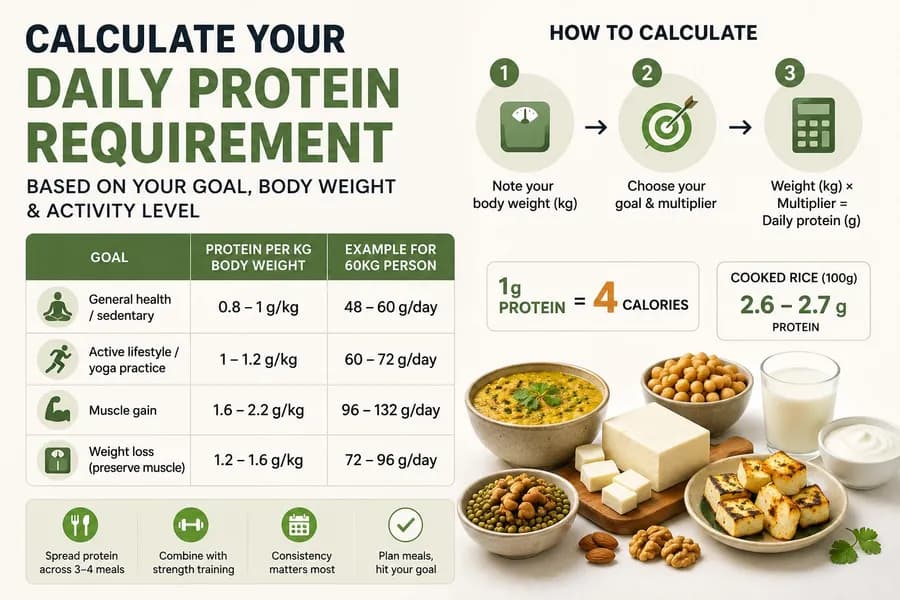
Daily Protein Requirement: How to Calculate What You Need
Your daily protein requirement isn’t a fixed number — it depends on your body weight, activity level, and goal. See exactly how to calculate it for.