
Xylitol: Where It Helps, Where It Doesn’t, and Why Dog Owners Should Care
Xylitol is a popular sugar-free sweetener in gum and toothpaste. It has real uses, but it can upset your stomach and is dangerous for dogs.
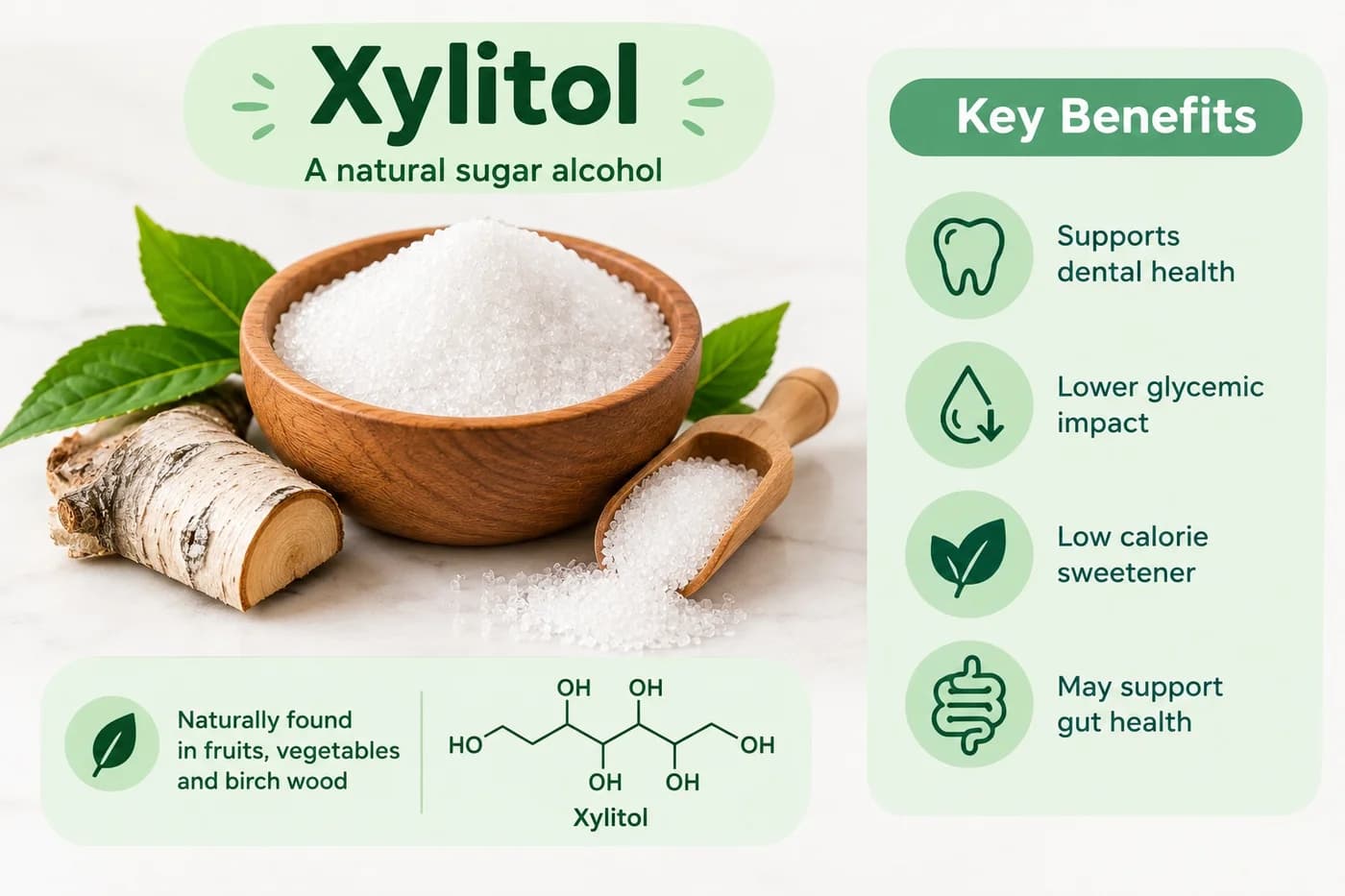
Key Takeaways
- Xylitol is a sugar alcohol with fewer calories than sugar.
- It may help teeth when used in gum or toothpaste instead of sugar.
- Large amounts can cause gas and loose stools.
- Xylitol is highly toxic to dogs; keep products out of their reach.
Check the back of a sugar-free gum packet and there’s a good chance you’ll spot the word xylitol. It’s a popular sweetener in gum, mints and toothpaste, and it’s often presented as the healthy swap for sugar. It does have real uses. But it also has a tummy-upset side and a serious danger for dogs that people rarely hear about. Here’s the full picture.
So, what is it?
Xylitol is a sugar alcohol. Despite the name, it has nothing to do with the alcohol in drinks. It tastes sweet like sugar and turns up in gum, mints, toothpaste and some baked products.
It has fewer calories than sugar, but it isn’t calorie-free. A “sugar-free” label also doesn’t make a product light overall, because flour, chocolate, milk or fats in the same product still add carbohydrates and energy. If you keep an eye on either, read the full nutrition panel.
How it’s different from sugar
Your body absorbs xylitol only partly, so it raises blood sugar less than ordinary sugar does. The part that isn’t absorbed travels on to your large bowel, and that’s the reason for the stomach side effects we’ll get to below.
Is it good for teeth?
Chewing gum after a meal makes your mouth produce more saliva, and saliva helps wash away food and neutralise acid. Xylitol products may add a little to this, though the evidence for extra cavity protection varies from product to product.
Think of it as a small bonus. Brushing with fluoride toothpaste, cleaning between your teeth and visiting the dentist still do the real work, and xylitol can’t repair a cavity that’s already there. Please don’t give gum to young children who can’t chew it safely.
When your stomach complains
Bacteria in your large bowel ferment the xylitol that reaches it, and it also pulls water into the gut. In larger amounts that can mean gas, bloating, cramps or loose stools.
People react very differently, so if you want to try a xylitol product, start with a small amount, especially if your gut is sensitive. Watch the total too. A gum, a couple of mints and a sugar-free sweet in one day can add up, and other sugar alcohols on the ingredient list can add to the effect.
If you have diabetes
Xylitol usually lifts blood sugar less than sugar does, but that doesn’t make every xylitol dessert a free pass. The rest of the recipe still counts, so look at the whole product and your portion. A dietitian can help you fit sweets into your usual meals. No sweetener treats diabetes. For everyday habits with better support, read our guide on how to control sugar naturally.
The dog warning
If you live with a dog, this is the most important part. In dogs, xylitol can trigger a sudden surge of insulin, which drops blood sugar to dangerous levels. It can also damage the liver. Even a small amount can be serious, which is why the FDA warns pet owners about it.
Gum, mints, sweets, toothpaste, some nut butters and home baking ingredients can all contain it. If your dog may have swallowed any, call a vet or an emergency animal clinic straight away. Don’t wait for symptoms, and don’t try a home remedy.
Where it hides
A dog can find gum in a handbag, a mint dropped under the table or a cake left on the counter. Xylitol sometimes appears as “birch sugar”, so read ingredient lists carefully. A label saying “natural” doesn’t make it safe for pets either. Xylitol can come from plant material and is still dangerous to dogs.
Keep toothpaste and dental products out of reach too. If you make sugar-free treats at home, tell everyone in the house, label the container clearly and wipe up spills. Never share those treats with a dog.
If an accident does happen, take the packet to the vet, but don’t delay the phone call while you look for it. The vet will want to know the product name, how much was eaten and when.
Reading the label
Look for xylitol in the ingredient list, check the serving size and see what else is in the product. If you share food with others, mention it. For humans, xylitol is a sweetener to use in an amount your stomach can handle. For dogs, it’s an emergency. That difference deserves a prominent place in any home that uses it.
Is it worth using?
If sugar-free gum helps you reach for fewer sugary sweets, it can be a practical choice. If it upsets your stomach, try something else. Water and regular dental care matter more than any sweetener. Weigh taste, digestion, dental habits and a safe home for your pets together. For more simple wellness reads, browse our Habitology health guides.
A simple habit to try
Check your gum and sweetener labels for xylitol, and store every product where a dog can’t reach it.
Editorial sources
Frequently Asked Questions
Related Articles

Natural Sweeteners: What the Label Really Means
"Natural" on a sweetener label does not mean low sugar. See how honey, jaggery, coconut sugar, stevia and monk fruit really compare.


Monk Fruit Sweetener: Uses, Blends and Safety
Monk fruit extract is intensely sweet, but most packets are blends. Here is what the label tells you about taste, glucose and digestion.
Sorbitol: Uses, Digestive Effects and Label Reading
Sorbitol is a sugar alcohol used in sugar-free foods, medicines and dental products, but larger amounts commonly cause gas or loose stools.

Sucralose: Uses, Safety and What Labels Reveal
What sucralose is, how regulators judge its safety, what packet fillers add and how to use it for a specific job.