
4-7-8 Breathing Technique: How to Do It for Sleep
Breathe in for 4, hold for 7, breathe out for 8. Here's how the 4-7-8 breathing technique works, how to practise it and what research says.
Key Takeaways
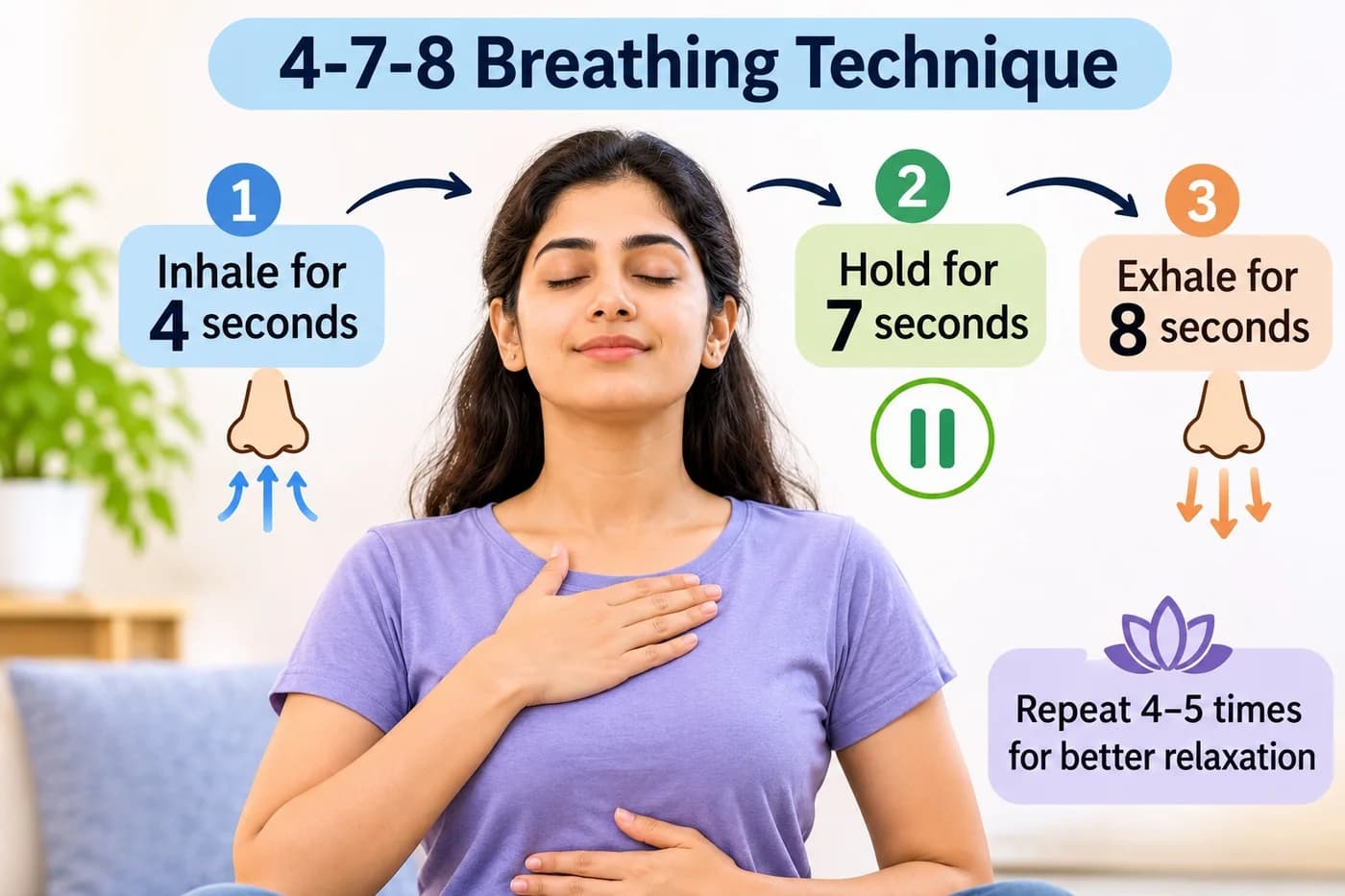
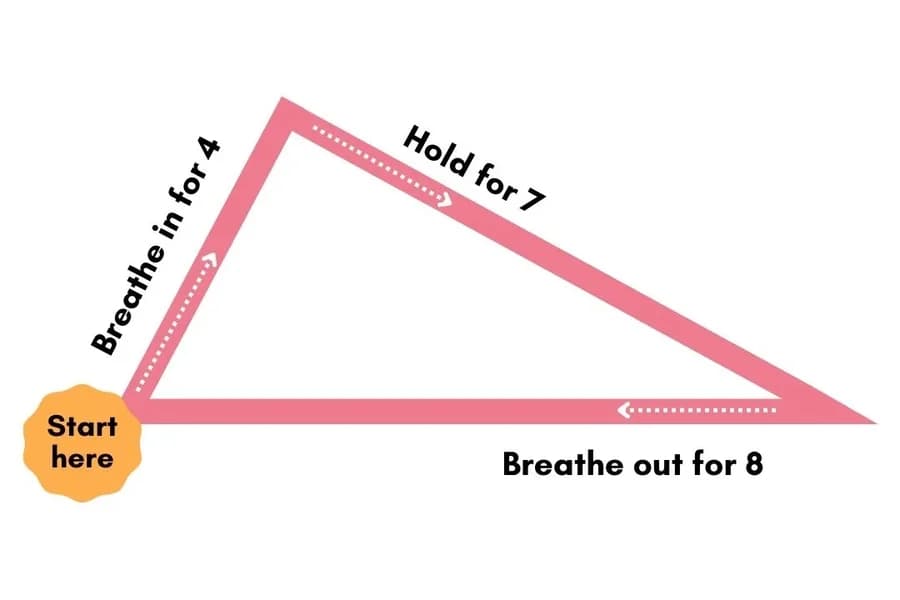
- 4-7-8 breathing means inhaling for 4 counts, holding for 7 and exhaling for 8.
- It was popularised by Dr Andrew Weil and is based on yogic breathing (pranayama).
- The long exhale may help shift your body into a calmer, rest-and-digest state.
- Start with 4 rounds and build up slowly; feeling light-headed at first is common.
- It's a relaxation tool, not a treatment for insomnia or anxiety disorders.
What Is 4-7-8 Breathing?
4-7-8 breathing is a simple breathing pattern in which you breathe in for a count of 4, hold your breath for a count of 7 and breathe out slowly for a count of 8. It was made popular by Dr Andrew Weil, an American doctor who based it on pranayama, the breathing practices of yoga. For readers in India, the idea will feel familiar: slowing down the breath to calm the mind is at the heart of many traditional practices.
The technique needs no equipment and takes less than a minute per round. That makes it easy to use in bed at night, before an exam or interview, or any time you feel tense.
How to Do 4-7-8 Breathing, Step by Step
Sit up straight or lie on your back in a comfortable position. Rest the tip of your tongue just behind your upper front teeth, and keep it there throughout. Then follow these steps:
- Breathe out fully through your mouth, making a soft whoosh sound.
- Close your mouth and breathe in quietly through your nose for a count of 4.
- Hold your breath for a count of 7.
- Breathe out completely through your mouth, with the whoosh sound, for a count of 8.
- That's one round. Repeat for a total of 4 rounds.
The exact speed of your counting matters less than keeping the 4-7-8 ratio. If holding for 7 feels too long at first, count faster rather than shortening the hold. As you get used to the pattern, you can slow your counting down.
Why 4-7-8 Breathing May Help You Relax
When you're stressed, your breathing tends to become fast and shallow, and your body stays in a more alert "fight or flight" state. Slow breathing, and especially a long, steady exhale, is thought to activate the parasympathetic nervous system, the part responsible for rest and digestion. That can slow your heart rate and help your muscles let go of tension.
Research on 4-7-8 breathing itself is still limited, but early findings are encouraging. In a small 2022 study of 43 healthy young adults, heart rate and systolic blood pressure were lower right after a session of 4-7-8 breathing. The authors concluded that the technique may help, though larger studies are needed. A separate pilot study found that slow breathing before bed calmed the body's stress response, but it didn't measurably shorten the time people took to fall asleep.
The counting also gives your mind something simple to focus on. Many people struggle to sleep because their thoughts keep racing, and steady counting can pull attention away from worries about the next day.
Can 4-7-8 Breathing Help You Fall Asleep?
Many people say 4-7-8 breathing helps them fall asleep, mainly because it calms the body and quietens busy thoughts. It works best as part of a wind-down routine rather than as a quick fix used once in a while. Practising it every day, not only on bad nights, helps your body learn to relax more quickly when you use it at bedtime.
It's important to be realistic, though. There isn't strong evidence that 4-7-8 breathing alone can treat insomnia. If you regularly lie awake for long periods, have trouble staying asleep or feel exhausted during the day, it's worth speaking to a doctor about the cause.
Tips for Getting the Most From It
Practise twice a day for a few weeks, for example once in the morning and once at bedtime, so the pattern becomes second nature. Keep to 4 rounds per session for the first month, then build up to 8 rounds if it feels comfortable. Combine it with a calm bedtime routine: dim lights, no phone for 30 to 60 minutes before bed and a cool, quiet bedroom.
It also helps to stay patient. Like any breathing practice, the calming effect tends to get stronger with regular practice.
Using 4-7-8 Breathing During the Day
Although it's best known as a sleep aid, 4-7-8 breathing can be useful at other times too. A few rounds before a stressful meeting, an exam or a difficult conversation can help you feel more settled. Some people use it when they notice anger or frustration building, giving themselves a minute to calm down before they respond. It can also help after a busy day, as a way of switching off before dinner with your family.
Because it takes so little time, you can practise it almost anywhere: sitting at your desk, waiting in a queue or sitting in a parked car. Just avoid doing it while driving or in any situation where feeling light-headed could be unsafe.
Who Should Be Careful?
Feeling slightly light-headed during the first few sessions is common, which is why it's best to sit or lie down and to start with only a few rounds. If you feel dizzy, stop and breathe normally.
People with breathing conditions such as asthma or COPD, heart conditions or low blood pressure, and pregnant women, should check with a doctor before practising breath-holding techniques. If breathing exercises make your anxiety worse, stop and try a gentler method, such as simply slowing your exhale without holding your breath.
4-7-8 Breathing vs Box Breathing
Box breathing is another popular technique, in which you breathe in, hold, breathe out and hold again for equal counts, often 4 each. Box breathing keeps a steady rhythm and is often used to stay calm and focused during the day, while 4-7-8 breathing has a longer exhale that many people find more relaxing at night.
You don't have to choose just one. Habuild's live sessions include daily breathing practice, and the Habuild app's Box Breathing habit gives you a guided way to build a regular breathing routine.
Editorial Sources
- Cleveland Clinic – 4-7-8 Breathing: How It Works, Benefits and Uses
- Vierra et al. – Effects of sleep deprivation and 4-7-8 breathing control on heart rate variability, blood pressure, blood glucose and endothelial function in healthy young adults (2022)
- Kuula et al. – The effects of presleep slow breathing and music listening on polysomnographic sleep measures: a pilot trial (2020)
Health Disclaimer
This article is for general information only and is not medical advice. Please consult a doctor before trying breath-holding techniques if you have a heart or lung condition or are pregnant.
Frequently Asked Questions
Related Articles
Breathing Exercises for Sleep: Techniques to Calm Your Mind
Breathing exercises for sleep work because slowing your exhale is one of the few nervous-system responses you can control directly. Try the techniques that calm a racing mind fastest.
How to Fall Asleep Fast When Your Mind Won’t Quiet Down
How to fall asleep fast usually comes down to giving your body the right signals, not trying harder. See the military method and other techniques that genuinely work.

Meditation for Sleep: A Gentle Nightly Practice for Calm
Meditation for sleep won't knock you out like a pill, but it teaches your mind and body how to let go, night after night. Try a guided nightly practice with Habuild.
Sleep Anxiety: Why You Can’t Relax at Night
Sleep anxiety is uniquely self-reinforcing — the fear of not sleeping is often exactly what keeps you awake. See how the cycle forms, and the fastest way to break it.