
What is Yoga Nidra? the Yogic Sleep Meditation Practice Explained
In this state, the body sleeps but the mind remains conscious and alert, performed lying down while following a guided systematic awareness sequence. See.

Key Takeaways
- Sanskrit combines yoga, union, and nidra, sleep – the body sleeps while the mind stays alert.
- Differs from active yoga by using no postures or breath techniques, only guided awareness.
- Research links regular practice to improved memory consolidation and cognitive function over months.
- Recommended starting point is a 10-15 minute guided body scan before a full session.
- Particularly valuable during recovery from illness, surgery, or sustained chronic stress.
- The systematic relaxation directly activates the parasympathetic system healthy sleep depends on.
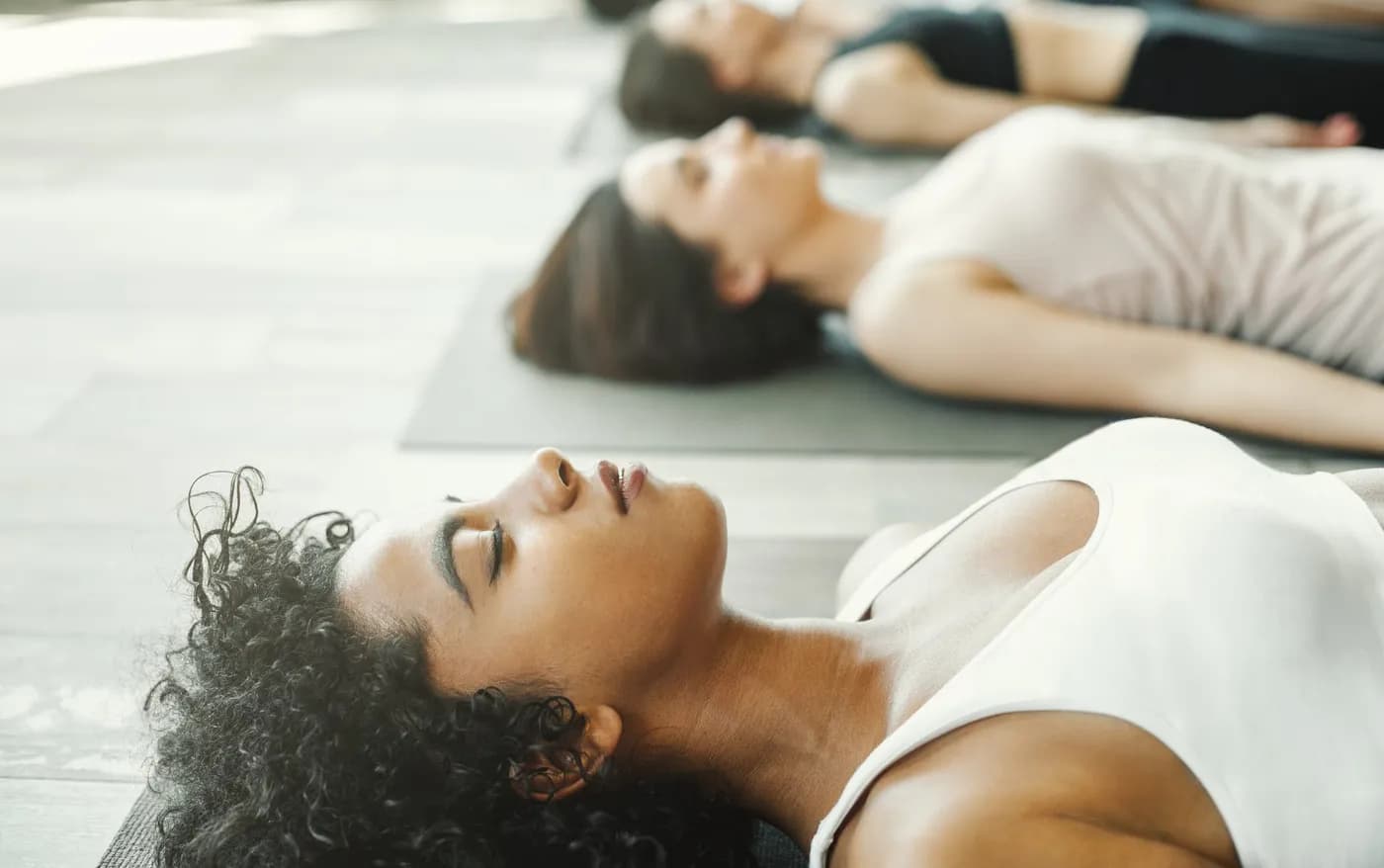
What is Yoga Nidra commonly known as? Yoga Nidra is a powerful guided meditation practice commonly known as “yogic sleep” — a state of deep relaxation where the body sleeps but the mind remains conscious and alert. Pronounced YOH-gah NEE-drah, the Sanskrit term combines ‘yoga’ (union) and ‘nidra’ (sleep). Unlike active yoga practices involving postures or breath work, Yoga Nidra is performed lying down in Savasana (Corpse Pose) while following a guided systematic body and awareness sequence. This guide explains what Yoga Nidra is, its remarkable benefits, the technique itself, and how to begin your own practice.
Benefits of Yoga Nidra: Why People Practise It
- Deep Relaxation and Stress Reduction The single most common benefit of Yoga Nidra — the practice produces measurable reductions in cortisol, blood pressure, and felt anxiety. A 30-minute session is reported to provide rest equivalent to 2–3 hours of regular sleep. Members managing concurrent stress often pair their practice with ouryoga for stress management programme.
- Improves Sleep Quality and Insomnia Relief Regular Yoga Nidra practice produces dramatic improvements in sleep quality and helps practitioners managing insomnia. The systematic relaxation activates the parasympathetic nervous system that healthy sleep requires.
- Reduces Anxiety and Emotional Reactivity The deep meditative state accessed in Yoga Nidra reduces the emotional reactivity that drives anxiety. Practitioners report improved emotional regulation in daily life. Members focused on broader breath capacity often pair their work with ouryoga for breathing programme.
- Supports Healing and Recovery The deep parasympathetic activation supports the body’s natural healing processes — particularly valuable for those recovering from illness, surgery, or chronic stress. Members managing concurrent back stiffness often pair their work with ouryoga for back pain programme.
- Enhances Memory and Cognitive Function Research indicates Yoga Nidra supports memory consolidation, learning, and cognitive function — particularly when practised regularly over months. Members focused on broader flexibility often pair their work with ouryoga for flexibility programme.
How to Get Started with Yoga Nidra
What You Need to Begin
A yoga mat or comfortable surface, a blanket or cushion, an optional eye pillow, and a quiet space free from interruption. Yoga Nidra is performed lying down — make the position as comfortable as possible. Recorded guided sessions or live guidance are essential for beginners.
Setting Realistic Goals
Begin with 20–30 minute sessions 3–4 times per week. Most beginners notice immediate relaxation benefits from the first session; deeper effects (improved sleep, reduced anxiety, enhanced cognition) emerge over 4–8 weeks of consistent practice. The practice can be done daily.
Start with the Basics
Begin with simple body scan meditation (10–15 minutes) to develop the foundation skill of guided awareness. Then progress to full Yoga Nidra sessions. Use guided audio or live online classes for the first 4–6 weeks before attempting unguided practice.
Core Phases of Yoga Nidra Practice
Settling into Savasana
The practice begins lying flat on the back in Savasana (Corpse Pose) with arms slightly away from the body, palms facing up, legs relaxed and slightly apart. The body must be fully comfortable for the practice to deepen.
Setting an Intention (Sankalpa)
A short personal intention or affirmation is silently repeated three times — planting the seed of intention in the deeply relaxed state that follows.
Body Awareness Rotation
The guide leads the practitioner through systematic awareness of each body part — typically starting with the right thumb and progressing through every body region. This is the foundational technique of Yoga Nidra.
Breath Awareness
Awareness shifts to the natural breath — observing the inhalation and exhalation without controlling them. Brings deeper relaxation and awareness.
Awareness of Sensations and Emotions
The guide brings awareness to opposing sensations (heaviness/lightness, warmth/cool) and emotional states — building the equanimity that Yoga Nidra develops.
Visualisation Phase
A guided visualisation phase — using specific imagery designed to access deeper meditative states. The imagery varies by tradition and teacher.
Returning to Waking Consciousness
The guide gradually brings the practitioner back to ordinary waking awareness — repeating the Sankalpa, then physical movement, before returning to seated position.
Common Mistakes to Avoid in Yoga Nidra
- Falling Fully Asleep The goal of Yoga Nidra is the state between sleep and wakefulness — not actually falling asleep. Falling asleep eliminates the practice’s benefits. Correction: practise sitting partially propped up if you tend to fall asleep, or practise at times when you are alert (not just before bed).
- Skipping the Sankalpa (Intention) Some practitioners skip the intention phase as it feels arbitrary — but the Sankalpa is one of the most powerful elements of Yoga Nidra. Correction: choose a meaningful intention and repeat it sincerely three times.
- Inconsistent Practice The benefits of Yoga Nidra compound through consistency. Sporadic practice produces minimal long-term effects. Correction: aim for at least 3–4 sessions per week.
- Practising Without Quality Guidance Early On Pure beginners attempting unguided Yoga Nidra often miss the systematic awareness rotation that makes the practice effective. Correction: use guided sessions for the first 4–6 weeks before attempting unguided practice.
Who Should Try Yoga Nidra?
- Beginners and Stressed Adults Yoga Nidra is one of the most beginner-accessible yoga practices available — requiring no flexibility, strength, or prior experience. Most beginners experience immediate relaxation from the first session.
- Women Managing Hormonal and Sleep Challenges Women across life stages — particularly during menopause transition — benefit dramatically from Yoga Nidra’s deep relaxation effects. Sleep improvements and stress reduction directly support hormonal balance.
- Older Adults with Sleep or Anxiety Concerns Yoga Nidra is particularly suited to older adults — its lying-down position makes the practice physically accessible regardless of mobility. (Disclaimer: those with diagnosed psychological conditions should engage Yoga Nidra as complement to, not replacement for, professional mental health care.)
- Working Professionals Managing Burnout Working professionals managing chronic stress and burnout benefit enormously from Yoga Nidra — even one 30-minute session weekly produces measurable stress reduction over months of practice.
Build a Yoga and Meditation Practice with a Routine That Actually Works
Building a sustainable Yoga Nidra practice alongside daily yoga isn’t about occasional retreats — it’s about consistency, expert guidance, and a structured routine that progresses with you. With the right support, you can practise yoga and meditation effectively from home and see real progress over weeks. The same daily-practice habit foundation drives ourdaily online yoga classes that members rely on every morning.
What You Get with Habuild’s Yoga Everyday Program:
- Daily live guided yoga sessions
- Beginner to advanced progression
- No-equipment & home-friendly practice
- Expert guidance to ensure correct form
- Community support to stay consistent
Start Your Yoga Journey
What is Yoga Nidra meditation at its simplest? A structured way to guide the body into deep rest while the mind stays quietly aware — some traditions call it what is Nidra Yoga instead, the same practice under a different name. What is Yoga Nidra and its benefits, boiled down: better sleep quality, lower stress reactivity, and sharper recovery from mental fatigue. If there’s one answer to what is the common benefit of Yoga Nidra people report most, it’s simply feeling more rested without more hours of sleep.
Yoga Nidra’s state of conscious rest is a skill the mind gets better at with repetition, sinking into deeper relaxation more readily each time the practice is returned to regularly rather than tried once and set aside. That’s true of most meditative states — familiarity, built through daily exposure, is what makes them accessible on demand. Habuild’s Yoga Everyday program incorporates restorative practices like this into a consistent daily rhythm, helping that familiarity build over time.
Frequently Asked Questions
Related Articles
Yoga Nidra for Beginners: A Complete Guide
Yoga nidra, or yogic sleep, is one of the easiest ways into meditation — no sitting, no posture discipline, just lying down and following a guide's voice. Try a guided yoga nidra session with Habuild.
योग निद्रा कैसे करें — पूरी विधि
योग निद्रा यानी योगिक नींद की पूरी विधि जानें — लेटकर, आवाज़ का अनुसरण करते हुए शरीर और मन को गहरी शांति तक ले जाने का तरीका। Habuild के साथ गाइडेड सेशन आज़माएं।

What Is Yoga Mudra? A Complete Guide to Types, Benefits & Practice
Mudras are intentional hand gestures — and sometimes full-body postures — used to influence the flow of energy in the body. See the types, benefits, and how consistent practice supports mental clarity.
