
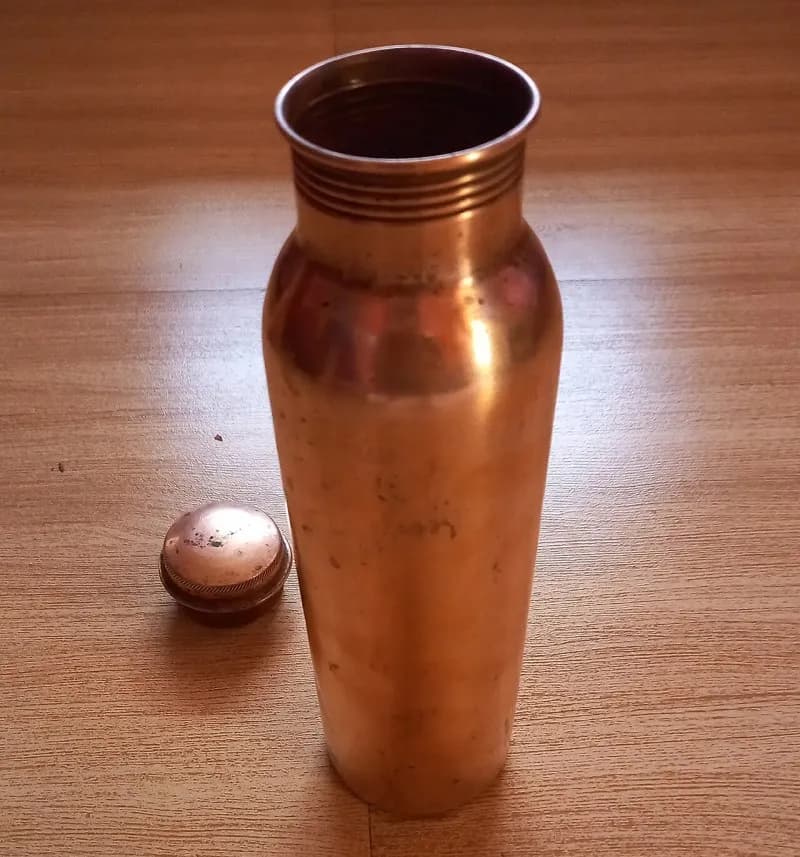
Copper Water Bottle: Safe Use, Cleaning and Care
Using a copper bottle? Learn what to fill it with, how to clean it, signs of wear and who should avoid extra copper exposure.

Key Takeaways
- Fill a copper bottle only with plain, already-safe drinking water.
- Lemon water, juice and other acidic drinks pull more copper into the liquid.
- Wash, rinse and dry it regularly; retire bottles that flake or corrode.
- Excess copper can cause nausea and vomiting; long-term excess harms the liver.
- People with Wilson disease or liver disease should avoid extra copper sources.
A copper water bottle can be a pleasant, traditional way to carry water, but its real value is convenience and preference, not detox or cure. Copper is an essential trace mineral, yet copper can also move from the metal into the water, and too much causes stomach upset and, over time, liver harm. This guide focuses on using and caring for a copper bottle safely. For what the evidence says about the claimed benefits, see our separate guide to copper vessel water benefits.
How much copper do you actually need?
Adults need about 900 micrograms of copper a day, according to the NIH Office of Dietary Supplements, and the upper limit for adults is 10,000 micrograms. Most people meet their needs through food such as whole grains, beans, nuts, seeds, potatoes and dark leafy greens. A healthy person does not need a bottle to get enough copper, and more is not better.
Why the amount in your water is uncertain
How much copper dissolves depends on the vessel, the water and the storage conditions. US public-health guidance notes that drinking water can pick up high levels of copper when acidic water sits in contact with copper pipes. A bottle works on the same chemistry, so you cannot calculate a reliable daily dose from bottle size or hours of storage. Taste is not a dependable test either: a strong metallic taste is a reason to stop, but a normal taste does not prove the level is low.
What to put in the bottle
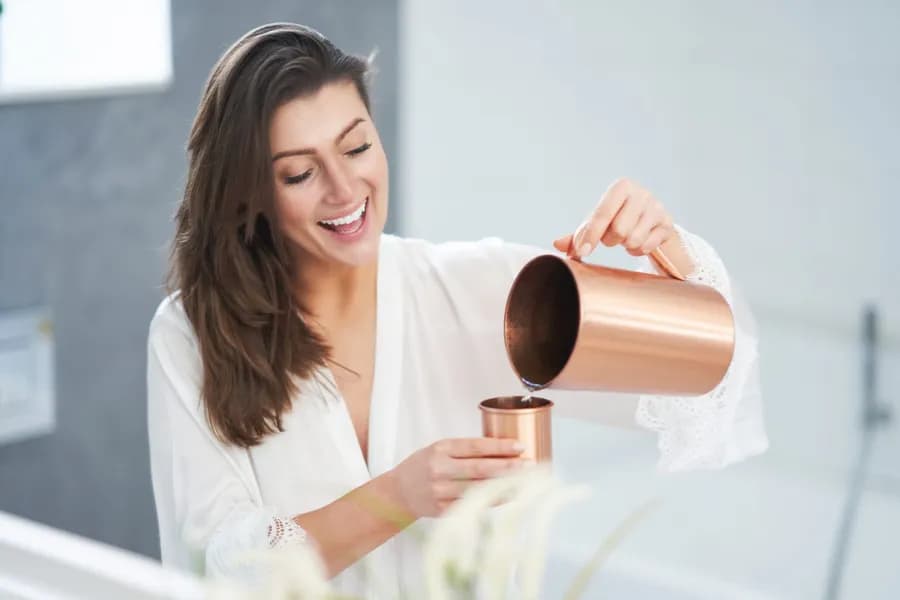
Plain drinking water only
Fill the bottle with water that is already safe to drink, such as treated tap water or filtered or boiled water. A copper bottle is not a water purifier and does not reliably remove chemical contaminants. During a local water-quality warning, follow the public-health advice for treating water rather than relying on the bottle.
What to keep out
- Lemon water, nimbu pani and fruit juice
- Vinegar drinks, kombucha and other acidic or fermented drinks
- Milk, buttermilk and sweetened drinks
- Very hot liquids, unless the maker says the bottle is designed for them
Acidic liquids dissolve more copper, so store them in glass or stainless steel instead. Avoid leaving water standing in the bottle for days.
How to clean and maintain it
- Empty and rinse the bottle every day.
- Wash the inside, neck and cap every few days using the method the maker recommends, such as mild soap and a soft bottle brush.
- If you use a traditional lemon-and-salt rub to remove tarnish, rinse very thoroughly with plain water afterwards and never leave the acidic mix standing inside.
- Let the bottle dry completely with the cap off before closing it.
- Do not use harsh scouring pads that scratch the surface or damage any lining.
A little dull tarnish on the outside is normal. Green or blue residue, flaking, pitting or a persistent bitter or metallic taste inside are signs of corrosion. Stop using a damaged bottle.
Check that the vessel is made for drinking
Decorative copper pieces are not automatically made for drinking water. Buy a product labelled food-grade or for drinking water, and keep its care instructions. Some bottles have lacquered or lined interiors with different cleaning needs; do not scrub away a lining to make the bottle shine. If the neck or cap is hard to reach, a bottle you can clean easily may be the safer choice.
Who should be cautious
- Wilson disease: this rare inherited condition makes copper build up in the liver and brain, so people with it should avoid extra copper sources.
- Liver disease: ask your doctor before using copper vessels regularly.
- Children: a copper bottle should not be used as a health treatment for a child.
- Supplement users: if you take a copper or multimineral supplement, tell your doctor about the bottle too.
A copper bottle is not a treatment for copper deficiency. Deficiency needs a proper diagnosis and a measured dose, because the amount released from a vessel is too uncertain.
When to seek medical advice
Nausea, vomiting, stomach pain or diarrhoea after drinking from a copper vessel need attention, especially if symptoms are severe or keep returning. Stop using the bottle and tell your clinician about it and any supplements you take.
If you prefer another bottle
A clean stainless-steel, glass or other food-grade reusable bottle carries safe water just as well. Good hydration depends on safe water and drinking enough for your body, climate and activity; our guide to daily water intake explains how much you actually need. If you already own and enjoy a copper bottle, use it with plain water and care for it well.
Editorial sources
Frequently Asked Questions
Related Articles
Copper Vessel Water Benefits: What’s Evidence-Based vs. Tradition
Storing water in a copper vessel overnight, or tamra jal, does have a couple of measurable effects — but many of the broader health claims attached to it.
Daily Water Intake: How Much Water Do You Actually Need?
The ‘drink 8 glasses a day’ rule is easy to remember, but it was never based on individual needs — your actual intake depends on body weight, activity.

Tongue Scraper Benefits: Copper, Silver & Ayurvedic Guide
A copper or silver tongue scraper, used daily for 30 seconds before brushing, removes the overnight bacterial coating Ayurveda calls ama — one of the oldest oral hygiene tools, part of dinacharya. See the full guide.