
Frankincense (Boswellia): Uses, Evidence and Safety
Frankincense incense, essential oil and Boswellia capsules are different products. What the evidence says for joint pain and how to use each safely.

Key Takeaways
- Incense, essential oil and oral Boswellia extracts are different products.
- Small studies suggest oral extracts may ease osteoarthritis pain somewhat.
- Topical frankincense has not been shown to work for joint pain.
- Incense smoke can irritate airways; never swallow essential oil.
- Persistent joint pain needs a diagnosis and exercise-based care first.
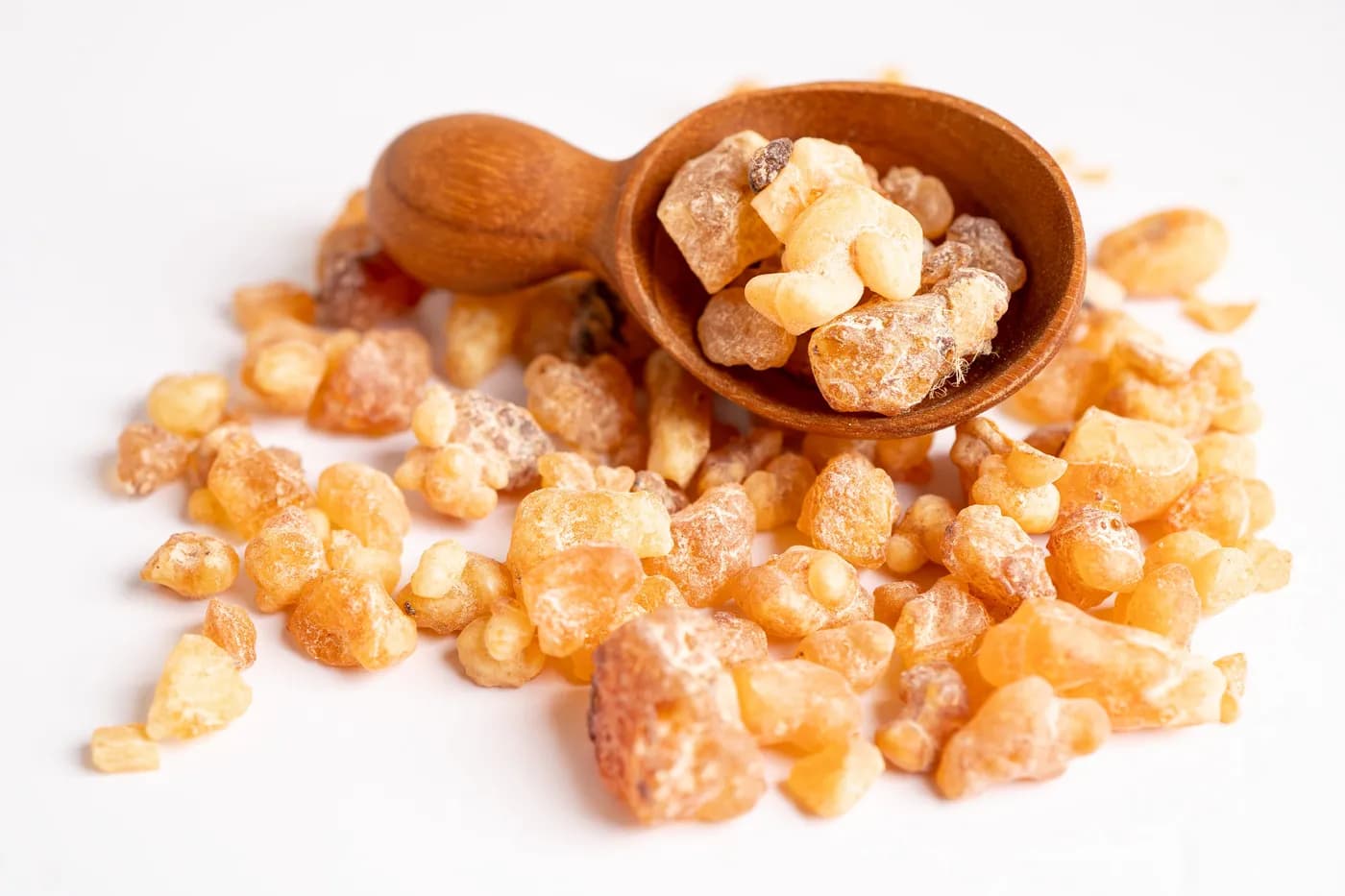
Frankincense is a fragrant resin from Boswellia trees. People burn it as incense, add its scent to skincare and diffusers, and sell concentrated extracts as supplements. These uses are very different. A room fragrance cannot treat arthritis, and a study of an oral extract does not prove that the essential oil has the same effect. The clearest way to approach frankincense is to decide whether you want a scent or are considering it for a health symptom.
What is frankincense?
Boswellia trees release resin when their bark is cut. The dried resin has been valued for its aroma in religious and cultural practices for centuries. It can be burned as incense, distilled into essential oil or processed into an extract for capsules. The species, extraction process and other ingredients vary, so the word "frankincense" alone tells you little about what is in a bottle.
Boswellic acids are compounds in the resin that researchers have studied for anti-inflammatory activity. That is a reason to investigate, not proof that every frankincense product reduces inflammation in the body. Smoke and essential oil are especially poor stand-ins for the extracts used in clinical studies.
Could it help joint pain?
According to NCCIH, several studies suggest oral Boswellia may reduce pain and inflammation in osteoarthritis, but larger, higher-quality studies are needed. Topical frankincense has not been shown to be effective. Because the studies and products differ, there is no reliable dose that applies to every capsule.
For osteoarthritis, regular movement, strengthening exercises, pacing painful tasks and weight management where relevant have clearer roles. Our guide to exercises for arthritis is a good place to start. A joint that is suddenly hot, very swollen or comes with fever is a different situation and needs prompt assessment.
Claims that frankincense cures cancer, asthma, infections or inflammatory bowel disease go far beyond the human evidence. A laboratory finding in cells does not mean a capsule treats a disease, so keep any existing treatment plan in place.
How do the forms differ?
Incense
Incense is chosen for fragrance and ritual. Burn it in a ventilated space, away from children and anything flammable. If the smoke causes coughing, headache or wheezing, stop. People with asthma or other lung conditions may prefer to avoid smoke altogether while still respecting the ritual in other ways.
Essential oil
Essential oil is a concentrated fragrance. A few drops can be too strong for skin, particularly a child's skin or an already inflamed area. Use only a suitably diluted topical product and stop if it stings, reddens or causes a rash. Never put it in the mouth, nose or eyes. Poison Control warns that essential oils can be poisonous when swallowed, so keep bottles out of children's reach. Diffusers release scent into shared air, so consider anyone nearby who is sensitive. Our article on essential oils for sleep covers safe diffuser use.
Oral supplements
A capsule may contain a standardised Boswellia serrata extract, plain resin powder or a blend with other herbs. NCCIH notes that oral Boswellia appears likely safe at doses used in trials lasting up to six months, but little is known about medicinal doses during pregnancy or breastfeeding. If you take medicine for a chronic condition, check the exact product with your doctor or pharmacist, since supplements and medicines can interact.
A simple way to decide
If you only enjoy the aroma, use frankincense as a fragrance with good ventilation; there is no health reason to inhale more smoke. If you want relief from joint pain, first find out what is causing it and use treatments that help you move and function.
If you do try a supplement, give it a clear aim and a fixed trial period, for example whether getting up from a chair or walking to a nearby shop becomes easier over a few weeks. Pain varies from day to day, so one good afternoon is weak evidence. If nothing changes, stop paying for it.
Avoid starting several new herbal products at once, because it becomes impossible to tell which one caused a problem. Stop any product that causes a rash, stomach upset or other troublesome symptoms. Swelling of the face or breathing difficulty needs urgent help.
Editorial sources
Frequently Asked Questions
Related Articles
What Are 5 Best Exercises for Arthritis? Expert Guide
Gentle range-of-motion rotations, chair squats, wall push-ups, heel-to-toe walking with calf raises, and the cat-cow spinal flow ease stiffness safely at home. See the expert guide.

Essential Oils for Sleep: What Works and How to Use Them
Not every essential oil marketed for sleep has evidence behind it — lavender does, most others don't. See which oils are worth using, and how to use them safely.
Healthy fats for joints: simple daily habit
Learn how small amounts of nuts, seeds and ghee can fit into balanced vegetarian meals that support normal function and vitamin absorption.

Yoga Asanas for Arthritis: Steps, Benefits & Precautions
Discover the best yoga asanas for arthritis — steps, benefits & safety tips.
