
Sleeping With a Fan On: Is It Bad for You?
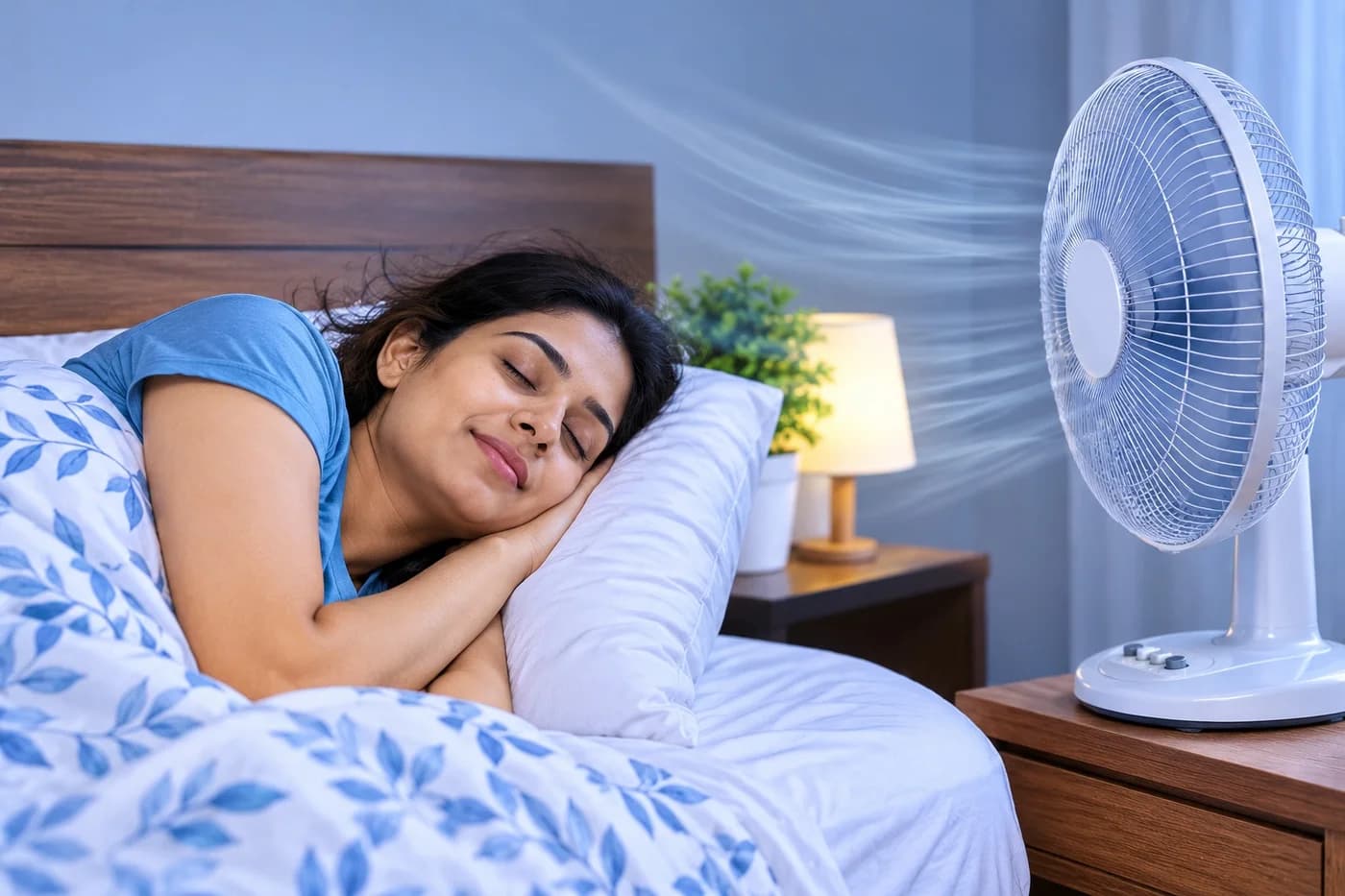
In most Indian homes, the fan runs all night. Here's what sleeping with a fan on does for your sleep, the possible side effects and how to avoid them.

Key Takeaways
- A fan can help you sleep by keeping you cool and masking background noise.
- Your body temperature drops to start sleep, and a hot room can make sleep lighter.
- Side effects can include dry eyes, mouth, throat and skin, and stirred-up dust.
- Keep fans clean, avoid pointing them straight at your face and adjust the speed.
- In extreme heat, a fan alone may not be enough to keep you safe.
Why So Many People Sleep With a Fan On
For most people in India, a ceiling fan running through the night is simply part of sleeping. In hot, humid weather, it's often the main way to stay comfortable enough to sleep. Many people also find they can't fall asleep without the steady hum of a fan, even in cooler months.
So is sleeping with a fan on good or bad for you? For most healthy people, it's fine and often helpful. But there are a few side effects worth knowing about, and some simple ways to avoid them.
Benefits of Sleeping With a Fan On
Keeping you cool
Your body temperature naturally drops in the evening to help you fall asleep and stay asleep. A hot room works against this process, and research shows that heat tends to make sleep lighter and more broken, with more time awake. A fan moves air over your skin and helps sweat evaporate, which cools you down and can make it easier to fall and stay asleep on warm nights.
Masking noise
The steady sound of a fan acts like white noise. It can drown out traffic, barking dogs, neighbours or a partner's snoring, which might otherwise wake you. Many people find the familiar hum itself relaxing.
Better air circulation
A fan keeps air moving in a closed room, which can make the space feel fresher and less stuffy, especially in small bedrooms or during humid monsoon nights.
Cheaper than air conditioning
Fans use far less electricity than air conditioners, making them a practical, affordable way to stay cool through long Indian summers. Habuild also has a guide on the best AC temperature for sleeping if you use both.
Possible Side Effects of Sleeping With a Fan On
Dry eyes, mouth and throat
A fan blowing directly on you all night can dry out your eyes, mouth and nasal passages. Some people wake up with a dry or sore throat, a stuffy nose or irritated eyes, especially if they sleep with their mouth open.
Dry skin
Constant air movement can also dry your skin. If you notice dry or itchy skin, try a lower fan speed or moisturise before bed.
Dust and allergies
Fans can stir up dust, pollen and pet hair, and dust that collects on the fan blades gets spread around the room each time it runs. For people with allergies or asthma, this can trigger sneezing, a blocked nose or wheezing.
Stiff muscles
Some people find that cool air blowing on one part of the body for hours, such as the neck or shoulders, leaves them stiff or achy in the morning.
What About "Fan Death"?
You may have heard claims that sleeping with a fan on in a closed room can be deadly. This idea, sometimes called "fan death", is widely considered a myth. Doctors have pointed out that there's little scientific evidence that a fan alone in a closed room can kill a healthy person.
Fans in Extreme Heat
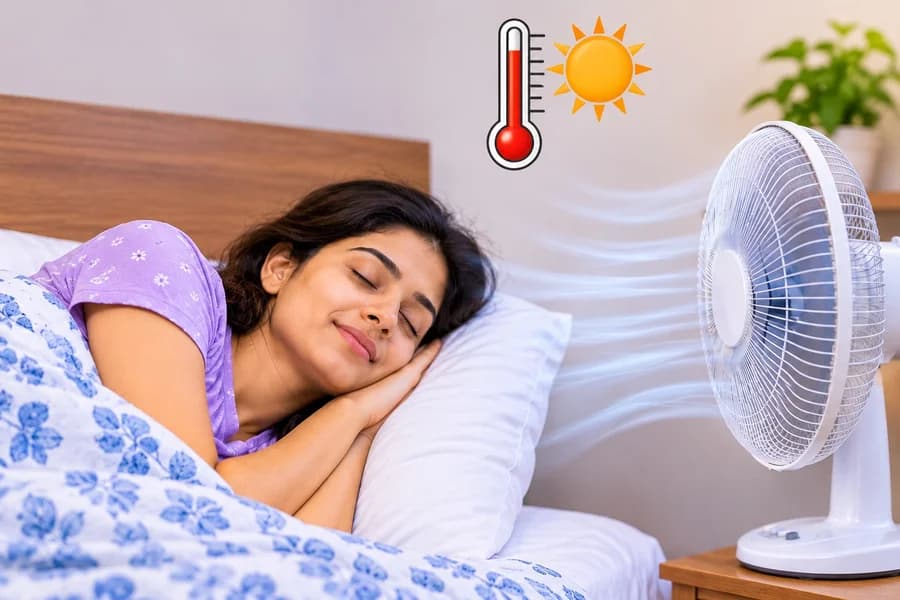
There is one important caution. In very hot weather, a fan alone may not be enough to keep your body cool. A Cochrane review notes that once air temperatures climb above about 35°C, a fan may even add to heat gain, while a 2021 modelling study suggested fans stop helping at slightly higher temperatures, around 37 to 39°C depending on age and health. Either way, in extreme heat, heat-related illness is a risk, particularly for older adults, young children and people with heart conditions. During heatwaves, drink enough water, use cool showers or wet cloths, keep rooms shaded and seek a cooler space if you can.
Tips for Sleeping With a Fan On
Clean your fan regularly. Wipe the blades every few weeks so the fan isn't spreading dust every night. Avoid pointing a table or pedestal fan straight at your face; aim it at your body or let it oscillate, and keep it at a comfortable distance.
Use the lowest speed that keeps you comfortable, especially later in the night when temperatures drop. Many people find a timer or a lower speed in the early morning hours helps prevent waking up feeling cold or dry.
If you wake up with dry eyes or a dry throat, drink water before bed, keep a glass by your bed and consider a humidifier in very dry seasons. If you have allergies, keep your bedroom as dust-free as possible, wash bedding regularly and talk to a doctor if symptoms continue.
Other Ways to Stay Cool at Night
A fan works best alongside a few simple habits. Keep curtains or blinds closed during the hottest part of the day so the room doesn't heat up, and open windows in the evening if the outside air is cooler. Choose light cotton bedsheets and loose, breathable sleepwear. A lukewarm shower before bed can help your body release heat, and a damp cloth on your neck or wrists can bring quick relief on very hot nights. Drinking enough water through the day, rather than a lot right before bed, also helps you stay comfortable without waking up to use the toilet.
Is Sleeping With a Fan On Bad for You?
For most people, sleeping with a fan on is not bad for you and can make sleep more comfortable in warm weather. The side effects are usually mild and easy to manage with a clean fan, sensible placement and the right speed. If you have asthma, allergies or other health problems that seem to get worse with a fan, speak to a doctor about what's best for you.
How Habuild Can Help
A cool room is one part of good sleep; a calm mind is another. Habuild's live sessions combine yoga, exercise and breathing, and the Habuild app's Box Breathing habit is an easy way to wind down before bed.
Editorial Sources
- Sleep Foundation – Is Sleeping With a Fan On Bad for You?
- Gupta et al. – Electric fans for reducing adverse health impacts in heatwaves, Cochrane review (2012)
- Morris et al. – Electric fan use for cooling during hot weather: a biophysical modelling study (2021)
- Okamoto-Mizuno & Mizuno – Effects of thermal environment on sleep and circadian rhythm (2012)
- Sleep Foundation – Best Temperature for Sleep
Health Disclaimer
This article is for general information only and is not medical advice. If you have asthma, allergies or a heart condition, please consult a doctor about staying cool safely at night.
Frequently Asked Questions
Related Articles
How to Sleep Better at Night: 8 Proven Habits for Deeper, More Restful Sleep
Sleep quality is highly responsive to a few specific evening habits — no medication, expensive devices, or complicated protocols required. See all 8 proven habits.

How to Stop Snoring: 7 Proven Ways for Quiet, Restful Sleep
Snoring signals a partly blocked airway during sleep, and most cases are caused by lifestyle, posture, and breathing patterns you can change. See 7 proven ways for quiet, restful sleep.

How to Get Deep Sleep: 7 Proven Ways to Improve and Lengthen Deep Sleep
Deep, slow-wave sleep is when the body physically repairs and the brain clears waste — the single most important phase for health and recovery. See 7 proven ways to improve and lengthen it.