
Anulom Vilom Pranayama: Steps, Benefits and Precautions
Learn anulom vilom pranayama — alternate-nostril breathing steps, benefits, and precautions to know before you start. Practise it daily alongside Habuild's guided yoga and breathing sessions.
Key Takeaways
- Anulom vilom pranayama is alternate nostril breathing done in a slow, steady rhythm.
- Popularized in India through Baba Ramdev’s televised yoga camps.
- Similar to nadi shodhana but skips breath retention for simplicity.
- May help calm the mind, balance the nervous system, and support blood pressure.
- Best practiced each morning on an empty stomach for 5 to 10 minutes.
- Avoid if you have a blocked nose, sinus infection, or feel dizzy.
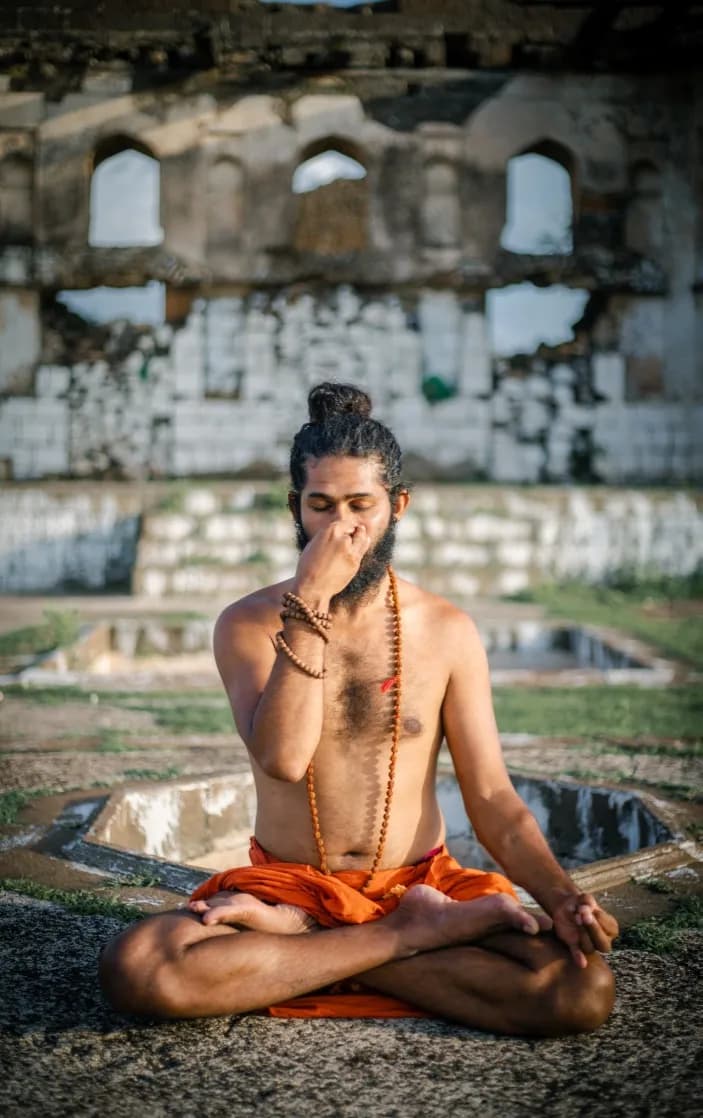
If you’ve ever flipped through TV channels early in the morning and landed on rows of people sitting cross-legged with one hand near their nose, breathing in through one nostril and out the other, you’ve seen anulom vilom pranayama in action. It’s one of the most recognisable and widely practised breathing exercises in India, made popular through Baba Ramdev’s televised yoga camps and taught today in almost every Patanjali-style session, park class, and school assembly. The name is simple once you break it down: anulom means “with the natural order” and vilom means “against it,” or reverse. Put together, anulom vilom pranayama is the practice of breathing in through one nostril, out through the other, and then reversing the pattern — round after round, in a slow, steady rhythm.
It sounds almost too simple to matter. But this quiet, unhurried breathing pattern is one of the most talked-about pranayama techniques in Indian households, and for good reason — it needs no equipment, no special posture beyond sitting comfortably, and almost anyone can learn it in a few minutes.
What Is Anulom Vilom Pranayama?
At its core, anulom vilom pranayama is a form of alternate nostril breathing. You use your thumb and ring finger to gently close one nostril at a time, guiding the breath from one side to the other in a steady, unforced rhythm. There’s no forceful exhalation involved, unlike kapalbhati, and no breath-holding required in the way it’s most commonly taught in India — just a calm, continuous cycle of inhale, switch, exhale, switch.
Pranayama itself simply means “breath control” in yoga, and anulom vilom pranayama is one of several such techniques, each with its own rhythm and purpose. Faster, more energising practices like kapalbhati and bhastrika sit at one end of the spectrum, while slower, calming ones like anulom vilom pranayama sit at the other. If you’re curious how it fits into the bigger picture, our guide to the different types of yoga breathing walks through where each technique is best used.
Anulom Vilom Pranayama vs Nadi Shodhana — Are They the Same?
Ask ten yoga teachers this question and you might get ten slightly different answers, because in everyday practice, the two names are used almost interchangeably. Most people who say “anulom vilom pranayama” and most people who say “nadi shodhana” are describing the same basic action — alternate nostril breathing, done slowly and mindfully.
Where they differ, classically, is in the finer detail. Nadi shodhana, in its traditional hatha yoga form, usually includes kumbhaka — a brief pause or breath retention — after the inhale, and sometimes the exhale too, along with more precise counts for how long each phase should last. Anulom vilom pranayama, as it’s commonly taught in Indian yoga camps, television sessions, and beginner classes, tends to leave out the holds and keeps things simpler: inhale, switch, exhale, switch, without a pause in between. Think of anulom vilom pranayama as the accessible, everyday version, and nadi shodhana as its more classical sibling with an extra layer of technique. Neither is “wrong” — they sit on the same spectrum, and which one you learn often comes down to which teacher taught you first. If you’d like to explore the deeper version with retention and its specific effects, our detailed guide to nadi shodhana benefits is a good next read.
Photo: Thamizhpparithi Maari, CC BY-SA 3.0, via Wikimedia Commons
Benefits of Anulom Vilom Pranayama
The benefits of anulom vilom pranayama are some of the best-known of any yoga breathing practice, particularly around stress and the nervous system. That said, it’s worth being honest about what this practice can and can’t do — it’s a wonderful daily habit, not a cure, and it works best alongside medical care, not instead of it.
Calms the Mind and Reduces Stress
This is where anulom vilom pranayama really shines. The slow, even breathing pattern nudges the body toward its parasympathetic “rest and digest” state, which helps ease the general sense of being wound up. People who practise anulom vilom pranayama daily often describe a noticeable calm that carries through the rest of the morning, long after the few minutes on the mat are over.
Balances the Nervous System
In yoga philosophy, the left and right nostrils are linked to two different energy channels — ida and pingala — associated with calming and activating effects respectively. Whether or not that framing resonates with you, the simple physical act of alternating breath between nostrils does seem to have a steadying effect on the nervous system, easing the body out of a constant, low-grade “on alert” mode.
Supports Healthy Blood Pressure
Anulom vilom pranayama is commonly recommended in India as part of a broader lifestyle approach to blood pressure, and slow, controlled breathing practices like this one are widely associated with supporting healthy blood pressure levels over time. It should never replace prescribed medication — think of it as a helpful daily companion to whatever your doctor has already advised, not a substitute for it.
Good for the Lungs and Respiratory Wellness
The slow, full inhales and exhales in anulom vilom pranayama gently encourage deeper, fuller breathing — a habit many of us have quietly lost during the day, when breathing tends to turn shallow and quick without our noticing. It’s often recommended as a gentle complement to respiratory wellness, especially for people easing back from a cold or mild congestion, though anyone with a diagnosed respiratory condition should check with their doctor before adding it to their routine.
Improves Focus and Mental Clarity
Because the mind has to stay gently engaged with counting breaths and switching nostrils, anulom vilom pranayama doubles up as a light concentration exercise. Many people say their thoughts feel less scattered afterwards, which is why it’s often used as a calming warm-up before meditation, study, or a busy workday.
How to Do Anulom Vilom Pranayama — Step-by-Step Instructions
Learning how to do anulom vilom pranayama takes only a few minutes, and you don’t need any equipment — just a quiet corner and a comfortable seat.
Best time to practise: Early morning, on an empty stomach, is ideal — most teachers recommend waiting at least four to six hours after a meal. If mornings aren’t possible for you, any calm moment on a light stomach works just as well.
Hand position — Vishnu Mudra: Fold the index and middle fingers of your right hand into your palm, keeping the thumb, ring finger, and little finger extended. This hand shape, called Vishnu Mudra, is what you’ll use to gently open and close each nostril through the practice.
Anulom Vilom Steps for Beginners:
- Sit comfortably cross-legged, or on a chair with your spine upright and shoulders relaxed. Close your eyes and take a couple of natural breaths to settle in.
- Bring your right hand into Vishnu Mudra. Rest your left hand gently on your knee, palm facing up.
- Close your right nostril with your right thumb. Inhale slowly and quietly through your left nostril, counting to about four.
- Close your left nostril with your ring finger, release your thumb, and exhale slowly through your right nostril.
- Inhale through the right nostril, then close it with your thumb, release your ring finger, and exhale through the left nostril. This completes one round.
- Continue this alternating pattern for 5 to 10 minutes, keeping your breath slow, smooth, and unhurried throughout — there should be no strain or breath-holding, especially as a beginner.
Start with 5 minutes if you’re new to anulom vilom pranayama, and build up gradually over a few weeks as the rhythm starts to feel natural. Most people settle into somewhere between 15 and 30 rounds a day once they’re comfortable with the pattern.
Precautions for Anulom Vilom Pranayama
Anulom vilom pranayama is one of the gentlest pranayama practices out there, and it’s considered safe for most people, including complete beginners and older adults. Still, a few sensible precautions are worth keeping in mind:
- Severe nasal blockage or sinus infection: If your nose is completely blocked or you’re dealing with an active sinus infection, it’s best to skip anulom vilom pranayama until you’re breathing more freely again — forcing air through a blocked nostril isn’t comfortable or useful.
- Feeling dizzy or lightheaded: If you ever feel dizzy, breathless, or uncomfortable while practising, stop, breathe normally, and rest. This isn’t meant to feel like effort.
- Pregnancy and existing health conditions: If you’re pregnant or managing a serious heart, lung, or blood pressure condition, it’s worth checking with your doctor before starting anulom vilom pranayama, simply as a general precaution.
- Not a replacement for treatment: This is a wellness practice, not a medical treatment. It works best as a steady daily habit alongside — never instead of — whatever care your doctor has already recommended.
Beyond these few checks, anulom vilom pranayama is remarkably low-risk and forgiving, which is part of why it’s taught so widely — from school classrooms to television yoga camps to hospital wellness programmes.
Like most things in yoga, anulom vilom pranayama rewards consistency far more than intensity. A few honest minutes each morning, done regularly, add up over months in a way that one long, occasional session never quite does. If you’re looking for a simple, structured way to build that daily habit, Habuild’s free yoga challenge is a good place to start — it brings together guided asana and breathing sessions, including practices like this one, into a routine you can actually stick with.
Frequently Asked Questions
Related Articles
Pranayama Asana: A Guide to Breathing Poses Benefits and Practice
Practice Pranayama Asana with Habuild. Learn pranayama breathing types, steps, and benefits for lung health, stress relief, and daily vitality. Start today!
Chandrabhedan Pranayam: How to Practice and Its Cooling Benefits
Practice Chandrabhedan Pranayam with Habuild. Follow the left nostril breathing steps to calm your mind, cool your body, and improve sleep quality. Start today!
Sukhasana (Easy Pose): Steps Benefits and Meditation Foundation
Try sukhasana with Habuild. Discover the sukhasana pose to improve posture, reduce stress, and cultivate a calm and focused mind. Start your session today!