
Meditation for Anxiety: A Simple Daily Practice That Helps
Meditation for anxiety won't silence racing thoughts forever, but it gently interrupts the spiral before it takes over your evening. Learn two practical techniques with Habuild's guided practice.
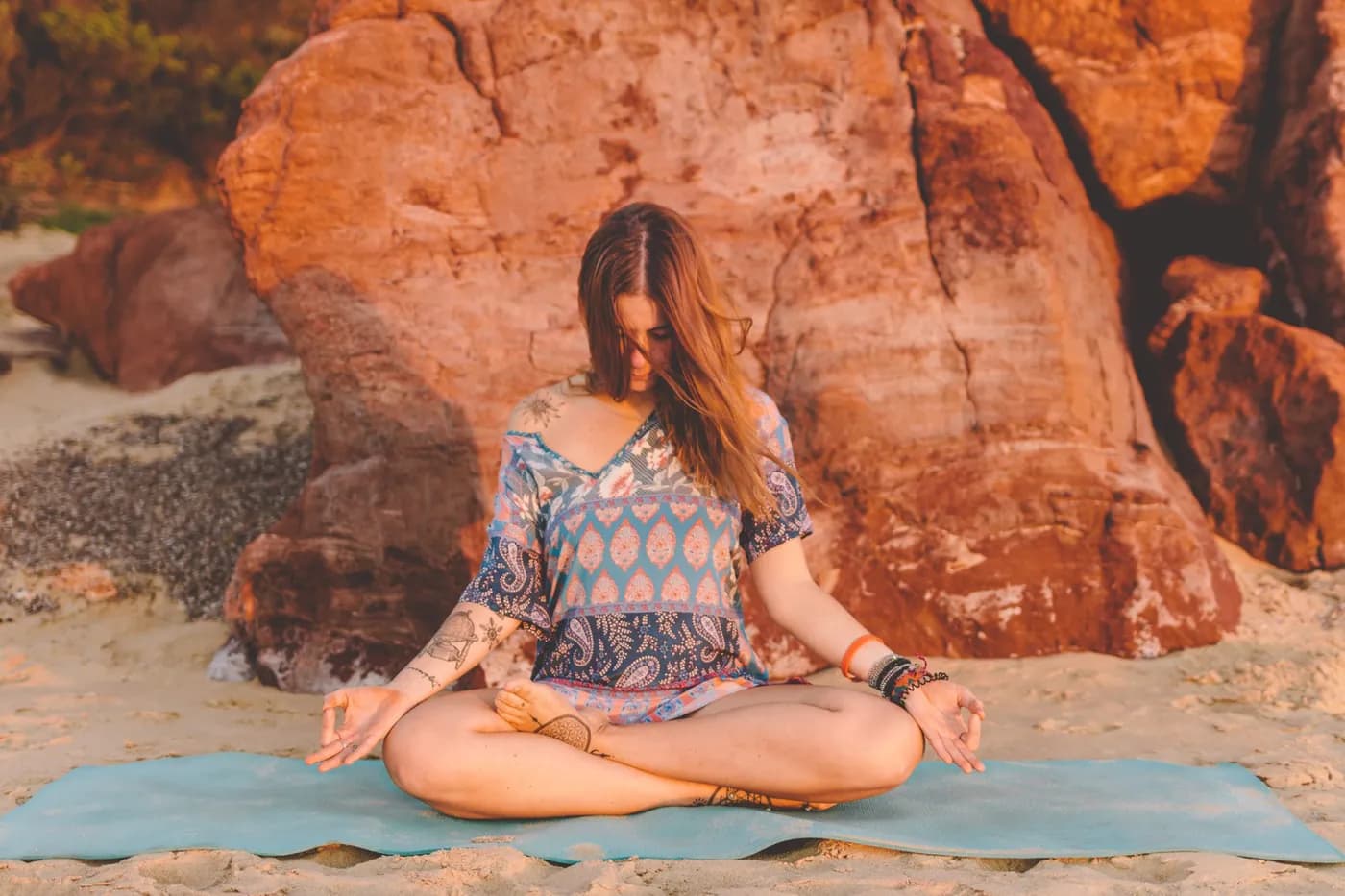
Key Takeaways
- Anxiety drags attention into an imagined future that mostly never happens.
- The mind’s threat-detection system fires on emails and deadlines like real danger.
- Meditation gives attention a present-moment anchor – usually the breath – to return to.
- Each time you catch a spiral and return to the breath, you’re training the same skill.
- This isn’t about silencing thoughts forever, just interrupting the spiral sooner.
If your mind has ever raced ten steps ahead of you, imagining every way tomorrow’s meeting or exam or family conversation could go wrong, you already know what anxiety feels like from the inside. It’s exhausting. The good news is that meditation for anxiety is one of the simplest, most accessible tools you have to bring your mind back to the only place it can actually do something useful: right now. This isn’t about becoming a different person or silencing your thoughts forever. It’s about learning a small, repeatable skill that gently interrupts the spiral before it takes over your whole evening.
Let’s talk about why this works, and then walk through two practical techniques you can try today.
Why Anxiety Loves to Live in the Future
Anxiety has a peculiar habit. It rarely bothers you about what’s happening right this second. Instead, it drags your attention into a future that hasn’t happened yet, and often never will happen the way your mind has scripted it. Will the interview go badly? What if that pain in your chest is something serious? What if everyone at the get-together judges you? Your body reacts to these imagined scenes almost as if they were real, tightening your shoulders, quickening your breath, flooding you with a low hum of dread.
This is the mind’s threat-detection system doing its job a little too enthusiastically. It evolved to scan for danger, and in a world of tigers and famine, jumping ahead to “what could go wrong” kept us alive. Today, that same wiring fires off during a WhatsApp message left on read or a deadline three weeks away. The thinking mind keeps running simulations, and each simulation asks your nervous system to feel a little bit of fear, over and over, all day.
You’ve probably noticed this yourself. A single unread message from your boss can send your mind sprinting through five different disaster scenarios before you’ve even opened it. None of those scenarios are happening in this moment. They’re all mental time travel, and your body pays the price for a future that exists only in your head.
This is exactly where meditation for anxiety earns its place in your daily routine. Meditation, at its simplest, is just training in noticing where your attention has gone and gently bringing it back to the present. Not fighting your thoughts. Not arguing with them. Just returning, again and again, to what’s actually here, right now, in this breath, in this body, in this room.
How Meditation for Anxiety Actually Works
Here’s the mechanism in plain language. Anxious thinking is almost always future-oriented. It’s rehearsal for a scene that exists only in imagination. Meditation works because it gives your attention a present-moment anchor, usually the breath or the body, to return to whenever it notices it has wandered into worry.
Every time you catch your mind mid-spiral and gently escort it back to the feeling of your breath, you’re doing a small rep of the same mental muscle that eventually makes anxious spiralling less automatic. You’re not suppressing the thought. You’re just not following it all the way down the rabbit hole this time. Do this often enough, and the racing-ahead habit starts to loosen its grip, a little at a time.
This is also why a regular meditation for anxiety relief practice tends to help more with everyday stress and worry than a single session ever could. Like any skill, from cycling to cooking, the benefit comes from repetition, not from doing it perfectly once. Five quiet minutes most days will do more for you than one perfect hour that never happens again.
A Grounding Meditation for Anxiety You Can Try Today
One of the easiest entry points into meditation for anxiety is a technique built entirely around your exhale. Here’s why the exhale matters so much: a longer, slower breath out signals directly to your nervous system that you are safe, activating the parasympathetic “rest and digest” response that counteracts the fight-or-flight feeling anxiety creates. You don’t need incense, a special cushion, or twenty minutes you don’t have. You need about five minutes and a quiet corner, even if that corner is your office washroom or the back seat of an auto.
Try this meditation for anxiety technique:
- Sit comfortably, close your eyes or soften your gaze downward, and let your shoulders drop.
- Breathe in gently through your nose for a count of four.
- Now exhale slowly through your nose or slightly parted lips for a count of six or seven, longer than the inhale.
- As you exhale, silently note “letting go” or simply feel the length of the breath leaving your body.
- Repeat this for eight to ten rounds, letting each exhale be a little longer and softer than the last.
That’s the whole practice. No chanting required, no perfect posture, nothing to get wrong. If your mind wanders off into tomorrow’s to-do list halfway through round three, that’s completely normal — just notice it happened and gently come back to the exhale. That noticing and returning is the entire practice.
If you’d like to build on this with breath-focused movement, our detailed guide on how to overcome anxiety through yoga and breathwork walks through postures that pair beautifully with this kind of breathing. And if you’re looking for a broader, everyday approach to managing anxious feelings alongside meditation, our piece on how to improve anxiety naturally covers lifestyle habits worth weaving into your week.
Photo: DayakSibiriak, CC BY-SA 4.0, via Wikimedia Commons
The 5-4-3-2-1 Technique: Meditation for Anxiety in the Moment
Sometimes anxiety doesn’t give you the luxury of five quiet minutes with your eyes closed. Maybe you’re mid-conversation, stuck in traffic, or sitting in a waiting room with your heart pounding. For these acute moments, the 5-4-3-2-1 sensory grounding technique works wonderfully because it needs nothing but your five senses, and it works fast.
Here’s how it goes. Silently name:
- 5 things you can see around you
- 4 things you can physically feel (the chair under you, fabric on your skin, your feet on the floor)
- 3 things you can hear
- 2 things you can smell
- 1 thing you can taste
By the time you reach “1,” your attention has been pulled fully out of the imagined future and planted firmly back in your actual surroundings. This is the same principle as the grounding breath meditation, just delivered through your senses instead of your breath, which makes it especially useful when you’re somewhere you can’t close your eyes or sit still.
Meditation for Anxiety Is a Support, Not a Substitute
We want to be honest with you here, because this matters. Meditation for anxiety is wonderfully effective as a daily habit for the ordinary stress, worry, and racing thoughts that come with modern life — deadlines, family pressures, uncertainty about the future, the general noise of being a person with a phone in 2026. Used consistently, it can genuinely help you feel calmer and more in control of your attention.
But if you’ve been diagnosed with an anxiety disorder, whether that’s generalised anxiety disorder, panic disorder, or something else, please don’t treat meditation as a replacement for therapy or medication. Anxiety disorder meditation, used well, is something you practise alongside professional care, not instead of it. Your doctor or therapist knows your history and your specific needs in a way no article or app can. Keep working with them, keep taking any medication as prescribed, and think of meditation as one more supportive tool in a fuller toolkit rather than the whole toolkit itself. If your anxiety feels unmanageable, is affecting your sleep, work, or relationships significantly, or comes with panic attacks, please do reach out to a mental health professional. There’s no shame in that. It’s simply the responsible next step, the same way you’d see a doctor for a fever that won’t break with home remedies alone.
Making Meditation for Anxiety a Daily Habit
The real benefit of meditation for anxiety shows up over weeks, not after one session. You don’t have to overhaul your morning or find an hour of silence. Even five minutes of the grounding breath meditation before you check your phone, or a short guided meditation for anxiety before bed, can slowly retrain how quickly your mind jumps to worst-case thinking. Pick a time that already exists in your day, right after you brush your teeth or before your morning chai, and attach the practice there. Consistency, done gently and without pressure, matters far more than duration.
Frequently Asked Questions
Related Articles
How to Reduce Anxiety Immediately: 7 Techniques That Calm You Down Fast
Acute anxiety episodes respond to techniques that address the body-mind connection through breath, movement, and grounding, working within minutes. See

Mudra for Anxiety (Gyan Mudra): Steps, Benefits and Precautions
Gyan Mudra, Prana Mudra, and Vayu Mudra shift the nervous system from the sympathetic fight-or-flight state to rest-and-digest, reducing baseline anxiety


Chakra Meditation: A 7-Chakra Guide for Beginners
Chakra meditation moves through all seven energy centres in a single sitting, giving beginners a felt sense of the whole system. Try a guided 7-chakra practice with Habuild.