
Meditation for Focus: Train Your Mind to Concentrate
Focus isn't a fixed trait — it's a skill that responds to practice. Learn how a few quiet minutes of guided meditation for focus can sharpen your attention, with Habuild.

Key Takeaways
- Focus is a trainable skill, not a fixed trait some people are born with.
- The real skill isn’t preventing wandering – it’s noticing it and returning attention.
- Each notice-and-return is one rep, using the same attention ‘muscle’ all day.
- Try single-point focus: pick one anchor, like the breath or a candle flame.
- Practicing a few times weekly helps you catch daytime distraction earlier too.
If you have ever sat down to answer one email and looked up forty minutes later having read the news, scrolled through three apps, and forgotten what you opened the laptop for in the first place, you already know why so many people are searching for meditation for focus. Your attention did not vanish. It simply never got trained. The good news is that focus is not a fixed trait some people are born with and others are not. It is a skill, and like any skill, it responds to practice. A few quiet minutes with a guided meditation for focus, done consistently, can noticeably sharpen the mind you bring to your work, your conversations, and your day.
Why Meditation for Focus Actually Works
Most of us assume focus is about willpower. Sit up straight, grit your teeth, don’t let your mind wander. But that is not really how attention works. Your mind will wander. That is what minds do. The real skill is not preventing the wandering, it is noticing when it happens and gently bringing your attention back. This is exactly what happens in meditation, and it is why meditation for focus is so effective as a practice, not just a nice idea.
Think of it like a rep at the gym. Every time you notice your mind has drifted, say, from your breath to your to-do list, and you bring it back, you are doing one rep. You are not failing at meditation when your mind wanders. You are training. The noticing and the returning is the exercise itself. And the muscle you are building here is the exact same one you use when you are halfway through a work report and your phone buzzes, or when you are in a meeting and your thoughts drift to lunch. It is the same attention span, just used in a different room.
This is what makes a regular sitting practice so useful for daily life, not just for the twenty minutes you spend with your eyes closed. Somebody who practices meditation to clear mind and focus even three or four times a week starts to notice the drift earlier during the day too. You catch yourself before you have spent fifteen minutes on autopilot. You come back to the task at hand faster. Over weeks, this compounds into something that feels less like meditation and more like a genuinely clearer, calmer mind.
A Simple Meditation for Focus Practice: Single-Point Technique
You do not need an app, an incense stick, or a special cushion to start. All you need is five to ten quiet minutes and one thing to place your attention on. This is sometimes called single-point focus meditation, and it is one of the oldest and most reliable techniques in the yogic tradition.
Step 1: Sit comfortably. Chair or floor, whatever lets your back stay upright without strain. Rest your hands on your knees or in your lap.
Step 2: Choose your anchor. The simplest anchor is your own breath, specifically the sensation of air moving in and out at your nostrils, or the rise and fall of your chest. If you would like a visual anchor instead, try trataka, the practice of steadily gazing at a candle flame placed at eye level, about an arm’s length away. Some people find a moving point of light easier to hold attention on than the more subtle sensation of breathing, especially when starting out.
Step 3: Rest your attention there, and only there. No need to control your breath or force your eyes wide open. Just let your attention rest on the chosen point.
Step 4: When your mind wanders, notice, and return. It will wander. That is not a problem, it is the whole exercise. The moment you realise your attention has drifted to a memory, a plan, an itch, gently bring it back to your breath or the flame. No self-criticism needed, just a soft, matter-of-fact return. Nothing more complicated than that is required for meditation for focus to work.
Step 5: Continue for five to ten minutes. A timer helps so you are not checking the clock.
If your day is built around screens and switching between ten tabs at once, this kind of reset matters even more, and pairing it with practical habit changes makes the effect last longer. Habuild’s guide on how to focus walks through everyday habits that reduce screen fatigue and mental clutter, and it pairs naturally with a short sitting practice. If your particular struggle is more about sitting through long study sessions or exam preparation, our piece on meditation for concentration goes deeper into that specific angle, with techniques suited to sustained, single-subject focus over longer stretches.
If you are new to this, a guided meditation for focus can make the early sessions easier since a voice gently reminds you where to place your attention, which takes some of the effort out of remembering the steps yourself.
One small habit that people find genuinely useful: do this right before something that demands concentration, like starting a work session, sitting down to write, preparing for a meeting, or picking up a task after a long stretch of screen time. Those five minutes act like a runway. You are not trying to meditate your way through the task itself, you are simply arriving at it with a mind that is a little more settled and a little less scattered than it would have been otherwise. This runway effect is one of the most practical everyday uses of meditation for focus.
Photo: Twentyfour Students, CC BY-SA 2.0, via Wikimedia Commons
Meditation for Focus vs Meditation for Concentration
You might come across both these phrases and wonder if they mean different things. They overlap quite a bit, but the emphasis is slightly different. Meditation for focus, as covered here, is about your general attention span, the ability to stay present with whatever you are doing across an ordinary day, whether that is replying to messages, having a conversation, or getting through a stretch of admin work. Meditation for concentration usually points toward a narrower, sustained kind of attention, the sort you need for exam preparation or a long, single-subject study block. Both use the same underlying muscle. Think of this article as the everyday version and the other as the deep-focus version for a specific task ahead.
Why Meditation for Focus Matters Beyond the Cushion
The point of training focus in stillness is that it shows up when you are not sitting still. People who practice regularly report that they catch themselves reaching for their phone mid-task and can choose not to pick it up. They notice screen fatigue building before it turns into an hour lost to scrolling. They come back to a half-finished task with less friction. None of this requires long sessions. Ten minutes, done consistently, tends to matter more than an hour done once a month.
It also helps to remember that mental clarity is not a permanent state you arrive at and keep forever. Some days your mind will feel scattered even after you meditate, and that is normal. The practice is not about achieving a spotless, silent mind every single time. It is about strengthening your ability to notice when you have drifted and return, so that skill is available to you everywhere else in your day, not just on the mat or cushion.
Frequently Asked Questions
Related Articles
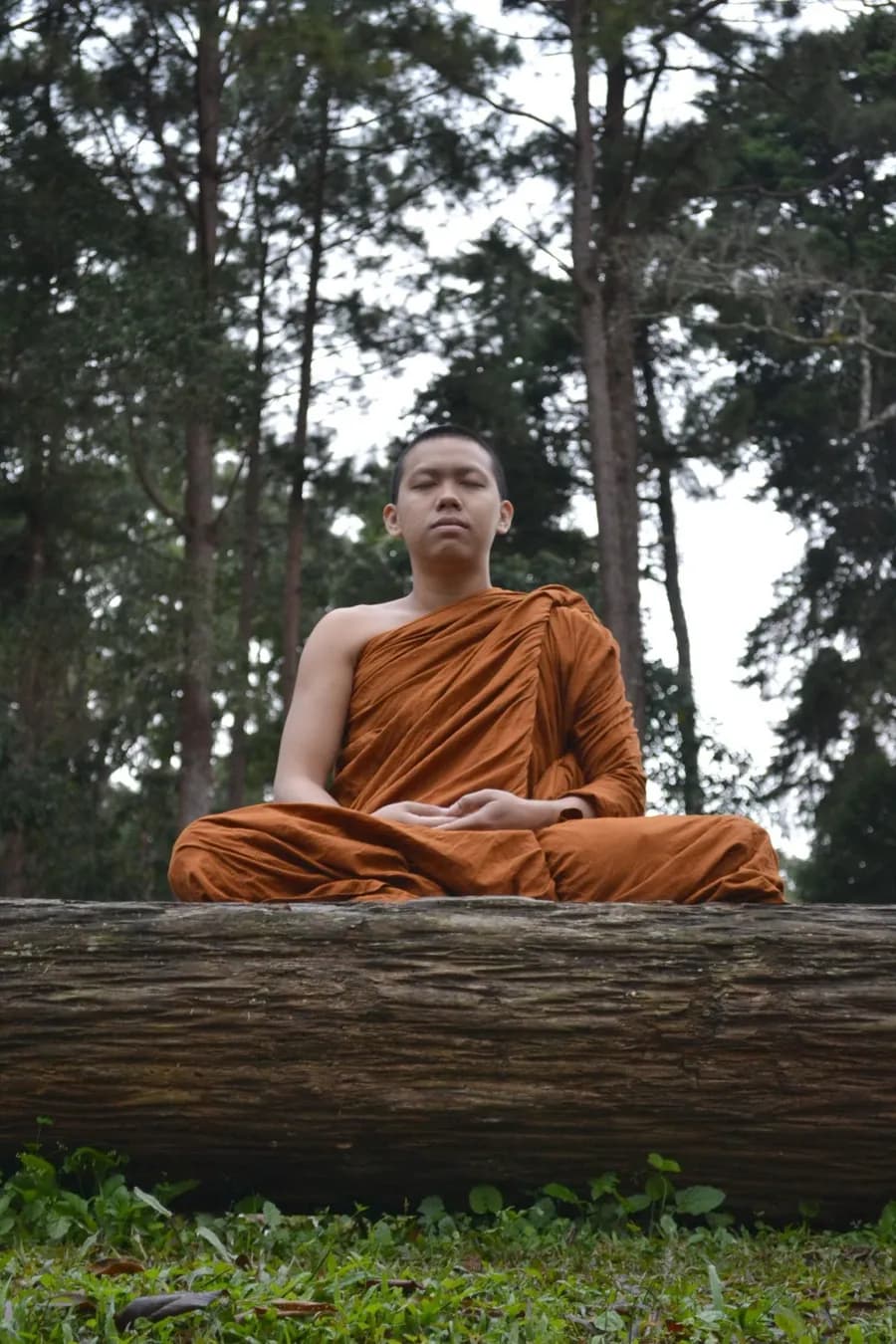
Anapana Meditation: Technique and Benefits
Anapana meditation, one of the oldest breath-awareness practices, simply asks you to observe the natural breath without controlling it. Learn the technique with Habuild's guided sessions.
Meditation for ADHD: What Actually Helps
Meditation for ADHD isn't a treatment or cure — it's a support for attention regulation, used alongside proper diagnosis and care. See what realistically helps, and try guided sessions with Habuild.

Buddha Meditation: An Introduction to the Traditions
Buddha meditation isn't one technique but a family of traditions, all rooted in training the mind to see clearly rather than react on autopilot. Explore the main schools, and try guided sessions with Habuild.