
Meditation for Intuition: Quieting the Noise to Listen
Intuition rarely shouts — meditation for intuition works by turning down the noise of anxious thoughts and mental chatter so the quieter signal is easier to notice. Practise it with Habuild's guided sessions.
Key Takeaways
- Intuition doesn’t shout – meditation works by turning down louder mental noise around it.
- Decision-making runs on two tracks; meditation helps the quieter, intuitive one get heard.
- Sit with a small decision and notice physical sensations, not a pros-and-cons list.
- Don’t expect a dramatic insight on the first try – the signal sharpens gradually.
- Some traditions tie intuition to the third-eye chakra, a respected but unproven framework.
Intuition rarely shouts. It’s usually a quiet, easy-to-miss sense underneath the louder noise of anxious thoughts, other people’s opinions, and mental chatter. Meditation for intuition works by turning down that noise, not by adding some new mystical sense — it simply makes the quieter signal easier to notice.
How Meditation for Intuition Works
Most of us are so busy reacting to notifications, deadlines, and other people’s expectations that a subtle gut feeling gets drowned out entirely. A regular sitting practice trains you to notice subtler internal signals — physical sensations, quiet feelings, small hesitations — the same skill that lets you catch a wandering thought during meditation. Over time, this same noticing ability extends to catching your own intuitive sense before it gets buried under louder mental noise.
There’s a useful way to think about what’s actually happening here. A lot of decision-making runs on two tracks at once: a slower, effortful, analytical track that weighs pros and cons, and a faster, quieter track that draws on everything you’ve absorbed but never consciously catalogued — past experience, subtle pattern recognition, a felt sense of “something’s off” before you can say why. Meditation for intuition doesn’t create that second track; it’s always running in the background. What meditation does is quiet the analytical noise and the anxious chatter enough that the quieter track actually gets heard, rather than being drowned out before it registers.
A Simple Practice to Strengthen Intuition
- Sit quietly for ten minutes, settling your attention on the breath.
- Once calm, bring to mind a small decision you’re facing.
- Notice any physical sensation or quiet feeling that arises — not the analytical pros-and-cons list, just the felt sense. A slight tightening, a sense of ease, a subtle pull toward one option — these are the signals worth noticing.
- Sit with that feeling for a moment before returning to your day, without immediately trying to justify or rationalise it.
- Optionally, jot down a single word or sentence describing what you noticed. Over weeks, this small record can help you learn to recognise your own intuitive signal more reliably.
This kind of strengthen intuition meditation isn’t about getting a dramatic answer every time — it’s about practicing the quiet noticing that makes intuition easier to access generally. A common mistake beginners make is treating the first session as a test of whether “it worked” — expecting a clear, dramatic insight right away. In practice, the signal tends to sharpen gradually, the same way any subtle perceptual skill improves with repetition rather than appearing fully formed on day one.
Kundalini Meditation for Intuition: A Traditional Framework
Some traditions, including kundalini yoga, associate intuition with the third-eye or ajna chakra, and use specific visualisation and breathing practices aimed at this centre. It’s worth holding this framework respectfully rather than as proven science — kundalini meditation for intuition is a traditional lens some practitioners find meaningful, and you’re welcome to explore it if it resonates, or stick with the simpler practice above if it doesn’t. If you’d like to understand the broader energetic framework this sits within, Habuild’s guide on kundalini energy is a useful next read.
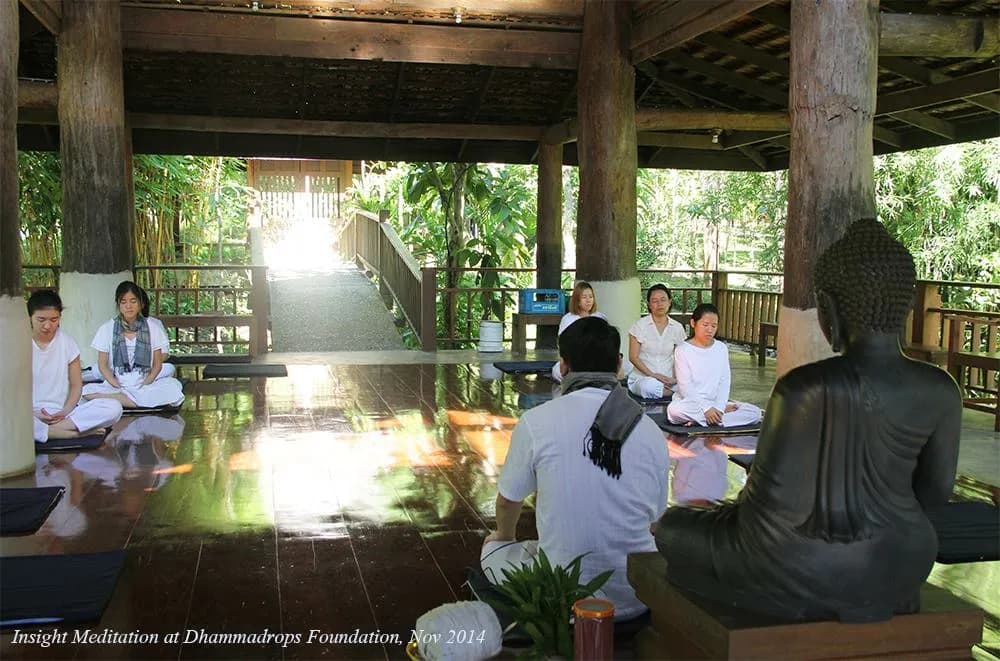
Photo: skyseeker, CC BY 2.0, via Openverse
Journaling Alongside Your Practice
Meditation for intuition pairs particularly well with a short journaling habit, more so than most other meditation goals, since intuition is inherently about noticing something subtle enough to easily forget within minutes. After each sitting session where you focused on a specific decision, writing even one line — “felt drawn toward saying no, though I couldn’t say exactly why” — builds a record you can look back on. Over months, this record often reveals a pattern: certain kinds of felt signals turn out to have been reliable for you, while others reflected anxiety rather than genuine intuition. That personal calibration is arguably more valuable than any single session’s insight.
Taking the Practice Off the Cushion
Meditation for intuition doesn’t have to stay confined to a formal ten-minute sit. Once you’ve built some familiarity with what your own felt sense actually feels like, you can borrow the same brief pause during an ordinary day — before replying to a difficult message, or right before a meeting where you need to make a call. Take three slow breaths, notice whatever sensation or quiet feeling arises, and let that sit alongside your usual reasoning rather than overriding it. This shorter, in-the-moment version works precisely because the formal practice already did the harder work of teaching you to recognise the signal in the first place; without that groundwork, a rushed thirty-second pause in the middle of a busy day rarely surfaces anything useful.
A Word on Skepticism
It’s completely reasonable to be skeptical about “intuition” as a concept, and meditation for intuition doesn’t require you to abandon that skepticism to get something useful from the practice. Strip away any mystical framing, and what remains is simply this: a calmer mind notices subtler information, including information your own nervous system and pattern-recognition have already processed but haven’t yet surfaced consciously. Whether you call that intuition, embodied cognition, or just “paying closer attention,” the practical exercise is the same, and it doesn’t ask you to believe in anything beyond your own capacity to notice more when there’s less noise.
Frequently Asked Questions
Related Articles

10 Minute Meditation: A Quick Daily Reset
A 10 minute meditation is long enough to settle into real calm and short enough to actually do daily. Find your own quick daily reset with Habuild's guided sessions.

Meditation for ADHD: What Actually Helps
Meditation for ADHD isn't a treatment or cure — it's a support for attention regulation, used alongside proper diagnosis and care. See what realistically helps, and try guided sessions with Habuild.
Anapana Meditation: Technique and Benefits
Anapana meditation, one of the oldest breath-awareness practices, simply asks you to observe the natural breath without controlling it. Learn the technique with Habuild's guided sessions.