
Sheetali Pranayama: Steps, Benefits and Precautions
Sheetali pranayama is one of the simplest, coolest breathing techniques in yoga — the Sanskrit name literally means 'cool.' Learn the steps, benefits, and precautions with Habuild's guided practice.
Key Takeaways
- The cooling breath: inhale through a curled tongue, exhale slowly through the nose.
- ‘Sheetali’ comes from the Sanskrit word for cool, and it works almost instantly.
- About a third of people can’t curl their tongue – a genetic trait, not a skill issue.
- Sitkari pranayama gives the same cooling effect by inhaling through clenched teeth instead.
- It’s the calming opposite of heating, energizing practices like Bhastrika.
If you have ever walked in from a scorching Indian afternoon, or finished a sweaty round of Surya Namaskars and wished you could cool down in seconds, sheetali pranayama is exactly what you need. It is one of the simplest, gentlest breathing techniques in yoga, and it works almost instantly. The name itself comes from the Sanskrit word “sheetal,” which means cool — and that’s precisely what this practice does to your body and mind. You may also come across it spelled as sitali pranayama; Sheetali and Sitali are just two common spellings of the same Sanskrit word and the same technique, so if you see it written either way, know that it’s the same breath we’re talking about. In this guide, we’ll cover what it is, how to do it step by step (including a simple alternative for people who can’t curl their tongue), its genuine benefits, and a few precautions worth knowing before you try it.
What Is Sheetali Pranayama?
Sheetali pranayama, often called the “cooling breath,” is a pranayama technique where you inhale through a curled or rolled tongue instead of your nose. As the air passes over your moist tongue, it cools down slightly through evaporation before it reaches your lungs — a bit like how a breeze feels cooler when it passes over water. You then close your mouth and exhale slowly through your nose. That’s the entire technique in a nutshell: a curled-tongue inhale, followed by a nasal exhale.
It’s one of many pranayama techniques taught in the yogic tradition, each designed to influence the body and mind differently. If you’re new to breathwork and want a broader map of where this technique fits among techniques like Nadi Shodhana, Bhramari, or Kapalbhati, our overview of yoga breathing techniques is a helpful place to start. What makes sheetali pranayama unique is its cooling, calming quality — it’s essentially the opposite of the heating, energizing breathing practices you may have already tried.
Sheetali or Sitkari: The Alternative for Those Who Can’t Curl Their Tongue
Here’s something a lot of beginners don’t know: not everyone can roll their tongue into a tube shape. It’s a genetic trait, and roughly a third of people simply cannot do it, no matter how much they practice. If that’s you, there’s nothing to worry about — there’s a close cousin of sheetali pranayama called Sitkari pranayama that gives you the same cooling effect without needing to curl your tongue at all.
In Sitkari, instead of curling the tongue, you gently clench your teeth together, part your lips slightly, and draw the breath in through the small gaps between your teeth. You’ll hear a soft hissing sound as the air passes through — that’s completely normal. The cooling sensation on your tongue and the roof of your mouth is very similar to what you’d feel with the tongue-curl version, and the benefits are considered much the same. So if you’ve ever felt discouraged trying to curl your tongue for this technique, the teeth-clenched variation is a perfectly good substitute.
How to Do Sheetali Pranayama: Step-by-Step
Learning how to do sheetali pranayama is refreshingly simple, and most beginners get comfortable with it within their very first sitting. Here’s the step-by-step process for both variations.
The tongue-curl version:
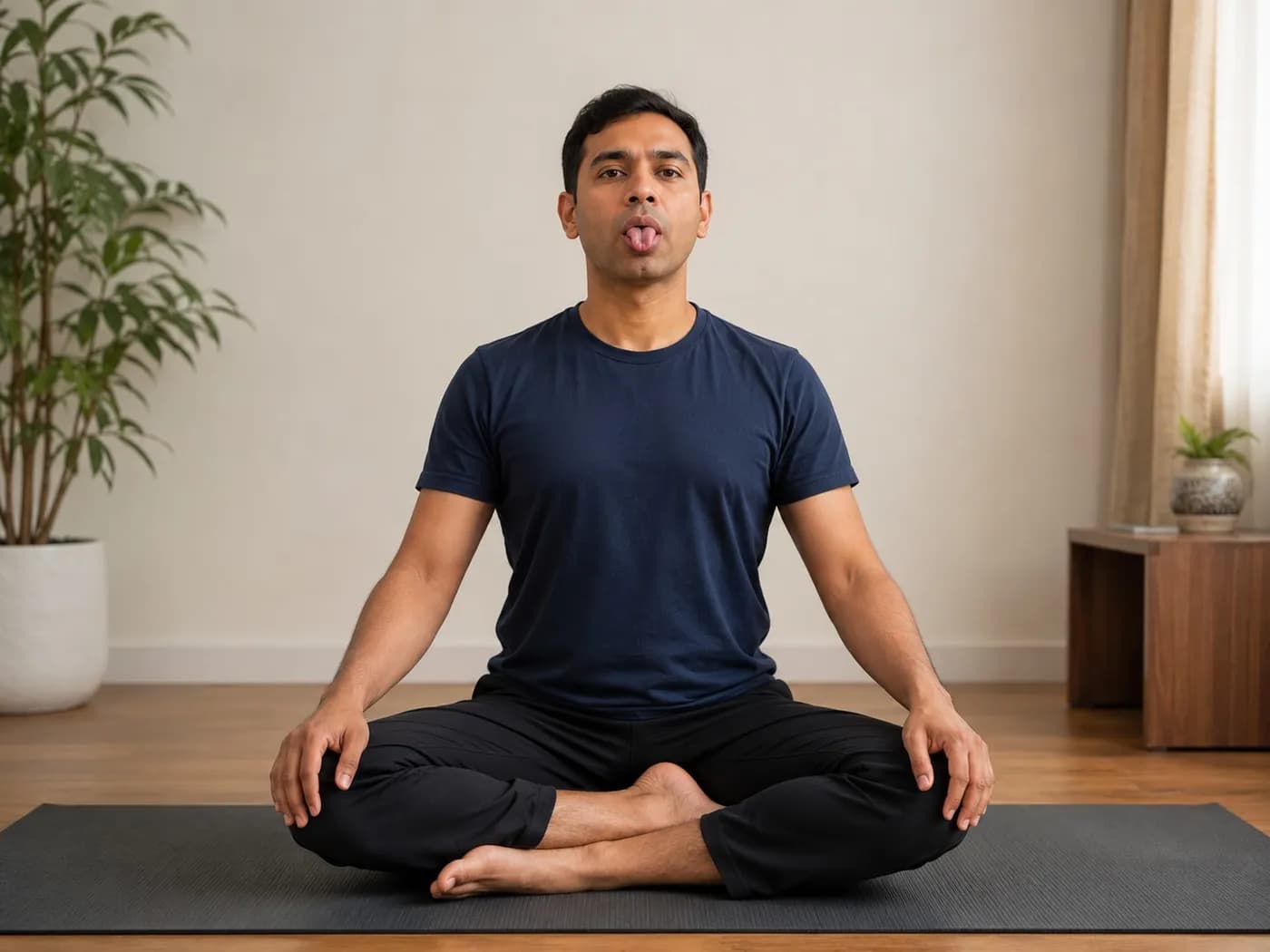
- Sit comfortably in a cross-legged position, or on a chair with your spine tall and shoulders relaxed. Rest your hands gently on your knees.
- Close your eyes and take a couple of normal, easy breaths to settle in.
- Stick your tongue out slightly and curl its edges upward, so it forms a tube or a taco shape. (If you can’t curl it, move on to the teeth-clenched version below.)
- Slowly inhale through the curled tongue, drawing the breath in as if you’re sipping cool air through a straw. You should feel a distinct coolness on your tongue.
- Once your lungs feel comfortably full, draw your tongue back in, close your mouth, and exhale slowly and completely through your nose.
- That’s one round. Pause briefly, then repeat.
The teeth-clenched version (Sitkari):
- Follow the same seated posture as above.
- Gently clench your upper and lower teeth together and part your lips just enough to expose your teeth.
- Inhale slowly through the gaps in your teeth, letting the air pass over your tongue.
- Close your mouth, and exhale gently through your nose.
- Repeat for the same number of rounds.
For beginners, 8 to 10 rounds is a good starting point, once or twice a day. As you get more comfortable, you can build up to 15 to 20 rounds in a sitting. There’s no need to rush the breath — the whole point of sheetali pranayama is a slow, unhurried inhale, so give yourself two or three seconds to draw the air in before you exhale.
Photo: Thamizhpparithi Maari, CC BY-SA 3.0, via Wikimedia Commons
Sheetali Pranayama Benefits
The sheetali pranayama benefits are fairly modest and specific compared to some other yogic breathing practices, but within that scope, they are genuinely useful and easy to feel almost immediately.
- Cools the body down. This is the most obvious and immediate benefit. Practicing it after time in the sun, after an intense workout, or during a hot summer afternoon can leave you feeling noticeably cooler within a few minutes.
- Calms the mind and eases irritability. The slow, deliberate rhythm of this breath has a naturally soothing effect on the nervous system. Many people find it helpful when they’re feeling short-tempered, agitated, or “heated” emotionally — not just physically.
- Reduces the sensation of excess body heat. In the language of yoga and Ayurveda, sheetali pranayama is considered a way to pacify excess “pitta” or heat in the body, which is one reason it’s traditionally recommended more in summer than in winter.
- Pairs well with a cool-down after vigorous practice. If you’ve just finished a heating, energizing pranayama like Kapalbhati or Bhastrika, a few rounds of sheetali pranayama afterward can help bring your system back to a more neutral, settled state. In fact, pranayama practices are often thought of in these two broad categories — heating and cooling — and Kapalbhati pranayama is a good example of the heating kind, which is why the two are often practiced in sequence, one after the other.
- A gentle aid for focus. Because it slows the breath and quiets a racing mind, some people use it as a brief reset before meditation or study.
It’s worth being honest here: sheetali pranayama isn’t a cure for anger management issues or a medical treatment for overheating or fever. Think of it as a small, reliable tool — one that cools you down and settles your mind for a while, not a permanent fix for bigger emotional or physical concerns.
Best Time to Practice This Cooling Breath
Traditionally, this technique is best practiced in warm weather — a hot Indian summer, a humid afternoon, or right after a heated physical practice like a fast-paced asana sequence or a heating pranayama. Early morning or evening on a warm day works well, ideally on an empty stomach. Because the whole technique is built around cooling the body down, it makes far more sense as a summer or post-workout practice than as something you do first thing on a cold winter morning.
Precautions Before You Practice
This breathing technique is gentle, but it isn’t right for everyone or every season. Keep these precautions in mind:
- Avoid it in cold or cool weather. Since the entire technique cools your body down, practicing it in winter or in an air-conditioned room can leave you feeling unnecessarily chilled or uncomfortable.
- Skip it if you have low blood pressure. Sheetali pranayama has a calming, cooling effect that can lower blood pressure further, so it’s best avoided if you already run low.
- Not ideal during asthma, chronic bronchitis, or any respiratory condition. Breathing cool air directly into the airways through the mouth can aggravate these conditions.
- Avoid it when you have a cold, cough, or congestion. Mouth-breathing cool air when your throat or sinuses are already irritated tends to make things feel worse, not better.
- Be cautious with the teeth-clenched (Sitkari) version if you have sensitive teeth or gums. Drawing cool air directly over exposed teeth can trigger discomfort for anyone prone to tooth sensitivity, so the tongue-curl version may suit you better, or you may want to skip this technique altogether on days your teeth feel sensitive.
- As with any new pranayama, if you’re pregnant, recovering from surgery, or managing a chronic health condition, it’s a good idea to check with your doctor or an experienced yoga teacher before starting.
Frequently Asked Questions
Related Articles
Bhastrika Pranayama: Steps, Benefits and Precautions
Bhastrika Pranayama is one of the more energetic breathing techniques in yoga — a loud, rhythmic 'whoosh' that wakes you up from the inside out. Learn the steps, benefits, and precautions with Habuild.

Anulom Vilom Pranayama: Steps, Benefits and Precautions
Learn anulom vilom pranayama — alternate-nostril breathing steps, benefits, and precautions to know before you start. Practise it daily alongside Habuild's guided yoga and breathing sessions.

Chakra Meditation: A 7-Chakra Guide for Beginners
Chakra meditation moves through all seven energy centres in a single sitting, giving beginners a felt sense of the whole system. Try a guided 7-chakra practice with Habuild.