
What Is Mindfulness Meditation?
What is mindfulness meditation, really? Paying attention to the present moment, deliberately and without judgment — the secular, widely-taught face of meditation today. Learn how to practise it with Habuild's guided sessions.
Key Takeaways
- Mindfulness meditation means paying attention to the present without judgment.
- It’s the secular, widely-taught version of meditation used in hospitals and schools.
- Notice when the mind wanders, label it if useful, then return to your anchor.
- A mind wandering fifty times in ten minutes gives fifty chances to practice, not failures.
- Calming effects build gradually and are usually noticed in hindsight, not in the moment.
What is mindfulness meditation, in simple terms? It’s the practice of paying attention to the present moment — your breath, body, thoughts, or surroundings — deliberately and without judgment. It’s become the secular, widely-taught face of meditation in hospitals, schools, and workplaces, stripped of specific religious framing so anyone can learn it as a pure mental-training tool. This guide answers what is mindfulness meditation in practical terms — how it works, how to begin, and where it’s most useful.
How to Do Mindfulness Meditation
- Sit comfortably, close your eyes or soften your gaze. A chair or cushion both work — the point is a stable, upright posture you can hold without fidgeting.
- Bring attention to your breath, body sensations, or sounds around you — whatever anchor you choose. The breath at the nostrils or the rise and fall of the belly are the most common starting anchors.
- When your mind wanders to a thought, judgment, or plan, simply notice it without engaging, and return to your chosen anchor. Some people find it helpful to mentally note what pulled them away — “thinking,” “planning,” “worrying” — before returning, since naming it makes letting go a little easier.
- Continue for five to fifteen minutes, using a timer so part of your attention isn’t spent wondering how much time is left.
This is really the entire technique behind how to do mindfulness meditation — noticing without judgment, and returning, repeated many times in a single sitting. A single session might involve dozens of these small returns, and every single one of them counts as the practice working, not as a failure to stay focused. If you’re still asking yourself what is mindfulness meditation actually supposed to feel like in the moment, this is the honest answer: mostly ordinary, occasionally calm, with brief flashes of clarity — not a dramatic altered state.
Common Mistakes When Learning How to Do Mindfulness Meditation
Once you understand what is mindfulness meditation actually asking of you, most beginner mistakes trace back to one root cause: expecting control rather than practicing observation. The most frequent mistake is treating a wandering mind as a problem to fix, which leads to frustration and, ironically, more mental noise. The practice was never about achieving a blank mind — it’s about noticing and returning, and a mind that wanders fifty times in ten minutes is giving you fifty opportunities to practice, not fifty failures. A second common mistake is sitting in a physically uncomfortable position and mistaking the resulting fidgeting for a lack of discipline, when it’s really just an easily fixed posture problem — a cushion under the hips or a chair with back support solves this for most people. A third mistake is expecting a dramatic shift after one or two sessions; the calming effects of mindfulness meditation for beginners tend to build gradually and are usually noticed in hindsight, over days and weeks, rather than felt strongly in the moment.
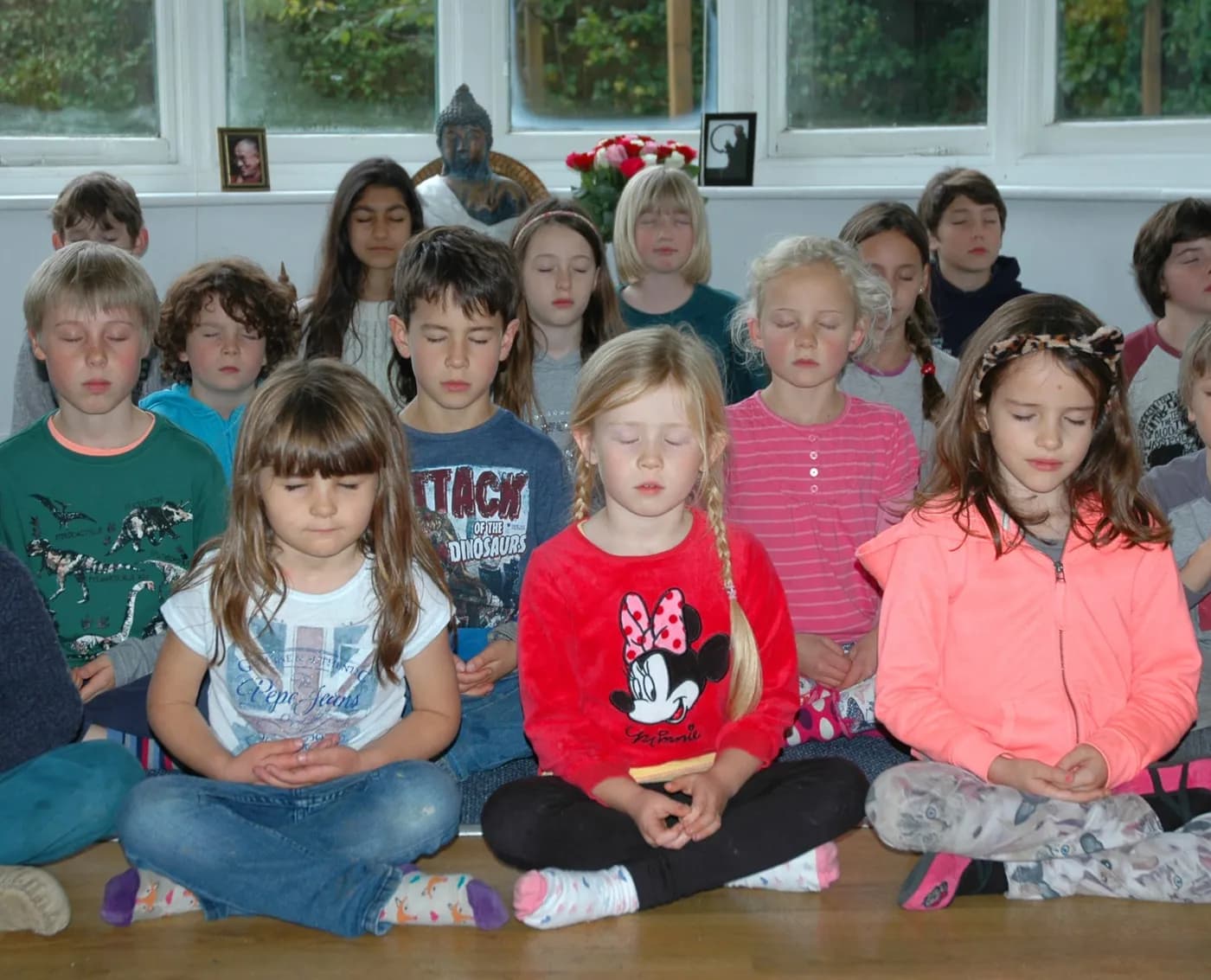
Photo: Dream2412, CC BY-SA 4.0, via Wikimedia Commons
Mindfulness Meditation for Beginners
The biggest early hurdle is expecting a blank, quiet mind. Mindfulness meditation for beginners works best when you understand upfront that thoughts will keep arising — the practice isn’t stopping them, it’s noticing them without getting swept away, then gently returning your attention. If you’re brand new to sitting practice generally, our fuller guide on meditation for beginners covers the basics in more depth, including posture and building a daily habit.
Formal Sitting vs Informal, Everyday Mindfulness
There’s a useful distinction within what is mindfulness meditation as a broader practice: formal mindfulness meditation, a dedicated seated session with your eyes closed, versus informal mindfulness, which is bringing the same quality of non-judgmental attention into ordinary activities like washing dishes, walking, or drinking your morning chai. Both count, and they reinforce each other. Formal sitting builds the underlying skill in a controlled, distraction-light setting, while informal practice is where that skill actually gets used, in the middle of a normal day full of triggers and demands. Beginners often benefit most from starting with formal what is mindfulness meditation sessions, then gradually adding a few minutes of informal awareness during one routine daily task, like the first ten minutes of a commute or the first cup of tea in the morning.
Where What Is Mindfulness Meditation Applies Most
Because of its non-judgmental, present-moment framing, this style is particularly well suited to anxious or racing thoughts — our piece on meditation for anxiety uses many of the same mindfulness principles applied specifically to anxious thinking patterns. It also tends to help in ordinary daily friction — a tense conversation, a stressful commute, a crowded inbox — precisely because what is mindfulness meditation trains is the pause between a trigger and a reaction, which is useful practically everywhere, not only in a formal sitting.
Frequently Asked Questions
Related Articles
Anapana Meditation: Technique and Benefits
Anapana meditation, one of the oldest breath-awareness practices, simply asks you to observe the natural breath without controlling it. Learn the technique with Habuild's guided sessions.

10 Minute Meditation: A Quick Daily Reset
A 10 minute meditation is long enough to settle into real calm and short enough to actually do daily. Find your own quick daily reset with Habuild's guided sessions.
Buddha Meditation: An Introduction to the Traditions
Buddha meditation isn't one technique but a family of traditions, all rooted in training the mind to see clearly rather than react on autopilot. Explore the main schools, and try guided sessions with Habuild.